

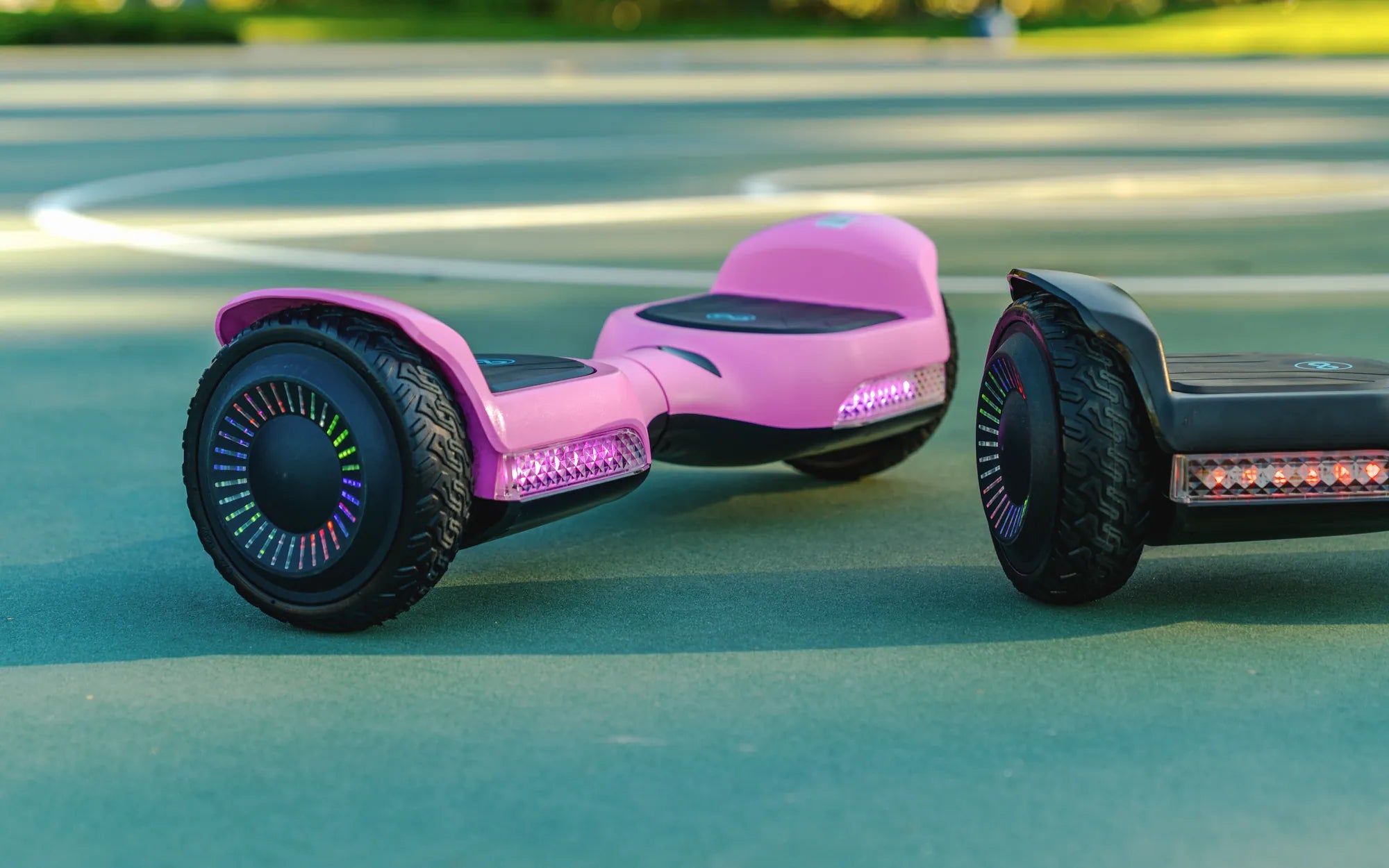
Introduction: The Rise of the Two-Wheel Hoverboard
The modern two-wheel self-balancing hoverboard represents a significant evolution in personal electric transport, distinct from its fictional levitating namesake. This market has transformed from a viral novelty into a serious segment of urban mobility solutions. The Two Wheel Hoverboard Market: Trends, Growth, and Future Outlook is defined by technological maturation, stringent safety protocols, and expanding consumer applications beyond recreation.
Understanding this market requires examining its journey from initial safety controversies to its current status as a legitimate last-mile transportation option. Brands that survived the industry's early shake-up, like Gyroor, did so by prioritizing engineering integrity and consumer trust. Today's market caters to commuters, students, and recreational users seeking efficient, eco-friendly alternatives to traditional transport.
This analysis will delve into the forces shaping the Two Wheel Hoverboard Market: Trends, Growth, and Future Outlook. We will explore technological innovations, regulatory frameworks, competitive dynamics, and emerging applications that define its trajectory. The market's resilience demonstrates its potential within the broader micro-mobility ecosystem.
The Current Market Landscape: More Than a Passing Fad
The two-wheel hoverboard market has stabilized into a multi-million dollar industry with consistent annual growth. It has successfully transitioned from a toy category to a recognized micro-mobility solution. Current applications include short-distance commuting, campus navigation, recreational riding in parks, and even commercial use in large facilities like warehouses and airports.
Market data indicates a compound annual growth rate (CAGR) of approximately 5-7% over the past five years. This growth is fueled by improved product reliability and greater consumer confidence. The demographic has expanded from primarily teenagers to include adults aged 25-45 who use hoverboards for practical urban transport. Geographic expansion into European and Asian markets has also contributed to sustained demand.
The post-2016 regulatory environment fundamentally altered the market landscape. The implementation of mandatory safety standards, particularly UL 2272 certification, eliminated numerous non-compliant manufacturers. This consolidation created space for established brands with robust research and development capabilities to thrive. The market now values durability and safety as much as novelty.
Key Market Segments and Consumer Drivers
Three primary segments drive the modern hoverboard market. The urban commuter segment seeks last-mile solutions connecting public transit stops to final destinations. The recreational segment, still significant, focuses on features like speed, off-road capability, and integrated entertainment. A growing commercial segment utilizes hoverboards for security patrols, warehouse logistics, and tourism.
Consumer adoption is driven by multiple factors. Rising fuel costs and urban traffic congestion make electric alternatives attractive. Environmental consciousness pushes consumers toward zero-direct-emission vehicles. The convenience of a compact, portable device that can be carried indoors addresses parking challenges in dense urban areas. Technological improvements in range and comfort have made hoverboards viable for longer daily use.
The Importance of Safety and Regulation in Market Stability
The 2016 safety crisis, involving battery fires in non-certified units, was a pivotal moment for the Two Wheel Hoverboard Market: Trends, Growth, and Future Outlook. It led to widespread recalls, import bans, and the development of the UL 2272 standard. This standard tests the complete electrical system—battery, charger, and motor—for safety under various stress conditions.
Today, UL 2272 certification is the industry's baseline for legitimacy. It reassures retailers, insurers, and consumers. Reputable brands like Gyroor build upon this foundation with additional safeguards, including battery management systems (BMS) that prevent overcharging and thermal runaway. This focus on safety has been the single most important factor in rebuilding market trust and enabling sustainable growth.
Dominant Trends Shaping the Hoverboard Industry
The hoverboard industry is characterized by rapid technological iteration. Current trends focus on enhancing user experience, expanding operational environments, and integrating with digital ecosystems. These trends are directly responding to the limitations of earlier-generation models and unlocking new use cases.
Connectivity and smart features are becoming standard expectations rather than premium add-ons. Manufacturers are investing in improved ergonomics and learning algorithms to reduce the initial learning curve for new riders. The trend toward modularity allows for easier repairs and upgrades, addressing concerns about product longevity and electronic waste.
Technological Advancements: Smarter, Safer, Longer-Lasting
Battery technology is at the forefront of innovation. While lithium-ion remains dominant, cell chemistry and packaging have improved. Modern hoverboards offer ranges of 10-15 miles on a single charge, with some premium models exceeding 18 miles. Fast-charging technology has reduced typical charge times to 2-3 hours. Gyroor and other leading brands utilize UL-certified battery packs rated for 500+ charge cycles, ensuring long-term reliability.
Motor power has increased, with dual 350W-500W motors now common in standard models. This provides better torque for hill climbing and acceleration. Smart features include Bluetooth connectivity for mobile apps that track speed, distance, and battery life, allow for firmware updates, and offer customizable riding modes. Integrated LED lighting systems enhance visibility and aesthetic appeal, while gyroscopic and sensor systems have become more precise for smoother balancing.
Design Evolution: Ruggedness and All-Terrain Capability
The most visible trend is the shift toward all-terrain (AT) hoverboards. These models feature larger, air-filled tires (often 8.5 or 10 inches), enhanced suspension, and more powerful motors. This design evolution directly addresses a key limitation of early models—their restriction to perfectly smooth surfaces. AT hoverboards can comfortably traverse grass, gravel, dirt paths, and uneven pavement.
This expansion into off-road capability has created an entirely new product subcategory and attracted a different consumer base. It has also improved overall durability, as the larger tires and reinforced frames better absorb shocks. Brands like Gyroor have developed specialized AT lines with IPX5 water-resistant ratings, making them suitable for use in light rain and on wet surfaces, further increasing their utility.
Integration with Broader Micro-Mobility Ecosystems
Hoverboards are increasingly considered as part of a integrated urban transport mix. Design innovations reflect this: foldable handlebars, carrying straps, and lighter materials make hoverboards easier to carry onto buses or trains for mixed-mode commutes. Some cities are piloting micro-mobility hubs that include docking or charging stations for various devices.
The shared mobility sector is also exploring hoverboards as a potential offering, though challenges around theft, maintenance, and battery swapping remain. For individual owners, the hoverboard's compact size solves the "first/last mile" problem more seamlessly than bulkier e-scooters or e-bikes, as it can be easily stored under a desk or in a locker.
Growth Drivers and Market Challenges
The market's trajectory is shaped by a complex interplay of enabling factors and persistent obstacles. A balanced view of the Two Wheel Hoverboard Market: Trends, Growth, and Future Outlook requires acknowledging both sides. The growth drivers are powerful, but the challenges require continued industry innovation and advocacy.
Sustained investment in research and development by leading companies is turning previous weaknesses into strengths. Consumer education is gradually improving public perception. However, the regulatory environment remains a patchwork, creating confusion for riders and manufacturers alike. The industry's long-term success depends on navigating these hurdles while capitalizing on favorable macro trends.
Primary Growth Engines
Several macroeconomic and social trends are propelling the market forward. Accelerating urbanization increases demand for compact, efficient personal transport. Global environmental targets are pushing consumers and corporations toward electric vehicles of all sizes. Advancements in lithium-ion battery production have driven down costs while improving energy density, making better hoverboards more affordable.
The normalization of remote and hybrid work models has changed commuting patterns, often making short, flexible trips more common than long daily commutes—a perfect use case for hoverboards. Furthermore, the direct-to-consumer e-commerce model allows reputable brands to reach customers globally with detailed product information and robust warranty support, bypassing traditional retail gatekeepers.
Persistent Challenges to Overcome
The regulatory landscape is fragmented. Laws regarding where hoverboards can be ridden (sidewalks, bike lanes, roads) vary by country, state, and even municipality. This legal uncertainty discourages some potential users. Public perception, though improving, is still occasionally tied to the safety issues of 2016, requiring ongoing education about modern safety standards.
Performance limitations, such as range anxiety and lower top speeds (typically capped at 10-12 mph for safety) compared to some e-scooters, can be a barrier for some commuters. Infrastructure gaps, like a lack of secure, convenient charging points in public areas, also limit utility. Finally, the market must continually combat low-quality, non-certified products that can still be found online, which undermine consumer confidence.
The Competitive Arena: How Brands Like Gyroor Differentiate
The competitive landscape has matured. The market is no longer a race to the lowest price point but a competition on quality, safety, and brand trust. Established players compete across several key dimensions: core performance (speed, range), durability and build quality, smart features, design aesthetics, and post-purchase support.
Differentiation often occurs in specific niches. Some brands target the extreme off-road segment, others focus on ultra-portable designs, and others prioritize integration with smart home ecosystems. The most successful brands communicate their value proposition clearly, emphasizing the engineering and safety standards that justify their price. Transparency about components, especially battery origin and certification, is a major competitive advantage.
Gyroor competes by anchoring its value proposition on three pillars: verified safety, all-weather durability, and reliable support. Its use of UL-certified lithium-ion battery packs is non-negotiable, providing customers with peace of mind against thermal hazards. The IPX5 water-resistant rating on key models ensures the electronics are protected from water splashes, enabling riding in damp conditions and easing cleaning. This builds all-weather confidence. Furthermore, Gyroor backs its products with a 1-year comprehensive warranty and US-based customer support, a critical trust signal that addresses concerns about longevity and service accessibility.
Future Outlook: Where is the Two-Wheel Hoverboard Headed?
The Two Wheel Hoverboard Market: Trends, Growth, and Future Outlook points toward a future of increased specialization and technological integration. Over the next 3-5 years, we can expect the line between hoverboards and other personal electric vehicles to blur further. The market will likely segment into clearly defined tiers: basic recreational models, advanced commuter models, and specialized professional/off-road models.
Adoption rates will continue to climb as product ecosystems mature. We may see greater convergence with urban planning initiatives as cities formalize regulations for micro-mobility devices. The future market will be less about selling a standalone gadget and more about providing a reliable component of a user's daily multimodal transport strategy. Success will belong to brands that build durable, safe, and repairable platforms.
Predictions for Innovation and Adoption
Technological innovation will focus on autonomy and energy. We anticipate the integration of basic AI for obstacle detection and adaptive stability control, especially useful for novice riders. Solar-assisted charging, perhaps via integrated panels or a separate solar backpack, could emerge to extend range for outdoor users. Modular, swappable battery systems might become popular, eliminating charging downtime for heavy users.
Connectivity will deepen, with hoverboards potentially communicating with smart city infrastructure (e.g., signaling their presence to vehicles at intersections) or integrating with fitness and navigation apps more seamlessly. Materials science will yield lighter yet stronger frames, possibly incorporating composites. Adoption will grow in commercial and industrial settings, with custom models designed for tasks like inventory management in large warehouses.
Market Consolidation and Niche Expansion
The market will continue to consolidate around a smaller number of brands that can invest in certification, R&D, and global supply chains. These major brands will offer full product lines. Simultaneously, we will see the proliferation of niche specialists—companies that make hoverboards for specific activities like trail riding, or for specific user groups like younger children with enhanced speed governors and training modes.
The accessory and customization market will expand significantly, offering official and third-party upgrades for tires, lights, and control pads. The secondary market for certified, refurbished hoverboards will also develop, driven by brands offering certified pre-owned programs with warranty support, making the technology accessible to a wider audience.
Hoverboard vs. Electric Scooter: A Practical Comparison
Choosing between a hoverboard and an electric scooter is a common dilemma. The right choice depends heavily on the primary use case, commute style, and rider preference. The following table breaks down the key differences to aid in decision-making.
| Feature | Two-Wheel Hoverboard | Electric Kick Scooter |
|---|---|---|
| Learning Curve | Moderate to Steep. Requires practice for balance. | Low. Intuitive for anyone who can ride a bicycle. |
| Portability & Weight | High. Typically 20-30 lbs, no handle, easy to carry. | Variable. Often 25-40 lbs, folding mechanism helps. |
| Terrain Handling | Good with All-Terrain models. Standard models need smooth pavement. | Generally good on pavement. Limited off-road capability unless specialized. |
| Typical Range | 10-15 miles | 15-30+ miles |
| Typical Max Speed | 10-12 mph | 15-20+ mph |
| Storage Footprint | Very Small. Can fit under a desk. | Larger when folded, requires dedicated space. |
| Commute Integration | Excellent for mixed-mode (bus/train + ride). | Good, but bulkier to carry on transit. |
| Primary Use Case | Last-mile transit, recreation, campus use. | Longer commutes, faster point-to-point trips. |
For a rider prioritizing seamless integration with public transit and easy storage, a hoverboard is superior. For someone with a longer, faster-paced commute on primarily paved paths, an electric scooter may be better. Brands like Gyroor offer products in both categories, allowing consumers to choose the right tool for their specific needs.
Frequently Asked Questions (FAQ)
What does UL 2272 certification mean, and why is it critical?
UL 2272 is a rigorous safety standard developed by Underwriters Laboratories specifically for self-balancing scooters (hoverboards). It tests the entire electrical system—battery, charger, and motor—for safety under conditions like overcharging, short-circuiting, vibration, and temperature extremes. It is critical because it verifies the product is engineered to prevent fire or explosion hazards. Never purchase a hoverboard without this certification.
Can I ride a hoverboard in the rain?
It depends on the model's Ingress Protection (IP) rating. A hoverboard with an IPX5 rating, like several Gyroor models, is protected against water jets from any direction. This means it can handle light rain, wet roads, and puddles. However, no consumer hoverboard is fully waterproof or submersible. Avoid deep puddles, heavy downpours, and submerging the device. Always check the manufacturer's specific water resistance guidelines.
What's the typical range and speed of a modern hoverboard?
Most standard models offer a range of 10-15 miles per charge, depending on rider weight, terrain, and temperature. All-terrain models may have slightly lower range due to larger tires and motors. Top speeds are typically governed between 10-12 mph for safety and regulatory reasons. Some models have different speed modes accessible via an app, with a beginner mode capping speed lower. Always check local laws for speed limits on sidewalks or bike paths.
How do hoverboards compare to electric scooters for commuting?
Hoverboards excel in ultimate portability and storage, making them ideal for mixed-mode commutes (e.g., bus + hoverboard) where you need to carry the device frequently. Electric scooters generally offer greater range, higher speed, and a simpler learning curve, making them better for longer, direct commutes. Hoverboards can handle more varied terrain with AT models, while scooters are mostly pavement-bound. The choice hinges on commute length, storage options, and personal comfort.
What should I look for in a warranty?
A comprehensive warranty should cover at least one year and include the core components: the battery pack, motors, and main control board (frame). The best warranties are straightforward and backed by accessible customer support, preferably within your region. Be wary of warranties that require you to ship the product internationally at your own cost. A strong warranty, like Gyroor's 1-year coverage, is a sign of manufacturer confidence in their product's durability and a commitment to customer satisfaction.
A Maturing Market with a Stable Future
The two-wheel hoverboard market has successfully navigated its early crises to emerge as a stable, innovative segment of the personal electric vehicle industry. Its growth is now underpinned by stringent safety standards, technological sophistication, and clear value propositions for urban mobility. The future of the Two Wheel Hoverboard Market: Trends, Growth, and Future Outlook is one of calculated evolution, not disruptive revolution.
Continued growth will depend on the industry's ability to standardize regulations, educate consumers, and innovate responsibly. Brands that prioritize safety certifications, durable construction, and reliable customer support will lead the market. The hoverboard has secured its place not as a fleeting gadget, but as a practical tool for modern transportation.
For riders seeking a blend of fun and function, the modern hoverboard offers a unique solution. By choosing a brand with verified safety credentials, robust build quality, and strong support, consumers can invest in a product designed for long-term enjoyment and utility. The journey from novelty to necessity is complete.
Ready to experience the balance of innovation and safety? Browse the full Gyroor collection, featuring UL-certified hoverboards, electric scooters, and e-bikes, at gyroorboard.com.
Hoverboard Conversion Kit: Transform Your Ride with This Ultimate Upgrade
Blue Wheel Hoverboard: The Ultimate Guide to Riding in Style