



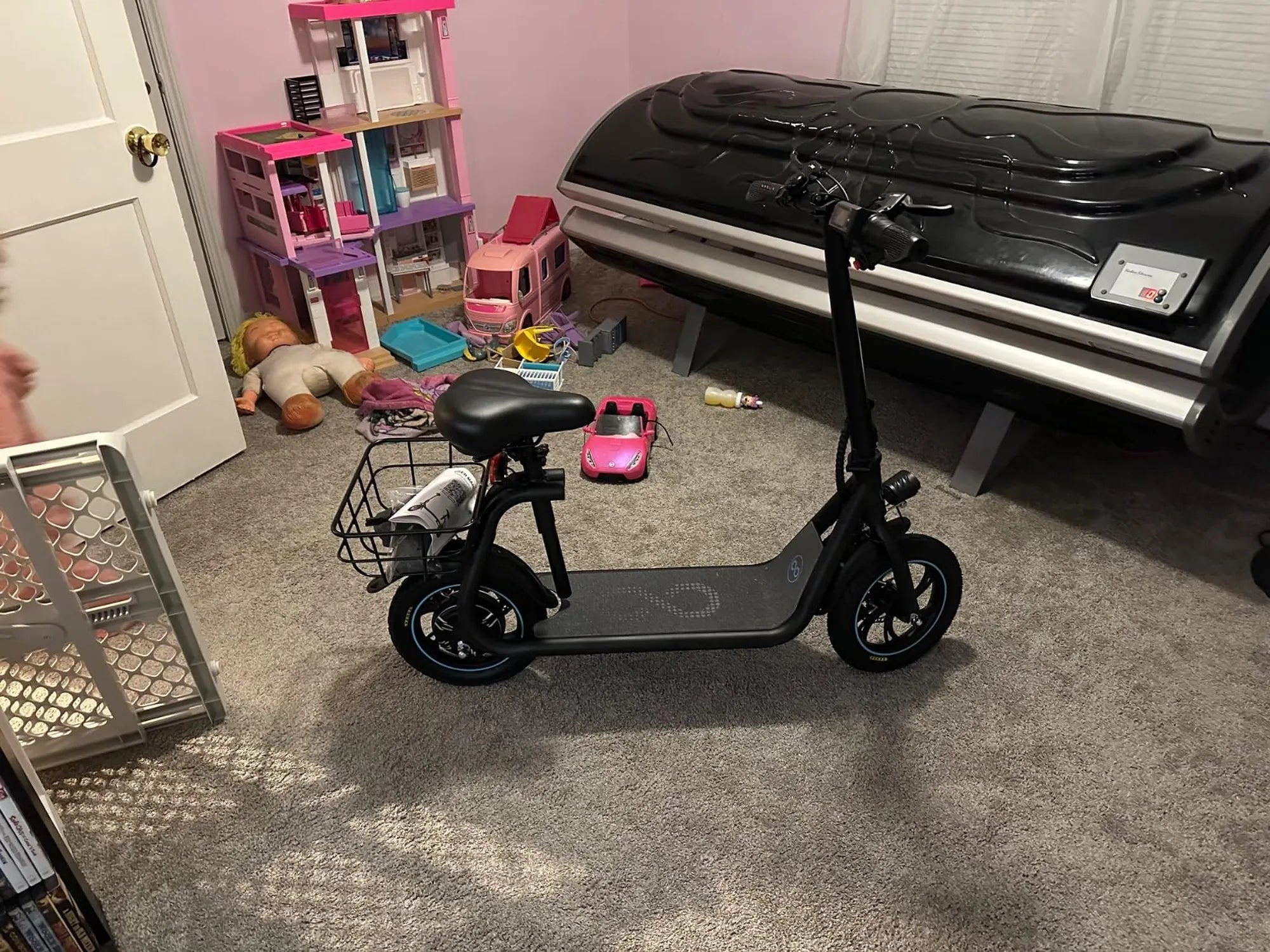
Introduction: Why Wheel Size is the Game-Changer for Adult E-Scooters
Urban commuting presents a unique set of challenges: potholes, uneven pavement, expansion joints, and unpredictable debris. For riders of traditional small-wheeled electric scooters, these obstacles translate to a jarring, unstable, and often unsafe experience. The solution is not just more power or a bigger battery; it's a fundamental redesign focused on the contact point with the ground. Adult electric scooters with large wheels represent this engineered evolution, prioritizing real-world performance and rider safety above all else.
This shift addresses the core limitations of early scooter designs. Brands that understand commuter needs, like Gyroor, build models where features such as UL-certified batteries, IPX5 water resistance, and robust frames are complemented by larger wheel diameters. The result is a vehicle that doesn't just transport you, but does so with confidence and comfort across the varied landscape of the modern city. For the adult commuter, this isn't a luxury—it's a necessity.
In this guide, we will dissect the science behind large wheels, outline the critical features for a reliable commuter scooter, and demonstrate how this design philosophy creates the ultimate urban commuting solution. The goal is to move beyond marketing specs to practical, data-driven insights that inform your purchase. The urban environment demands a tool built for the task, and the evidence points clearly to the advantages of larger wheels.
The Science of Stability: How Larger Wheels Transform Your Ride
The benefits of larger wheels are rooted in fundamental physics. A wheel's diameter directly impacts its ability to roll over obstacles. A larger wheel treats a crack or small pothole as a minor bump, while a smaller wheel can catch or become trapped, potentially causing a crash. This is because the larger wheel's contact point with the obstacle's edge is at a shallower angle, requiring less force to overcome.
Furthermore, larger wheels possess greater gyroscopic stability. The spinning mass of a bigger wheel creates a stronger stabilizing force, helping the scooter stay upright and track straight with less input from the rider. This is especially crucial at higher speeds or when navigating slight turns while maintaining balance. This inherent stability reduces rider fatigue and increases control during longer commutes.
Momentum conservation is another key advantage. Larger wheels have a higher rotational inertia, meaning they resist changes in speed more effectively. This leads to a smoother ride with less speed fluctuation over minor bumps and a more efficient use of battery power, as the motor isn't constantly working to re-accelerate a small, easily-slowed wheel. The ride feel transitions from a nervous, twitchy experience to a planted, confident glide.
Conquering Urban Terrain: From Potholes to Cobblestones
Let's apply this science to specific urban hazards. A common 1.5-inch pavement crack is a non-event for a 10-inch wheel but a significant jolt for a 6-inch one. Railroad tracks and tram lines, often set at tricky angles, are navigated more safely as the larger wheel is less likely to get caught in the groove. For gravel patches or wet leaves, the larger contact patch and improved roll-over ability provide much-needed traction and predictability.
Cobblestone and brick pathways, common in historic districts, are perhaps the ultimate test. Small wheels transmit every single uneven stone directly to the rider's legs and feet. A large-wheel scooter, often paired with a suspension system, absorbs and averages out these imperfections, making such paths not just bearable but enjoyable. This capability expands your viable route options significantly.
The psychological impact is as important as the physical. Knowing your scooter can handle unexpected terrain reduces stress and increases alertness to traffic and pedestrians, rather than fixating on the road surface. This confidence is what transforms an electric scooter from a last-mile novelty into a genuine, primary-mode commuting vehicle for adults.
Key Features to Look for in a Large-Wheel Commuter Scooter
While wheel size is paramount, it must be part of a holistic package designed for daily use. A quality commuter scooter balances performance, durability, and practical features. The motor must provide adequate power for hills and acceleration, while the battery must deliver consistent, safe range. Build quality determines longevity, and thoughtful design elements enhance usability.
Water resistance is non-negotiable for a true commuter vehicle. An IPX5 rating means the scooter can withstand water jets from any direction, protecting it from rain-washed streets and puddle splashes. Similarly, the braking system must be robust and reliable, with dual mechanical or hydraulic brakes being the gold standard for controlled stopping in all conditions.
Finally, consider ergonomics and portability. A deck large enough for a comfortable stance, intuitive controls, and a functional folding mechanism for mixed-mode travel (e.g., train + scooter) are essential. These features separate a toy from a tool, ensuring the scooter integrates seamlessly into your daily routine.
The Power & Range Equation: Matching Motor and Battery to Your Needs
Motor wattage dictates performance. A 350W motor is suitable for flat terrain and lighter riders, but for adult commuters facing hills or needing brisk acceleration, a 500W or 650W motor is a wiser investment. Peak wattage can be higher, providing bursts for steep inclines. Always check the continuous power rating for a true sense of sustained performance.
Battery capacity, measured in Watt-hours (Wh), dictates range. Manufacturer claims are often based on ideal conditions. A practical formula is to assume real-world range is 60-70% of the claimed maximum. For a 10-mile commute (round trip), a scooter with a claimed 18-20 mile range provides a safe buffer. Battery safety is critical; insist on UL-certified battery packs like those used by Gyroor, which undergo rigorous testing for over 500 charge cycles and include protection against overcharge, short-circuit, and thermal runaway.
The synergy between motor and battery defines the experience. An underpowered motor will strain and drain the battery quickly on hills. A high-capacity battery paired with an efficient motor delivers not just longer range, but more consistent power delivery throughout your ride, preventing the sluggish feeling of a depleted battery on your journey home.
Build Quality & Warranty: Investing in Long-Term Reliability
The frame is the scooter's skeleton. Aerospace-grade aluminum alloys offer the best strength-to-weight ratio, resisting fatigue from constant vibration and impacts. Check weld points and folding mechanisms for solid construction. Components like the stem latch should feel secure and not develop play over time.
A comprehensive warranty is your insurance policy. A 1-year warranty on the entire vehicle, like that offered by Gyroor, signals confidence in the product's durability. Pay attention to battery warranty coverage specifically. Reliable brands back their products with accessible customer support, often based in the region of sale (e.g., North America), to handle any issues promptly.
This investment in quality pays dividends in safety and total cost of ownership. A well-built scooter with proper water resistance and a robust battery system requires less maintenance, suffers fewer failures, and retains its value better than a poorly constructed alternative. For an adult depending on it for daily transport, reliability is priceless.
Gyroor's Large-Wheel Lineup: Engineered for the Real World
Gyroor's approach centers on delivering the large-wheel advantage through models designed for specific rider needs. With a focus on UL-certified safety, IPX5 weather resistance, and robust construction, their scooters are built to handle the demands of daily urban commuting. The following table highlights key models that exemplify this philosophy.
| Model | Wheel Size | Motor (Peak) | Max Range | Key Commuter Features |
|---|---|---|---|---|
| Gyroor C1 | 10" Solid Tires | 650W | 25 miles | Dual suspension, dual brakes, LED display, UL-certified battery |
| Gyroor M3 | 10" Pneumatic Tires | 500W | 22 miles | Front suspension, air-filled tires for comfort, folding handlebars |
| Gyroor S1 | 8.5" Solid Tires | 350W | 18 miles | Ultra-portable design, compact fold, ideal for multi-modal transit |
Each model serves a distinct purpose. The C1 is the performance commuter, with its dual suspension and powerful motor tackling the roughest city streets. The M3 offers a balance of comfort via pneumatic tires and practical folding. The S1, while with slightly smaller wheels, is optimized for those who prioritize portability and frequent carrying, without sacrificing core build quality.
Common across the lineup is a commitment to the features that matter for adults: reliable batteries, water-resistant design, and clear, warranty-backed support. This allows riders to choose based on their specific commute length, terrain, and storage needs, confident in the underlying quality and safety standards.
Model Spotlight: The Gyroor C1 Commuter
The Gyroor C1 stands out as a flagship model built around the large-wheel commuter thesis. Its 10-inch solid rubber tires are paired with a sophisticated dual suspension system—a front hydraulic spring and a rear shock absorber. This combination is engineered to dissipate impact energy from urban obstacles before it reaches the rider, providing a remarkably smooth and controlled ride.
Ideal for the rider with a 5-10 mile one-way commute involving varied terrain, the 650W peak motor delivers confident acceleration and hill-climbing ability. The claimed 25-mile range, supported by the UL-certified battery, ensures most commuters can complete multiple round trips on a single charge. Safety is reinforced with a dual braking system (disc + e-brake) and bright front and rear lights.
The deck is generously sized for a stable footing, and the folding mechanism is robust and secure. For the adult seeking a premium, car-replacement commuting experience where comfort and capability are paramount, the C1 demonstrates how large wheels form the foundation of a superior urban vehicle. It translates the theory of stability into a tangible, daily reality.
Beyond the Commute: The Versatility of Large-Wheel Scooters
The stability and comfort that define a great commuter scooter also unlock significant versatility. These vehicles are not confined to the daily grind. On weekends, they become recreational tools for exploring park pathways, river trails, and boardwalks that would be uncomfortable or unsafe on smaller-wheeled models. Their all-terrain capability expands the definition of a ride.
For college students, a large-wheel scooter is ideal for navigating sprawling campuses, from paved walkways to occasional grassy cuts. The extended range reduces charging frequency, and the durable build withstands the rigors of campus life. Similarly, they serve as perfect last-mile connectors from bus stops, train stations, or parking garages to the final destination, seamlessly integrating with public transit.
This versatility justifies the investment. Instead of a single-purpose device, you own a multi-functional personal electric vehicle. It can handle grocery runs, trips to the local café, or leisurely evening rides with equal competence. The large-wheel design, therefore, isn't just a commuting solution; it's a gateway to a broader, more efficient, and enjoyable form of micro-mobility.
Safety, Maintenance, and Riding Best Practices
Owning a high-performance scooter comes with responsibility. Always wear a helmet—a non-negotiable safety rule. Consider additional gear like knee and elbow pads, especially when learning or riding in heavy traffic. Use the integrated lights day and night, and add reflective elements to your clothing or backpack for increased visibility.
Regular maintenance is simple but crucial. Monthly, check tire pressure on pneumatic models, inspect tires for wear or damage, ensure all bolts (especially around the stem and folding mechanisms) are tight, and test brake function. Keep the scooter clean, particularly the braking surfaces. Store it in a dry place and avoid leaving the battery fully depleted for extended periods.
Ride defensively. Assume cars and pedestrians may not see you. Obey local traffic laws, which often classify e-scooters similarly to bicycles. Avoid sidewalks where prohibited, and always yield to pedestrians. Practice emergency braking in a safe, empty area to understand your scooter's stopping distance. A proactive approach to safety maximizes the enjoyment and utility of your ride.
FAQ: Your Large-Wheel Electric Scooter Questions Answered
Q: Are larger-wheel scooters much heavier and harder to carry?
A: They are typically heavier than compact models due to larger motors, batteries, and frames. However, the weight increase (often 3-7 lbs) is a trade-off for stability and range. All quality commuter models feature folding designs. The key is to evaluate the folded dimensions and whether it fits your storage needs (e.g., under a desk, in a trunk). The ride comfort almost always outweighs the minor portability difference.
Q: Is an IPX5 water resistance rating sufficient for real-world rain?
A>Yes, IPX5 is the standard for commuter-grade scooters. It means the scooter can withstand sustained water jets from any direction, equivalent to heavy rain and road spray. You can confidently ride on wet streets after a storm. However, it is not rated for submersion. Avoid deep puddles, and do not pressure-wash the scooter, as this can force water into seals.
Q: How does the warranty process work with brands like Gyroor?
A>Reputable brands provide clear warranty claims processes. Typically, you contact customer support via email or a portal with your proof of purchase and a description of the issue. For issues covered under the warranty (e.g., motor or battery defects), they will often send replacement parts with instructions or arrange for service at an authorized center. Gyroor's US-based support team handles claims for their 1-year comprehensive warranty.
Q: Can I really use this for a hilly commute?
A>This depends on the motor power and the hill's grade. A scooter with a 500W or 650W continuous motor, like the Gyroor C1, is designed for hills. It will maintain a safe, reduced speed on inclines rather than stalling. Always check the manufacturer's stated hill-climbing grade (e.g., 15-20 degrees) as a guide. For very hilly cities, opting for the most powerful motor in your budget is recommended.
Q: What's the true cost of ownership beyond the purchase price?
A>Minimal, if you choose a quality model. Costs include electricity for charging (negligible), occasional tire replacements (every 1,000-2,000 miles for solid tires), and brake pad changes. The major savings come from replacing car trips (fuel, parking, maintenance) or public transit fares. A durable scooter with a good warranty protects against unexpected repair costs, making the total cost of ownership very competitive.
Conclusion: Rolling Forward with Confidence
The urban landscape is demanding, but your commute doesn't have to be. The evidence is clear: adult electric scooters with large wheels provide a fundamentally superior experience through enhanced stability, safety, and comfort. This is not an incremental improvement but a categorical shift in what a personal electric vehicle can be. When this wheel design is combined with a UL-certified battery, water-resistant construction, and a robust warranty, you have a tool built for reliability.
Brands like Gyroor have engineered their lineup around this principle, offering models that turn the challenge of potholes and poor pavement into a non-issue. The result is a commute that is faster than walking, more enjoyable than sitting in traffic, and more flexible than fixed-route transit. You arrive at your destination feeling refreshed, not fatigued.
Investing in a high-quality, large-wheel electric scooter is an investment in reclaiming your time, reducing your transportation costs, and navigating your city with newfound freedom and confidence. The ultimate urban commuting solution is here, and it's built on a simple, powerful idea: bigger wheels roll better. Explore how Gyroor's commitment to this philosophy can transform your daily travel.
Ready to experience the difference for yourself? Browse the full Gyroor collection, featuring UL-certified, high-performance commuter scooters, at gyroorboard.com.
Where Should Electric Scooters Be Ridden: A Guide to Safe and Legal Riding
Where Should Electric Scooters Be Ridden: A Guide to Safe and Legal Riding