



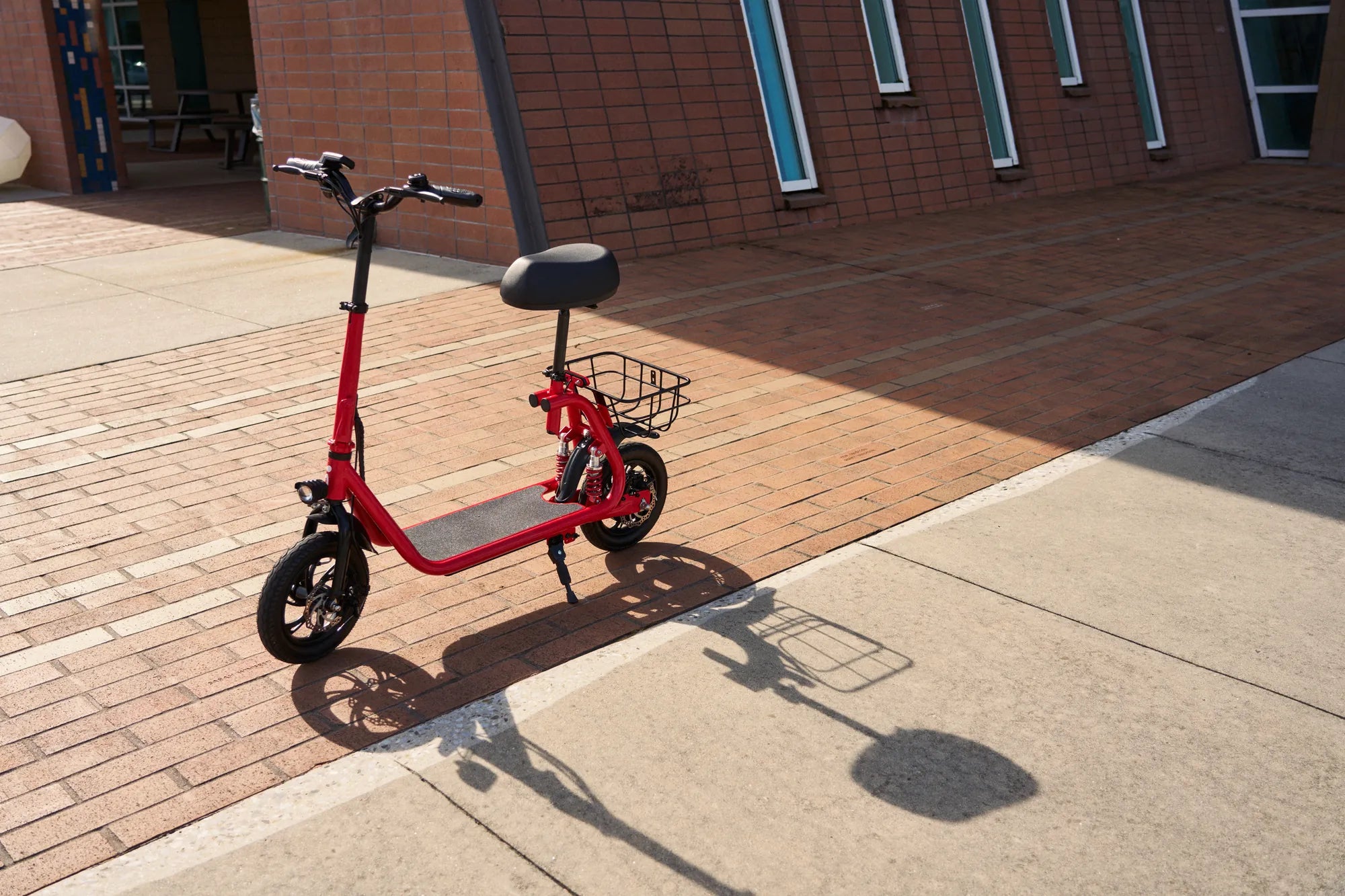
If you own or are considering a 15 mph electric scooter, your most pressing question is likely, "Is this legal to ride where I live?" The answer is more nuanced than a simple yes or no. Legality isn't dictated by top speed alone; it's governed by a complex, often confusing patchwork of federal guidelines, state vehicle codes, and hyper-local city ordinances. This guide will demystify the legal landscape for 15 mph e-scooters, providing you with a clear, actionable roadmap to understand the rules, ensure compliance, and ride safely and legally. We’ll cover the critical layers of regulation, the key factors beyond speed that determine legality, and a practical checklist to verify your scooter's status.
Understanding the 15 MPH Benchmark: Why It's a Common Speed
The 15 mph top speed is not an arbitrary number. It represents a deliberate sweet spot in electric scooter design, balancing performance, safety, and regulatory alignment. For many entry-level and commuter-focused models, 15 mph provides sufficient speed for practical urban travel without the heightened risks associated with higher-performance vehicles.
From an engineering perspective, a 15 mph scooter can utilize a smaller, more efficient motor and battery system. This keeps the weight down, improves portability, and extends range, making it an ideal choice for last-mile commuting, campus travel, or recreational rides in the neighborhood. The speed is accessible for new riders while still being faster than average walking or jogging pace.
Critically, 15 mph often aligns with or sits just below the legal thresholds established by many municipalities. Numerous cities and states define "low-speed electric bicycles" or similar personal mobility devices as those with a maximum assisted speed of 20 mph. By designing scooters to cap at 15 mph, manufacturers intentionally position them within the most permissive regulatory categories, increasing the likelihood they can be ridden without a license, registration, or insurance.
This speed also influences where you are permitted to ride. In jurisdictions that differentiate between sidewalk and roadway use based on speed, a 15 mph scooter may be permitted in bicycle lanes or on streets with speed limits of 25-35 mph, where it can keep up with traffic flow more safely than on crowded pedestrian walkways.
Federal, State, and Local: The Three Layers of E-Scooter Law
Navigating e-scooter legality requires understanding three distinct but interconnected layers of regulation: federal, state, and local. Ignoring any one of these can lead to fines, confiscation of your scooter, or legal liability.
At the federal level in the United States, there is no specific law governing the operation of electric scooters on public roads. However, the Consumer Product Safety Commission (CPSC) sets mandatory safety standards for their manufacture and sale as consumer products. These standards cover aspects like electrical system safety, mechanical integrity, and hazard labeling. A scooter sold in the U.S. must comply with these baseline safety requirements.
State governments hold the primary authority for vehicle classification. Each state's vehicle code defines what an electric scooter is—often terms like "electric scooter," "motorized scooter," or "electric personal assistive mobility device." This classification is paramount because it determines fundamental rules: Is it a vehicle? Does it belong on the road, bike lane, or sidewalk? Are there age, helmet, or license requirements? A 15 mph top speed frequently helps a scooter qualify for the most lenient classification, often grouped with bicycles.
Finally, and most importantly, are local ordinances from your city, town, or county. These are where the rubber meets the road. Local laws specify the operational details: helmet mandates for all ages or just minors, complete bans on sidewalk riding, designated parking or no-parking zones, prohibitions in specific parks or business districts, and rules for use on multi-use paths. These ordinances can vary dramatically from one city to the next, even within the same state.
How States Classify 15 MPH Electric Scooters
State classification is the critical first filter. Most states have now adopted specific legislation for electric scooters, moving them out of a legal gray area. A common approach is to create a new vehicle category, such as "low-speed electric scooter," with a defined maximum speed (often 15-20 mph).
Under this model, 15 mph scooters are typically treated similarly to bicycles. They are allowed on roadways and, in many cases, in bicycle lanes. They usually do not require a driver's license, vehicle registration, or insurance. However, states almost universally impose age minimums, commonly 16 years old, and require that riders under 18 wear a helmet. Some states may also mandate basic safety equipment like a front white light and rear red reflector for night riding.
It is essential to look up your specific state's vehicle code. Avoid assumptions based on a neighbor's state. For example, California's laws are well-defined for e-scooters, while other states may still be catching up, leaving more interpretation to local authorities.
The Critical Role of City and County Ordinances
Your state may give you the green light, but your city can still say no. Local ordinances are the most granular and enforceable rules you will encounter. They are designed to address local safety concerns, pedestrian traffic, and urban planning goals.
Common provisions in city ordinances include: a complete prohibition of e-scooters on sidewalks in business districts or downtown areas; a requirement to use bike lanes when available; specific rules against riding on trails in public parks; and strict regulations about where you can park your scooter (e.g., not blocking ADA ramps, building entrances, or street furniture).
DUI laws also apply universally. Operating a 15 mph electric scooter under the influence of alcohol or drugs is illegal in every jurisdiction, as they are considered vehicles. Penalties can be severe, matching those for driving a car while intoxicated.
Enforcement of these local rules is common. Police and parking enforcement officers will issue citations for riding on prohibited sidewalks or illegal parking. Therefore, a quick search for "[Your City Name] electric scooter ordinance" is the single most important step you can take before riding.
Key Legality Factors Beyond Top Speed
While the 15 mph capability is a key starting point, several other factors are equally critical in determining if your scooter is legal and where you can ride it. Compliance isn't just about how fast you can go; it's about how the scooter is built and equipped.
First are lighting and audible warning devices. Most state and local laws require an electric scooter operated at night to have a front white light visible from a certain distance (e.g., 500 feet) and a rear red reflector or light. A bell or other audible signaling device is also a common requirement. These are not optional accessories; they are legal necessities for safe, compliant operation.
Braking systems are another crucial component. Your scooter must have at least one brake—typically a hand-operated brake on the rear wheel—that can bring the scooter to a stop within a specified distance. Reliable brakes are a fundamental safety and legal requirement.
The Non-Negotiable Importance of UL-Certified Batteries
While not always written into traffic law, battery safety certification has become a de facto legal and practical requirement. Underwriters Laboratories (UL) certification, particularly the UL 2272 standard for e-mobility batteries, is the industry benchmark for fire safety.
Many cities, universities, apartment buildings, and public transit systems now explicitly ban the charging or storage of electric scooters and e-bikes that do not have UL-certified batteries. This is a direct response to fire hazards associated with poorly manufactured lithium-ion packs. A scooter with a UL-certified battery, like all models from Gyroor, is far more likely to be permitted indoors and on public transportation, which is essential for commuters.
Age, Helmet, and Where You Can Ride
These are the most variable and locally enforced rules. Age requirements are almost universal, typically setting a minimum riding age of 16. Helmet laws vary widely: some states and cities require them for all riders, some only for minors, and others have no mandate (though it is always recommended).
The rules governing where you can ride are the most complex. There is no single answer to "Are 15 mph electric scooters legal on sidewalks?" It is a hyper-local question. Some cities ban all motorized devices from sidewalks. Others allow them if operated at walking speed. Many permit them on sidewalks outside of dense commercial districts. The general trend, however, is to restrict scooters to bicycle lanes or roads with speed limits under 35 mph, as a 15 mph scooter can integrate more safely there than among pedestrians.
Practical Checklist: Ensuring Your 15 MPH Scooter is Street Legal
Follow this step-by-step checklist to verify your scooter's legality and ride with confidence.
- Research Your State Vehicle Code: Find the official definition for "electric scooter" or "motorized scooter." Note the maximum speed limit for the classification, age minimums, helmet laws, and any required equipment (lights, bell).
- Search Your Local City/County Ordinances: This is the most critical step. Look for "micromobility" or "electric scooter" rules. Pay close attention to maps of prohibited areas (downtown, parks), sidewalk riding rules, and designated parking/No-parking zones.
- Equip Your Scooter for Compliance: Ensure your scooter has a front white light and rear red light/reflector for night riding. Install a bell or horn. Verify your brakes are in perfect working order. These are often legal requirements, not suggestions.
- Verify Battery Certification: Confirm your scooter's battery is UL-certified (UL 2272). This is essential for bringing it into buildings or on public transit and is a key indicator of overall build quality and safety.
- Understand Insurance and Liability: While not typically required, check if your homeowner's or renter's insurance policy covers liability for e-scooter accidents. Consider personal injury protection if you use it for daily commuting.
- Practice Safe and Respectful Riding: Obey all traffic signs and signals. Yield to pedestrians. Do not ride under the influence. Your behavior on the road influences future regulations and public perception of e-scooters.
Comparing Common E-Scooter Classifications
The table below illustrates how a 15 mph scooter typically fits into common regulatory frameworks compared to other personal electric vehicles. This is a general guide; always verify local laws.
| Vehicle Type | Typical Max Speed | Common Classification | License/Reg. Required? | Common Riding Location |
|---|---|---|---|---|
| 15 MPH Electric Scooter | 15 mph | Low-Speed Electric Scooter / Bicycle-like | No | Bike Lanes, Roads (≤35 mph) |
| High-Performance E-Scooter | 25+ mph | Motorized Vehicle / Moped (varies) | Often Yes | Roadways Only |
| Electric Bicycle (Class 1/2) | 20 mph | Bicycle | No | Bike Lanes, Roads, Trails |
| Hoverboard | 10 mph | Personal Mobility Device | No | Sidewalks, Paths (local rules vary) |
The Gyroor Advantage: Built for Compliance and Peace of Mind
Choosing a reputable brand is one of the most effective ways to navigate the legal and safety landscape from the start. Gyroor designs its electric scooters with compliance and rider assurance as core principles, directly addressing many of the legal factors discussed.
Every Gyroor scooter is powered by a UL-certified battery pack, rigorously tested for over 500 charge cycles. This certification is not just a marketing point; it's a foundational safety feature that meets the growing number of regulations from cities, landlords, and transit authorities, allowing you to bring your scooter indoors or onto a train with greater confidence.
Furthermore, Gyroor models feature IPX5 water-resistant designs. This engineering provides practical legality for daily use—a sudden rain shower doesn't force an illegal or unsafe ride on a sidewalk. You can confidently use the scooter in various weather conditions as intended, on the road or in the bike lane. Coupled with reliable lighting systems and effective brakes, these features ensure the scooter meets common equipment mandates.
Backed by a trusted 1-year warranty and supported by a brand with over 100,000 riders in North America and Europe, a Gyroor scooter represents a product built to established quality and safety benchmarks. This reliability translates directly to predictable performance and fewer issues that could lead to unsafe situations or non-compliance during a routine safety check.
Frequently Asked Questions (FAQ)
Is a 15 mph electric scooter legal on sidewalks?
It depends entirely on your local city or county ordinance. Many cities, especially urban centers, prohibit all motorized scooters on sidewalks to protect pedestrians. Others may allow them on sidewalks outside of designated business districts, or if the rider yields to all pedestrians and operates at walking speed. Always check your local rules first; the default assumption should be that sidewalk riding is prohibited unless explicitly allowed.
Do I need a license or insurance for a 15 mph scooter?
Typically, no. In most states that have defined e-scooter laws, low-speed models (under 20 mph) do not require a driver's license, vehicle registration, or mandatory insurance. However, exceptions exist. A handful of states may have different rules, and insurance, while not legally required, is highly recommended for liability protection in case of an accident.
Can I get a DUI on an electric scooter?
Yes, absolutely. Electric scooters are considered vehicles under traffic laws in virtually all jurisdictions. Operating any vehicle, including a 15 mph electric scooter, while under the influence of alcohol or drugs is illegal and can result in a DUI charge, with penalties similar to those for driving a car intoxicated.
Are there any places where 15 mph scooters are always illegal?
Yes. They are universally prohibited on interstate highways, freeways, and other high-speed roadways where the minimum speed limit exceeds their capability. They are also commonly banned by local rule on certain nature trails, in pedestrian-only malls, inside public buildings, and on private property where posted.
What happens if I'm caught riding an illegal scooter or breaking a local rule?
Consequences can include fines, which can range from $50 to several hundred dollars. In more severe cases, or for repeat offenses, a rider's scooter may be impounded. Violations like DUI or reckless riding that causes injury can lead to criminal charges. Enforcement is increasing as cities formalize their micromobility regulations.
Ride Informed, Ride Responsibly
The question "Are 15 MPH Electric Scooters Legal?" finds its answer not in a universal law, but in a careful review of your specific location's rules. By understanding the three-tiered system of federal, state, and local regulation, you empower yourself to ride legally and safely. Remember that legality extends beyond the speedometer to include proper lighting, braking, battery safety, and adherence to age and helmet laws. Prioritizing a scooter from a reputable brand that designs for compliance, like those with UL-certified batteries and water-resistant builds, provides a strong foundation for worry-free riding. As micromobility continues to evolve, informed and responsible riders help shape positive, sustainable regulations for everyone. Ready to explore a scooter built with these principles in mind?
Browse the full Gyroor collection of compliant and reliable electric scooters at gyroorboard.com.
Who Makes Pure Electric Scooters: A Deep Dive into the Industry
Can Electric Scooters Go on Bike Trails? A Complete Guide to Rules & Safety