



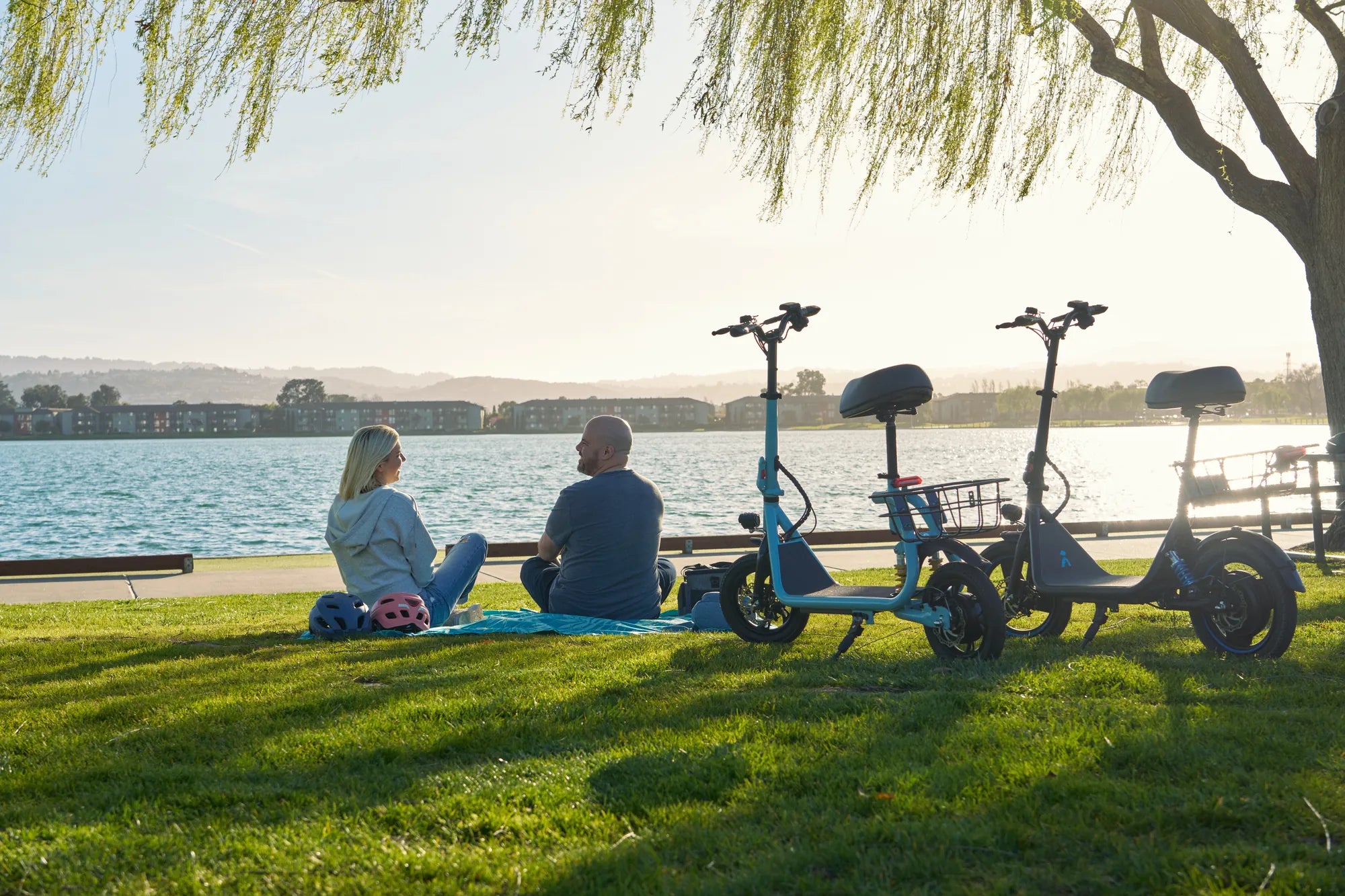
Introduction: The Electric Scooter Boom and the Green Question
Electric scooters have zipped from novelty to normality in global cities, symbolizing a shift toward agile, tech-enabled mobility. Their silent, zero-emission operation presents a compelling green image, promising relief from traffic congestion and urban smog. But this leads to a critical, and often oversimplified, question: Are electric scooters bad for the environment?
The answer is not a simple yes or no. The environmental impact of an e-scooter is a story told across its entire lifecycle, from the mining of its raw materials to its final disposal. This article dissects that full story with factual data, moving beyond the surface-level "electric equals green" narrative.
We will compare e-scooters directly to personal cars, public transit, bicycles, and walking. You will learn where the environmental benefits are real and significant, and where hidden costs in manufacturing and short lifespans can undermine them. The goal is to provide a clear, evidence-based framework for understanding the true footprint of this popular trend.
The Green Promise: Direct Emissions and Urban Air Quality
The most immediate and undeniable environmental benefit of electric scooters is their complete lack of tailpipe emissions. When in use, they produce zero carbon dioxide (CO2), nitrogen oxides (NOx), or particulate matter (PM2.5). This is a direct and local air quality win, especially in dense urban corridors plagued by traffic pollution.
Contrast this with a typical gasoline-powered passenger vehicle. The U.S. Environmental Protection Agency (EPA) estimates that a passenger vehicle emits about 4.6 metric tons of CO2 per year. Replacing even a fraction of short, single-occupancy car trips with e-scooter rides can have a measurable cumulative impact on urban greenhouse gas levels and public health.
For example, a 3-mile round trip commute in an average car generates roughly 1.5-2 pounds of CO2. Using an electric scooter for the same journey shifts the emissions to the power plant, which, depending on the local energy grid, typically results in far less carbon output. In cities with cleaner grids, the per-mile emissions from charging can be negligible.
Beyond CO2, the reduction in localized pollutants is critical. Vehicles are a leading source of NOx, which contributes to smog and respiratory illnesses. By taking cars off the road for short trips, e-scooters can directly improve the air we breathe in city centers, making them a potent tool for cleaner urban living.
The Hidden Footprint: Manufacturing, Materials, and Lifespan
To assess an electric scooter's true environmental cost, we must look upstream to its creation. The manufacturing phase is carbon-intensive, embedding a significant "carbon debt" into the vehicle before it rolls its first mile. This embedded carbon must be paid off through clean use over the product's lifetime.
The frame is typically aluminum, a material whose production is extremely energy-intensive. The battery is the heart of the issue, requiring lithium, cobalt, nickel, and other rare-earth metals. Mining these materials involves substantial land disruption, water use, and energy consumption, contributing to habitat loss and pollution.
A scooter's net environmental benefit is fundamentally tied to its operational lifespan. A durable scooter used for thousands of miles efficiently amortizes its manufacturing footprint. A poorly made scooter that breaks quickly, or a shared scooter vandalized and discarded within months, may never offset its initial environmental cost.
This lifespan challenge has been starkly highlighted by shared micromobility fleets. Early studies, such as one from North Carolina State University, suggested some shared scooters had lifespans as short as a few months due to accidents, misuse, and wear, dramatically inflating their per-mile environmental impact. This underscores that durability isn't just a quality issue—it's an environmental imperative.
The Battery Conundrum: From Resource Extraction to End-of-Life
The lithium-ion battery is the environmental linchpin. Lithium extraction, often from brine pools in arid regions, is water-intensive and can affect local ecosystems. Cobalt mining has raised serious ethical and environmental concerns. The carbon footprint of battery cell production is substantial.
Therefore, battery quality and management are paramount. High-quality, UL-certified battery packs, like those used in Gyroor scooters, are engineered for safety and longevity, often rated for 500+ full charge cycles. This durability ensures the embedded carbon and resource cost of the battery is spread over many years of use.
End-of-life management is the final critical piece. A battery discarded in a landfill poses a fire hazard and risks leaching toxic materials. Responsible recycling is essential to recover valuable metals like lithium, cobalt, and copper, closing the loop in a circular economy.
Consumers should prioritize brands that support responsible battery stewardship. Choosing a scooter from a reputable brand with a clear commitment to durability and backed by a reliable warranty is a direct choice for a lower environmental impact.
E-Scooters vs. Alternatives: A Comparative Lifecycle Analysis
Understanding the environmental hierarchy of transportation requires a per-passenger, per-mile comparison. The following table synthesizes data from various lifecycle assessment studies to illustrate key comparisons. Note that impacts for e-scooters and buses vary widely based on lifespan and occupancy, respectively.
| Mode of Transport | Key Environmental Considerations | Relative Carbon Impact (Per Passenger Mile) |
|---|---|---|
| Walking / Cycling | Zero operational emissions. Embodied energy in food/production is minimal. | Lowest |
| Electric Bicycle (Personal) | Similar manufacturing footprint to e-scooter, but longer typical lifespan and greater trip replacement potential. | Very Low |
| Electric Scooter (Durable Personal) | Manufacturing footprint amortized over long use. Zero tailpipe emissions. Grid-dependent. | Low |
| Public Transit (Full Bus/Train) | High efficiency at full occupancy spreads manufacturing and operational footprint across many riders. | Low |
| Electric Scooter (Short-Lived Shared) | High per-mile impact if lifespan is short. Collection/docking for charging adds significant emissions. | Moderate to High |
| Passenger Car (Solo Driver) | High manufacturing footprint + continuous tailpipe emissions. Least efficient mode for urban trips. | Highest |
The analysis reveals a clear narrative: a durable personal e-scooter used to replace car trips is a strong environmental positive. Its impact is significantly lower than a solo car trip and can be competitive with or better than a partially filled bus running on diesel.
However, the same e-scooter is less environmentally friendly than a traditional bicycle, walking, or a fully occupied train. The "last-mile" use case—connecting a rider from a transit stop to their final destination—is where the e-scooter's environmental payoff is often greatest, effectively extending the range of clean public transportation.
The wild card is the shared scooter model. If fleet vehicles are robust and long-lived, and if charging logistics use clean energy, their impact improves. However, short lifespans and inefficient collection via gas-powered vans can erode or even reverse their green advantage, sometimes making them comparable to a very efficient car over the lifecycle.
The Shared vs. Personal Scooter Dilemma
The business model of a scooter drastically influences its environmental ledger. Shared scooters offer accessibility and spontaneity, which can encourage mode shift away from cars. Yet, the operational "back-end" of shared systems carries a heavy, often hidden, environmental burden.
This includes the emissions from fleets of gas-powered vans used by "juicers" to collect, charge, and redistribute scooters each night. Studies have shown this collection logistics can account for over 40% of a shared scooter's total carbon footprint. Some companies are moving toward swappable battery systems and using electric vehicles for collection to mitigate this.
Personal electric scooters, owned and maintained by an individual, eliminate this collection footprint entirely. The charging emissions are limited to the rider's home electricity use. The environmental equation then hinges almost entirely on the scooter's quality, lifespan, and how many car trips it replaces.
For the eco-conscious individual, owning a well-made personal scooter from a brand like Gyroor, which is designed for durability with features like IPX5 water resistance and backed by a 1-year warranty, typically results in a lower long-term environmental impact than frequent use of shared fleets. The rider's direct control over maintenance and care extends the product's life, maximizing the amortization of its initial carbon cost.
How to Be an Eco-Conscious E-Scooter Rider: A Practical Guide
Your choices as a rider directly influence the environmental math. By following these principles, you can ensure your e-scooter use is a net positive for the planet.
Choosing a Sustainable Model: Durability Over Disposability
Invest in quality. Seek out brands with a reputation for robust construction, repairability, and strong customer support. Look for certifications like UL for the battery system, which signals safety and reliability. Features like water resistance (IP ratings) and pneumatic or airless tires designed for durability protect your investment from the elements and wear.
Avoid the temptation of ultra-cheap, no-name models. These are often disposable by design, with non-replaceable batteries and a lack of spare parts. Their short lifespan guarantees a higher environmental cost per mile. Brands that offer comprehensive warranties demonstrate confidence in their product's longevity, a key indicator of sustainability.
Maximizing Your Scooter's Lifespan: Maintenance and Care
Proper care is green action. Follow the manufacturer's charging guidelines—avoid constantly draining the battery to 0% or leaving it at 100% for extended periods. Store your scooter in a dry, temperate place when not in use. Regularly check tire pressure, brake function, and tighten bolts.
When issues arise, seek repair before replacement. Utilize the manufacturer's support channels. A brand like Gyroor provides accessible customer service and warranty support, helping you fix issues rather than discarding the entire unit. Simple maintenance can double or triple a scooter's operational life, dramatically reducing its annual environmental footprint.
Responsible End-of-Life: The Importance of Proper Recycling
Never dispose of an e-scooter or its battery in household trash. Lithium-ion batteries are classified as hazardous waste and require special handling. When your scooter reaches the end of its useful life, contact the manufacturer or retailer about take-back programs.
Alternatively, take it to a certified e-waste recycling facility. These facilities safely dismantle the unit, recovering metals and ensuring the battery is processed correctly. Responsible recycling prevents soil and water contamination and recovers valuable materials, reducing the need for future mining.
The Role of Policy and Infrastructure
Individual action is bolstered by supportive systems. City planning and policy are crucial in maximizing the environmental potential of micromobility. Dedicated, protected bike lanes make e-scooter riding safer and more appealing, encouraging more people to leave their cars at home.
Integrating e-scooters with public transit through secure parking or "mobility hubs" at transit stations facilitates seamless multimodal trips. Regulations that mandate minimum durability standards, repairability, and producer responsibility for recycling can shift the entire industry toward more sustainable models.
Investment in a clean energy grid is also essential. As the electricity used to charge e-scooters becomes greener through solar, wind, and other renewables, the operational carbon footprint of every ride approaches zero. The environmental benefit of any electric vehicle is intrinsically linked to the cleanliness of the grid that powers it.
Conclusion: A Tool, Not a Silver Bullet
So, are electric scooters bad for the environment? The nuanced truth is that they are a tool with environmental consequences that can be either positive or negative, dictated by how they are made, used, and disposed of. They are not an unqualified green savior, nor are they an ecological disaster.
When built for durability, used to replace gasoline car trips, maintained for a long life, and responsibly recycled, a personal electric scooter is a meaningful and effective part of a lower-carbon urban transport mix. It offers a practical solution for short trips where walking is too slow and driving is inefficient and polluting.
The responsibility is shared. Manufacturers must commit to building better, longer-lasting products. Cities must create safe infrastructure. And riders must make informed choices, opting for quality and committing to care. If you're ready to choose a ride built for longevity and performance, explore a scooter designed with these principles in mind. Browse the full Gyroor collection, featuring UL-certified batteries and robust designs trusted by over 100,000 riders, at gyroorboard.com.
Frequently Asked Questions (FAQ)
Q: Are shared e-scooters or personal e-scooters better for the environment?
A: Generally, a durable personal e-scooter has a lower per-mile environmental impact. Shared scooters often suffer from short lifespans due to heavy use and vandalism, and their collection/charging logistics using gas vans add significant emissions. A well-maintained personal scooter avoids these operational costs and spreads its manufacturing footprint over many more miles of use.
Q: How does the electricity source (coal vs. renewables) charging my scooter affect its footprint?
A: It is absolutely critical. Charging an e-scooter on a grid powered by coal can triple the carbon emissions per mile compared to charging on a grid powered by renewables or natural gas. The cleaner your local electricity mix, the greener your e-scooter ride becomes. This underscores the importance of broader clean energy transitions.
Q: What's the single biggest thing I can do to make my e-scooter use greener?
A: Use it to replace car trips, not walks or bike rides. The largest environmental payoff comes from directly displacing gasoline-powered vehicle miles, especially for short, solo trips under 3 miles. Combining your e-scooter with public transit for a "last-mile" solution is another highly effective green strategy.
Q: How does an e-scooter's environmental impact compare to an e-bike?
A: They are similar, but e-bikes often have a slight edge. E-bikes typically have a longer lifespan, can replace a wider range of trips (including longer commutes and cargo trips), and encourage more physical activity. Both are vastly superior to cars. The choice between them often comes down to personal need, trip distance, and storage, rather than a major environmental differentiator.
Q: Is the mining for e-scooter batteries so damaging that it cancels out the benefits?
A: Not if the scooter is used sufficiently. While the mining impacts are real and serious, lifecycle studies show that a durable e-scooter used to replace car trips will offset its manufacturing carbon debt within the first few hundred miles of use. The key is ensuring the battery (and scooter) lasts long enough to achieve this payback and is then recycled to recover materials, reducing the need for future mining.
Benefits of Electric Scooters in India: A Sustainable and Cost-Effective Commute
Electric Scooters No License Required: Your Ultimate Guide to Hassle-Free Commuting