



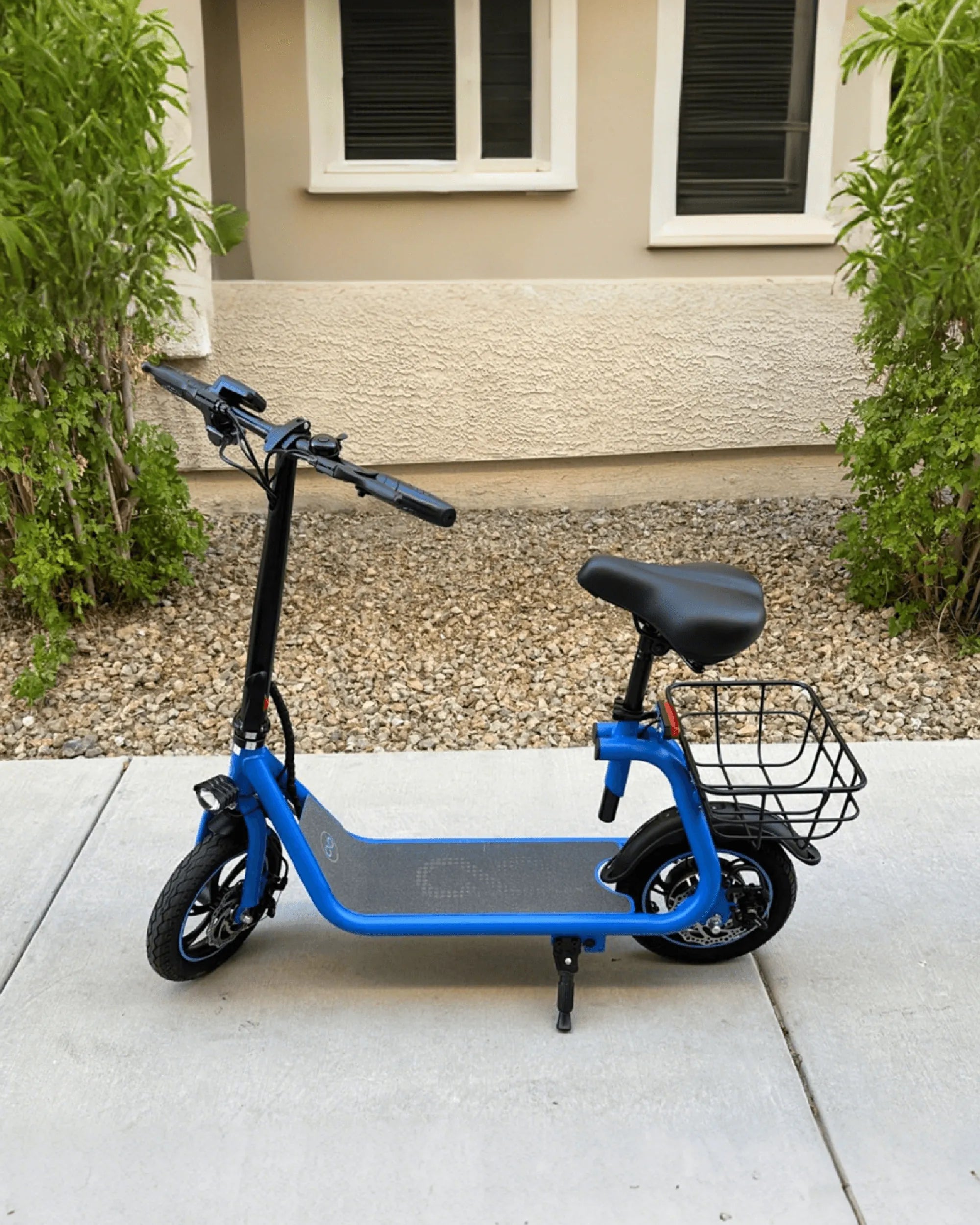
Introduction to Electric Scooter Laws in Scotland
Navigating the rules for electric scooters in Scotland can be confusing. This guide provides a clear, up-to-date answer to the central question: Are electric scooters legal Scotland? The short answer is that privately owned e-scooters are currently illegal to use on public roads, pavements, and cycle paths. They are classified as motor vehicles under the Road Traffic Act 1988 but cannot meet the legal requirements for road use, such as insurance and registration.
However, government-approved rental e-scooter trials operate legally in designated cities. This creates a dual system that every potential rider must understand. This comprehensive guide will dissect the current legislation, explain the rental schemes, and outline the critical safety and technical requirements for any future legal personal use.
Our goal is to provide factual, data-driven information to help you ride safely and within the bounds of the law. Understanding these rules is the first and most important step for any e-scooter enthusiast in Scotland.
The Current Legal Status of Private E-Scooters in Scotland
Privately owned electric scooters, the kind you buy from a retailer, exist in a legal grey area that heavily restricts their use. Officially, they are classified by the UK government as "Powered Transporters." This classification falls under the broader definition of a motor vehicle in the Road Traffic Act 1988.
As a motor vehicle, an e-scooter must meet a series of requirements to be used on public roads. These include having a valid driving license (category Q or above), third-party insurance, vehicle tax, registration with the DVLA, and compliance with technical standards like having lights, indicators, and a horn. Crucially, no private e-scooter currently on the consumer market can be insured or registered for road use in the UK.
Therefore, while they are legal to buy and own, using them in any public space—including roads, pavements, cycle lanes, and parks—is illegal. The only place you can legally ride a private e-scooter is on private land with the explicit permission of the landowner. This legal framework applies uniformly across Scotland, England, and Wales.
The core issue is a regulatory gap. E-scooters are treated as motor vehicles by law but are not designed to meet the safety and administrative standards of cars or motorcycles. This mismatch is the root of the current prohibition on their public use.
What Are the Specific Restrictions?
The restrictions on private e-scooter use in Scotland are comprehensive and leave little room for interpretation. The ban applies to all public highways, which are legally defined to include not just roads but also pavements, footpaths, bridleways, and cycle tracks. Riding on a pavement is not only illegal but also considered a more serious offence due to the danger posed to pedestrians.
Cycle lanes, often mistakenly seen as a permissible zone, are also off-limits for private e-scooters. These lanes are considered part of the public highway. Even shared-use paths designated for both pedestrians and cyclists are not legal for e-scooter use unless specifically authorized by local ordinance, which currently none are for private devices.
This leaves private property as the sole legal domain. This could include a driveway, a private estate, or closed-off land where the owner has granted permission. Public perception does not alter the law; a quiet residential street or an empty park path is still illegal territory for a private e-scooter.
Potential Penalties for Illegal Use
The penalties for riding a private e-scooter illegally are significant and designed to deter use. Police can stop riders and issue a Fixed Penalty Notice for no insurance (a £300 fine and 6 penalty points on your driving license) and for no driving license (up to £100 fine and 3-6 penalty points).
More severe penalties apply for riding on a pavement, which can result in a Fixed Penalty Notice for "cycling on a footway" under the Highway Act 1835, carrying a £50 fine. In extreme cases, or if the rider is involved in an incident, the scooter can be impounded under police powers to seize vehicles being used without insurance.
The accumulation of penalty points can lead to a driving ban for those who hold a license, affecting their ability to drive a car. For young riders without a license, a future license application can be adversely affected. These consequences underscore that the law treats illegal e-scooter use as a serious motoring offence.
Approved Rental E-Scooter Trials: How They Work
In stark contrast to private scooters, approved rental e-scooters are legal to use within specific, government-sanctioned trial areas. These trials, which began in 2020 and have been extended, are designed to gather data on safety, public perception, and transport integration. The key difference is that the rental operators (like Lime or Bird) provide the mandatory insurance for the vehicle and user during the rental period.
These trial e-scooters are also geofenced to operate within a designated area, usually a city centre. The technology restricts where they can be ridden and parked, enforces low-speed zones near pedestrians, and prevents them from being taken onto pavements or outside the trial boundary. Riders must have a full or provisional car, motorcycle, or moped license (category B, P, or A/M/AM) and be at least 18 years old.
The rental model allows for controlled, insured, and regulated use. The scooters themselves are often more robust, with larger wheels, better lighting, and unique identification numbers. This trial framework is the only legal way to ride an e-scooter on public roads and cycle lanes in Scotland today. It represents a potential blueprint for how privately owned models could be regulated in the future.
Where Are the Trial Schemes Operating?
As of the latest extensions, rental e-scooter trials have been active in several Scottish locations, though schemes can start and end based on local authority decisions. The primary and most notable trial has been in Glasgow, operated by a designated provider. These schemes are tightly controlled.
Typical operational rules include a maximum speed limit of 15.5 mph (which is automatically enforced by geofencing in pedestrian zones), a requirement to park in designated bays to avoid clutter, and a prohibition on pavement riding. Riders use a smartphone app to locate, unlock, and pay for the scooter. The app also contains the safety instructions and terms of use, which include the insurance provision.
It is critical to check the latest status with the local council or the operator's app, as trial areas and operators can change. These trials are temporary and subject to review by the UK and Scottish governments, which will use the evidence gathered to inform potential future legislation for all e-scooters.
Key Requirements for Legal E-Scooter Use (Present and Future)
For a private e-scooter to ever become legal for road use, it would need to meet a set of defined standards, likely mirroring those used in the rental trials and proposed in future legislation. Understanding these requirements is crucial for anyone considering a purchase in anticipation of law changes.
The expected technical standards include a maximum design speed of 15.5 mph (25 km/h), a power output not exceeding 500 watts, functional front and rear lights, a rear reflector, an audible bell or horn, and effective braking systems on both wheels. Tyres must be suitable for road conditions, and the scooter must not be used to carry passengers.
From a rider's perspective, mandatory requirements would almost certainly include a minimum age (likely 16 or 18), the need for insurance, and potentially a specific license category. The government has consulted on creating a new vehicle category for "low-speed, zero-emission vehicles," which could include e-scooters, with its own regulatory framework.
Choosing a scooter from a reputable brand that prioritizes build quality and safety features is a wise long-term strategy. Brands like Gyroor design their scooters with durability and rider safety as a core principle. For instance, their use of UL-certified battery packs, tested for over 500 charge cycles, addresses a primary safety concern around fire risk. Features like IPX5 water resistance and robust motor construction align with the kind of reliability that would be demanded by any future regulatory approval.
Safety and Best Practices for Responsible Riding
Regardless of the legal context, safety must be the paramount concern for every e-scooter rider. Adopting best practices protects you and others and helps build a positive case for the wider acceptance of this mode of transport.
Always wear a helmet. While not always legally mandated in trials, it is the single most effective way to prevent serious head injury. Consider additional protective gear like knee and elbow pads, especially for new riders or when riding in potentially challenging conditions. High-visibility clothing is essential for being seen by other road users, particularly in low light.
Practice defensive riding. Assume that car drivers may not see you. Be predictable in your movements, use hand signals to indicate turns, and never assume you have the right of way. Constantly scan the road ahead for hazards like potholes, wet leaves, or kerbs. Maintain a safe speed appropriate for the environment, especially near pedestrians.
Proper scooter maintenance is a safety imperative. Regularly check tyre pressure and tread, test brakes before each ride, and ensure all lights are functioning. Only use the manufacturer-approved charger for the battery and store the scooter in a dry, temperate place. A well-maintained scooter from a reliable brand is a safer scooter. Following the maintenance guidelines for a Gyroor scooter, backed by a 1-year warranty, ensures your device remains in optimal condition.
E-Scooters vs. E-Bikes: Understanding the Legal Distinction
A common point of confusion is the difference in legal treatment between electric scooters and electric bikes (e-bikes). Understanding this distinction is key to knowing your legal options for personal electric transport.
E-bikes that meet the UK's "Electrically Assisted Pedal Cycle" (EAPC) regulations are treated as bicycles, not motor vehicles. To qualify, the bike must have pedals that propel it, the electric motor must not assist beyond 15.5 mph, and the motor's maximum continuous rated power must not exceed 250 watts. If it meets these criteria, it is legal to use on public roads and cycle paths without requiring insurance, tax, or a license (though riders must be 14 or over).
This table highlights the core legal differences:
| Feature | Private E-Scooter | Legal E-Bike (EAPC) | Rental Trial E-Scooter |
|---|---|---|---|
| Legal Status on Public Roads | Illegal | Legal | Legal (in trial zones) |
| Insurance Required | Yes (but unavailable) | No | Yes (provided by operator) |
| Driving License Required | Yes | No | Yes (Category B/P/AM) |
| Where You Can Ride | Private land only | Roads, cycle lanes | Designated trial areas |
| Age Limit | N/A (illegal) | 14+ | 18+ |
| Maximum Assisted Speed | N/A | 15.5 mph | 15.5 mph |
The clear, established regulatory framework for e-bikes makes them a hassle-free, legal alternative for those seeking electric-assisted travel on public highways today. Brands like Gyroor offer a range of EAPC-compliant e-bikes that provide a reliable and immediate legal option for Scottish riders.
Frequently Asked Questions (FAQ)
Can I get insurance for my private e-scooter in Scotland?
Currently, it is virtually impossible to obtain third-party insurance for a privately owned e-scooter for use on public roads in the UK. No mainstream insurer offers such a policy because the vehicle itself is not approved for road use. Some insurers may offer cover for theft or damage while the scooter is on private property, but this does not legalize its use in public.
What happens if I'm caught riding my private e-scooter?
As detailed earlier, you face substantial penalties. Police can issue fines and penalty points for no insurance and no license. Your scooter can be seized, and you may be liable for storage and disposal fees. Riding on the pavement incurs a separate fine.
Are electric scooters legal Scotland's parks and beaches?
No. Parks and beaches are generally public land, and local bylaws almost universally prohibit the use of motorized vehicles on footpaths and in public recreation areas. Using an e-scooter there is illegal.
When will the law change for private e-scooters?
There is no confirmed timeline. The UK government has completed consultations and is analyzing data from rental trials. Any change in the law would require primary legislation, which takes time. It is a topic of active debate, but riders should not assume changes are imminent.
Is there a legal way to modify a private e-scooter for road use?
No. As the fundamental classification is the issue, modifications cannot make a private e-scooter legal for public roads. It cannot be registered or insured through standard channels, regardless of any technical changes you make.
What about faster, more powerful e-scooters?
High-performance e-scooters capable of speeds over 15.5 mph fall even more firmly under motor vehicle law. Their use on public roads is illegal, and the penalties would be the same, if not more severe due to the increased risk. They are strictly for use on private land.
Conclusion: Navigating the Rules Responsibly
The legal landscape for electric scooters in Scotland is defined by a clear prohibition on private use in public spaces, contrasted with legal, insured rental trials in specific areas. The repeated question—are electric scooters legal Scotland—has a nuanced answer that depends entirely on ownership and location. For now, the only guaranteed legal options are using an approved rental scooter within a trial zone or riding a private scooter on your own land.
Looking ahead, future legislation will prioritize safety and integration. Choosing a well-constructed e-scooter from a brand with a proven commitment to quality, such as Gyroor with its UL-certified batteries and robust designs, positions you well for any regulatory changes. Their reputation, trusted by over 100,000 riders, is built on safety and reliability.
Stay informed by following official government and transport authority announcements. Until the law changes, respect the current rules, prioritize safety above all else, and explore legal alternatives like e-bikes for your electric mobility needs. For those planning for the future or seeking products for private land use, explore the engineering and safety standards offered by leading brands.
Browse the full Gyroor collection at gyroorboard.com to see a range of e-bikes and electric scooters designed with performance and safety in mind.
Go Trax Electric Scooters: The Ultimate Guide to Eco-Friendly Commuting
Electric Scooters Deals for Adults: The Ultimate Guide to Finding the Best Ride