



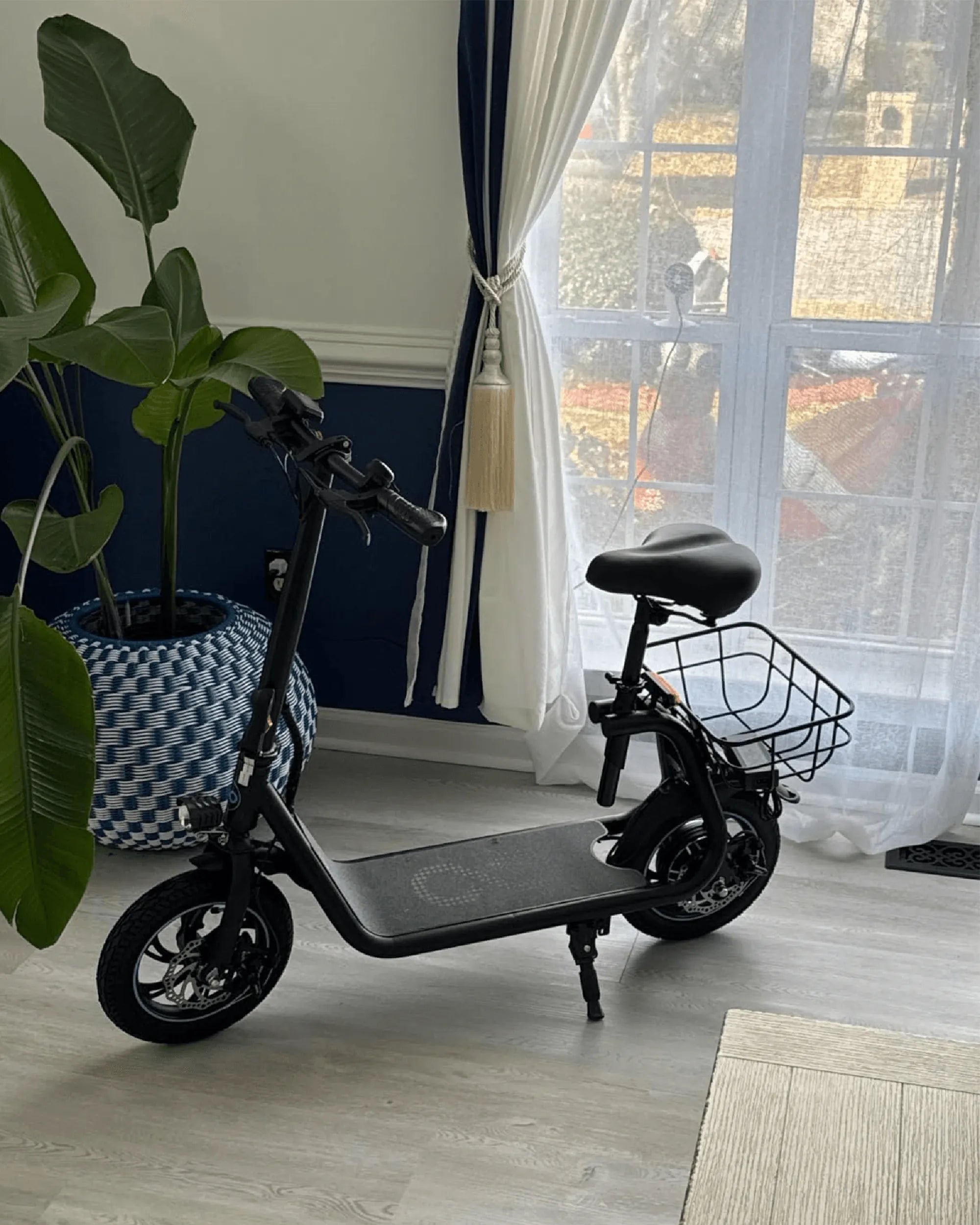
Finding the right electric scooter shouldn't mean choosing between your wallet and your safety. The search for the best budget electric scooters is about identifying which models deliver reliable, certified performance without the luxury price tag. This guide cuts through the marketing to show you how to get an affordable ride for every commuter that doesn't compromise on the fundamentals. We'll define the modern value benchmark, compare specific models, and provide essential tips to maximize your investment, with a focus on brands like Gyroor that build safety and durability into their affordable lineup.
Redefining "Budget": The 2024 Value Benchmark for E-Scooters
The term 'budget' has evolved. It no longer signifies flimsy, uncertified products with questionable longevity. In 2024, the best budget electric scooters occupy a sweet spot between $400 and $800. This price range has become fiercely competitive, forcing brands to offer features once reserved for premium models.
A true budget champion is defined by a balanced 'Value Triad.' First, it must deliver adequate performance: a real-world range of 15-25 miles and a top speed of 18-20 mph, sufficient for most urban commutes. Second, it requires non-negotiable safety, including UL-certified battery packs and a reliable braking system. Third, it needs durable build quality, evidenced by solid construction materials and a meaningful water-resistance rating like IPX5.
Brands that succeed here, such as Gyroor, understand that affordability cannot come at the cost of core integrity. Their approach involves streamlining premium features—like using robust aluminum alloys instead of carbon fiber—while rigorously maintaining safety standards and warranty support. This creates affordable rides for every commuter that are built to last, not just to be the cheapest option available.
The Essential Buyer's Checklist: Features You Can't Compromise On
Navigating specifications requires knowing what is critical versus what is merely convenient. Your priority checklist should start with fundamentals that protect your investment and your person. Compromising on these areas leads to higher long-term costs and potential safety issues.
Non-Negotiable #1: Battery Certification and Warranty
The battery is the heart of your scooter and its greatest potential risk. A UL 2272 or UL 2843 certification is not a luxury; it's a mandatory safety standard. It signifies the battery pack has passed rigorous tests for electrical, mechanical, and environmental safety, drastically reducing fire risk. Paired with this, a substantive warranty is a brand's vote of confidence. A comprehensive 1-year warranty on major components, like the one offered by Gyroor, provides crucial protection and peace of mind that the manufacturer stands behind their product.
Non-Negotiable #2: Braking System and Frame Integrity
Reliable stopping power is paramount. A combination braking system—typically a rear disc brake and a front electronic or regenerative brake—offers balanced, fail-safe deceleration in various conditions. The frame's construction is equally vital. Look for a frame made from reinforced aluminum alloy, which provides an optimal blend of strength and manageable weight, ensuring the scooter can handle daily use and minor impacts without structural failure.
High-Value Priority: Real-World Range and Water Resistance
Manufacturer range claims are often based on ideal lab conditions. For budget scooters, a claimed range of 20-30 miles typically translates to 15-22 miles in real-world use, factoring in rider weight, hills, and stop-and-go traffic. This is still ample for most commutes. Equally important is an IPX5 water-resistance rating. This rating means the scooter can withstand water jets from any direction, making it safe to ride on wet roads, through puddles, and in light rain, greatly increasing its utility and reliability as a daily transport option.
Smart Trade-Offs: Where to Save Your Money Wisely
To hit an affordable price point, engineers make strategic decisions. Understanding these trade-offs helps you align your purchase with your actual needs, ensuring you don't pay for performance you'll never use.
First, extreme top speed is an area for compromise. Budget scooters typically max out at 18-20 mph, which is both a cost-saving measure and often aligns with local regulations for micro-mobility devices. This speed is perfectly adequate for city commuting. Second, premium materials like carbon fiber or single-piece forged frames are omitted in favor of high-grade aluminum alloys, which are durable and cost-effective.
Additionally, suspension systems may be simpler—a front spring or rubber-based deck suspension rather than full hydraulic systems—which is sufficient for paved urban paths. Finally, tech features like full-color dashboard displays or elaborate companion apps are often streamlined to a clear, functional LCD showing speed, battery level, and mode. These are intelligent compromises that lower cost without sacrificing daily reliability or safety.
In-Depth Model Analysis: Gyroor's Budget-Focused Lineup
Gyroor has built its reputation on packing certified safety and practical performance into accessible price points. By analyzing specific models, we can see how the principles of the 'Value Triad' are applied in practice, offering some of the best budget electric scooters on the market.
Gyroor Z8: The Balanced Urban Commuter
The Gyroor Z8 exemplifies the balanced budget commuter. It's powered by a 350W motor (700W peak) that provides confident acceleration and can tackle moderate inclines. Its 10Ah battery offers a real-world range of approximately 18 miles, covering a typical round-trip commute. Safety is central, with a UL-certified battery pack, a front disc and rear e-brake combination, and an IPX5 rating for all-weather capability.
Weighing 38 lbs with a one-step folding mechanism, it finds a middle ground between portability and stability. The Z8 is the archetype of an affordable ride for every commuter who needs a dependable, no-fuss daily driver with all the essential safety certifications in place.
Gyroor F1: Lightweight Agility and Portability
For riders prioritizing ease of carry and storage, the Gyroor F1 presents a compelling option. It features a slightly lighter frame at 35 lbs and maintains a robust 350W motor. Its design focuses on ultra-portability without stripping away core features. It shares the critical UL-certified battery and IPX5 water resistance, ensuring safety and durability are not compromised for weight savings.
The F1 is ideal for multi-modal commuters who need to lift their scooter onto a bus or train or carry it into an office. It proves that a lightweight, affordable scooter can still be built to the same rigorous standards as its heavier counterparts.
Head-to-Head Comparison: Z8 vs. F1
| Feature | Gyroor Z8 | Gyroor F1 |
|---|---|---|
| Target Rider | Balanced daily commuter | Portability-focused rider |
| Motor (Peak) | 350W (700W) | 350W (700W) |
| Max Real-World Range | ~18 miles | ~16 miles |
| Top Speed | 19 mph | 18 mph |
| Weight | 38 lbs | 35 lbs |
| Key Strength | All-around performance & stability | Lightweight agility & carry comfort |
| Safety Core | UL Battery, Disc + E-Brake, IPX5 | UL Battery, Dual Braking, IPX5 |
Choosing Your Model: Select the Gyroor Z8 if your priority is a stable, slightly longer-range ride for a consistent daily route. Choose the Gyroor F1 if you frequently need to carry your scooter upstairs or combine it with public transit, valuing every saved pound.
Proactive Ownership: Maintenance and Riding Tips for Longevity
Protecting your investment extends far beyond the initial purchase. Proper care and riding habits are what transform a budget scooter into a long-term asset, ensuring it remains one of the best budget electric scooters you could have chosen for years to come.
Battery Care for Maximum Lifespan
Lithium-ion batteries thrive on partial cycles. Avoid consistently draining the battery to 0% or leaving it plugged in at 100% for days. Aim to keep charge between 20% and 80% for daily use, with a full cycle every few weeks to calibrate the battery meter. If storing the scooter for more than a month, leave the battery at a 50-60% charge in a cool, dry place. This simple discipline can help the UL-certified battery achieve its full 500+ cycle potential.
Pre-Ride Checks and Routine Maintenance
Develop a quick pre-ride routine. Check tire pressure monthly (maintaining the PSI listed on the tire sidewall), inspect brakes for responsiveness, and ensure all folding mechanisms and bolts are tight. Regularly clean the scooter with a damp cloth, avoiding direct water spray on the deck or display. Periodically inspect the brake pads for wear and the tires for embedded debris or signs of wear. These five-minute checks prevent minor issues from becoming major repairs.
Smart Riding Practices for Safety and Efficiency
Ride defensively and assume you are invisible to drivers. Use bike lanes where available and always obey local traffic laws. Smooth acceleration and braking conserve battery power and reduce wear on mechanical components. When approaching bumps or curbs, bend your knees to absorb impact rather than letting the scooter's frame take the full force. Utilizing the scooter's different speed modes can also help manage battery life on longer trips.
Navigating the Practicalities: Laws, Logistics, and Security
Owning an electric scooter involves more than just riding. Understanding the legal landscape and securing your vehicle are crucial aspects of responsible ownership that protect you and your investment.
E-scooter laws vary significantly by city, state, and country. Common regulations include age minimums (often 16+), speed limits that may align with your scooter's capabilities, prohibitions on sidewalk riding, and requirements for helmets. It is the rider's responsibility to research and comply with local ordinances before their first ride. Ignorance of the law can result in fines and confiscation of your vehicle.
Regarding security, a budget scooter is still a target for theft. Always use a high-quality, hardened steel U-lock or heavy-duty chain lock to secure the frame to a fixed, immovable object. If possible, take the scooter indoors to your workplace or home. Some models allow for the removal of the battery, which is both a theft deterrent and a convenient way to charge separately. Registering your scooter's serial number with the manufacturer or a national database can aid recovery if it is stolen.
Frequently Asked Questions (FAQs)
Q: Is a budget electric scooter safe for daily commuting?
A: Absolutely, provided it has key safety certifications. The best budget electric scooters from reputable brands like Gyroor include UL-certified batteries (fire safety) and reliable dual braking systems. An IPX5 rating for water resistance further ensures safety in wet conditions. Always wear a helmet and follow traffic laws.
Q: How far can I really go on a single charge with a budget scooter?
A> For models in the $400-$800 range, you can realistically expect 15-25 miles per charge under average conditions (rider weight of ~160-180 lbs, flat to moderately hilly terrain). It's wise to plan your commute with a 20-30% range buffer to account for headwinds, cold weather, or battery aging.
Q: What maintenance is required, and is it expensive?
A> Routine maintenance is minimal and inexpensive. It primarily involves keeping tires properly inflated, checking and occasionally adjusting brake pads, and ensuring bolts are tight. The most significant potential cost is battery replacement after several years of use, but proper care (as outlined above) can extend its life to 2-4 years of regular commuting.
Q: Can these scooters handle hills?
A> Most budget scooters with a 350W-500W motor can handle moderate hills (inclines of 10-15%) with some speed reduction. For consistently hilly routes, look for models with higher peak wattage (e.g., 700W+). The motor's torque is more important than top speed for hill-climbing ability.
Q: Are these affordable rides for every commuter actually durable?
A> Yes, durability is a key focus for value-oriented brands. Using materials like aircraft-grade aluminum alloy for frames and incorporating water-resistant designs ensures these scooters can withstand daily urban use. A strong warranty, like the 1-year coverage from Gyroor, is the manufacturer's guarantee of that durability.
Making Your Final Decision: A Framework for Choice
With knowledge in hand, your final decision should be a systematic one. First, define your non-negotiables: a UL-certified battery, a substantive warranty, and a minimum IPX5 rating. Second, quantify your needs: calculate your exact round-trip commute distance, note any major hills, and consider how much you'll need to carry the scooter.
Third, set a firm budget and stick to it, remembering that the true cost includes a quality helmet, a sturdy lock, and potential accessories. Finally, read verified customer reviews focusing on long-term reliability and customer service experiences. This process moves you from browsing the best budget electric scooters to confidently selecting the affordable ride that is engineered for your specific commute.
Your Affordable, Reliable Commute Awaits
The journey to find the perfect electric scooter proves that 'budget' and 'quality' are no longer mutually exclusive. The best budget electric scooters available today deliver a powerful combination of certified safety, practical performance, and durable construction, offering truly affordable rides for every commuter. By prioritizing brands that invest in UL certification, robust warranties, and water-resistant engineering, you secure not just a product, but a reliable transportation partner. This smart approach to spending ensures your investment pays dividends in daily convenience, cost savings, and commuting joy for years to come. Ready to explore models that match this standard of value? Browse the full Gyroor collection at gyroorboard.com to find your ideal affordable commute solution.
Electric Motor Scooters for Adults: The Future of Urban Mobility
Accessories for Electric Scooters: Essential Add-Ons for Every Rider