



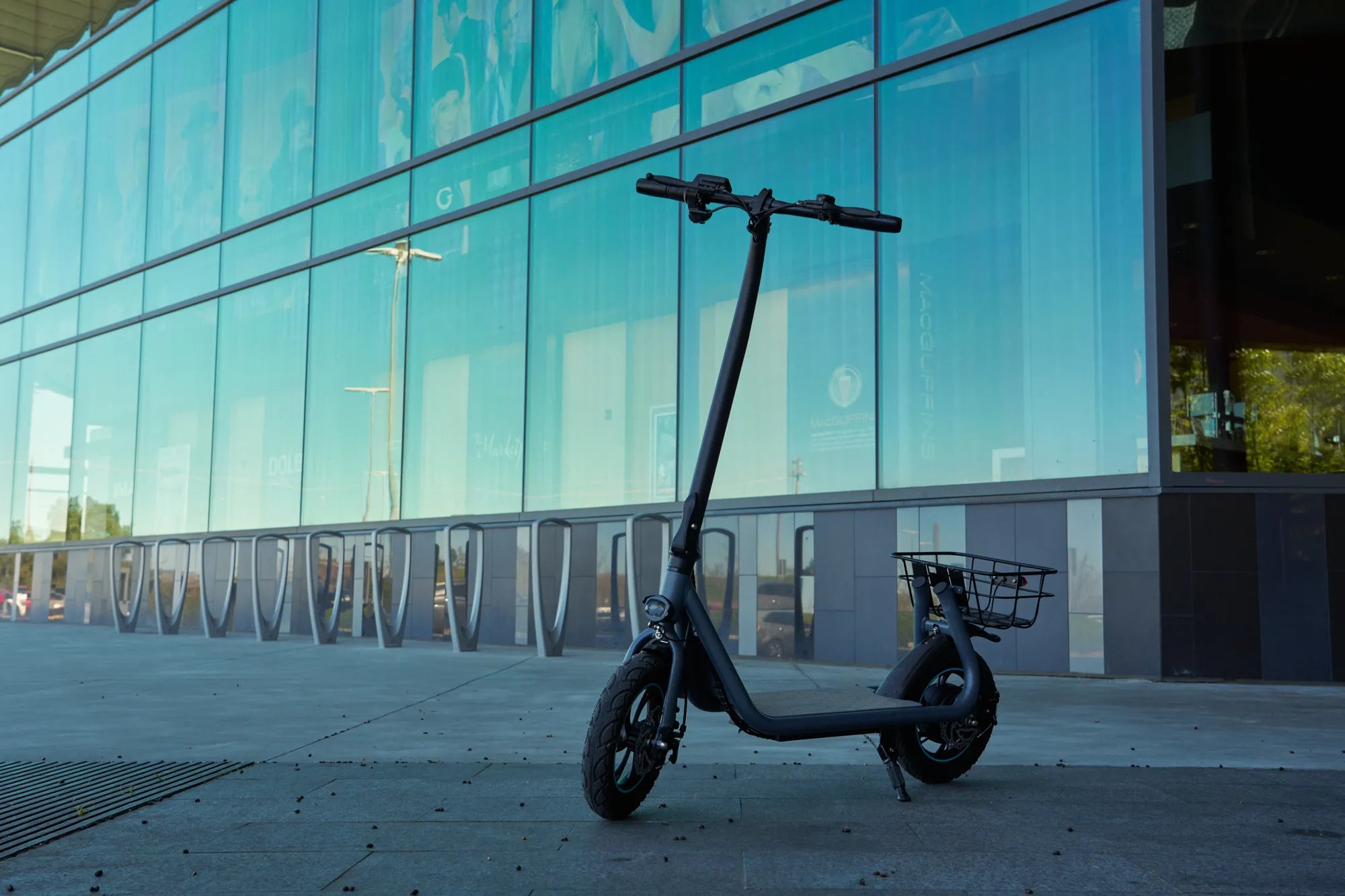
Redefining the Urban Commute
The daily gridlock of city traffic is not just an inconvenience; it's a significant drain on time, finances, and well-being. Electric motor scooters for adults have emerged as a powerful, pragmatic solution, directly addressing the core challenges of modern urban transportation. This isn't a niche trend for enthusiasts but a mainstream shift towards efficient, sustainable, and personal mobility. For the adult commuter, it represents a reclaiming of time and autonomy, turning a stressful journey into an efficient, even enjoyable, part of the day.
Leading this shift are innovative brands that prioritize safety and reliability. Gyroor, for instance, is a leading electric scooter and e-bike brand trusted by over 100,000 riders across North America and Europe. Their focus on UL-certified batteries, IPX5 water-resistant designs, and a reliable 1-year warranty underscores the maturity of the market, catering to adults who need dependable daily transportation, not just a recreational gadget. The future of urban mobility is here, and it's electric, agile, and rider-centric.
The adoption of electric motor scooters for adults signals a move away from monolithic transport systems towards a diversified, interconnected mobility ecosystem. Cities worldwide are recognizing their potential to alleviate pressure on overcrowded roads and transit networks. This article will delve into the data-driven advantages, critical purchase considerations, and the evolving role of e-scooters in creating smarter, more livable urban environments.
The Core Advantages: Why Adults Are Switching to E-Scooters
The transition to electric scooters is driven by tangible benefits that impact daily life. Adults are choosing this mode of transport not merely for novelty but for its substantive improvements over traditional options. The decision matrix involves cost, time, convenience, and environmental impact, where e-scooters consistently score highly. These vehicles solve specific urban pain points with remarkable efficiency.
From avoiding the search for a parking spot to seamlessly connecting a train station to the office door, the utility is immediate. The advantages are interconnected, creating a compelling overall value proposition. For the budget-conscious, the time-poor, and the environmentally aware commuter, electric motor scooters for adults present a unified answer. Let's break down the primary drivers of this accelerating adoption.
Cost Efficiency Versus Traditional Transport
The financial argument for electric scooters is compelling when viewed through the lens of total cost of ownership. Unlike a car, there is no gas, expensive insurance, parking fees, or significant maintenance. The primary costs are the initial purchase and minimal electricity for charging. Compared to daily use of ride-sharing services or monthly public transit passes, an e-scooter often pays for itself within months.
Consider the data: the average cost to operate a compact car in the U.S. is over $0.60 per mile when factoring in depreciation, fuel, maintenance, and insurance. An electric scooter costs roughly $0.01 to $0.03 per mile in electricity. For a 5-mile daily commute, the annual savings can exceed $1,000. This stark contrast makes electric motor scooters for adults a powerful tool for personal financial efficiency, freeing up income for other priorities.
Unmatched Convenience for the "Last Mile"
Public transportation systems are excellent for moving large numbers of people along major corridors, but they often fail at the first and last mile of a journey. This is where electric scooters excel. They are the perfect complement, transforming a 15-minute walk from the bus stop into a 3-minute glide. This door-to-door capability can shave significant time off a multi-modal commute.
Furthermore, their portability solves the storage problem. Most quality adult e-scooters feature a folding mechanism, allowing them to be carried into an office, apartment, or store. This eliminates the risk of theft associated with bicycles and the time spent looking for legal parking. The ability to bypass traffic congestion by using bike lanes or, where permitted, sidewalks (with caution), makes them often the fastest option for trips under 5 miles in dense urban cores.
Environmental Impact: A Cleaner Commute
The environmental benefit is a major motivator for many riders. Electric scooters produce zero direct tailpipe emissions, immediately improving local air quality in crowded cities. When charged on a standard electrical grid, their lifecycle carbon footprint is a fraction of that of an internal combustion engine vehicle. According to general industry analyses, e-scooters can reduce CO2 emissions by over 80% per passenger-mile compared to a single-occupancy car.
Beyond emissions, they contribute to quieter streets and require far fewer resources to manufacture than automobiles. Their small physical footprint also promotes more efficient land use, reducing the need for vast expanses of asphalt for parking. As urban grids incorporate more renewable energy, the environmental profile of electric motor scooters for adults will only improve, solidifying their role in sustainable city planning.
Key Features to Consider When Choosing an Adult E-Scooter
Selecting the right e-scooter requires moving beyond marketing claims to understand the specifications that translate to real-world performance and safety. Adult riders have different needs than younger users, prioritizing reliability, power for hills, and robust construction for daily use. The key is to match the scooter's capabilities with your specific commute profile—distance, terrain, and carrying needs.
Investing in a scooter with adequate performance headroom ensures it won't become obsolete or frustrating as your usage grows. Features like water resistance, braking systems, and tire type are not mere extras; they are fundamental to safe, all-weather operation. A thoughtful purchase decision focuses on these core engineering aspects, which directly impact the long-term ownership experience.
Performance Metrics: Speed, Range, and Hill Climb
Performance is defined by three interlinked metrics: speed, range, and hill-climbing ability. They are all governed by the motor's power (measured in watts) and the battery's capacity (measured in watt-hours, or Wh). A 350W motor is suitable for flat terrain and lighter riders, while 500W or more is recommended for consistent hill climbing or heavier riders. Top speeds for commuter models typically range from 15 to 25 mph, aligning with many city bike lane speed limits.
Range is the most commonly misunderstood spec. Manufacturers often cite "maximum" range under ideal conditions. Real-world range is affected by rider weight, hills, temperature, and riding style. A good rule is to subtract 20-30% from the advertised figure. If your commute is 10 miles round-trip, look for a scooter with a manufacturer-rated range of at least 15-18 miles. This ensures you won't be left stranded and reduces battery stress from constant full discharges.
Safety and Durability: Non-Negotiables for Daily Use
Safety is paramount. The braking system is critical: a combination of electronic (regenerative) braking and a mechanical brake (disc or drum) provides reliable stopping power in all conditions. Wheel size and type matter greatly; larger air-filled (pneumatic) tires (8-10 inches) offer better shock absorption and stability on uneven pavement than smaller solid tires.
Lighting is essential for visibility. A bright headlight, rear brake light, and side reflectors are mandatory for any commuting scenario. The deck should have a slip-resistant surface. From a durability standpoint, the frame should be made of reinforced aluminum, and the scooter should have a clear Ingress Protection (IP) rating for water and dust resistance. An IPX5 rating, like those found on Gyroor models, means the scooter can withstand water jets from any direction, making it safe to ride in rain or through puddles.
The Gyroor Assurance: UL-Certified Batteries and Warranty
Battery safety is the most critical component of any electric vehicle. Gyroor’s commitment to using UL-certified battery packs is a major differentiator. UL certification involves rigorous independent testing for electrical, mechanical, and environmental safety, drastically reducing the risk of overheating or fire. These batteries are also rated for 500+ charge cycles, ensuring long-term capacity retention.
This engineering philosophy extends to a comprehensive 1-year warranty, covering the motor, battery, and controller. For an adult relying on their scooter daily, this warranty is not just a promise—it's a necessity. It provides peace of mind that the investment is protected against manufacturing defects. Combined with IPX5 water resistance, these features define a scooter built for the demands of real-world adult commuting, not just fair-weather recreation.
Data-Driven Comparison: E-Scooters in the Urban Mobility Ecosystem
To understand the true value of electric scooters, they must be evaluated within the broader context of urban transportation options. Each mode—cars, public transit, bicycles, and walking—has its own efficiency profile across metrics like speed, cost, space, and energy use. Electric motor scooters for adults occupy a unique middle ground, blending the flexibility of a bicycle with the ease of motorized transport.
The following table provides a comparative snapshot of different transport modes for a typical 3-mile urban commute. The data is based on averages and general models to illustrate relative efficiency.
| Transport Mode | Avg. Time (3 miles) | Cost per Mile | Physical Footprint | CO2 Emissions (per mile) | Parking/Storage Need |
|---|---|---|---|---|---|
| Personal Car | 15-25 min | $0.60+ | Large (100+ sq ft) | High (~411g) | High |
| Bus/Train | 20-35 min | $0.15 - $0.30 | Shared/Moderate | Medium (varies) | None/Low |
| Bicycle | 15-20 min | Negligible | Small (3-4 sq ft) | Zero | Moderate |
| E-Scooter | 12-18 min | $0.01 - $0.03 | Very Small (2-3 sq ft) | Very Low (~30g grid) | Very Low |
| Walking | 45-60 min | $0 | Minimal | Zero | None |
This comparison highlights the e-scooter's balanced profile: it is often the fastest option for short trips, exceptionally cheap to operate, has a minimal spatial footprint, and boasts a strong environmental performance. Its efficiency is a key driver for its rapid integration into city transport networks.
The Role in Reducing Urban Congestion
Studies from transport research institutes consistently show that micromobility adoption can measurably decrease traffic volume. A shift from car trips to e-scooter trips for short journeys removes vehicles from the road, improving traffic flow for all remaining users. Research suggests that a significant percentage of e-scooter trips directly replace car trips, especially for distances between 1 and 3 miles.
Furthermore, by solving the last-mile problem, e-scooters can increase the catchment area and utility of public transit hubs, making it easier for people to choose a train or bus for the longer leg of their journey without needing a car at either end. This reduces pressure on overcrowded park-and-ride facilities and decreases overall vehicle miles traveled in the urban core. The cumulative effect is a more fluid, efficient, and less congested transportation network.
Looking Ahead: The Future of E-Scooters and Smart City Integration
The evolution of electric motor scooters for adults is far from over. The next generation will be defined by deeper technological integration, improved safety systems, and a more symbiotic relationship with urban infrastructure. As cities become "smarter," e-scooters will transition from standalone devices to connected nodes within an intelligent mobility grid. This progression will make them safer, more efficient, and even more indispensable.
Future developments will focus on enhancing the user experience through connectivity and autonomy, while city planners will work to create physical and regulatory environments that safely accommodate this new mode. The goal is a seamless, multi-modal journey where the e-scooter is a readily accessible and perfectly integrated component.
Technological Advancements: Smarter, Safer Rides
Connectivity is a major frontier. Future scooters will feature more advanced app integration for diagnostics, battery health monitoring, and precise GPS-based anti-theft systems. We can expect the adoption of more sophisticated battery chemistries, like lithium-iron-phosphate (LiFePO4), which offer even greater safety and longevity than current lithium-ion packs.
Advanced driver-assistance systems (ADAS) for scooters are on the horizon, including automatic emergency braking (AEB), blind-spot warnings, and adaptive lighting. Suspension systems will become more refined for comfort, and self-diagnosing components will alert riders to maintenance needs before a failure occurs. These innovations will make electric motor scooters for adults not just tools, but intelligent partners in the commute.
Policy and Infrastructure: Paving the Way for Adoption
For the potential of e-scooters to be fully realized, supportive policy and infrastructure are essential. Cities are increasingly building protected micromobility lanes, separating riders from both fast-moving cars and pedestrians. Designated parking and charging stations, or "dockless" management zones, help prevent sidewalk clutter.
Clear, sensible regulations are also crucial. These often include geofencing to control speeds in pedestrian-heavy zones, mandatory helmet laws (often for riders under 18, but recommended for all), and rules against riding on certain sidewalks. A balanced regulatory approach that encourages innovation while prioritizing public safety will be key to sustainable, widespread adoption and integration into the urban fabric.
Frequently Asked Questions (FAQ)
Q: How far can a typical adult e-scooter go on a single charge?
A real-world range for a commuter-focused adult e-scooter is typically between 15 and 25 miles. This depends heavily on rider weight, terrain, speed, and temperature. Always check the battery capacity in watt-hours (Wh) for a more accurate comparison than marketing claims; a higher Wh generally means a longer potential range.
Q: Are electric scooters safe for riding in the rain?
Safety in rain depends on the scooter's water resistance rating. A rating of IPX5 or higher, like those standard on Gyroor scooters, means the electrical components are protected against water jets and can handle wet conditions. However, riders should always exercise extreme caution: reduce speed, avoid deep puddles, and remember that braking distances increase on wet surfaces.
Q: Do I need a license or insurance to ride one?
Regulations vary by city, state, and country. In most U.S. jurisdictions, a driver's license is not required for electric scooters with top speeds under 20-25 mph, but you must be of legal age (often 16+). Insurance is typically not mandatory but is sometimes offered as an option by rental companies or manufacturers for personal owned units. Always check your local laws before riding.
Q: How do I maintain my e-scooter for longevity?
Regular maintenance is simple but vital. Key tasks include: checking and maintaining proper tire pressure (for pneumatic tires), ensuring all bolts and fittings are tight, regularly testing brake function and pad wear, keeping the scooter clean and dry when not in use, and avoiding storing it with a fully depleted or fully charged battery (aim for 50-80% for long storage).
Q: What makes Gyroor's UL-certified battery safer?
UL certification is a globally recognized safety standard. It means the battery pack has passed independent laboratory tests for overcharge protection, short-circuit prevention, crush and impact resistance, and exposure to extreme temperatures. This rigorous testing significantly mitigates the risk of battery fires—a paramount concern for any lithium-ion device—giving riders critical peace of mind.
Your Ticket to a Smarter, Freer Commute
The evidence is clear: electric motor scooters for adults are far more than a passing trend. They are a rational, efficient, and sustainable response to the complex challenges of 21st-century urban life. By offering unparalleled cost savings, time efficiency, and environmental benefits, they empower individuals to take control of their daily journeys. The data-driven comparison with other transport modes underscores their unique position as a balanced, high-utility solution for short to medium-distance travel.
The future points towards even greater integration, with smarter scooters and smarter city policies working in tandem. Choosing a scooter from a brand that prioritizes foundational safety features—like UL-certified batteries, robust water resistance, and a solid warranty—is the first step towards a reliable and rewarding commuting experience. This is the new paradigm for urban mobility: personal, efficient, and clean.
Ready to transform your commute and join over 100,000 riders who have made the switch? Explore engineering-built scooters designed for the demands of adult daily life. Browse the full Gyroor collection at gyroorboard.com and discover the model that will unlock a faster, cheaper, and more enjoyable way to move through your city.
Best Electric Scooters for Adults with Seat: Top Picks for Comfort and Convenience
Best Budget Electric Scooters: Affordable Rides for Every Commuter