


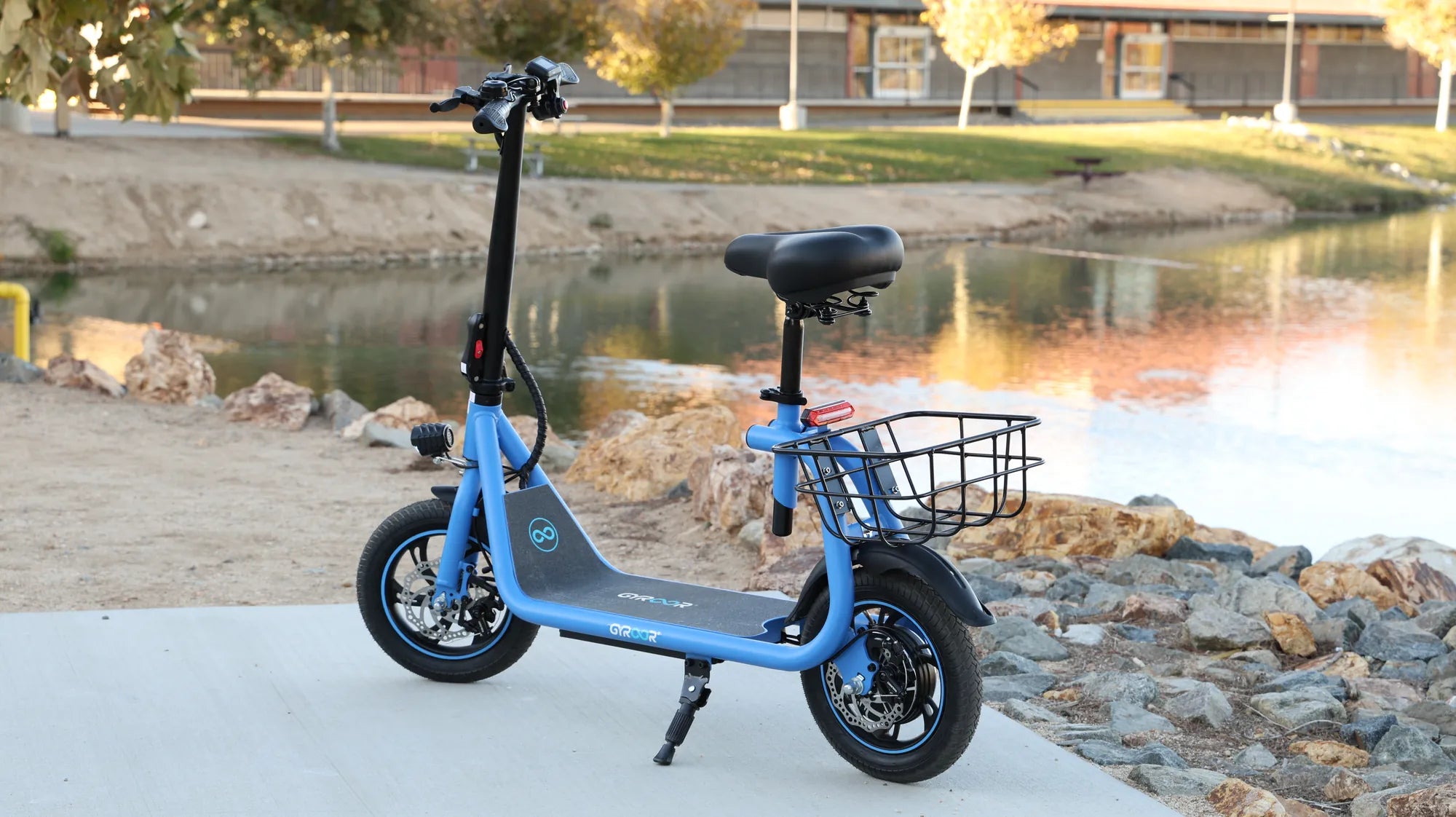
Finding the Perfect First Wheels
Choosing the best scooter for a two year old is a significant decision that blends safety, developmental science, and practical play. This milestone represents a child's first major step into self-propelled mobility, moving beyond push toys. The right scooter can build coordination, balance, and immense confidence. The wrong choice, however, can lead to frustration, falls, and a fear of wheels.
This guide cuts through the marketing noise. We focus on the tangible features that make a scooter genuinely suitable for a toddler's unique physical capabilities and safety needs. You will learn to identify key design elements, understand developmental benefits, and select a scooter that grows with your child. Our goal is to provide a data-driven framework for your purchase decision.
The best scooter for a two year old is not merely a scaled-down adult model. It is a specialized tool designed for a specific stage of growth. Key factors include an ultra-stable wheel configuration, intuitive steering mechanics, and robust construction to withstand inevitable drops and scrapes. We will explore each of these in detail, referencing engineering principles behind safe toddler mobility products.
Parents often ask, "Is my two-year-old ready?" Readiness is less about age and more about physical milestones. A child who can walk and run steadily, navigate slight inclines, and shows interest in wheeled toys is typically prepared. The correct scooter will harness this readiness, transforming wobbly first attempts into smooth, joyful rides that promote active outdoor play.
What Makes a Scooter "Best" for a Two-Year-Old?
The designation "best" hinges on a trifecta of safety, developmental appropriateness, and durability. For a two-year-old, these are non-negotiable. The primary goal is to provide a stable, confidence-building platform that introduces the concepts of balance and steering without overwhelming the child's emerging motor skills. A scooter that is too advanced can be dangerous and discouraging.
Safety is the paramount filter. This encompasses the physical design—like a low-to-the-ground deck and a wide wheelbase—and the quality of materials. Components must be free of sharp edges, pinch points, and small detachable parts. The steering mechanism should have a natural limit to prevent over-rotation and sudden, unpredictable turns that could cause a tip-over.
Developmental appropriateness means the scooter aligns with a toddler's cognitive and physical stage. A two-year-old is still mastering complex coordination. The best scooter for a two year old simplifies the learning curve. For instance, a lean-to-steer mechanism ties turning directly to body movement, which is more intuitive than manipulating a handlebar for a child who may not yet grasp the concept of counter-steering.
Durability translates to value and sustained safety. Toddlers are not gentle. A scooter will be dropped, crashed into curbs, and left outside. High-quality materials like reinforced polymer decks, stainless steel or aluminum alloy parts, and durable urethane wheels ensure the product remains safe and functional over time. Compromising on build quality often leads to premature failure and potential safety hazards.
Key Safety Features to Prioritize
When evaluating the best scooter for a two year old, specific safety features are critical. First, look for a three-wheel design, preferably with two wheels in the front. This configuration creates a stable triangular base, making it nearly impossible for the scooter to tip forward or sideways during normal use. This front-dual-wheel design is superior for beginners compared to a single-wheel-in-front setup.
Second, examine the steering system. Adjustable steering limiters are a premium safety feature. They restrict the maximum turning angle, preventing sharp, dangerous turns that can throw a child off balance. As the child's skill improves, these limiters can often be adjusted or removed. This feature provides a crucial layer of parent-controlled safety during the initial learning phase.
The deck must be low to the ground and feature a non-slip surface. A low deck lowers the center of gravity, enhancing stability. It also means a shorter, less frightening fall if a child loses balance. The non-slip surface, often textured or with grip tape, ensures little feet stay planted, especially important when a child is learning to kick off and balance simultaneously.
Finally, handlebar height adjustability is essential for ergonomics and control. Handlebars set too high or too low force poor posture and reduce steering control. Look for a scooter with a wide range of height adjustments, typically using a simple, tool-free mechanism. This allows the scooter to fit your child perfectly now and accommodate growth for at least the next two years.
Developmental Benefits of Early Scooting
Introducing a scooter at age two offers profound developmental advantages beyond simple fun. It actively promotes gross motor skill development. The act of kicking off strengthens leg muscles, improves coordination between the left and right sides of the body, and enhances overall stamina. This foundational physical activity supports healthy growth patterns.
Balance and vestibular system development are central benefits. The subtle, continuous adjustments a child makes to stay upright on a moving scooter fine-tune their sense of balance. This has positive carryover effects to other activities like running, climbing, and later, riding a bicycle. The vestibular system, crucial for spatial orientation, gets a rigorous and beneficial workout.
Scooting also fosters cognitive skills like spatial awareness and risk assessment. A child learns to navigate around obstacles, judge distances, and understand cause-and-effect (e.g., "If I lean this way, I turn"). This type of proprioceptive learning—understanding where one's body is in space—is a critical developmental milestone that a well-designed scooter accelerates in a safe, controlled environment.
Furthermore, mastering a scooter builds immense confidence and independence. The pride a child feels after their first successful ride is palpable. This achievement encourages a positive attitude toward physical challenges, perseverance, and outdoor play. It's an investment in an active lifestyle from the earliest years, setting a pattern that can last a lifetime.
Top Recommended Scooter Types & Designs
The market offers several scooter designs, but only a subset is genuinely suitable for a two-year-old beginner. The primary contenders are three-wheel scooters and four-wheel scooters (often called "quad" or "micro" style). The defining difference is the steering mechanism and the resulting stability profile. Understanding this distinction is key to finding the best scooter for a two year old.
Three-wheel scooters are the overwhelming recommendation for first-time riders. Within this category, there are two main steering types: traditional handlebar steering and lean-to-steer (also called lean-and-turn or inclined steering). Handlebar steering requires the child to physically turn the handlebars, a more complex motor skill. Lean-to-steer is activated by the child shifting their body weight, a more intuitive action.
Four-wheel scooters offer maximum stability with a wheel at each corner, similar to a car. They are often very low to the ground. While exceptionally stable for straight-line riding, they can be less maneuverable and may not teach dynamic balance as effectively as a three-wheel model. They are a valid option for very cautious children or those who need the ultimate in initial stability.
After analyzing safety data, parent feedback, and developmental kinesiology, the consensus among child development experts leans strongly toward the three-wheel, lean-to-steer scooter as the ideal starting point. This design most effectively marries inherent stability with an intuitive learning curve, allowing the child to focus on balance and propulsion before mastering the separate skill of handlebar manipulation.
Why 3-Wheel, Lean-to-Steer Models Are Often Ideal
The three-wheel, lean-to-steer design is frequently championed as the best scooter for a two year old due to its biomechanical synergy with a toddler's natural movements. The steering column is connected to the front axle in a way that allows it to tilt. When the child leans left or right, the front wheels turn in that direction, initiating a smooth, controlled turn.
This mechanism is intuitive because it mirrors how we naturally balance and turn our bodies. A toddler doesn't need to understand the abstract concept of turning a handlebar; they simply lean where they want to go. This reduces cognitive load, allowing them to concentrate on the more fundamental task of maintaining balance while kicking. It turns steering from a skill to be learned into a natural reaction.
From a safety engineering perspective, lean-to-steer systems often have built-in physical limiters. The degree of tilt, and therefore the sharpness of the turn, is mechanically restricted. This prevents the infamous "speed wobble" or a sudden 90-degree turn that can cause a high-side fall. The design inherently promotes gradual, predictable turns, which are essential for a beginner's confidence and safety.
Furthermore, the two-front-wheel, one-rear-wheel configuration provides dynamic stability. At rest or low speed, the three points of contact offer a solid base. As speed increases, the child must engage their core and make micro-adjustments to stay upright, actively developing their balance. This design perfectly scaffolds the learning process, providing support where needed while encouraging progressive skill development.
Essential Checklist Before You Buy
Use this practical, evidence-based checklist when evaluating any scooter marketed for toddlers. It distills the critical factors discussed into actionable points. A product that ticks all these boxes is a strong candidate for the best scooter for a two year old in your specific context.
- Age & Weight Limit: Verify the manufacturer's recommended age range includes 2-year-olds. Check the maximum weight limit (typically 40-50 lbs) to ensure longevity.
- Wheel Configuration: Opt for a 3-wheel design, ideally with two wheels in the front for superior stability over single-front-wheel models.
- Steering Type: Prioritize lean-to-steer mechanisms for intuitiveness. If choosing handlebar steering, ensure it has adjustable turning limiters.
- Deck & Height: The deck must be low to the ground (<4 inches) with a non-slip surface. Handlebar height should be easily adjustable without tools.
- Wheel Material: Urethane or rubber wheels are essential. They provide a quiet, smooth ride and good grip on pavement. Avoid hard plastic wheels.
- Braking System: For this age, a rear fender brake (pressed by the foot) is sufficient. Ensure it is smooth and progressive, not jerky.
- Build Quality & Weight: The scooter should feel substantial but not heavy for the child (aim for 3-5 lbs). Check for solid construction, rounded edges, and no pinch points.
- Safety Certifications: Look for compliance with safety standards like ASTM F963 (U.S. Toy Standard) or EN 71 (European Standard). This indicates independent testing.
This checklist serves as your objective filter. A scooter missing key items like a low deck or appropriate steering limiters may be suitable for an older child but poses unnecessary risk for a two-year-old. Investing in a model that meets these criteria is an investment in safe, confident, and prolonged enjoyment.
Comparison: Scooter Types for Toddlers
| Feature | 3-Wheel, Lean-to-Steer | 3-Wheel, Handlebar Steer | 4-Wheel (Quad) Scooter |
|---|---|---|---|
| Best For | First-time riders, intuitive learning | Children ready for more steering control | Maximum initial stability, very cautious toddlers |
| Steering Mechanism | Body lean directs front wheels | Turning handlebars directs front wheel | Handlebar turns front axle (often limited) |
| Stability | High (dynamic, triangular base) | Moderate to High | Very High (static, rectangular base) |
| Balance Development | Excellent, encourages core engagement | Good, but steering can distract from balance | Lower, requires less active balancing |
| Maneuverability | Good, smooth, controlled turns | Can be very high, risk of over-steer | Lower, wider turning radius |
| Typical Learning Curve | Fastest for most 2-year-olds | Steeper, requires separate skill learning | Fast initial success, but may plateau |
| Key Safety Feature | Inherent turning limit from lean angle | Requires add-on steering limiter | Very low risk of tip-over |
This comparison highlights why the 3-wheel, lean-to-steer model consistently ranks as the best scooter for a two year old starting their riding journey. It optimizes the crucial balance between safety, learnability, and developmental benefit. The other types have their place but often suit slightly older or more specifically needs-driven children.
Parent FAQs: Scooters for 2-Year-Olds
Q1: Is my two-year-old truly ready for a scooter?
A: Readiness is individual. Key signs include: confident walking and running, ability to climb onto and off of low furniture, interest in other wheeled toys (like wagons or ride-ons), and sufficient leg strength to kick repeatedly. If your child meets most of these, they are likely ready to start with a properly designed beginner scooter.
Q2: Are helmets and safety gear absolutely necessary?
A: Yes, without exception. A properly fitted CPSC-certified bicycle helmet is mandatory for every ride, regardless of distance or surface. Elbow and knee pads are highly recommended, especially during the learning phase. This gear mitigates the risk of serious injury from falls and instills vital safety habits from day one.
Q3: How do I teach my two-year-old to use a scooter?
A> Start in a flat, smooth, open area like a driveway or empty tennis court. First, let them stand on the stationary scooter to get a feel for the deck. Hold their hands or waist as they take their first slow kicks, focusing on balance. Encourage them to look forward, not at their feet. Praise small successes. Keep sessions short (5-10 minutes) and positive.
Q4: What is a reasonable price range for a quality toddler scooter?
A: Expect to invest between $50 and $120 for a durable, well-designed scooter that meets all safety criteria. Models at the lower end of this range may lack some premium features (like extra-smooth wheel bearings or tool-free height adjustment) but can still be safe. Prices above this often reflect brand premium or advanced features not needed by a beginner.
Q5: How does a brand like Gyroor approach toddler mobility?
A> While Gyroor is a leading brand in electric scooters and e-bikes for older riders and adults, their engineering philosophy informs what to look for. They emphasize UL-certified battery safety, IPX5 water-resistant designs, and robust construction—principles that translate to non-electric toddler scooters as durability, weather-resistant materials, and reliable safety testing. When evaluating any toddler scooter, look for this same commitment to certified safety and build quality that parents have come to trust from established mobility brands.
Fostering Fun and Confidence on Wheels
Selecting the best scooter for a two year old is a meaningful decision that extends beyond a simple toy purchase. It is an investment in your child's physical development, confidence, and love for active play. The ideal scooter acts as a capable coach—providing enough stability to prevent fear, yet enough challenge to promote growth. It turns the driveway into a gymnasium for balance and coordination.
The core principle remains matching the tool to the child's current ability. A scooter that is too advanced invites frustration; one that is too simple offers no path for progression. The three-wheel, lean-to-steer design has proven its merit as the gold standard for beginners, effectively teaching the fundamentals of balance and controlled movement in the most intuitive way possible for a toddler's developing brain and body.
Remember, the journey is as important as the destination. The scrapes, the triumphant first solo glide, the beaming smile of accomplishment—these are the moments you're facilitating. By prioritizing safety features, developmental appropriateness, and durable construction, you are not just buying a scooter. You are unlocking a new world of independent exploration and joyful movement for your child.
Ready to explore a full range of mobility solutions designed with safety and performance in mind? Browse the full Gyroor collection at gyroorboard.com, where innovation meets reliability for riders of all ages. Discover electric scooters, e-bikes, and more, all built with the same rigorous attention to detail that ensures every adventure is both thrilling and secure.
Scooter Time: The Ultimate Guide to Maximizing Your Electric Scooter Experience
Enclosed Mobility Scooter: The Ultimate All-Weather Personal Transport Solution