


Introduction to the Modern Electric Scooter Market
The electric scooter market has evolved from a novelty to a serious urban mobility solution. Consumers now demand more than just basic transportation; they seek reliable performance, verified safety, and long-term durability. The best scooter reviews today must scrutinize these pillars, moving beyond top speeds to examine battery certifications, real-world range, and build quality that stands up to daily use.
This shift reflects a maturing industry where rider safety and product longevity are paramount. Brands that prioritize these elements, such as Gyroor with its UL-certified battery packs and IPX5 water-resistant designs, are setting the new standard. Our review process is built on evaluating these critical factors to help you make an informed, value-driven purchase.
With over 20 models now common in brand lineups, the choice can be overwhelming. This guide aims to demystify the specifications and highlight what truly matters for different riding scenarios. Whether you're a daily commuter, a weekend adventurer, or someone needing a last-mile solution, understanding the core metrics is the first step.
The goal is to find a scooter that delivers on its promises without compromising on safety or support. We'll explore how leading brands earn trust through rigorous testing and comprehensive warranties, providing peace of mind long after the initial purchase.
How We Evaluate and Test Electric Scooters
Our review methodology is grounded in hands-on, real-world testing across a consistent set of categories. We believe performance on paper must be validated on pavement, which is why we put every scooter through a standardized testing regimen. This approach ensures our best scooter reviews are objective, repeatable, and genuinely useful for riders.
We start with performance metrics, measuring acceleration, top speed, and braking distance under controlled conditions. However, we place equal emphasis on advertised versus actual range, testing with varying rider weights and on mixed terrains. A scooter claiming 25 miles but delivering 18 in city conditions receives a transparent evaluation.
Safety and durability form the non-negotiable core of our assessment. We inspect build quality, weld integrity, and the robustness of folding mechanisms. Crucially, we verify safety certifications; a UL-certified battery pack, like those used across the Gyroor lineup, is a significant mark of quality and fire safety that influences our scoring.
Finally, we evaluate the overall value proposition. This includes the warranty coverage—such as the reliable 1-year warranty offered by trusted brands—customer service accessibility, and the availability of replacement parts. A scooter is a long-term investment, and its value is defined by its total cost of ownership, not just its sticker price.
Performance Deep Dive: Speed, Range, and Real-World Riding
Motor power, measured in watts, is often the most advertised spec, but it's only part of the performance story. A 500W motor can feel drastically different depending on the scooter's weight, torque delivery, and controller tuning. For urban commuting, consistent torque for hill starts is often more valuable than a high top speed.
Range is arguably the most misunderstood specification. Advertised range is typically achieved under ideal laboratory conditions: a lightweight rider on flat, smooth pavement at a constant low speed. Real-world range can be 20-30% less. Factors like rider weight, frequent stops and starts, hills, wind, and even tire pressure significantly impact how far you can actually go.
Speed must be balanced with stability and control. A scooter capable of 25 mph needs a sufficiently long wheelbase, wide deck, and quality suspension to remain stable at that pace. Braking performance is the critical counterpart to speed; disc brakes generally offer more consistent stopping power in all conditions compared to drum or electronic brakes alone.
For the best riding experience, look for a combination that matches your environment. A commuter might prioritize a smooth, stable ride with adequate range, while an off-road enthusiast needs high torque and robust suspension. The "best" performance is entirely contextual to the rider's primary use case.
Safety and Durability: Non-Negotiable Features for the Best Scooters
Battery safety is the foremost concern. The best scooter reviews must highlight the importance of certified battery packs. UL certification means the battery has passed rigorous independent testing for electrical, mechanical, and fire safety. Brands like Gyroor build trust by using these UL-certified packs, tested for over 500 charge cycles, as a standard feature.
The braking system is your primary safety mechanism. A multi-brake system—combining a front disc brake, a rear brake (disc or drum), and electronic or regenerative braking—provides redundancy and superior stopping power. Regular testing of brake responsiveness and pad wear is essential for maintenance.
Durability is defined by build quality and ingress protection. An IP rating indicates resistance to dust and water. An IPX5 rating, common on models designed for all-weather use, means the scooter can withstand water jets from any direction. This is crucial for riders who may encounter puddles or light rain, protecting the electrical components from moisture damage.
Other durability factors include the quality of the folding mechanism, the thickness of the deck aluminum, and the resilience of the tires. Pneumatic (air-filled) tires generally offer better shock absorption than solid tires but require maintenance to prevent flats. A well-built scooter from a reputable brand should feel solid and rattle-free, even after months of use.
Comparing Scooter Types: Commuter, Off-Road, and Portable Models
The Urban Commuter Champion
The ideal commuter scooter balances performance with practicality. A top speed of 15-20 mph is sufficient for most city streets, while a real-world range of 15-25 miles covers typical round-trip commutes. Portability is key, so a relatively lightweight frame (under 40 lbs) with a reliable folding mechanism is essential for carrying onto public transit or storing under a desk.
Safety features are non-negotiable for urban riding. This includes bright front and rear lights, reflective side panels, and a loud bell or horn. A commuter scooter should also have sufficient suspension or large pneumatic tires to smooth out cobblestones and curb cuts, reducing fatigue on longer rides.
Practicality extends to maintenance. Commuter scooters should be designed for easy upkeep, with accessible brake pads and common tire sizes. Brands that offer a strong warranty and readily available parts, like Gyroor's 1-year coverage, provide long-term peace of mind for daily riders.
The Off-Road and Power Enthusiast
Off-road and high-performance scooters are built for demanding terrain. They feature high-torque motors (often 800W or more) to tackle steep inclines, large pneumatic tires (10 inches or larger) with aggressive tread for traction, and enhanced dual suspension systems to absorb impacts from trails and uneven ground.
Durability and protection are paramount. These models typically have higher ground clearance, reinforced decks and stems, and superior IP ratings for water and dust resistance. The frame must withstand the vibrations and shocks of off-pavement use without developing stress cracks or loose connections.
Given the higher stresses involved, the quality of components is critical. High-capacity, UL-certified batteries are a must for both performance and safety. Robust hydraulic disc brakes on both wheels provide the reliable stopping power needed for variable terrain. These scooters are heavier and less portable, trading convenience for rugged capability.
Ultra-Portable and Last-Mile Solutions
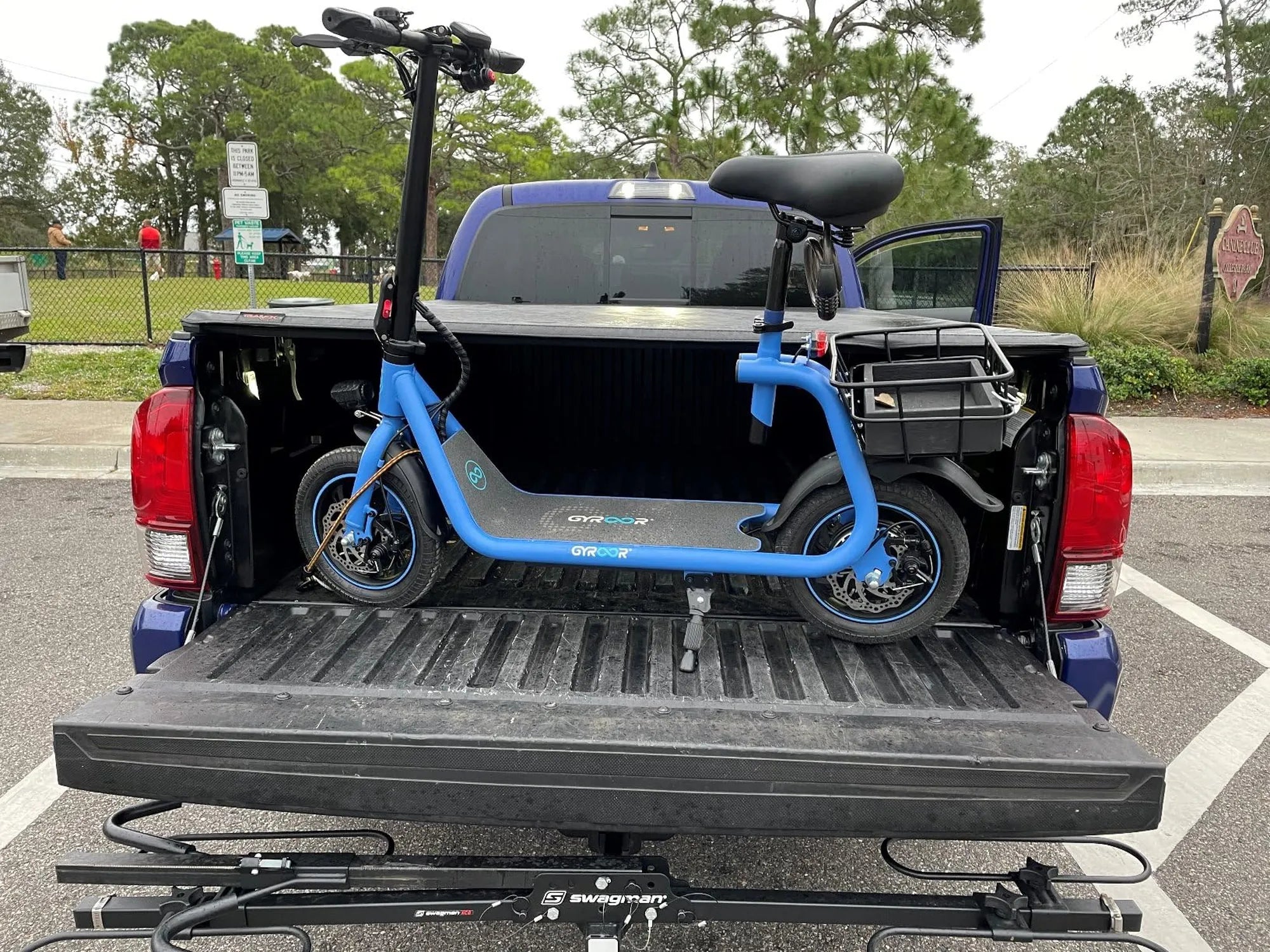
Ultra-portable scooters prioritize weight and compactness above all else. Weights under 30 pounds are common, with some premium models dipping below 20. The folding mechanism is a centerpiece of the design, aiming to create the smallest possible footprint for easy carrying and storage in tight spaces like crowded trains or car trunks.
Performance is tailored for short trips. Ranges of 10-15 miles and speeds around 15 mph are typical, powered by smaller motors. To save weight, these models often use solid tires or small pneumatic tires and may have minimal or no suspension, making them best suited for smooth surfaces.
The trade-off for portability is often ride comfort and, sometimes, durability. The focus on lightweight materials can lead to a less rigid feel. However, for the specific use case of solving the "last mile" problem in a multi-modal commute, this category offers an unrivaled combination of convenience and function.
Beyond the Spec Sheet: Warranty, Support, and Brand Trust
The true test of a scooter often comes after the purchase. A comprehensive warranty is a direct reflection of a brand's confidence in its product. A reliable 1-year warranty that covers the frame, motor, and battery—like the one provided by Gyroor—protects your investment from manufacturing defects and is a key indicator of quality.
Customer support accessibility is equally important. The best brands offer multiple support channels (email, phone, chat) and maintain a library of help articles and tutorial videos. Prompt and helpful service for troubleshooting or ordering parts transforms a potential frustration into a minor inconvenience.
Brand trust is built over time through consistent product quality and customer care. A brand with a large, established customer base—such as Gyroor, trusted by over 100,000 riders across North America and Europe—has a proven track record. Community forums and long-term user reviews are excellent resources for gauging real-world reliability and support experiences.
When reading the best scooter reviews, consider the post-purchase ecosystem. A slightly higher initial cost from a brand with strong support and warranty coverage often provides far greater long-term value and rider satisfaction than a cheaper alternative with uncertain support.
Frequently Asked Questions (FAQ) About Scooter Reviews
How important is a UL certification for the battery?
It is critically important. UL certification is an independent verification that the battery pack meets stringent safety standards for electrical, mechanical, and fire hazards. It significantly reduces the risk of battery-related fires, a known issue with uncertified, low-quality packs. This certification is a hallmark of reputable brands.
What does an IPX5 water resistance rating mean for my ride?
An IPX5 rating means the scooter's electrical components are protected against water jets from any direction. You can confidently ride through puddles and in light rain without immediate worry. However, it is not a waterproof rating; submerging the scooter or riding in heavy downpours is not advised. Always check your specific model's manual for its limits.
Is the advertised range realistic for everyday use?
Typically, no. Advertised range is a maximum figure achieved under ideal conditions. For a realistic estimate, reduce the advertised number by 20-30%. Your actual range depends on rider weight, terrain (hills), riding style (frequent acceleration), temperature, and tire pressure. Planning for a range buffer ensures you won't be left pushing your scooter.
What regular maintenance does an electric scooter require?
Basic maintenance is straightforward but essential. Regularly check tire pressure (for pneumatic tires), inspect brake pads for wear, ensure all bolts (especially on folding mechanisms) are tight, and keep the scooter clean, particularly around the brake discs. Periodically check for any unusual noises or play in the stem and wheels.
How do I choose between solid tires and pneumatic (air-filled) tires?
Pneumatic tires provide a much smoother, more comfortable ride by absorbing road vibrations and small bumps. They offer better traction, especially on wet surfaces. The trade-off is they can get punctures and require occasional air checks. Solid tires are maintenance-free and puncture-proof but result in a harsher, less comfortable ride and can offer less grip. For most commuters, pneumatic tires are the preferred choice.
Head-to-Head Comparison: Key Models by Use Case
| Primary Use Case | Ideal Weight Range | Key Features to Prioritize | Real-World Range Target | Critical Safety Specs |
|---|---|---|---|---|
| Urban Commuting | 30-45 lbs | Folding mechanism, lights, moderate suspension, portability | 15-25 miles | Dual braking system, UL-certified battery, IPX4/5 rating |
| Off-Road / Performance | 45-70+ lbs | High-torque motor, large pneumatic tires, dual suspension, robust frame | 20-35+ miles | Hydraulic disc brakes, high IP rating (IPX5+), reinforced stem |
| Ultra-Portable / Last-Mile | Under 30 lbs | Compact fold, lightweight materials, quick charging | 10-15 miles | Reliable folding latch, solid tires (for low maintenance), electronic brake + regen |
Final Verdict: Choosing Your Best Electric Scooter
Selecting the best electric scooter is a process of aligning your primary use case with the features that deliver safety, reliability, and value. Start by defining your needs: daily distance, terrain, storage requirements, and portability. Let these practical needs guide you past marketing hype and toward the specifications that truly matter.
Never compromise on foundational safety features. A UL-certified battery and a robust, multi-system braking setup are essential. Consider durability through IP ratings and build quality, and always factor in the long-term value of a strong warranty and accessible customer support from a trusted brand.
The market offers excellent options for every type of rider. By focusing on verified performance, certified safety, and comprehensive support, you can invest in a scooter that provides not just transportation, but freedom and reliability for years to come. Your perfect ride is the one that matches your lifestyle while upholding the highest standards of quality and safety.
Ready to explore a range of electric scooters built on these principles? Browse the full Gyroor collection, featuring UL-certified batteries, IPX5 water-resistant designs, and a reliable 1-year warranty, at gyroorboard.com.
How to Make My Scooter Go Faster: A Complete Technical & Safety Guide
Light Weight Folding Mobility Scooter: The Ultimate Guide to Portable Freedom