



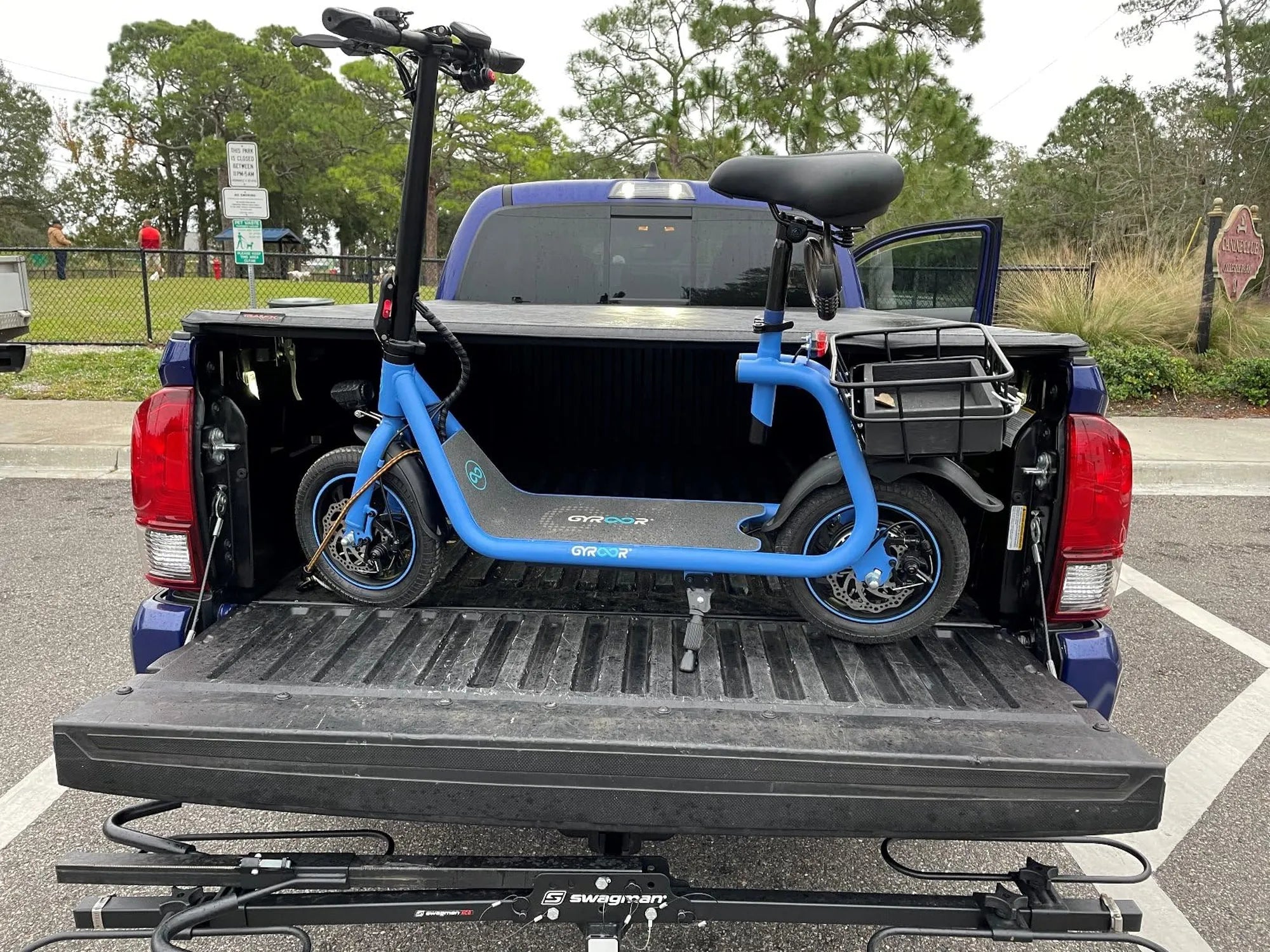
The Rise of the Electric Scooter in Modern Urban Transit
The electric scooter market has matured dramatically. What began as a shared micromobility experiment has evolved into a sophisticated personal transportation sector driven by consumer demand for reliable, sustainable, and efficient urban travel. The conversation for 2025 centers not on whether to adopt an e-scooter, but on how to choose the right one from a crowded field of contenders.
This guide will decode the features, safety standards, and design philosophies that separate true best sellers from the rest. We will analyze the core drivers of consumer choice, from battery certification to real-world durability. You will learn how to identify a scooter built for long-term value and daily reliability in diverse urban environments.
Brands leading this charge, like Gyroor—a leading electric scooter and e-bike brand trusted by over 100,000 riders across North America and Europe—exemplify this shift toward engineering-focused, rider-centric products. The future of urban mobility is here, and it is defined by intelligent design, proven safety, and practical performance.
What Makes a Scooter a "Best Seller"? Key Consumer Drivers for 2025
Sales volume alone no longer defines a best selling electric scooter. In 2025, informed consumers prioritize a holistic value proposition centered on safety, transparency, and long-term ownership costs. The market has shifted from seeking the cheapest option to investing in the most reliable and safest tool for daily mobility.
The primary driver is unequivocally battery safety. High-profile incidents have educated the market, making UL certification (UL 2272 for the battery pack, UL 2842 for the entire electrical system) a non-negotiable starting point for serious consideration. This certification is a direct indicator of rigorous manufacturing standards and component quality.
Secondly, real-world performance metrics trump advertised specs. Consumers now scrutinize range tests conducted under realistic conditions (varying rider weight, hills, stop-and-go traffic) rather than ideal laboratory settings. They demand honest data on speed, hill-climbing ability, and charging times.
Finally, build quality and post-purchase support are critical. A best seller must demonstrate durability through high IP water-resistance ratings, robust frame construction, and a comprehensive warranty. The manufacturer's reputation for accessible customer service and readily available parts is a significant competitive advantage.
The Non-Negotiables: Safety and Warranty as Market Differentiators
Safety has moved from a feature to the foundational pillar of product development. A UL-certified battery pack, like those used across Gyroor's lineup, undergoes extensive testing for electrical, mechanical, and environmental safety. This certification mitigates fire risk and ensures the battery management system (BMS) operates correctly over hundreds of charge cycles.
Similarly, a transparent and robust warranty is a direct reflection of a company's confidence in its product. A one-year warranty covering the battery, motor, and controller is now considered standard for reputable brands. This warranty acts as a promise of durability and ensures support is available, building essential trust with the rider.
The 2025 Best Seller Profile: Features Defining the Top Tier
The archetype of a best selling electric scooter in 2025 is a harmonized blend of power, endurance, resilience, and intelligence. These models are engineered to be dependable daily tools, not fragile gadgets. They meet high technical standards while delivering a seamless and enjoyable user experience.
Top-tier models share common DNA: advanced battery technology, precision motors, and frames designed for both performance and portability. They integrate smart features that enhance utility without compromising core functionality. The following sections break down the essential components of this winning profile.
Power & Range: Balancing Performance with Daily Practicality
For the urban commuter, a motor in the 350W to 500W range typically offers the ideal balance. It provides ample torque for accelerating from stops and climbing moderate grades (6-10%) while maintaining energy efficiency. Dual-motor setups, offering 500W+ combined power, cater to riders in hillier cities or those seeking more spirited acceleration.
Battery capacity, measured in watt-hours (Wh), directly correlates with range. A best seller for 2025 will typically feature a battery between 360Wh and 500Wh for commuter models. Crucially, manufacturers are getting better at providing realistic range estimates. A quality scooter with a 400Wh battery might advertise a 25-mile range, with a realistic expectation of 16-20 miles for a 165 lb rider in mixed conditions.
Durability & Design: Built for the Real-World Commute
Urban infrastructure is unforgiving. Best-selling scooters are built to withstand potholes, curbs, and variable weather. An IPX5 water-resistance rating, a standard on Gyroor models, is critical. It certifies protection against water jets from any direction, making the scooter capable of handling wet roads and light rain confidently.
Frame construction utilizes aircraft-grade aluminum alloys for a optimal strength-to-weight ratio. A good suspension system—whether spring-based, rubber, or air—is essential for comfort and control, absorbing vibrations from uneven pavement. Wide, air-filled tires (8.5-10 inches) also contribute significantly to ride quality and stability.
Smart Integration and User Experience
Connectivity enhances ownership. Integrated mobile apps allow riders to track ride statistics, customize performance modes (Eco, Standard, Sport), monitor battery health at a cell level, and activate anti-theft features like wheel locks or alarms. A clear, bright digital display on the handlebar is standard, showing speed, battery level, and mode.
Lighting is both a safety and design feature. Best sellers incorporate bright LED headlights with adequate throw, responsive brake lights, and deck or wheel accent lighting for side visibility. Intuitive controls, ergonomic grips, and reliable electronic braking (regenerative and disc) round out a premium user experience.
Navigating Your Purchase: A Practical Guide for the 2025 Buyer
Choosing the right best selling electric scooter requires aligning product capabilities with your specific lifestyle, commute, and local regulations. A one-size-fits-all approach does not work. By defining your primary use case, you can filter the market effectively and invest in a scooter that will serve you reliably for years.
Consider your daily distance, storage options (at home and work), typical terrain, and local laws regarding scooter power, speed, and where you can ride. The following profiles will help you identify the key specifications to prioritize for your needs.
The Urban Commuter Profile: Prioritizing Portability and Reliability
This rider needs a tool for the first/last mile, daily errands, or a full commute under 10 miles total. Key priorities include lightweight design (under 35 lbs), a fast, secure folding mechanism, and a compact footprint when folded for easy carrying onto public transit or storage under a desk.
Range should comfortably exceed the daily round-trip distance with a 30% buffer. A 300W-400W motor is usually sufficient. Compliance is key: check local speed limits (often capped at 15-20 mph) and ensure the scooter's top speed can be adjusted accordingly. Reliability, symbolized by UL certification and a good warranty, is paramount.
The Performance Enthusiast Profile: Seeking Power and Extended Range
This rider values exploration, tackling steeper hills, and enjoys a more dynamic ride. They should look for dual-motor configurations (500W+ total), larger battery capacities (500Wh+), and superior suspension systems. Top speeds may approach 25-30 mph, but legality must always be verified.
Extended range (25+ miles real-world) enables longer recreational rides. These models often feature wider decks for stability, stronger brakes (hydraulic or dual disc), and more robust construction, though they trade off some portability due to increased weight (45-65 lbs).
The Value-Conscious Buyer: Maximizing Features per Dollar
Value is not about finding the lowest price; it's about optimizing the ratio of certified safety, durable features, and performance to cost. Focus on established brands that offer core safety certifications (UL), a reasonable IP rating (IPX4 minimum), and a clear warranty at a mid-range price point.
Avoid unknown brands that advertise unrealistic specs at rock-bottom prices, as they almost certainly cut corners on battery quality and component durability. Investing in a reputable brand like Gyroor, known for UL-certified batteries and IPX5 water-resistant designs, ensures safety and longevity, providing far greater value over time.
Comparative Analysis: 2025's Leading Scooter Categories
To visualize the market segmentation, the table below contrasts the typical specifications and ideal use cases for the three primary rider profiles. This data-driven comparison highlights how best selling electric scooters are engineered to meet distinct needs.
| Feature | Urban Commuter | Performance Enthusiast | Value Leader |
|---|---|---|---|
| Primary Use | Daily commute, short trips, multi-modal transit | Longer rides, hilly terrain, recreational speed | Balanced daily use with budget mindfulness |
| Motor Power | 350W - 450W Single | 500W - 1000W+ Dual | 300W - 400W Single |
| Real-World Range | 12 - 20 miles | 20 - 35+ miles | 10 - 18 miles |
| Weight | 28 - 38 lbs | 45 - 70 lbs | 30 - 40 lbs |
| Key Feature | Portability, fast folding, compliance | Power, suspension, large battery | Certified safety, reliable warranty, essential features |
| Price Point | Mid to High | Premium | Mid-Range |
The Future is Here: How Brands Like Gyroor Are Shaping Mobility
Leading brands are not just following trends; they are establishing the benchmarks for the industry. They respond to the 2025 drivers by embedding safety and durability into their core engineering philosophy. This proactive approach builds the trust necessary for widespread adoption of electric scooters as legitimate transportation.
For instance, Gyroor's commitment to using UL-certified battery packs in all models directly addresses the top consumer concern. Their IPX5 water-resistant rating across the lineup ensures readiness for real-world weather. The standard 1-year warranty provides a safety net for riders, reinforcing the brand's focus on long-term reliability.
This holistic approach—prioritizing certified components, rigorous testing, and clear customer support—creates products that naturally ascend to best seller status. They deliver on the promise of urban mobility: freedom, efficiency, and sustainability, without compromising on the fundamentals of safety and quality. The future of urban mobility is built by brands that hold themselves to these higher standards.
FAQ: Your Top Electric Scooter Questions, Answered
Q: How important is a UL certification for an e-scooter battery?
A>It is the single most important safety feature. UL 2272 certification means the battery pack has passed rigorous tests for electrical, mechanical, and environmental hazards, drastically reducing fire risk. It is a key indicator of overall build quality and responsible manufacturing. Never compromise on this.
Q: Is an IPX5 water-resistant rating enough for rain?
A>Yes, for most urban riding conditions. An IPX5 rating certifies protection against water jets from any direction, making it perfectly suitable for riding on wet roads, through puddles, and in light to moderate rain. It is not designed for submersion or riding through deep standing water.
Q: What should I look for in a warranty?
A>Seek clarity and comprehensiveness. A strong warranty is at least 1 year long and explicitly covers the core components: battery, motor, controller, and frame. Also, research the brand's reputation for honoring warranties and providing accessible customer service support channels.
Q: How do I estimate the real-world range I'll get?
A>A reliable rule of thumb is to expect 60-70% of the manufacturer's advertised maximum range. Advertised ranges are typically achieved under ideal conditions (light rider, flat ground, constant low speed). Factor in your weight, hill frequency, use of higher speed modes, and temperature for a personal estimate.
Q: Are electric scooters difficult to maintain?
A>Properly built models require minimal routine maintenance. Key tasks include regularly checking tire pressure, ensuring bolts are tight, keeping the scooter clean (especially after wet rides), and storing the battery in a cool, dry place. Always follow the manufacturer's specific charging guidelines to maximize battery life.
Choosing Your Partner in Urban Mobility
The landscape of best selling electric scooters in 2025 is defined by maturity, responsibility, and specialization. The winning models are those that seamlessly integrate certified safety, durable construction, and honest performance into a package tailored for specific urban lifestyles. They are engineered as reliable partners for the daily commute, not disposable novelties.
Your choice should be guided by a clear understanding of your needs and a steadfast commitment to fundamental safety standards. Prioritize UL-certified batteries, meaningful water resistance, and a trustworthy warranty. Brands that champion these principles, such as Gyroor with its focus on UL-certified batteries and IPX5 water-resistant designs, offer a blueprint for what a true best seller represents: dependable, safe, and sustainable urban freedom.
The future of urban mobility is electric, intelligent, and personal. Equip yourself with a tool built to last. Explore the engineering and reliability that define the next generation of transportation by browsing the full Gyroor collection at gyroorboard.com.
Are There Electric Scooters in Chicago? A Complete Guide to the Windy City's Scooter Scene
Electric Scooters for Kids Aged 13+: A Safe and Fun Way to Ride