



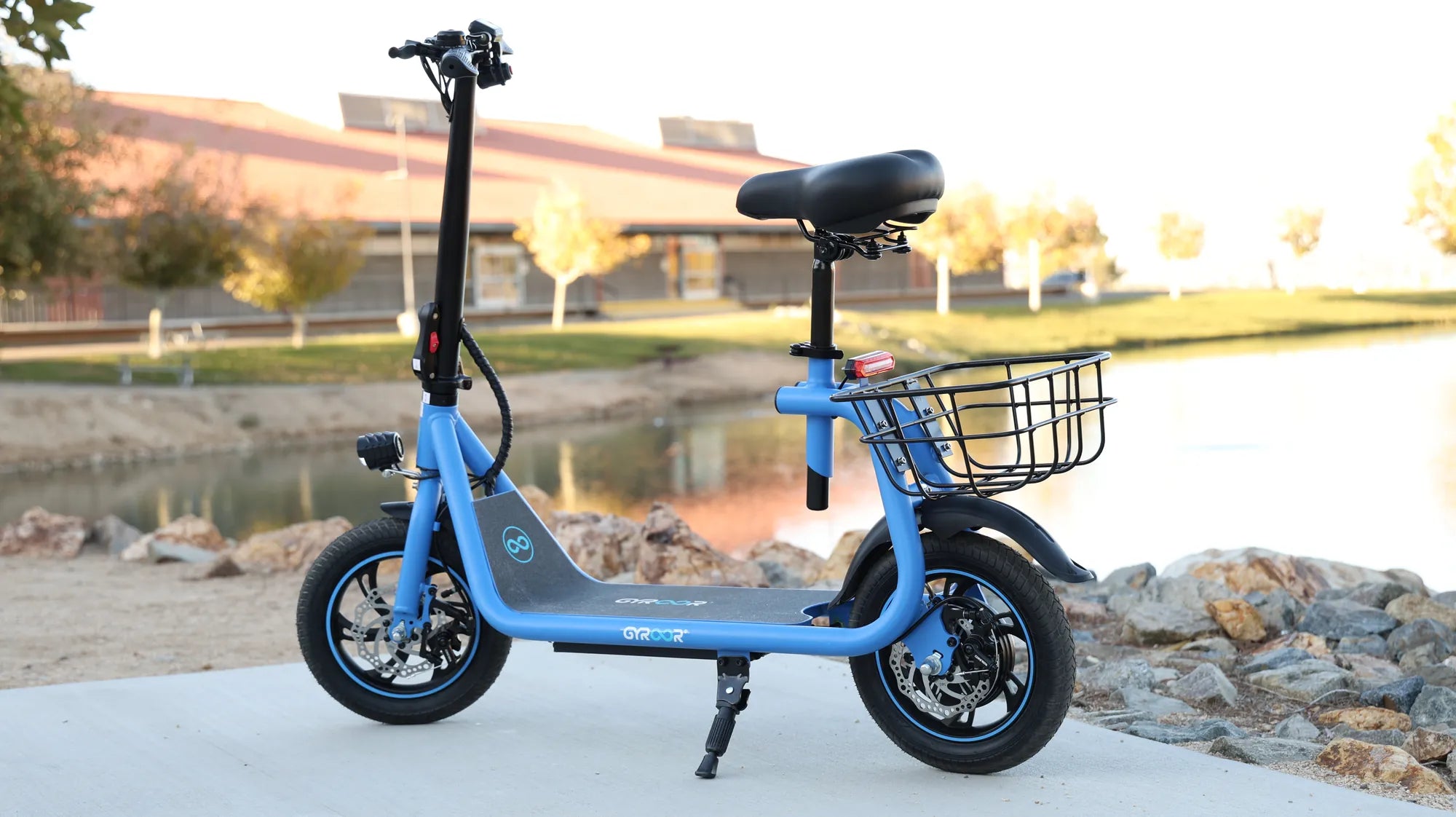
Navigating Wet Weather with Your Electric Scooter
Riding an electric scooter transforms daily commutes, but a sudden drizzle can spark immediate concern. The core question for any rider is straightforward: Can electric scooters be in the rain? The answer is nuanced, hinging on a critical understanding of water resistance ratings, component integrity, and rider responsibility.
This article provides a data-driven analysis of what happens when scooters meet moisture. We'll dissect Ingress Protection (IP) codes, identify which components are most vulnerable, and outline actionable steps for safe operation and maintenance. Modern commuter scooters from reputable brands are engineered for real-world conditions, including occasional wet roads, but informed usage is non-negotiable.
Brands like Gyroor design models with this reality in mind, featuring IPX5-rated water resistance and UL-certified batteries to offer riders greater confidence. However, no consumer electric scooter is fully waterproof, and understanding the distinction between resistant and proof is the first step to safe, wet-weather riding.
Understanding IP Ratings: The Science of Water Resistance
The Ingress Protection (IP) code is an international standard (IEC 60529) that classifies the degree of protection provided by an enclosure against solids and liquids. For electric scooters, this rating is your primary data point for assessing water tolerance. The code typically appears as "IP" followed by two digits, like IPX5.
The first digit (0-6) indicates protection against solid objects like dust. The second digit (0-9K) specifies protection against water. An "X" means the product hasn't been rated for that type of ingress. Therefore, an IPX5 scooter has a defined water resistance rating but no official dust protection rating.
It's vital to dismiss the term "waterproof" from your vocabulary when discussing electric scooters. The correct term is water-resistant, indicating a defined level of protection under specific test conditions, not indefinite or complete immunity. For practical urban commuting, a minimum rating of IPX4 is often cited, but IPX5 provides a more robust safety margin for riding in light rain.
Lower ratings like IPX4 protect against water splashes from any direction, suitable for a light mist. Ratings of IPX5 and above defend against more directed water jets, correlating better with actual rain and road spray. Knowing your scooter's exact IP rating is the foundational step in answering can electric scooters be in the rain for your specific model.
What Does an IPX5 Rating Actually Mean?
An IPX5 rating is a common and practical standard for many commuter-focused electric scooters, including several models from Gyroor. This rating certifies that the scooter's electrical components can withstand water jets from a 6.3mm nozzle from any direction without harmful effects.
In real-world terms, an IPX5 rating translates to protection against light to moderate rain, riding through puddles, and the general wetness of damp roads. The testing simulates conditions like being sprayed by a car tire on a wet street or caught in a steady rain shower. It is designed for dynamic exposure, not static immersion.
However, the protection has clear limits. An IPX5-rated scooter is not rated for submersion, high-pressure washing, or prolonged, heavy downpours. The rating applies to the enclosure of critical parts; it does not guarantee that water won't eventually seep into mechanical components like wheel bearings or brake systems over time and with repeated exposure.
When you ask, "Can electric scooters be in the rain?" an IPX5 rating provides a qualified "yes" for typical urban wet-weather scenarios. It signifies a scooter built for the unpredictability of daily commutes, offering a significant layer of protection that non-rated or lower-rated models lack.
The Real Risks: What Can Go Wrong in the Rain?
Even with a good IP rating, exposing an electric scooter to water introduces multiple risks that can lead to performance degradation, component failure, or safety hazards. The primary vulnerabilities lie in the electrical system, the motor, and the braking components.
The battery pack and electronic controller are the most sensitive. Water ingress can cause short circuits, leading to immediate failure or, in extreme cases, a fire risk. Corrosion on battery terminals and control board connections is a slower, insidious process that can degrade performance and lifespan. This is why the quality of the battery seal and its certifications are paramount.
The electric motor, often housed in the wheel hub, is susceptible to water damage in its bearings. Contaminated bearings will wear out rapidly, leading to noisy operation and eventual seizure. While many motors are well-sealed, repeated immersion in deep puddles can compromise this protection.
Braking performance is critically reduced in wet conditions. Disc brakes may squeal and lose bite, while electronic or drum brakes can experience delayed response. Furthermore, wet tires have significantly less traction, increasing the risk of skidding, especially when braking or turning. These mechanical and grip-related risks exist independently of a scooter's IP rating and require adapted riding technique.
Battery Safety: The Critical Role of UL-Certification
When discussing water and electric scooters, the battery demands special attention. A UL-certified battery pack, a standard feature across Gyroor's lineup, represents a critical benchmark for safety and durability. UL certification involves rigorous independent testing for electrical, mechanical, and environmental stress.
These tests evaluate the battery's ability to handle overcharging, short circuits, and extreme temperatures. A battery that passes these hurdles is fundamentally more robust, with better-sealed cells and higher-quality construction that inherently offers better resistance to environmental moisture and the vibrations of wet-road riding.
This certification provides a vital layer of safety assurance. In the event of a compromised seal or unexpected water ingress, a UL-certified battery is engineered with fail-safes to minimize the risk of thermal runaway—a dangerous condition where the battery overheats and can potentially catch fire.
Therefore, when evaluating if an electric scooter can handle the rain, the presence of a UL-certified battery is as important as the IP rating. It's an indicator of a manufacturer's commitment to safety and reliability, offering peace of mind that the most critical and potentially hazardous component has been built to a recognized safety standard.
Practical Rider's Guide: How to Safely Use Your Scooter in Wet Conditions
If you must ride in wet weather, a systematic approach to preparation, riding, and post-ride care can drastically reduce risk. This guide applies whether you're planning a ride in light rain or get caught in an unexpected shower.
Pre-Ride Checks: Ensure your tires are properly inflated for better grip. Check that brake pads have sufficient material and that cables are intact. Confirm all protective caps for charging ports are securely fastened. If your scooter has a removable battery, verify its seal is clean and undamaged before insertion.
Safe Riding Technique: Reduce your speed by at least 30%. Accelerate and brake smoothly and gradually to avoid skidding. Avoid sharp turns and lean less than you would on dry pavement. Steer clear of large puddles, painted road markings, metal grates, and leaves, as these are extremely slippery. Increase your following distance significantly.
Post-Ride Care (Crucial): Immediately after your ride, use a dry, absorbent towel to wipe down the entire scooter, focusing on the deck, stem, brakes, and wheels. Gently tilt the scooter to drain any water from the deck. Use a compressed air duster or a dry cloth to remove moisture from around brake calipers and charging ports. Never store a wet scooter or charge it until it is completely dry to the touch, inside and out. Allow it to air-dry in a well-ventilated area for several hours.
If Caught in a Heavy Downpour: Seek shelter if possible. If you must continue, ride with extreme caution. Once you reach your destination, perform the post-ride drying procedure with extra thoroughness. Pay close attention to any unusual sounds or behavior from the scooter on your next ride, such as flickering lights or erratic power delivery.
Comparing Water Resistance in Electric Scooters
Not all water resistance is created equal. The following table compares common IP ratings for water (the second digit) to help you understand what level of protection is suitable for different riding needs.
| IP Rating (Water) | Test Definition & Protection Level | Suitable For | Not Suitable For |
|---|---|---|---|
| IPX4 | Splash-resistant. Water splashing from any direction shall have no harmful effect. | Very light mist, accidental splashes. Short exposure to drizzle. | Riding in rain, going through puddles, wet commutes. |
| IPX5 | Water jet-resistant. Water projected by a 6.3mm nozzle from any direction shall have no harmful effect. | Light to moderate rain, wet urban roads, puddle spray. The standard for reliable commuter scooters like many Gyroor models. | Submersion, heavy monsoons, pressure washing, deep flooding. |
| IPX7 | Immersion up to 1m for 30 minutes. | Accidental drops in water, very heavy rain. Often found in specialized off-road or rugged models. | Continuous high-pressure water jets (like IPX6). |
| No Rating / IPX0 | No protection against water ingress. | Exclusively dry, indoor, or fair-weather use. High risk of immediate damage if wet. | Any exposure to moisture, including damp roads or humidity. |
As the table shows, an IPX5 rating strikes a practical balance for everyday use. It offers substantial protection against the most common wet-weather scenarios a commuter will face without the significant cost increase associated with specialized IPX7 or higher models. Choosing a scooter with at least an IPX5 rating is the most informed answer to the question, can electric scooters be in the rain, for the average rider.
Warranty and Support: What’s Covered?
Understanding a manufacturer's warranty stance on water damage is essential. Most standard warranties explicitly exclude damage caused by water ingress unless the scooter has a specific IP rating and the damage occurs under conditions within that rating's scope. This is a critical distinction.
For example, a brand may void the warranty if an IPX5-rated scooter is submerged in a lake, but may cover a controller failure if it occurs after normal riding in rain, provided the failure is deemed a manufacturing defect in the water seal. The burden of proof can be challenging, highlighting the importance of purchasing from a reputable company with clear policies.
Gyroor backs its products with a 1-year comprehensive warranty and US-based customer support. This warranty covers defects in materials and workmanship. While it does not cover "acts of God" or intentional abuse (like submerging an IPX5 scooter), it reflects confidence in the durability of their IPX5-rated builds and UL-certified components.
This reliable support network is a key part of the value proposition. When you invest in a scooter from a trusted brand, you're not just buying a product with certain specifications; you're gaining access to a company that stands behind its engineering. Always review the warranty terms carefully and use your scooter within its rated parameters to maintain coverage.
Frequently Asked Questions (FAQ)
Q: Can I ride my Gyroor scooter in heavy rain?
A: It is not recommended. While Gyroor scooters with an IPX5 rating are built to handle light to moderate rain, heavy downpours or monsoons exceed the tested conditions. The intensity of water exposure, combined with reduced visibility and traction, creates significant safety and damage risks. Seek shelter if possible.
Q: What should I do if my scooter gets partially submerged in a deep puddle?
A> Immediately power it off. Do not attempt to turn it back on or charge it. Thoroughly dry the exterior, then place it in a dry, ventilated area for at least 48-72 hours to allow internal moisture to evaporate. Before using it again, inspect it carefully. If you notice any malfunction, contact customer support. The warranty likely does not cover submersion damage.
Q: How do I properly dry my electric scooter after riding in the rain?
A> Follow this sequence: 1) Wipe the entire scooter with a dry towel. 2) Tilt it to drain water from the deck. 3) Use compressed air or a cloth on brakes and ports. 4) Let it air-dry upright in a warm, dry place for several hours or overnight. 5) Ensure it is completely dry before the next use or charging attempt.
Q: Does the warranty cover water damage?
A> Coverage depends on the circumstances matching the scooter's IP rating. Damage from riding within the rated conditions (e.g., light rain for an IPX5 scooter) may be covered if it results from a manufacturing defect. Damage from exceeding the rating (submersion, pressure washing) is typically not covered. Always check your specific warranty document.
Q: Can I wash my electric scooter with a hose?
A> No. Even with an IPX5 rating, using a pressurized hose or pressure washer is dangerous. The concentrated force can drive water past seals not designed for that type of exposure. Only use a damp cloth for cleaning, and avoid directing water at any openings, especially the charging port.
Ride Smart, Stay Safe, and Plan Ahead
The question "Can electric scooters be in the rain?" is best answered with a framework of knowledge rather than a simple yes or no. Modern, well-built scooters from reputable brands are indeed capable companions for damp urban environments, thanks to standardized water-resistance ratings like IPX5 and safety-certified components.
Your safety and your scooter's longevity depend on three pillars: knowing your model's specific IP rating and its limits, adapting your riding technique for hazardous wet conditions, and committing to diligent post-ride maintenance. The mechanical risks of reduced traction and braking remain, regardless of how well-sealed your electronics are.
Choosing a scooter designed for real-world use is the first critical decision. Brands like Gyroor, which prioritize UL-certified batteries and IPX5-rated construction across their lineup, provide a foundation of reliability trusted by over 100,000 riders. This engineering, combined with a comprehensive 1-year warranty, offers confidence for the inevitable wet commute.
Ultimately, technology provides protection, but rider judgment ensures safety. Understand your equipment, respect the weather, and maintain your scooter diligently. For those seeking a reliable electric scooter built to handle the challenges of daily commuting, including occasional rain, explore the robust and water-resistant models available. Browse the full Gyroor collection at gyroorboard.com to find a scooter engineered for your journey, come rain or shine.
Top Electric Scooters for Kids: The Ultimate Guide for Parents
Electric Kick Scooters: The Future of Urban Mobility Is Here