



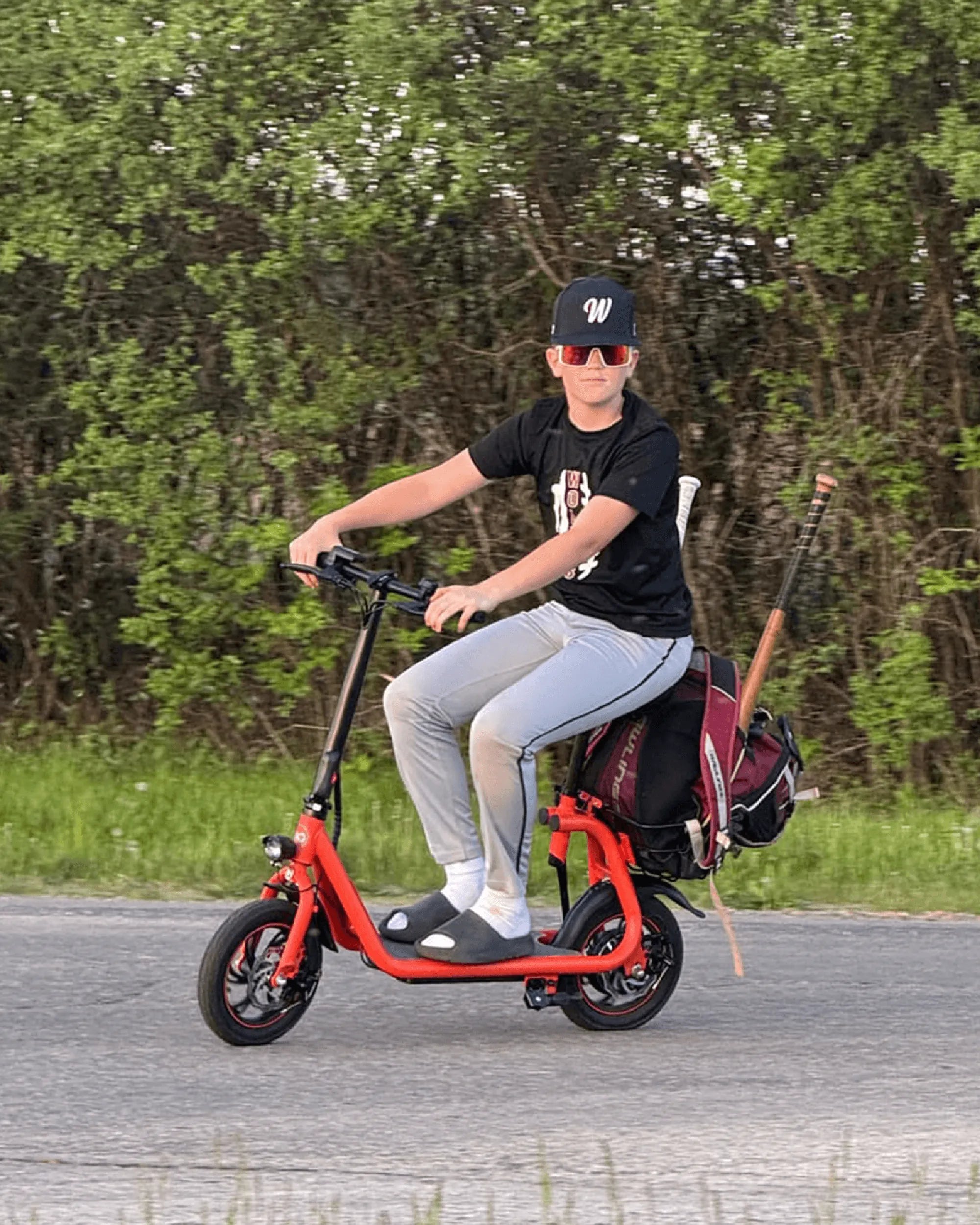
Navigating the World of Kids' Electric Scooters
Electric scooters have transformed from niche gadgets to mainstream tools for childhood outdoor fun, skill development, and a taste of independent mobility. For parents, navigating this market requires balancing excitement with essential safety and practicality. This guide cuts through the noise with factual, data-driven advice to help you make the best choice. As a leading electric scooter and e-bike brand trusted by over 100,000 riders across North America and Europe, Gyroor is committed to safety-first design, featuring UL-certified batteries and robust construction. Our goal is to provide the ultimate resource for selecting the right scooter for your child's age, skill level, and environment.
Why Safety is Non-Negotiable: Key Features Every Parent Must Check
When evaluating top electric scooters for kids, safety must be the primary lens. A scooter's core engineering determines its real-world reliability. Key features are not just specifications; they are safeguards.
Parents should prioritize verified battery safety, structural integrity, and controlled performance. These elements work in concert to prevent common hazards. Investing in a scooter with proven safety credentials is an investment in peace of mind.
The Battery: Understanding UL Certification and Charge Safety
The battery is the heart of the scooter and its most critical safety component. UL certification, specifically UL 2271 for the battery pack and UL 2849 for the entire electrical system, is a rigorous third-party safety standard. It involves extensive testing for electrical, mechanical, and environmental stress to prevent overheating, short-circuiting, and fire.
Gyroor's commitment to using only UL-certified battery packs, tested for 500+ charge cycles, provides a fundamental layer of protection. Beyond certification, proper charging habits are vital. Always use the manufacturer-provided charger, avoid overnight charging unattended, and store the scooter in a dry, cool place.
Build Quality and Water Resistance: What IPX5 Really Means
A scooter's durability directly impacts its safe operation over time. The IP (Ingress Protection) rating indicates its defense against solids and liquids. An IPX5 rating, common in quality models, means the scooter is protected against water jets from any direction.
This rating safeguards against splashes from puddles, wet pavement, or light rain, making it suitable for real-world conditions. It does not mean the scooter is submersible or suitable for heavy downpours. A sturdy frame, secure folding mechanisms, and reliable welds are equally important signs of build quality that prevent structural failures.
Speed Control and Braking Systems: Managing the Power
Controllable power is essential for young riders. Look for scooters with multiple speed modes, often controlled via a beginner-friendly interface. A beginner mode typically limits speed to 5-7 mph, allowing skill development in a safe envelope.
The braking system must be responsive and intuitive. A combination brake—such as an electronic brake paired with a rear foot or disc brake—provides redundancy and effective stopping power. A wide, textured deck also contributes to safety by offering stable footing, which is crucial for maintaining balance during acceleration and braking.
Finding the Perfect Fit: A Parent's Guide to Scooter Selection
Selecting from the top electric scooters for kids requires a methodical approach based on your child's profile. A perfect fit ensures safety, enhances enjoyment, and extends the product's lifespan. This decision matrix focuses on the rider's physical attributes and intended use.
Ignoring manufacturer guidelines for age and weight is a significant risk. An undersized scooter may be unstable, while an oversized one can be difficult to control. Always treat maximum weight limits as strict ceilings, not suggestions.
Age and Weight Recommendations: Matching Scooter to Rider
Age recommendations correlate with developmental stages in motor skills and judgment. Weight capacity is a direct engineering limit for the motor, battery, and frame. The following table provides a general framework for matching a scooter to a rider.
| Age Range | Recommended Weight Capacity | Typical Motor Power | Key Features Focus |
|---|---|---|---|
| 6-8 years | 120 lbs / 55 kg max | 100W - 150W | Beginner speed mode (≤7 mph), lower deck, simple controls |
| 9-12 years | 160 lbs / 73 kg max | 150W - 250W | Multiple speed modes (up to 10-12 mph), enhanced suspension, brighter lights |
| 13+ years | 200 lbs / 91 kg+ max | 250W+ | Higher speed capabilities, adult-style features, longer range |
These are guidelines; always defer to the specific model's manufacturer specifications. A lightweight child on a scooter designed for older kids may struggle with the higher speed and handling.
Terrain and Use Case: Pavement Cruisers vs. All-Terrain Explorers
Where will your child ride most? The answer dictates tire choice and suspension needs. For smooth pavement, bike paths, and sidewalks, scooters with solid honeycomb or airless rubber tires are ideal. They require no maintenance and are puncture-proof.
For gravel paths, grass, or slightly uneven terrain, models with air-filled pneumatic tires and front or dual suspension provide crucial shock absorption. This results in a smoother, more stable ride. Gyroor's range includes models tailored for both environments, ensuring a comfortable experience matched to the terrain.
Portability and Weight: For Parents on the Go
Consider the scooter's total weight and foldability. A child should be able to safely carry their scooter up a short flight of stairs if needed. Generally, scooters for younger kids weigh 15-22 lbs, while more feature-rich models for older children can weigh 25-35 lbs.
A quick-folding mechanism is invaluable for storage in a car trunk or at home. Test the folding latch for security; it must lock firmly in both the open and closed positions to prevent accidental collapse during riding.
Decoding Specifications: Motor Power, Range, and Speed
Understanding key specs demystifies performance claims and sets realistic expectations. Motor power (watts) influences hill-climbing ability and acceleration. A 150W motor is sufficient for gentle slopes, while 250W+ handles moderate inclines more comfortably.
Range is the estimated distance per charge, but real-world results vary. Factors like rider weight, terrain, temperature, and use of lights/throttle affect it. Manufacturers often test under ideal conditions, so consider the listed range a best-case scenario.
Maximum speed is a critical safety spec. The best top electric scooters for kids offer adjustable limits. A scooter that starts in a 6 mph beginner mode but can be unlocked to 12 mph as skills grow offers longevity and adaptive safety.
Essential Safety Gear and Parental Supervision Rules
The safest scooter is only one part of the equation. Proper gear and clear rules are non-negotiable layers of protection. This equipment is as mandatory as a seatbelt in a car.
A CPSC-certified bicycle helmet is the absolute minimum. It must fit snugly. Knee and elbow pads protect against common falls, and closed-toe shoes are essential for foot protection and grip.
Establish family riding rules: always wear gear, ride in designated safe areas (parks, empty parking lots, sidewalks where legal and safe), never near roads with traffic, and never after dark or in poor weather. Parental supervision is crucial until the child demonstrates consistent, responsible riding habits.
Teaching Responsible Riding: A Quick Starter Guide
The first ride should be a structured lesson, not free play. Start in a flat, open, car-free area like an empty tennis court or parking lot. Begin with the scooter powered off, letting the child practice kicking and coasting to get a feel for balance.
Introduce power slowly. In the slowest speed mode, practice starting, gentle acceleration, and using the brake to come to a complete stop. Drill turning maneuvers in both directions. Teach them to always scan the path ahead for cracks, pebbles, or obstacles.
Emphasize respect for pedestrians, signaling intentions, and avoiding sudden movements. This foundational practice builds muscle memory and confidence, setting the stage for a lifetime of safe riding habits.
The Value of a Strong Warranty and Accessible Support
A robust warranty reflects the manufacturer's confidence in their product. Look for a comprehensive 1-year warranty that covers the battery, motor, and frame against manufacturing defects. This is your safeguard against premature failures.
Accessible customer support is equally important. Brands like Gyroor, with support teams in North America and Europe, can provide timely troubleshooting, replacement parts, and clear guidance. Check online reviews for feedback on a company's responsiveness to warranty claims and support requests before purchasing.
Frequently Asked Questions (FAQs) for Concerned Parents
Q1: What is the ideal age for a child to start using an electric scooter?
Most manufacturers recommend ages 6-8 as a starting point, depending on the child's coordination, strength, and ability to follow safety rules. It's less about a specific birthday and more about demonstrated maturity and physical capability. Always start with a model designed for beginners with speed limiting.
Q2: How long does the battery last on a single charge, and what's the charging time?
Range varies by model, battery capacity, and riding conditions. For kids' models, a realistic range is 6-10 miles per charge. Charging time typically ranges from 3 to 5 hours for a full charge. Using the correct charger and not depleting the battery completely before charging helps maintain battery health.
Q3: Are these scooters safe for use in the rain or on wet ground?
Scooters with an IPX5 water-resistant rating are safe for riding on wet pavement and in light rain, as they are protected against water splashes. However, they are not waterproof. Avoid deep puddles, heavy rain, and submersion. Wet conditions also reduce traction, so riding must be slower and more cautious, with greater braking distance.
Q4: Can the top speed be limited for beginners?
Yes, this is a standard and critical feature on quality kids' electric scooters. They typically offer 2-3 speed modes selectable via a button or app. Beginner mode often caps speed at 5-7 mph. Parents can keep the scooter in this mode until the child demonstrates full control and readiness for more speed.
Q5: What maintenance does an electric scooter require?
Regular maintenance is simple but important. Key tasks include: checking tire pressure (for pneumatic tires), ensuring all bolts and nuts are tight (especially on folding mechanisms), cleaning the deck and frame with a damp cloth, inspecting brakes for wear, and storing the scooter in a dry place. Avoid high-pressure water jets when cleaning.
Empowering Safe Adventures with Confidence
Choosing one of the top electric scooters for kids is a significant decision that opens a door to outdoor adventure and fun. The key takeaways are clear: prioritize verified safety certifications like UL for the battery and a meaningful IP rating, meticulously match the scooter's specifications to your child's age and weight, and never compromise on safety gear and supervised practice.
With these precautions in place, an electric scooter from a trusted, innovation-driven brand becomes a source of joy, confidence, and responsible outdoor activity. It encourages physical play, develops coordination, and fosters independence within a safe framework. Ready to explore models that put safety and performance first? Browse the full Gyroor collection, featuring UL-certified, IPX5 water-resistant designs backed by a reliable 1-year warranty, at gyroorboard.com and empower your child's next adventure.
Ride on Scooters Electric: The Future of Urban Mobility
Can Electric Scooters Be in the Rain? What Riders Must Know