



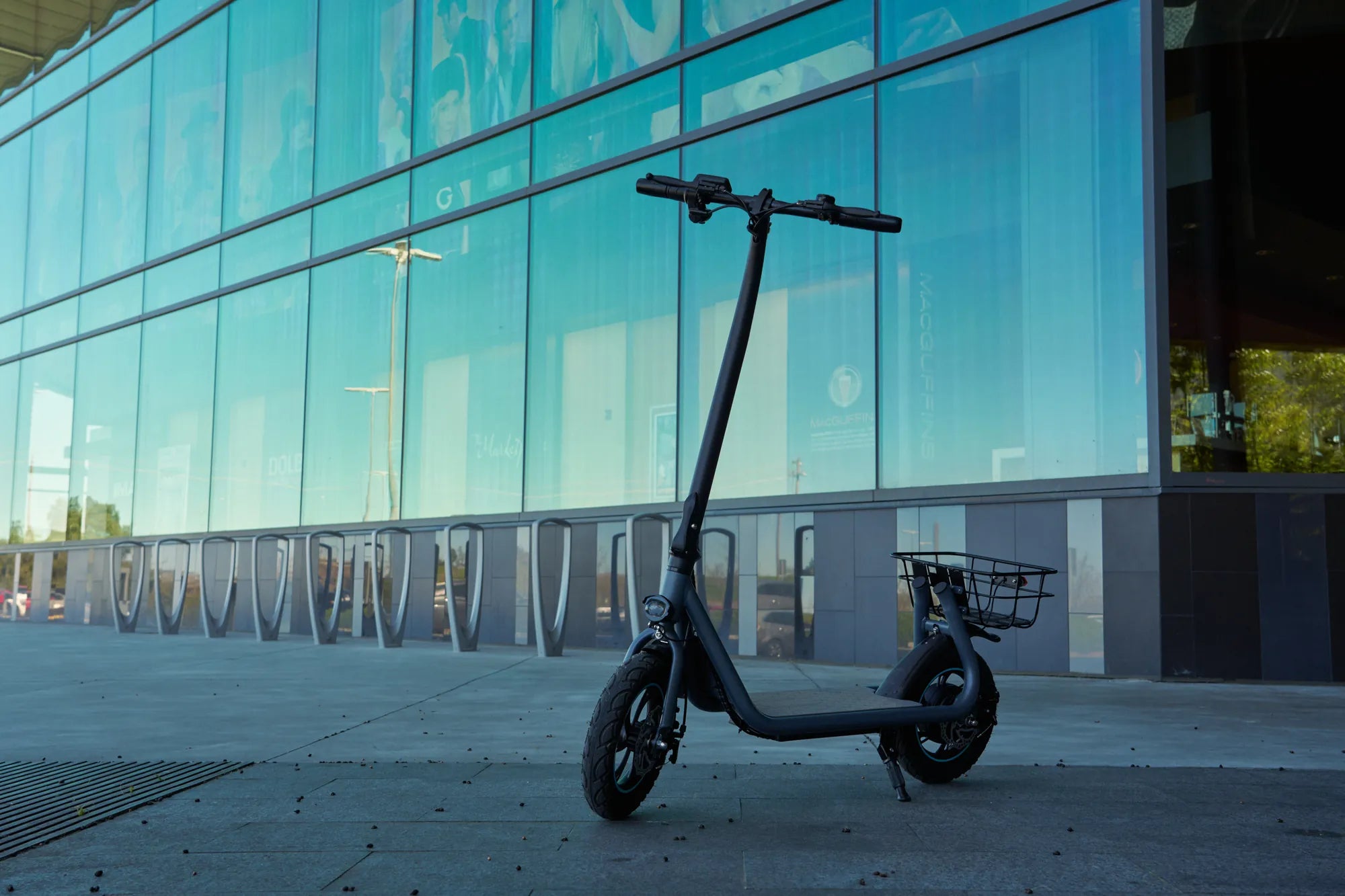
Introduction: The Hill-Climbing Question for Modern Commuters
A steep incline on your commute can be a daunting obstacle. The burning question for many potential riders is straightforward: can electric scooters go up hills? The answer is a definitive yes, but with significant caveats tied to engineering, specifications, and real-world conditions.
This article demystifies the climbing capabilities of modern e-scooters. We will examine the critical technical factors—motor torque, battery systems, and controller efficiency—that determine uphill performance. We'll compare different model types, highlight essential riding techniques, and provide data-driven insights to help you select a scooter that won't leave you walking up your local hill.
Understanding these capabilities is key to a confident, reliable riding experience. Whether you're navigating San Francisco's slopes or a gentle suburban grade, the right knowledge and equipment make all the difference.
The Engineering Behind the Climb: Key Technical Factors
An electric scooter's ability to ascend an incline is not magic; it's physics and engineering. Performance is dictated by a few core specifications that work in concert to overcome gravity and friction.
Ignoring marketing fluff and focusing on these key metrics will give you a clear picture of any scooter's hill-climbing potential. Think of it as the scooter's power-to-weight ratio and its ability to sustain output under heavy load.
Motor Power and Torque: The Heart of the Ascent
Motor wattage is often the most advertised spec, but it requires context. Nominal power (e.g., 350W) indicates continuous output, while peak power (e.g., 700W) is the maximum short-term burst. For hills, sustained torque—the rotational force that gets the wheel turning—is more critical than top speed.
A high-torque motor delivers strong initial acceleration and maintains power on a gradient. Dual-motor setups, where two motors engage simultaneously, effectively double the available torque, making them exceptionally capable for steep inclines and off-road terrain.
Single-motor commuter scooters rely on gear ratios and motor design to maximize torque within their power band. The key takeaway is that for hills, torque ratings and motor configuration are more telling than wattage alone.
Battery Voltage and Controller Efficiency: Sustaining the Push
The battery pack is the scooter's fuel tank, and its voltage is like the pressure in that tank. Common systems are 36V, 48V, and 52V. A higher voltage system can deliver more power to the motor with less current, resulting in more efficient and powerful performance, especially under the strain of a climb.
The electronic speed controller (ESC) acts as the brain, regulating power flow from the battery to the motor. A quality controller manages this delivery efficiently, preventing overheating and ensuring smooth power application during sustained climbs.
Under heavy load, cheaper batteries can experience "voltage sag," where output drops precipitously, causing a sudden loss of power. A high-quality, high-drain battery is essential to maintain voltage and prevent this dangerous scenario mid-hill.
Weight, Gradient, and Terrain: The Real-World Variables
Engineering specs meet reality here. The total weight—rider, scooter, and any cargo—is the mass that gravity is pulling down. A 250 lb rider on a 40 lb scooter presents a vastly different challenge than a 150 lb rider on the same model.
Gradient, measured as a percentage, is crucial. A 10% grade rises 1 foot vertically for every 10 feet horizontally. Most urban scooters handle 10-15% grades. True hill conquerors aim for 20-30% capabilities.
Terrain surface dramatically affects traction and rolling resistance. Smooth pavement offers the best performance. Gravel, grass, or wet surfaces increase resistance and risk wheel slip, demanding more power and caution from the rider.
Performance Tiers: From City Commutes to Mountain Trails
Not all electric scooters are built for the same terrain. Manufacturers design models for specific use cases, which directly correlates to their hill-climbing prowess. Understanding these tiers helps match the scooter to your route's demands.
The following table compares general scooter categories based on their typical specifications and intended hill-climbing use.
| Scooter Category | Typical Motor Power | Battery Voltage | Max Grade Ability | Ideal Use Case |
|---|---|---|---|---|
| Lightweight Commuter | 250W - 350W | 36V | Up to 10% | Flat to gently rolling urban paths, short distances. |
| Standard Commuter | 350W - 500W | 36V - 48V | 10% - 15% | Daily city commutes with overpasses and moderate hills. |
| Performance/Pro Commuter | 500W - 1000W (Single or Dual) | 48V - 52V | 15% - 25% | Hilly cities, longer commutes, variable terrain. |
| Off-Road/High-Performance | 1000W+ (Often Dual) | 52V+ | 25%+ | Steep hills, trail riding, rugged conditions. |
Gyroor Models: Engineered for Confident Climbing
As a leading electric scooter and e-bike brand trusted by over 100,000 riders across North America and Europe, Gyroor designs its lineup with real-world performance in mind. Here’s how different Gyroor models are built to handle inclines.
Commuter Champions: Mastering Urban Inclines
Models like the Gyroor C1 and C2 series are engineered for efficient daily travel. Featuring robust 350W to 500W motors paired with 36V or 48V battery systems, these scooters deliver reliable power for urban landscapes.
They are adept at handling moderate grades commonly found in cities—think bridge approaches, suburban hills, and parking ramps, typically up to 15-20% gradients depending on rider weight. Their focus is on a balance of power, range, and portability for the everyday commuter.
With IPX5 water-resistant designs, they also maintain reliability when encountering wet pavement on hills, a common urban scenario. The integration of UL-certified battery packs ensures stable power delivery during sustained climbs, protecting against performance drops.
Off-Road and Performance Models: Conquering Steeper Terrain
For riders facing steeper challenges or seeking adventure, Gyroor's performance-oriented models, such as those in the Warrior series, are built to dominate. These scooters often feature dual-motor configurations, with combined peak power exceeding 1000W, and high-voltage 48V or 52V battery systems.
This setup generates immense torque, enabling them to tackle steep hills exceeding 25% grade and power through uneven off-road trails. Larger, air-filled tires provide the necessary traction on loose or rugged surfaces where climbing is most demanding.
The reinforced frames and advanced suspension systems on these models manage the additional stresses of aggressive hill climbing, ensuring durability and rider control. They represent the pinnacle of hill-climbing capability for consumer electric scooters.
The Foundation: UL-Certified Batteries and Sustained Power
A critical but often overlooked aspect of hill climbing is battery integrity. Gyroor's commitment to using UL-certified lithium-ion battery packs in all models is a major advantage for climbing performance.
These rigorously tested batteries are engineered for high-drain scenarios. During a steep climb, when the motor draws maximum current, these packs maintain a stable voltage output. This prevents the dangerous voltage sag that can strand a rider and ensures consistent power delivery from the bottom to the top of the hill.
Furthermore, the 500+ charge cycle rating of these batteries means this reliable performance is maintained over years of use, not just when the scooter is new. This built-in safety and durability are foundational to confident hill climbing.
Maximizing Your Scooter's Hill-Climbing Ability: A Rider's Guide
Your technique and preparation are as important as your scooter's specifications. Follow these practical steps to optimize performance and safety on every incline.
Pre-Ride Preparation: Tire Pressure and Battery Charge
Always check tire pressure before a ride involving hills. Properly inflated tires (to the PSI listed on the sidewall) minimize rolling resistance, which conserves battery power and improves efficiency. Under-inflated tires make the motor work harder.
Ensure your battery charge is above 50%, ideally 80% or more, before tackling significant hills. Battery voltage naturally decreases as charge depletes. Starting a climb with a low battery significantly increases the risk of power loss and voltage sag mid-hill.
Riding Techniques for Efficiency and Safety
Use a running start. Approach the hill with some momentum from the flat section before it. This reduces the initial energy required to overcome inertia and begin the ascent.
Apply steady, smooth throttle. Avoid "pulsing" or jerky inputs. A consistent throttle allows the motor and controller to operate at peak efficiency. Lean your body weight slightly forward over the front wheel to improve traction and prevent the front end from lifting on very steep starts.
Maintain a realistic speed. Expect to go slower uphill. Fighting to maintain your flat-ground speed will drain the battery rapidly and stress the motor. Let the scooter settle into its sustainable climbing pace.
Understanding Limits and Conserving Battery
Know your scooter's and your own limits. If a hill looks too steep or the scooter is struggling, dismount and walk. It's safer for you and prevents potential damage from motor overheating.
Aggressive hill climbing significantly reduces overall range. If your route includes multiple steep climbs, plan for a reduced total distance. Combining hill climbing with high speeds and frequent acceleration will deplete the battery the fastest.
Frequently Asked Questions About E-Scooters and Hills
Q: What is the maximum hill grade most e-scooters can climb?
A: Most standard commuter e-scooters (500W single motor) can handle grades between 10% and 15%. Performance models (dual motors, 1000W+) can often conquer grades of 20% to 30%. Always check the manufacturer's stated gradeability, but remember this is tested under ideal conditions with a light rider.
Q: Does using a scooter on hills damage the motor or battery?
A: Occasional hill climbing on a scooter designed for it causes normal wear. However, constantly overloading an underpowered scooter on steep hills can lead to overheating, which may shorten motor life and strain the battery. Using a scooter with appropriate power and a high-quality battery system, like Gyroor's UL-certified packs, minimizes this risk.
Q: Will my scooter's speed drop significantly going uphill?
A: Yes, this is normal and expected. The scooter is using most of its power to overcome gravity rather than achieve speed. A scooter that goes 20 mph on flat ground may slow to 6-10 mph on a steep hill. This is a sign the motor is working within its capacity, not a malfunction.
Q: How does Gyroor's IPX5 water-resistance help on wet hills?
A: IPX5 rating means the scooter can withstand low-pressure water jets from any direction. On wet hills, this protects critical electrical components—like the motor, controller, and battery contacts—from water sprayed up by the wheels or rain. This protection allows for safer, more reliable operation in damp conditions where traction is already a concern.
Q: What does the 1-year warranty cover regarding hill-climbing stress?
A: Gyroor's 1-year warranty covers defects in materials and workmanship under normal use. Using a performance model on hills is considered normal use. The warranty would cover failures of the motor or battery that are not a result of physical damage, misuse, or modification. It provides peace of mind that the components are built to handle the stresses for which they are engineered.
Conclusion: Choosing Confidence for Every Climb
The question of whether electric scooters can go up hills has a layered answer. Modern e-scooters, particularly those designed with power and durability in mind, are fully capable of conquering a wide range of inclines. The key lies in matching the scooter's technical specifications—motor torque, battery voltage, and build quality—to the specific demands of your terrain and weight.
Brands like Gyroor engineer their models with these challenges in focus, from commuter scooters that handle daily urban slopes to high-performance machines built for steep trails. The integration of UL-certified batteries, IPX5 water-resistance, and robust warranties forms a foundation of safety and reliability that empowers riders to tackle hills with confidence.
By understanding the engineering, preparing your scooter, and employing smart riding techniques, you can transform hills from obstacles into enjoyable parts of your journey. Assess your needs, choose a scooter built for the task, and experience the freedom of powered mobility on any terrain.
Ready to find the perfect electric scooter for your hilly commute or weekend adventures? Browse the full Gyroor collection, featuring UL-certified safety and performance-driven designs, at gyroorboard.com.
Top Electric Scooters for Urban Commuting: The Ultimate Guide
Competitive Landscape of Electric Scooters Market 2025: Trends and Future Outlook