



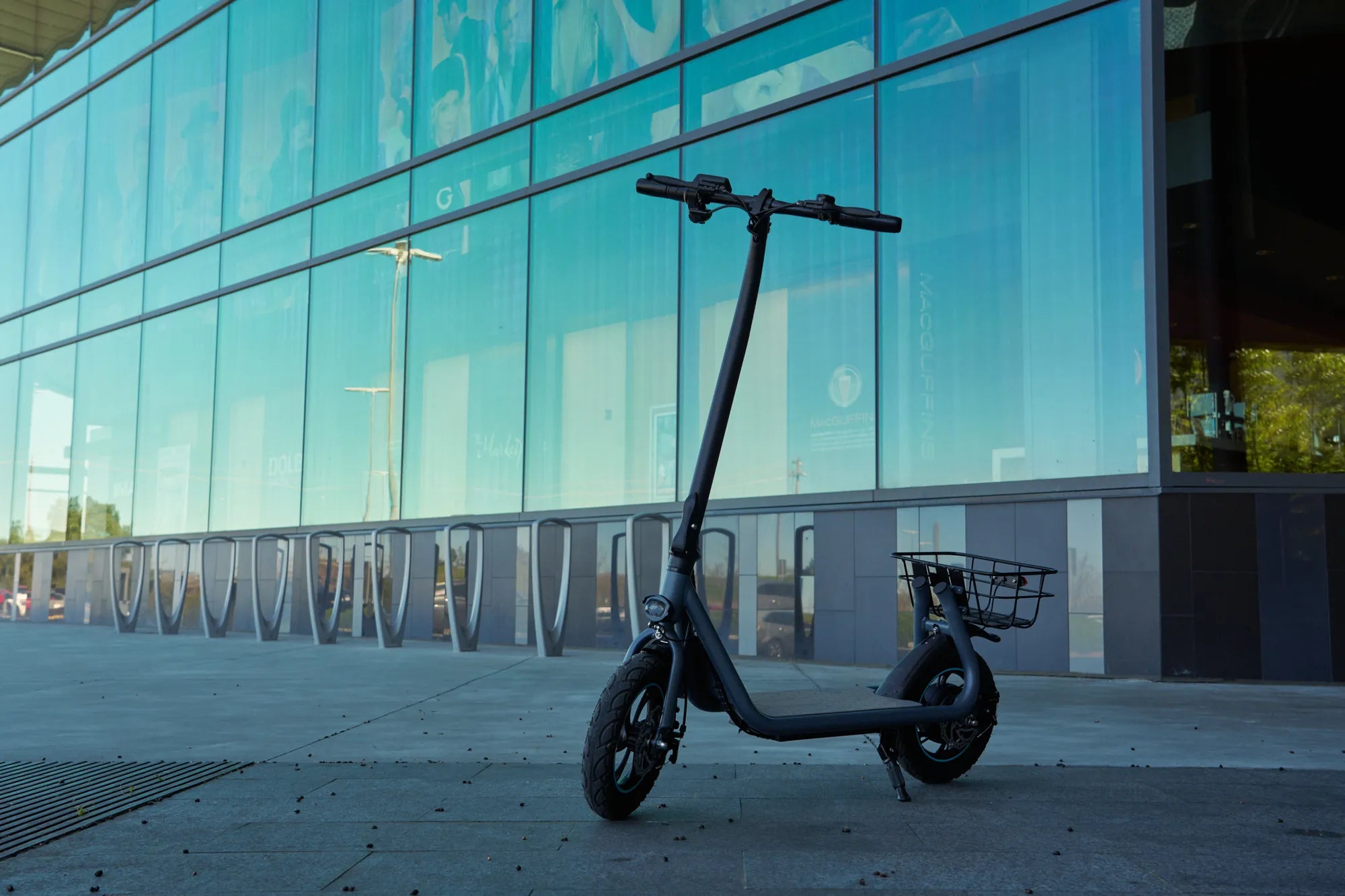
You see them everywhere—electric scooters zipping through bike lanes, weaving between cyclists. But is this legal? More importantly, is it safe? The question 'Can electric scooters use bike lanes?' has become one of the most pressing issues in urban mobility as cities adapt to new transportation technologies. The answer isn't simple or universal; it depends entirely on your location, local laws, and how responsibly you ride. This guide will navigate the complex patchwork of regulations, analyze the safety dynamics of shared lanes, and provide actionable advice for riders. As a leading electric scooter and e-bike brand trusted by over 100,000 riders across North America and Europe, Gyroor is committed to rider education and safety, offering models with UL-certified batteries and features designed for compliant urban riding.
Navigating the Gray Area: Why This Question Matters
The rapid adoption of electric scooters has outpaced municipal regulations in many areas, creating a legal gray zone. Riders often assume bike lanes are fair game, while cyclists may feel their dedicated space is being invaded. This tension highlights the need for clear rules and shared understanding.
Understanding whether electric scooters can use bike lanes isn't just about avoiding tickets—it's about infrastructure planning, rider safety, and harmonious urban mobility. Cities that successfully integrate e-scooters see reduced car traffic and lower emissions, but this requires clear guidelines.
The confusion stems from classification. Are electric scooters vehicles? Are they pedestrians? Most jurisdictions are now settling on classifying them as "micro-mobility devices" with specific rules. How your local government classifies them directly determines where you can legally operate.
Beyond legality, there's a practical dimension. Bike lanes often represent the safest available corridor for scooter riders, away from fast-moving car traffic. Denying access might push riders onto dangerous roads or crowded sidewalks, creating different safety issues. The core challenge is balancing access with safety for all users.
The Legal Landscape: A State-by-State and City-by-City Patchwork
In the United States, there is no single federal law governing electric scooter use in bike lanes. Regulation happens at state and municipal levels, creating a complex mosaic of rules. What's legal in one city might be prohibited just across the county line.
Generally, laws fall into three categories: explicit permission, explicit prohibition, and ambiguous or non-existent rules. A growing number of cities—including Portland, Austin, and Denver—have passed ordinances specifically allowing e-scooters in bike lanes, often with speed restrictions. Others, like some parts of New York City historically, have treated them more restrictively.
California's Assembly Bill 2989 provides a common framework adopted by many localities: it allows motorized scooters on bike paths and lanes, but not on sidewalks, with requirements for helmets (for riders under 18) and a maximum speed of 15 mph on bike paths. This model legislation is influential but not universal.
Internationally, the picture varies widely. In the UK, rental e-scooters are legal in bike lanes during government trials, but privately owned ones are not. In many European cities like Paris and Berlin, integration into bike infrastructure is more advanced. The rider's absolute first step must always be to check their specific city and state transportation codes.
Key Legal Factors That Determine Access
Local laws typically hinge on specific technical and usage criteria. Motor wattage is a common limit; many jurisdictions only allow lower-powered devices (often under 750W) in bike lanes. Maximum speed is another critical factor, with limits commonly set between 15 and 20 mph for bike lane access.
Ownership model matters too. Some cities have different rules for shared rental scooters versus privately owned ones. Rental fleets are often geofenced to limit where they can operate, while private rider compliance relies on education. Age restrictions and helmet laws also frequently apply, especially for younger riders.
Device type is crucial. Laws often distinguish between stand-up electric kick scooters and seated electric mopeds or e-bikes. Gyroor's lineup, for example, includes both e-scooters and e-bikes, and the rules for each can differ even within the same city. Knowing how your device is classified is essential.
Ultimately, the burden is on the rider. Ignorance of the law is rarely a valid defense. A quick search of your city's "micromobility" or "department of transportation" website, or a call to local non-emergency police, can provide definitive answers and prevent costly fines.
Safety First: The Principles of Coexisting in Shared Spaces
Legality is one thing; safe coexistence is another. Even where electric scooters are permitted in bike lanes, their presence introduces new dynamics. The primary goal for all users—scooter riders, cyclists, and pedestrians at intersections—must be mutual respect and predictable behavior.
Safety is a shared responsibility. Scooter riders must understand they are often the newer, faster variable in an established ecosystem. Cyclists, in turn, can help by acknowledging that scooters are legitimate users where permitted. Conflicts often arise from surprise rather than malice.
The physics are important. Electric scooters have different acceleration, braking, and stability profiles than bicycles. Their smaller wheels are more susceptible to road imperfections like potholes or cracks. Riders must adjust their behavior based on their vehicle's characteristics and the environment.
Infrastructure design also plays a role. Narrow, congested bike lanes are harder to share than wide, protected ones. The best outcomes occur when city planners design lanes with mixed micro-mobility traffic in mind, incorporating adequate width and clear signage for all users.
Essential Etiquette for Scooter Riders in Bike Lanes
Control your speed. This is the most critical rule. Use your scooter's speed modes—many Gyroor models feature multiple settings like Eco and Sport. In a crowded bike lane, a lower speed (e.g., 10-12 mph) is appropriate. Match the flow of traffic, don't dominate it.
Communicate clearly. Use a bell or your voice to announce passes with a simple "On your left!" Never assume a cyclist can hear your silent electric motor approaching from behind. Make eye contact at intersections and use hand signals for turns when possible.
Maintain position and avoid sudden movements. Ride in a predictable, straight line. Don't weave in and out of the lane or swing wide around obstacles without checking behind you. Think of yourself as a vehicle within the flow.
Leave space. Maintain a safe following distance from the cyclist or scooter in front of you. Provide ample room when passing. If the lane is too narrow to pass safely, wait patiently for a safe opportunity. Never crowd or tailgate.
Identifying and Mitigating Common Hazards
Dooring zones are a major danger. Ride far enough away from parked cars to avoid being hit by an suddenly opened door. If the bike lane is placed next to parking, exercise extreme caution and reduce speed.
Pedestrian incursions are common. People may step into the bike lane without looking, especially near crosswalks and bus stops. Always be prepared to yield and slow down in areas with high foot traffic. Your right to the lane does not override safety.
Speed differentials can cause conflict. Traditional cyclists may travel at 8-12 mph, while e-scooters can easily reach 15-20 mph. Be especially careful when passing, and do so smoothly and with ample clearance. Aggressive acceleration can startle others.
Road surface hazards are magnified on scooters. Small wheels mean cracks, gravel, wet leaves, and potholes are more dangerous. Scan the path ahead and adjust your line early. Gyroor scooters with pneumatic tires and suspension offer better hazard absorption, but vigilance is key.
Data and Comparison: How E-Scooters and Bikes Stack Up
Objective comparison helps contextualize the sharing debate. When examining speed, size, and behavior, e-scooters and bicycles (including e-bikes) often have more similarities than differences, suggesting shared use is feasible with clear rules.
Studies from transportation research institutes, such as the Mineta Transportation Institute, indicate that conflict points in mixed micro-mobility lanes are often related to behavioral issues—like wrong-way riding or sidewalk riding—rather than the inherent incompatibility of the devices themselves.
| Feature | Typical Electric Scooter | Typical Traditional Bicycle | Typical E-Bike (Class 1/2) |
|---|---|---|---|
| Average Commuting Speed | 12-18 mph | 10-15 mph | 15-20 mph |
| Braking Distance (15 mph) | 15-20 feet | 10-15 feet | 12-18 feet |
| Width in Lane | ~2 feet | ~2-2.5 feet | ~2-2.5 feet |
| Common Bike Lane Legality | Often permitted with restrictions | Fully permitted | Fully permitted (on bike paths) |
| Maneuverability | High (short wheelbase) | High | Moderate (longer, heavier) |
The data shows convergence. Modern e-scooters and e-bikes operate at similar speeds in urban settings. Their physical footprint in a lane is nearly identical. The main differentiator is the rider's posture and the learning curve—new scooter riders may be less predictable than experienced cyclists.
This comparison supports the argument for integration based on performance, not prejudice. When devices with similar operational profiles share space, the focus should be on regulating safe behavior for all, rather than banning one specific device type.
Beyond Bike Lanes: Where Else Can You Legally Ride?
Bike lanes aren't the only infrastructure. Understanding the full spectrum of where you can and cannot ride is crucial for planning safe, legal trips. The rules change dramatically based on the type of roadway or path.
Sidewalks are almost universally prohibited for electric scooter use in major urban areas. Riding on sidewalks is dangerous for pedestrians, especially those with disabilities or small children. Exceptions might exist in very low-density suburbs or on specific shared paths, but these are rare. Always default to "no" unless signage explicitly says otherwise.
Roads are often a required alternative. If no bike lane is present, many local laws require electric scooters to operate on the street, following the same rules as bicycles: riding with traffic, obeying signals, and using hand signals. On roads, positioning is key—ride in a visible lane position, but not so far out as to impede traffic unnecessarily.
Multi-use paths (MUP) are a common alternative. These paved paths, shared by pedestrians, cyclists, and sometimes skaters, often permit e-scooters. However, speed limits are typically lower (e.g., 10-15 mph), and yielding to pedestrians is mandatory. Extra caution is required due to the mixed, unpredictable traffic.
Protected bike lanes (cycle tracks) are the gold standard for sharing. These lanes, physically separated from car traffic by barriers, offer the safest environment for mixed micro-mobility. If e-scooters are allowed in bike lanes, they are almost always allowed in these protected corridors.
Gear and Preparation: Equipping Yourself for Safe Lane Sharing
Safe riding starts with the right equipment. Choosing a scooter designed for compliance and outfitting yourself properly significantly reduces risk and increases your confidence when sharing space with cyclists.
Your scooter should have reliable, responsive brakes. Dual braking systems (electronic and mechanical) are ideal. Bright front and rear lights are non-negotiable for visibility, not just at night but in dawn, dusk, or foggy conditions. Gyroor models include integrated lighting systems and reflectors for this purpose.
A helmet is the single most important safety item. Wear a properly fitted bicycle or multi-sport helmet every time you ride, regardless of local helmet law requirements. Consider additional protective gear like gloves and knee pads for longer or faster commutes.
Regular maintenance is a safety protocol. Check tire pressure weekly, test brakes before each ride, and ensure all bolts are tight. A well-maintained scooter is more predictable and less likely to suffer a mechanical failure in traffic. Gyroor's reliable 1-year warranty and UL-certified battery packs provide a foundation of mechanical trust.
Finally, equip yourself with knowledge. Have your local transportation department's website bookmarked. Consider taking an urban cycling safety course—the principles of defensive riding, hazard scanning, and intersection navigation apply directly to e-scooter operation in bike lanes.
Frequently Asked Questions: Quick Answers to Common Concerns
Q: Do I need a license, registration, or insurance to ride my e-scooter in a bike lane?
A: For most stand-up electric kick scooters, no driver's license, vehicle registration, or insurance is required in the vast majority of U.S. jurisdictions. They are treated similarly to bicycles. However, this can change for higher-powered or seated scooter models, so always verify local laws.
Q: What is the typical speed limit for e-scooters in bike lanes?
A: Where specified, speed limits in bike lanes commonly range from 15 mph to 20 mph. Many cities set the limit at 15 mph. It's your responsibility to know and obey the limit, which is why scooters with adjustable speed modes, like many from Gyroor, are advantageous for compliance.
Q: Are Gyroor scooters designed with bike lane use in mind?
A> Yes. Gyroor designs its electric scooters to meet common regulatory thresholds for bike lane access, with appropriate power levels, speed modes, and essential safety features like lights and reliable brakes. Their IPX5 water-resistant design and robust construction also handle the varied surfaces of urban bike lanes.
Q: Who has the right-of-way in a shared bike lane?
A: Right-of-way rules follow standard traffic principles. The user ahead has the right-of-way. When passing, you must yield. At intersections, bike lane users typically follow the same signals as vehicular traffic. When in doubt, yield to avoid conflict—being "right" is less important than being safe.
Q: What should I do if my city's laws are unclear or seem outdated?
A: First, ride conservatively as if you are a bicycle: use the road (not sidewalk), follow traffic laws, and yield. Second, advocate for clarity. Contact your local city council member or transportation department to ask for updated micro-mobility ordinances. Many cities are actively revising their codes and public input helps.
Q: Can I be fined for riding my e-scooter in a bike lane?
A> Absolutely. If local law prohibits it, or if you are violating a related rule (like speeding or not wearing a required helmet), you can receive a citation. Fines vary by city but can be substantial. Knowing and following the law protects both your safety and your wallet.
The Future of Shared Lanes and Responsible Riding
The trend is clear: cities are increasingly integrating electric scooters into their bike lane infrastructure because it is the safest place for them to operate. The evolution of law is catching up with the reality on the streets, moving from reactive prohibition to managed integration.
This integration's success hinges entirely on responsible rider behavior. Every scooter rider in a bike lane is an ambassador for this new mode of transport. Courteous, predictable, and law-abiding riding builds social acceptance and encourages cities to expand access.
Technology will aid this evolution. Geofencing can enforce speed limits in sensitive areas. Improved lane design—wider, protected, and with clear signage for all micro-mobility—will reduce friction. Brands like Gyroor contribute by building reliable, compliant vehicles with safety as a core design principle, backed by UL-certified batteries and strong warranties.
The ultimate answer to 'Can electric scooters use bike lanes?' is becoming "yes, where local laws permit, and when riders commit to safety." By understanding the rules, respecting shared space, and preparing properly, you can enjoy the freedom and efficiency of e-scooter commuting while being a responsible part of the urban transportation ecosystem. Explore scooters designed for this new reality and join the community of informed riders shaping the future of city travel.
Ready to ride with confidence? Browse the full Gyroor collection of electric scooters and e-bikes, engineered for safety, compliance, and performance in urban environments, at gyroorboard.com.
Do Electric Scooters Catch on Fire? A Data-Driven Safety Guide
Are Electric Scooters Water Proof? What You Need to Know