

Navigating the Rules of the Road for Electric Scooters
You're considering an electric scooter for your commute or weekend fun, but a pressing question stops you: do you need a driver's license for a scooter? The answer is not a simple yes or no. It's a complex web of state statutes, local ordinances, and vehicle classifications that vary wildly across the United States and internationally.
This guide provides a definitive, data-driven breakdown of scooter licensing laws. We'll clarify the critical differences between vehicle types, outline general rules and common exceptions, and equip you with the knowledge to ride legally and safely. As a leader in personal electric mobility, Gyroor is committed to rider education and safety, ensuring our community of over 100,000 riders enjoys the freedom of electric scooters with complete confidence and compliance.
Understanding the Different Types of "Scooters"
Legal classification is the foundation of all licensing requirements. The term "scooter" is used for three distinct vehicle categories, each with its own regulatory framework. Misunderstanding this is the primary source of confusion for new riders.
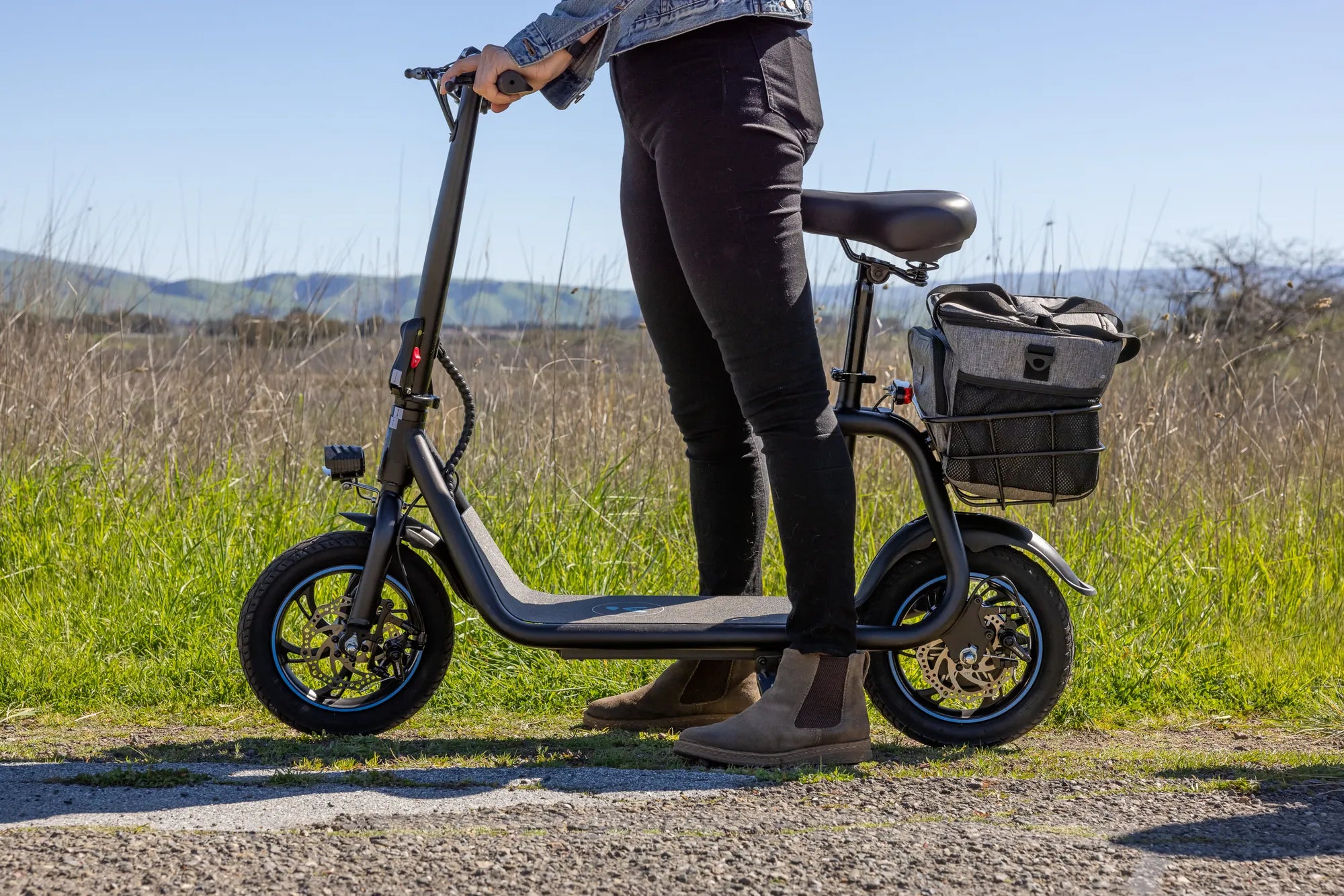
A gas-powered motor scooter, like a traditional Vespa, typically has an engine displacement of 50cc or greater. State Departments of Motor Vehicles (DMVs) almost universally classify these as motor vehicles or motorcycles. An electric kick scooter, such as models from Gyroor, is a stand-up, lightweight vehicle with a small electric motor and a deck for standing. Its legal status is newer and more varied.
A moped is a low-speed, pedal-equipped bicycle with a helper motor. While sometimes grouped with scooters, mopeds often have a separate legal category, sometimes requiring a special "M" endorsement on a license. Knowing which category your vehicle falls into is the first and most crucial step.
Gas-Powered Motor Scooters vs. Electric Kick Scooters
The distinction here is paramount. Gas-powered motor scooters with engines above 50cc are treated identically to motorcycles in all 50 states. This mandates a standard driver's license (sometimes with a motorcycle endorsement), vehicle registration, license plates, and mandatory insurance.
For smaller gas scooters (often 49cc or less), some states offer a middle ground. They may be classified as "motorized bicycles" or "mopeds," potentially requiring only a standard driver's license (not a motorcycle endorsement) but still needing registration. In contrast, the vast majority of privately-owned electric kick scooters fall under a newer class of "personal electric mobility devices."
This classification is key. It typically exempts them from the traditional requirements of a driver's license, registration, and insurance, treating them more analogously to bicycles. However, this exemption hinges on specific technical criteria like maximum speed and motor power, which we will explore in detail.
Do You Need a License for an Electric Kick Scooter? The General Rule & Exceptions
Here is the core answer: For a privately-owned, low-speed electric kick scooter, a driver's license is generally NOT required in most U.S. states and many international jurisdictions. This is the default position established by many state laws that have adapted to micro-mobility.
States like California, Texas, and Florida have passed legislation explicitly classifying e-scooters similarly to bicycles, removing the license requirement for riders over a certain age (often 16). This legal framework is designed to encourage sustainable, compact transportation alternatives.
However, this general rule has critical, non-negotiable exceptions. Riders who assume a universal "no license needed" policy risk fines and legal penalties. The regulatory landscape is a patchwork, and the burden of compliance falls on the rider.
The Critical Role of Local Ordinances
State law provides the baseline, but city and county governments possess the authority to enact stricter regulations. A state may not require a license, but a major city within it might impose its own rules for e-scooter operation on public streets and sidewalks.
Common local restrictions include: outright bans on sidewalk riding; geofenced no-ride zones in dense pedestrian areas; universal helmet mandates for all ages (where state law might only require them for minors); and specific scooter parking rules to prevent clutter. For example, a rider in a suburban town may have different rules than someone in the state's largest city.
Always check your municipal transportation or city clerk's website. The rules for a Gyroor scooter in one part of a state can be different from another. This local layer of regulation is where most riders encounter unexpected legal issues.
State-by-State Exceptions and Key Variables
A handful of states maintain unique requirements. More importantly, the technical specifications of your electric scooter can change its legal classification. The two most critical variables are maximum speed and motor wattage.
Many states use a 20 mph threshold. If an e-scooter can exceed 20 mph on level ground, it may be reclassified as a "motor vehicle" or "moped," suddenly triggering license, registration, and insurance mandates. Similarly, a motor exceeding 750W (1 horsepower) can push it into a regulated category.
Furthermore, rules for shared rental scooters (like those from Bird or Lime) are often different from rules for privately-owned models. Rental companies frequently embed driver's license verification within their apps as a condition of use, even in states where private scooters don't require one. Always verify the specific laws for your state of residence.
Essential Legal Requirements Beyond a Driver's License
Even where a license isn't mandatory, a set of universal legal and safety rules applies. Responsible ridership means adhering to these regulations, which are designed for the safety of the rider and the public.
Ignorance of these laws is not a valid defense. Law enforcement is increasingly focused on micro-mobility compliance as the number of riders skyrockets. Understanding these rules is as important as knowing the licensing status of your vehicle.
Age Restrictions and Helmet Laws
While a license may not be needed, a minimum age often is. Most states and localities set a minimum operating age for electric kick scooters, commonly 16 years old. Some areas allow younger riders, but only on private property or with direct adult supervision.
Helmet laws vary dramatically but are a critical safety component. According to a 2019 CDC study, head injuries account for nearly half of all e-scooter-related emergency room visits. Some states, like California, require helmets for all e-scooter riders. Others, like Texas, only mandate them for riders under 18. Regardless of the law, wearing a certified bicycle or multi-impact helmet is the single most effective safety practice.
Where to Ride: Road, Bike Lane, or Sidewalk?
Right-of-way rules are strictly defined. In most jurisdictions, electric scooters are prohibited from sidewalks in business districts due to pedestrian safety risks. The intended place of travel is typically the road or a designated bike lane.
When on the road, riders must follow all standard traffic laws: stopping at red lights and stop signs, signaling turns, and riding in the same direction as traffic. Most states recommend or require riding on roads with speed limits of 35 mph or less. Using bike lanes is almost always permitted and is the safest option where available. Knowing and following these traffic flow rules is essential for legal and safe operation.
The Importance of UL-Certification and Warranty
Product safety is a legal and practical imperative. Using a scooter with a non-UL-certified battery pack is a significant fire hazard and may violate local fire safety codes. Reputable brands prioritize this certification.
Gyroor builds all its models with UL-certified battery packs tested for over 500 charge cycles, alongside IPX5 water-resistant designs for reliability. A strong warranty, like Gyroor's 1-year comprehensive coverage, is also a marker of a compliant, durable product designed for real-world use. Choosing a reputable brand is a foundational step in responsible ownership.
Comparison of Common Scooter Types and Licensing
This table summarizes the typical legal requirements across the main scooter categories. Always verify with your local DMV.
| Vehicle Type | Typical License Required | Registration & Plates | Insurance Required | Helmet Law (Varies) |
|---|---|---|---|---|
| Gas Scooter (>50cc) | Standard Driver's License (Often Motorcycle Endorsement) | Yes | Yes | Usually Yes |
| Gas Scooter/Moped (<50cc) | Standard Driver's License (No Endorsement) | Often Yes | Often Yes | Usually Yes |
| Electric Kick Scooter (<20 mph) | Generally No (Check Local Laws) | No | No (But Recommended) | Often for Minors |
| High-Power E-Scooter (>20 mph) | Possibly Yes (State-Dependent) | Possibly Yes | Possibly Yes | Usually Yes |
| E-Bike (Class 1, 2, 3) | No | No | No (But Recommended) | Varies by Class & State |
Rider Scenarios: A Practical Guide
Applying these rules to real-world situations clarifies their importance. Your use case directly influences which regulations you'll need to prioritize.
The Urban Commuter (e.g., NYC, Chicago)
Urban riders face the most complex regulatory environment. Cities like New York have specific laws governing e-scooter speed (max 15 mph), helmet use (required for all), and where to ride (bike lanes/roads under 30 mph, no sidewalks).
Navigating dense traffic requires strict adherence to signals and lane discipline. Urban commuters must be hyper-aware of local ordinances, which can change frequently. The connectivity of bike lane networks is a major factor in route planning. For reliable daily use in this demanding environment, a commuter-focused model like the Gyroor F1 Pro, with its robust suspension and UL-certified battery, is engineered for this purpose.
The Suburban or Campus Rider
Suburban and campus settings often have more relaxed local ordinances, but state laws still apply fully. Riding is typically on low-speed residential roads, bike paths, and campus thoroughfares.
The key here is sharing the road courteously with cars and bicycles. Connectivity with public transit—folding your scooter to take on a bus or train—is a major advantage. While licensing is usually not a concern, understanding right-of-way and dismounting rules in pedestrian-dense areas on campus is crucial. A portable, foldable model offers ideal versatility for this mixed-use lifestyle.
The Off-Road Enthusiast
On private property, such as trails on your own land, licensing and traffic laws are irrelevant. You have the freedom to explore. However, the moment you transition to public trails, parks, or roads, all applicable vehicular laws come into effect.
Many public multi-use trails permit e-bikes and e-scooters, but it is not universal. Checking with the park authority is mandatory. For this type of adventurous riding, durability and water resistance are key. A scooter with IPX5-rated water resistance, like several in the Gyroor lineup, provides necessary protection against dust and splashes encountered on varied terrain.
Frequently Asked Questions (FAQ)
Do I need insurance for my electric scooter?
Legally, most states do not require insurance for low-speed, privately-owned e-scooters. However, it is highly recommended. Your homeowner's or renter's insurance policy may offer some liability coverage, but it's not guaranteed. A dedicated personal electric vehicle insurance policy can protect you from liability if you cause an accident and cover theft or damage to your scooter.
Can I get a DUI on an electric scooter?
Absolutely yes. Electric scooters are considered vehicles under traffic law in virtually all jurisdictions. Operating any vehicle, including a bicycle or e-scooter, while under the influence of alcohol or drugs is a crime and can result in a DUI (Driving Under the Influence) charge, with the same severe legal penalties, including fines, license suspension, and jail time.
What's the difference between rules for my own scooter vs. a rental?
Rental scooter systems operate under specific permits granted by cities. These agreements often impose additional rules, such as mandatory in-app license checks, lower geofenced speed limits in pedestrian zones, and strict parking corrals. Rules for private scooters are governed by general state and local law, offering more freedom but requiring more personal diligence to understand and follow them.
Are these rules the same for electric bikes (e-bikes)?
Similar, but distinct. E-bikes have a more established, three-class system (Class 1, 2, 3) adopted by most states. Generally, no license is required for any class. However, age restrictions, helmet laws, and where you can ride (especially for Class 3 e-bikes capable of 28 mph) differ from e-scooter rules. Always check your state's specific e-bike legislation.
What if I'm visiting another state or country with my scooter?
You are subject to the laws of the jurisdiction where you are riding. Do not assume the rules from your home state apply. Before traveling with or renting a scooter elsewhere, research that state's or country's specific micro-mobility laws regarding licensing, helmet use, and approved riding areas to avoid violations.
Empowered and Informed Riding
The freedom of electric scooters is unparalleled, but it comes with the responsibility to know and follow the rules. For the majority of riders on a Gyroor or similar electric kick scooter, a standard driver's license is not a prerequisite. The real requirement is diligent research into your state's vehicle code and your city's local ordinances.
Prioritize safety above all: wear a helmet, obey traffic signals, ride defensively, and invest in a reliable, UL-certified scooter from a reputable brand. This informed approach ensures your rides are not only enjoyable but also lawful and safe. The open path awaits—ride smart.
Ready to choose the right scooter for your lifestyle and local laws? Explore the full range of high-performance, UL-certified, and compliant electric scooters and e-bikes. Browse the full Gyroor collection at gyroorboard.com to find your perfect ride.
E-Bike for Parents: The Ultimate Guide to Family Mobility
Can You Ride an Ebike on the Highway? The Legal & Safety Guide