



Navigating the World of Electric Scooters for Young Riders
Choosing an electric scooter for a 4-year-old is a significant decision that blends excitement with serious safety considerations. This guide provides the data-driven insights you need to select a vehicle that fosters outdoor confidence, motor skill development, and pure fun, while prioritizing protection above all. We will dissect the essential features of an age-appropriate scooter, from speed limiters to battery safety, and provide a clear comparison of what to look for. As a leader trusted by over 100,000 riders, Gyroor designs with these precise developmental and safety milestones in mind, ensuring the electric scooter for kids 4 year old you choose is a tool for growth, not just a toy.
What Makes a Scooter "Age-Appropriate" for a 4-Year-Old?
An age-appropriate scooter for a preschooler is defined by a specific set of engineering and design principles that match their physical and cognitive development. It is not merely a scaled-down version of an adult or teen model. The core philosophy must balance introductory thrill with inherent stability and simplified operation.
For a 4-year-old, gross and fine motor skills are still rapidly developing. Their reaction times, balance, and risk assessment are fundamentally different from an older child's. Therefore, the scooter's design must compensate for and support these stages. Key parameters include a maximum speed capped well below 5 MPH, a low center of gravity, and controls that require minimal complex coordination.
Key Safety Features You Cannot Compromise On
Safety is non-negotiable. The primary feature is a strict speed governor. For a first-time rider, a maximum speed of 2-3 MPH is ideal. This allows them to feel the sensation of powered movement without overwhelming their ability to control it or react. A wide, anti-slip deck is crucial for stable footing, and a low deck height minimizes the distance to the ground, reducing fear and injury risk from a potential stop.
Reliable braking is paramount. A regenerative or foot brake is often safer than a hand-lever brake for this age, as it requires less hand strength and coordination. Finally, integrated safety features like bright LED front and rear lights are essential for visibility, even during daytime rides, ensuring your child is seen by others.
Design & Ergonomics: Fit for Little Bodies
Ergonomics directly impact safety and enjoyment. The scooter must be lightweight, ideally under 10 lbs, so a parent can easily carry it and a child can maneuver it without strain. Adjustable handlebar height is a significant advantage, allowing the scooter to grow with your child over a season or two, ensuring a proper, upright riding posture.
The controls must be intuitive. A simple thumb-press throttle is easier for small hands to manage than a twist-grip. All buttons and functions should be minimal and straightforward, avoiding confusing modes or settings. The overall build should have rounded edges and no pinch points to protect little hands and feet during handling.
The Gyroor Advantage: Engineered for Preschooler Safety and Fun
Gyroor applies a rigorous, safety-first engineering philosophy to its youth models, understanding that trust is the foundation of a family brand. With a 4.5/5 average customer rating from over 100,000 riders, their approach combines certified components, durable construction, and supportive customer care specifically for the preschool age group.
This commitment translates into tangible features that address parental concerns directly. When evaluating an electric scooter for kids 4 year old, the brand behind it matters as much as the specs. Gyroor's designs are tested for the realities of childhood use, from unexpected puddles to repeated charge cycles, ensuring longevity and consistent performance.
UL-Certified Peace of Mind: Why the Battery Matters Most
The battery is the most critical safety component. Gyroor exclusively uses UL-certified lithium-ion battery packs, which have undergone independent testing for electrical, fire, and mechanical safety. This certification is a parent's guarantee that the battery management system will prevent overcharging, short-circuiting, and overheating.
For a child's product, this is non-negotiable. Non-certified batteries pose a significant risk. Gyroor's batteries are rated for 500+ charge cycles, ensuring reliable power delivery over the scooter's lifespan. This engineering focus provides peace of mind that the power source is as safe as the scooter's speed is slow.
Built for Real Life: IPX5 Water Resistance & Durability
Childhood is messy. An IPX5 water-resistance rating means the scooter's electrical components are protected against low-pressure water jets from any direction. In practice, this safeguards the scooter against riding through damp grass, accidental puddles, or a sudden light rain, preventing corrosion and electrical failure.
This durability extends to the frame and components. Gyroor scooters for this age group use reinforced polymer and aluminum alloys designed to withstand the bumps and drops of learning. This resilience ensures the scooter remains a reliable companion for play, rather than becoming a fragile toy that breaks after minor mishaps.
Confidence in Your Purchase: The 1-Year Comprehensive Warranty
Gyroor's 1-year warranty on the electric scooter for kids 4 year old models is a testament to their build quality and commitment to customer support. This comprehensive coverage includes the motor, battery, and frame, protecting your investment from manufacturing defects.
Coupled with responsive, US-based customer service, this warranty reduces the stress of a potential issue. It represents the brand's confidence in its products and provides a clear support path for parents, ensuring that any concerns are addressed promptly and helpfully.
Choosing the Right Model: A Practical Comparison for Parents
Selecting the best model involves comparing specific features against your child's personality and your family's lifestyle. A cautious child might thrive with the most basic model, while a more physically confident one may benefit from a scooter with a gentle second speed setting. Use the following comparison to guide your decision.
| Feature | Entry-Level Model (Ideal for Cautious Beginners) | Enhanced Model (For Confident Riders) |
|---|---|---|
| Max Speed | 2 MPH (Single Speed) | 2 MPH & 3.5 MPH (Dual Speed) |
| Motor Power | 24V, 80W | 24V, 100W |
| Battery & Range | 24V, 4.0Ah (~40 min playtime) | 24V, 5.0Ah (~55 min playtime) |
| Weight Capacity | Up to 55 lbs | Up to 65 lbs |
| Key Advantage | Ultra-simple, focused on stability | Growth potential, adaptable speed |
Speed vs. Control: Finding the Perfect Balance
The speed setting is the most crucial choice. A single-speed scooter locked at 2 MPH is perfect for a true beginner. It eliminates any chance of accidental acceleration to a higher speed, allowing the child to focus entirely on balancing, steering, and stopping. This builds foundational confidence safely.
A dual-speed model (e.g., 2 MPH and 3.5 MPH) offers longevity. Your child can start on the low setting and graduate to the higher one as their skills solidify, often within the same season. This can extend the scooter's useful life. The decision hinges on your child's initial comfort level and physical coordination.
Battery Life & Real-World Playtime
Battery specifications like 24V and 4.0Ah translate directly to playtime. A 24V, 4.0Ah battery typically provides 35-45 minutes of continuous use on a single charge, which is ample for multiple park or driveway sessions. It’s important to manage expectations: continuous use means constant throttle engagement; real-world play with stops and starts will extend this time.
Charging time is also a practical consideration. Most models for this age group require 3-5 hours for a full charge. Teaching your child that the scooter needs to "rest and eat" after play is a good habit. This realistic battery life encourages healthy play sessions and prevents disappointment.
Essential Safety Gear and Riding Rules
The scooter itself is only one part of the safety system. Proper gear and clear rules are equally vital. Establishing these habits from the very first ride sets a standard that will protect your child as they grow and potentially transition to other wheeled activities. Safety is a non-negotiable condition of riding.
Consistent enforcement of these rules by all supervising adults is key. The goal is to make safety procedures as automatic as putting on shoes before going outside. This structured approach allows the fun and freedom of riding to exist within a secure framework.
The Non-Negotiable Helmet (and Other Gear)
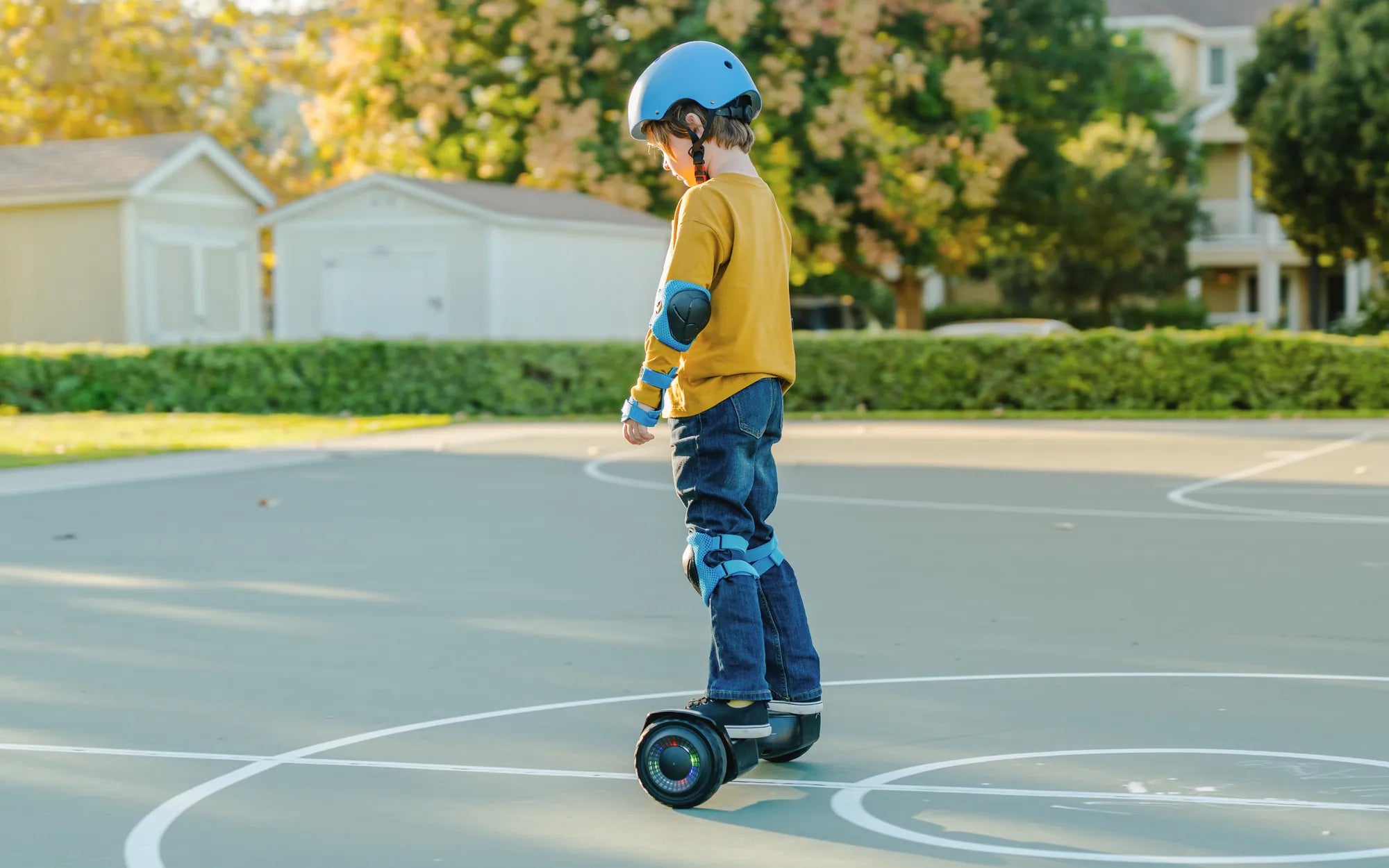
A properly fitted CPSC-certified bicycle helmet is mandatory for every ride, no exceptions. The helmet should sit level on the head, with the strap snug under the chin. For a 4-year-old, consider additional protective gear as standard, especially during the learning phase.
Knee and elbow pads significantly reduce the risk of scrapes and bruises from inevitable tumbles. Closed-toe, sturdy shoes (never sandals or crocs) are essential for foot protection and proper grip on the deck. This gear ensemble should be as routine as buckling a seatbelt.
Setting Ground Rules: Where and How to Ride
Establish a strict riding zone: smooth, paved, level surfaces only, such as a driveway, empty parking lot, or smooth sidewalk park path. Absolutely no riding near streets, driveways with car traffic, or on hills. The riding area should be free of major debris, gravel, or sand, which can cause wheels to slip.
Direct adult supervision is required at all times. The supervising adult should be engaged, not distracted. Rules should include: always stopping completely before getting off, no carrying passengers, and being aware of surroundings (like other kids or pedestrians). Riding should be limited to daylight hours with good visibility.
Parental FAQs: Your Top Questions Answered
Q1: What is the recommended weight limit for a 4-year-old's scooter?
A: Most quality models, like those from Gyroor, have a weight capacity between 55 and 65 lbs. This comfortably accommodates the average 4-year-old and allows room for growth, ensuring the scooter's motor and frame are not overstressed.
Q2: How long does the battery take to charge, and how should I store the scooter?
A: Full charge typically takes 3-5 hours. Store the scooter and battery in a cool, dry place, away from direct sunlight or extreme temperatures. For long-term storage (over a month), charge the battery to about 50-60% first.
Q3: Can the speed be adjusted or limited as my child grows?
A> On dual-speed models, yes. The speed is usually selected via a simple button or switch on the deck or handlebar. The lower speed acts as a built-in training mode. Single-speed models have a fixed, non-adjustable speed for consistent, beginner-friendly performance.
Q4: Is assembly difficult? What maintenance is required?
A> Assembly is typically minimal, often involving attaching the handlebar to the stem and tightening a few bolts—a 10-minute task. Maintenance is simple: regularly check that all bolts are tight, keep the scooter clean and dry, and ensure tires are properly inflated (if pneumatic). Avoid high-pressure water sprays.
Q5: My child has never ridden any scooter. Is electric too advanced?
A> Not necessarily. An appropriately slow electric scooter for kids 4 year old can be an introductory vehicle because the powered movement helps them focus on balance and steering without the added complexity of kicking. However, starting with a non-powered kick scooter to develop basic balance is also a excellent precursor.
Fostering Independence the Safe Way
Selecting the right electric scooter for your 4-year-old is an investment in their joy, development, and first taste of independent mobility. The process hinges on a checklist: prioritize certified battery safety, age-appropriate speed limits, durable and water-resistant construction, and the non-negotiable use of protective gear. Brands like Gyroor build to these standards, offering the engineering peace of mind that lets you focus on the fun.
By choosing wisely and setting clear boundaries, you transform a simple toy into a tool for building confidence, coordination, and a love for active play. The memories of those first wobbly, triumphant rides are priceless. Ready to explore models designed with these precise principles in mind? Browse the full Gyroor collection at gyroorboard.com to find the perfect, safe start for your child's riding adventure.
Where Can You Purchase a Hoverboard: The Ultimate Buying Guide
What's the Fastest a Hoverboard Can Go? Speed Limits & Safety Guide