

Introduction: The Urban Mobility Revolution and the Pavement Dilemma
The arrival of electric scooters has transformed city streets, offering a swift, eco-friendly alternative for short trips. This transformation brings a critical question to the forefront: where should these vehicles operate? The debate over Electric Scooters on Pavements: Safety, Regulations, and Urban Mobility is central to their integration into urban life. This article provides a clear, data-driven guide to navigating the legal patchwork, implementing vital safety practices, and understanding the broader role of e-scooters in creating sustainable cities. You will learn the definitive rules, how to protect pedestrians and yourself, and why infrastructure development is the ultimate solution.
The Global Legal Mosaic: Where Pavement Riding is Prohibited and Permitted
There is no universal law for electric scooter use. Regulations are a fragmented tapestry that varies dramatically by country, state, and city. Understanding this legal landscape is the first and most crucial step for any rider. Ignorance can result in significant fines, confiscation of your scooter, or even legal points on a driver's license. The core principle is that in most major urban areas, riding an electric scooter on the pavement (sidewalk) is explicitly illegal, as these spaces are designated for pedestrian safety.
The rationale is grounded in speed differentials and risk management. A pedestrian walks at 3-4 mph, while even a basic e-scooter can travel at 15 mph or more. This mismatch creates a high risk of serious injury in a collision. Therefore, lawmakers typically designate roads, bicycle lanes, or shared micro-mobility paths as the appropriate venues for motorized scooters. The discussion of Electric Scooters on Pavements: Safety, Regulations, and Urban Mobility must begin with a respect for these legal boundaries.
North America: A Complex Patchwork of State and City Laws
In the United States and Canada, there is no federal statute governing e-scooter use. Legislation is enacted at the state, provincial, and municipal levels, creating a complex environment. For instance, California state law prohibits e-scooters on sidewalks unless a local ordinance allows it, and most cities like San Francisco and Los Angeles maintain the ban. New York City explicitly forbids e-scooter use on sidewalks, restricting them to streets with speed limits under 30 mph and bike lanes.
Chicago follows a similar model, banning sidewalk riding. Some exceptions exist for lower-speed devices or in specific zones, but these are rare. In Canada, provinces like Ontario treat e-scooters similarly to e-bikes, generally prohibiting them on sidewalks unless a municipality passes a bylaw permitting it on certain pathways. The key takeaway is that riders must verify local laws before their first ride.
Europe and the UK: Strict Prohibitions and Rental Schemes
The regulatory environment in Europe is generally more restrictive towards private e-scooter use on pavements. In the United Kingdom, privately-owned electric scooters are currently illegal to use on public roads, cycle lanes, and pavements. Their use is confined to private land. This stands in contrast to government-sanctioned rental trials in dozens of towns and cities, where scooters are permitted on roads and cycle lanes.
Across the European Union, many member states, including France, Germany, and Spain, have established specific laws that classify e-scooters as personal mobility vehicles. These laws typically ban them from sidewalks, mandate helmet use for younger riders, set speed limits (often 20 km/h or 12.5 mph), and require the use of lights and bells. Fines for illegal pavement riding are common and can be substantial.
The Imperative of Checking Local Ordinances
Given this variability, a proactive check of local regulations is non-negotiable. Riders should consult their city's Department of Transportation or official municipal website for the most current bylaws. Look for terms like "personal mobility devices," "motorized scooters," or "micro-mobility" in traffic codes. Assuming legality based on another city's rules is a direct path to penalties. Responsible engagement with the topic of Electric Scooters on Pavements: Safety, Regulations, and Urban Mobility starts with this due diligence.
Safety Protocols for Shared Spaces (Where Legally Permitted)
In limited contexts—such as certain shared-use paths, low-traffic residential areas with explicit permission, or during sanctioned rental scheme use—riders may share space with pedestrians. In these scenarios, safety becomes the rider's paramount responsibility. The goal is to coexist without conflict, prioritizing pedestrian safety and demonstrating that e-scooters can be integrated respectfully.
Adopting a mindset of defensive riding is essential. Assume pedestrians may not hear or see you, and that children or pets could move unpredictably. Your behavior directly impacts public perception of micro-mobility. By following established safety protocols, riders can help build a case for more inclusive infrastructure rather than stricter bans.
Mastering Speed Management and Right-of-Way
Speed is the single most critical factor in shared spaces. On any path with pedestrians, your speed should be reduced to a brisk walking pace, ideally below 10 km/h (6 mph). This allows ample time to react and stop. The absolute rule is that pedestrians always have the right-of-way. This means yielding, slowing to a crawl, or dismounting and walking your scooter when passing individuals, groups, or near playgrounds and store entrances.
Anticipate that pedestrians may step sideways without looking, stop suddenly, or be wearing headphones. Maintaining a low speed is not just courteous; it is the primary method of preventing accidents. It transforms the dynamic from a vehicle moving through a crowd to a person respectfully sharing a path.
Enhancing Situational Awareness and Communication
Constant vigilance is required. Scan the path ahead for obstacles like cracks, potholes, debris, and parked vehicles. Be particularly cautious at intersections, driveways, and blind corners. Effective communication is equally important. Use an audible bell or a clear, polite verbal warning such as "Passing on your left" well before you reach a pedestrian. Avoid startling people.
Never assume a pedestrian knows you are there. Make eye contact if possible when approaching from the front or side. At night, ensure your scooter's lights are fully functional and use reflective clothing or accessories. Your awareness and clear signals are key components of safe operation in any discussion on Electric Scooters on Pavements: Safety, Regulations, and Urban Mobility.
Selecting the Right Scooter for Urban Control
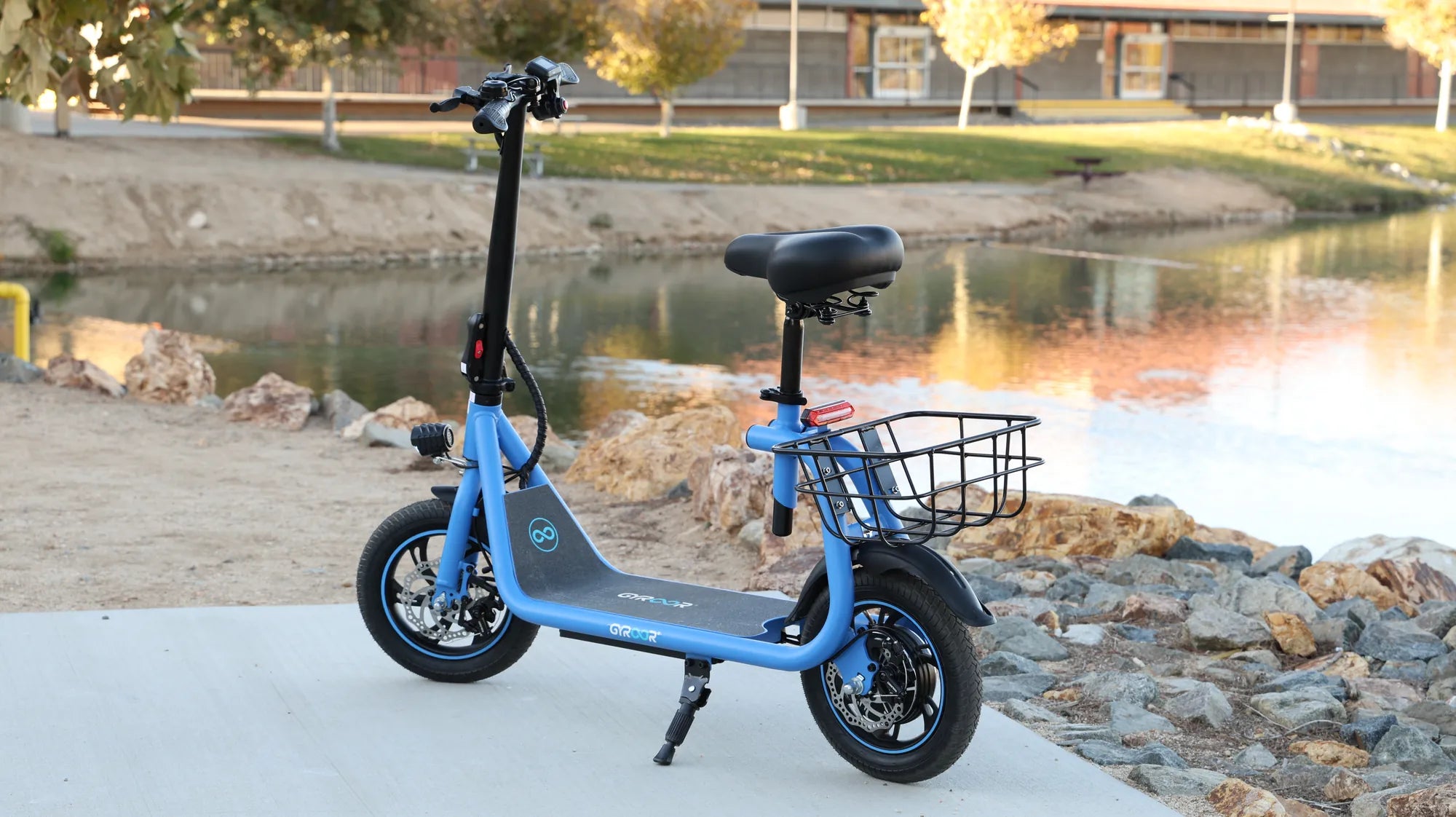
The hardware itself plays a significant role in safety. Not all scooters are equally suited for the stop-and-start, controlled riding required in shared environments. Key features that enhance safety and control include responsive dual braking systems (e.g., electronic regenerative and mechanical disc brakes), a wide, stable deck for secure footing, and pneumatic or air-filled tires for better shock absorption and traction.
As a leader in the field, Gyroor designs its electric scooters with these urban safety priorities in mind. Models like the Gyroor S1 and S2 feature combination braking systems, robust frames, and bright LED lighting for visibility. Furthermore, all Gyroor scooters utilize UL-certified battery packs, undergoing rigorous testing for over 500 charge cycles. This addresses a critical safety concern by ensuring battery integrity and significantly reducing fire risk, setting a benchmark for responsible manufacturing.
Comparative Analysis: Pavement vs. Bike Lane vs. Road Riding
The choice of where to ride has profound implications for safety, legality, and practicality. The following table compares the key characteristics of the three primary riding environments.
| Riding Environment | Legal Status | Primary Safety Risks | Rider Action Required | Ideal For |
|---|---|---|---|---|
| Pavement (Sidewalk) | Mostly illegal. Check local exceptions. | Collision with pedestrians, driveways, obstacles. | Extreme low speed (<6 mph), dismount when crowded, yield always. | Last 50 feet to destination; illegal in most cases. |
| Designated Bike Lane | Legal and encouraged in most jurisdictions. | Conflicts with cyclists, parked cars (dooring), debris. | Ride predictably, signal turns, maintain moderate speed, watch for car doors. | Commuting, efficient medium-distance travel, safest legal option. |
| Road (Street) | Legal in many areas when bike lanes absent. | Motor vehicle traffic, potholes, being unseen by drivers. | Obey all traffic laws, ride with traffic, use hand signals, wear high-vis gear, assume you are invisible to cars. | Areas without bike infrastructure; requires confident, defensive riding. |
This comparison underscores that designated bike lanes offer the optimal balance of legality, relative safety, and efficiency for the theme of Electric Scooters on Pavements: Safety, Regulations, and Urban Mobility. Pavement riding, where rarely permitted, demands the highest level of caution and concession to pedestrians.
The Urban Mobility Equation: E-Scooters as a Sustainable Solution
Beyond the immediate concerns of pavement use, electric scooters represent a significant component of the future of sustainable urban transport. They address several critical urban challenges: traffic congestion, air pollution, and the "last-mile" problem that plagues public transit systems. When integrated safely and legally, they can reduce reliance on private cars for short trips.
Studies from transport authorities in cities like Paris and Portland have shown that a substantial portion of e-scooter and e-bike trips directly replace car journeys. This shift leads to measurable reductions in carbon emissions and traffic volume. The convenience of a compact, electric vehicle for trips under three miles is undeniable, making them a practical tool for urban mobility reform.
Alleviating Congestion and Reducing Emissions
The data supporting e-scooters' environmental benefit is growing. A 2021 study by Lime estimated its riders prevented over 50 million pounds of CO2 emissions by replacing car trips. In dense urban cores, where many car trips are short and inefficient, switching to an e-scooter can cut an individual's transportation carbon footprint for those journeys to nearly zero, especially as electricity grids become greener.
Furthermore, e-scooters take up a fraction of the space of a car, both while moving and when parked. This efficiency can help reduce traffic congestion, a major source of urban pollution and economic loss. By providing a viable alternative, e-scooters contribute to quieter, less polluted, and more livable city centers, a core promise of modern Electric Scooters on Pavements: Safety, Regulations, and Urban Mobility.
The Infrastructure Imperative: Beyond the Pavement Debate
The ongoing conflict over pavement use highlights a fundamental urban planning shortfall: the lack of dedicated, protected infrastructure for micro-mobility. The safest solution is not to force scooters onto sidewalks or into busy traffic lanes, but to build more protected bike lanes and slow-speed "shared streets."
Cities like Copenhagen and Amsterdam demonstrate how integrated networks of cycle paths create safe environments for all non-car users. Investment in this infrastructure is the logical endpoint of the pavement debate. It separates different modes of transport according to speed and mass, protecting pedestrians while giving e-scooter and bicycle riders a safe, efficient right-of-way. Advocating for these improvements is a crucial step for the long-term acceptance of e-scooters.
Maintenance and Preparedness: The Foundation of Safe Riding
Safe riding is impossible on an unsafe scooter. Regular maintenance is a legal and ethical responsibility. Before every ride, perform a quick pre-ride check: test brakes, ensure tires are properly inflated, verify that lights are working, and check for any loose parts or frame damage. This is especially important for the braking system, your primary safety mechanism.
Proper battery care is also part of safe ownership. Follow manufacturer guidelines for charging and storage. Using a reputable brand like Gyroor, which provides a comprehensive 1-year warranty and US-based customer support, ensures access to genuine parts and expert advice. This support structure helps riders maintain their scooters in peak condition, ensuring that critical safety features like brakes and lights function correctly for responsible riding wherever it is legal.
Frequently Asked Questions (FAQ)
Q: Is it ever okay to ride my e-scooter on the pavement?
A: Only if your local municipal laws explicitly permit it. This is rare in urban centers. When in any doubt, assume it is prohibited. In pedestrian-dense areas, always dismount and walk your scooter.
Q: What are the typical penalties for illegal pavement riding?
A: Penalties vary but commonly include on-the-spot fines ranging from $100 to $200 or more. In some jurisdictions, like the UK, you could receive penalty points on your driver's license. In severe cases, the scooter may be impounded.
Q: How do I find out the specific laws for my city?
A: Visit your city's official website and search for "Department of Transportation" or "traffic codes." Look for sections on "motorized scooters," "personal mobility devices," or "micro-mobility." Local police non-emergency lines can sometimes provide guidance.
Q: Where is the safest place to ride if pavements are off-limits?
A: Designated bicycle lanes are the safest and most legal option. If no bike lane exists, ride on the road, obeying all traffic laws as you would on a bicycle. Always ride in the direction of traffic, as far to the right as is safe, and wear a helmet.
Q: How does Gyroor's product design promote safer urban riding?
A>Gyroor scooters are engineered for urban control. Features like dual braking systems (electronic + disc) ensure reliable stopping power. Wide decks and pneumatic tires enhance stability and comfort on varied surfaces. UL-certified batteries provide peace of mind regarding fire safety, and bright lighting systems maximize visibility to others, addressing key concerns in the Electric Scooters on Pavements: Safety, Regulations, and Urban Mobility discussion.
Riding Forward: Responsibility as the Path to Integration
The future of electric scooters in our cities hinges on responsible riding and smart infrastructure investment. The debate over Electric Scooters on Pavements: Safety, Regulations, and Urban Mobility resolves into a clear mandate: know and follow your local laws without exception. Prioritize pedestrian safety above convenience, advocate for protected bike lanes, and choose a scooter built for reliability and control. By adopting these practices, riders become ambassadors for a cleaner, more efficient mode of transport. The potential of e-scooters to reduce congestion and emissions is significant, but it can only be realized through a shared commitment to safety and legality.
Ready to explore electric scooters designed with urban safety and performance in mind? Browse the full range of UL-certified, feature-rich models in the Gyroor collection at gyroorboard.com. Join over 100,000 riders who trust Gyroor for their journey towards smarter urban mobility.
High Quality CE Electric Scooters: The Ultimate Guide to Smart Urban Mobility
Can Electric Scooters Blow Up? The Truth About Battery Safety