

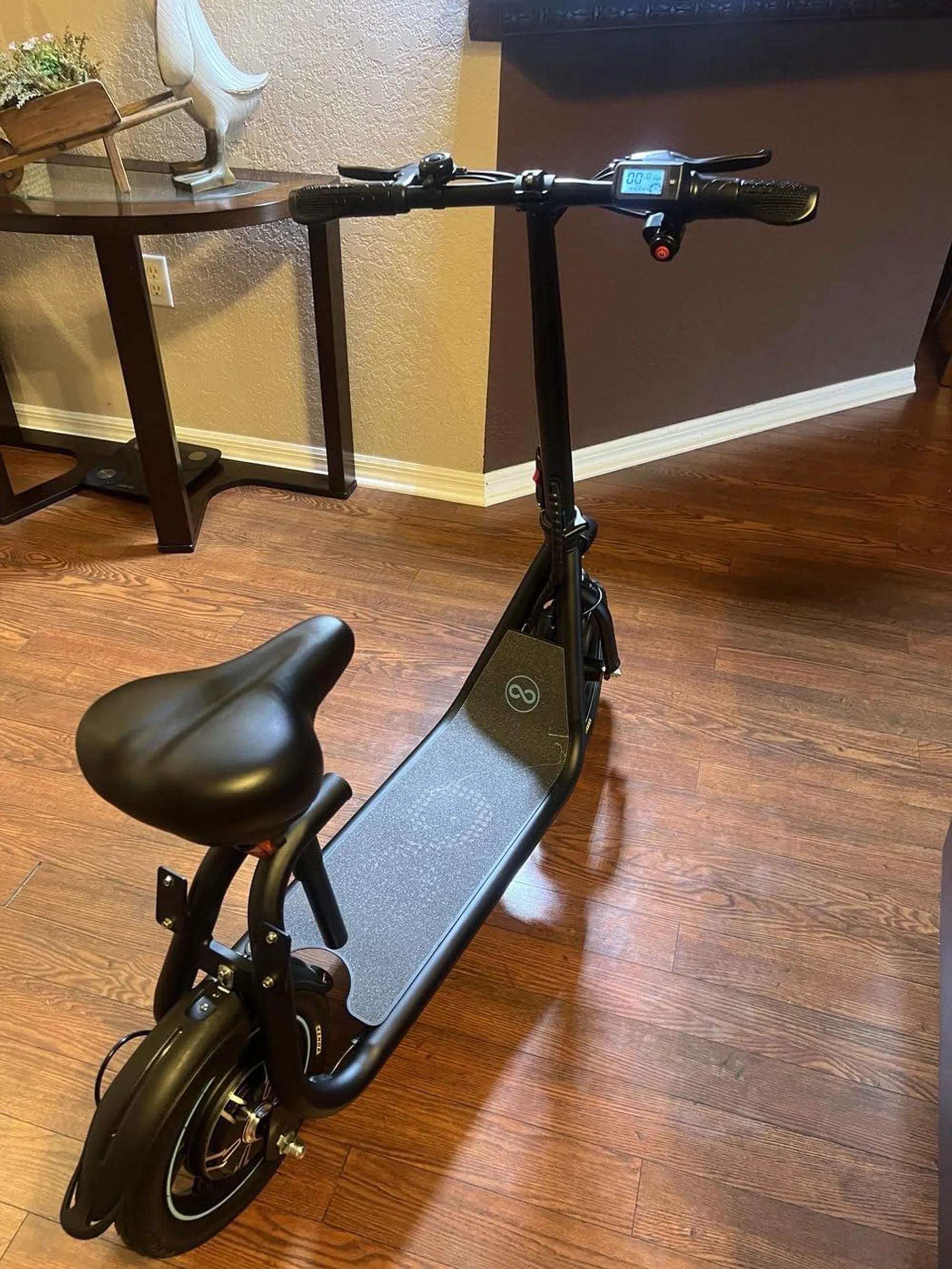
Introduction: Redefining Urban Commutes with CE-Certified Electric Scooters
Navigating city streets demands a transportation solution that is agile, efficient, and reliable. High Quality CE Electric Scooters: The Ultimate Guide to Smart Urban Mobility begins by establishing that a CE mark is your first, non-negotiable indicator of a scooter built for the European market's rigorous safety and environmental standards. This certification is the foundation upon which true quality is built, transforming a simple vehicle into a cornerstone of smart, sustainable urban mobility.
The shift towards personal electric vehicles is not just about avoiding traffic; it's about embracing a smarter way to move. A high-quality CE electric scooter represents a conscious investment in this future, combining legal compliance with superior engineering for a seamless commute. This guide will equip you with the knowledge to distinguish baseline compliance from exceptional quality, ensuring your choice delivers safety, performance, and longevity.
We will dissect the meaning of the CE mark, explore the advanced features that define a premium scooter, and examine real-world examples from leading brands. You will learn how to match technical specifications to your daily route and understand why after-sales support is as critical as motor power. By the end, you will be prepared to make an informed decision that elevates your urban travel experience.
What Does "CE Certification" Really Mean for Your Electric Scooter?
The CE mark is often misunderstood as a simple quality seal. In reality, it is a manufacturer's declaration that the product complies with the essential requirements of all relevant European Union legislation. For electric scooters, this encompasses a suite of directives designed to protect users and the environment. It is a mandatory passport for sale within the EU and EEA, not an optional accolade.
Key directives include the Electromagnetic Compatibility (EMC) Directive, ensuring the scooter does not emit excessive electromagnetic interference and is immune to interference from other devices. The Low Voltage Directive (LVD) covers electrical safety within certain voltage limits, governing safe construction and insulation. For scooters with higher power outputs or specific designs, the Machinery Directive may also apply, focusing on mechanical safety and risk reduction.
The process to achieve CE certification involves rigorous conformity assessment, which can include testing by notified bodies, detailed technical documentation, and the creation of a comprehensive EU Declaration of Conformity. This documentation must be available to market surveillance authorities. The presence of the CE mark signifies that the manufacturer has undertaken this legally binding process, assuming full responsibility for the product's compliance.
It is crucial to understand that CE certification represents a baseline—the legal minimum for market entry. It guarantees that a scooter meets fundamental EU safety, health, and environmental standards. However, the pursuit of a truly High Quality CE Electric Scooter involves seeking out models that use this baseline as a starting point and build significantly upon it with higher-grade components and additional voluntary certifications.
The Direct Impact on Rider Safety and Scooter Durability
The abstract standards behind CE certification have direct, tangible effects on every ride. Compliance with the EMC directive means your scooter's electronic systems, like the controller and display, are stable and reliable, preventing sudden shutdowns from interference. Adherence to the Low Voltage Directive ensures all electrical connections are properly insulated and protected, drastically reducing the risk of short circuits, electrical fires, or shocks.
From a durability perspective, these standards enforce a level of construction quality that directly impacts longevity. Wiring must be of a certain standard and securely routed to prevent wear and tear from vibration. Connectors must be robust. This results in a scooter that can better withstand the constant jolts and vibrations of daily urban riding, leading to fewer electrical failures and a longer operational life.
Furthermore, the required risk assessments under relevant directives push manufacturers to implement critical safety features. This includes reliable braking systems with adequate stopping power, stable geometry to prevent tipping, and safeguards against accidental acceleration. When you choose a CE-certified scooter, you are choosing a vehicle that has been systematically evaluated for these fundamental safety risks.
In essence, the CE mark is your assurance that the scooter has been designed with a foundational layer of safety and durability in mind. It is the critical first filter in your search, separating legitimate, responsibly made products from unregulated and potentially dangerous imports. For a truly superior experience, you must then look for the features that build upon this foundation.
Key Features of a Truly High-Quality Electric Scooter
Once CE certification is confirmed, evaluating a scooter's quality requires a deep dive into its core components and engineering philosophy. A High Quality CE Electric Scooter distinguishes itself through superior materials, advanced technology, and thoughtful design that enhances both performance and the rider's experience. These features represent the investment a manufacturer makes beyond mere compliance.
Premium scooters prioritize user-centric design, integrating features that address real-world commuting challenges. This includes intuitive controls, clear information displays, and ergonomic considerations that reduce fatigue. The construction feels solid and precise, not creaky or flimsy, signaling attention to detail in assembly and quality control during manufacturing.
The difference is often felt immediately during the ride. A high-quality scooter offers smoother acceleration, more consistent braking, and a stable, planted feel on various surfaces. It manages heat effectively, maintaining performance over longer rides without throttling power. These characteristics stem from the synergistic performance of its key subsystems: the powertrain, the chassis, and the electronic brain that controls it all.
Investing in these features translates to greater reliability, enhanced safety, and more enjoyment from every journey. It reduces long-term ownership costs through durability and often comes with the backing of a confident warranty. The following sections break down the most critical areas where quality becomes apparent.
The Heart of the Scooter: Battery and Motor Performance
The battery and motor form the inseparable core of any electric scooter's performance. A high-quality scooter sources its lithium-ion battery cells from reputable suppliers and assembles them into a pack with a sophisticated Battery Management System (BMS). Leading brands, like Gyroor, take this a critical step further by utilizing UL-certified battery packs. While CE covers general electrical safety, UL certification involves specific, stringent testing for battery cells and packs regarding fire risk, electrical safety, and mechanical integrity, offering an additional, voluntary layer of safety assurance.
Battery quality directly dictates real-world range and lifespan. Premium cells with high energy density provide more consistent range closer to the advertised maximum, even as the battery ages. A robust BMS protects against overcharging, deep discharge, short circuits, and individual cell failures, ensuring safety and extending the pack's life well beyond 500 charge cycles. This translates to years of reliable service before significant capacity degradation.
Motor performance is about more than just wattage. A high-quality motor, whether hub-driven or belt-driven, provides smooth, linear acceleration and sufficient torque to handle urban inclines without straining. It operates efficiently, converting electrical energy into motion with minimal loss, which also contributes to better range. The motor should be paired with a responsive electronic speed controller (ESC) that delivers power predictably and integrates seamlessly with the braking system for regenerative braking where applicable.
Together, a UL-certified battery and a well-engineered motor provide the dependable, powerful, and safe performance required for a stress-free daily commute. They are the most significant determinants of whether a scooter feels capable and trustworthy or underpowered and anxious.
Built for the Real World: IP Ratings and Construction
Urban commuting is an all-weather affair. A scooter's Ingress Protection (IP) rating quantifies its resilience against dust and water. For reliable daily use, a minimum of IPX4 (protection from water splashes from any direction) is advisable, but a High Quality CE Electric Scooter often features an IPX5 rating. This means it can withstand water jets from a nozzle (6.3mm) from any direction, making it confidently resistant to rain, wet roads, and puddle splashes. This engineering prevents water ingress that could damage electronics or corrode connections, a common failure point in lesser models.
Frame construction is equally vital. Aerospace-grade aluminum alloys are the standard for premium frames, offering an optimal balance of strength, stiffness, and light weight. The welding and finishing should be clean and consistent, indicating precise manufacturing. The folding mechanism, a high-stress point, must be over-engineered with robust locks and hinges to prevent play or failure over thousands of folding cycles.
Suspension and tires complete the real-world readiness package. A combination of front and rear suspension (spring or hydraulic) absorbs road imperfections, increasing comfort, improving tire contact for better braking, and reducing stress on the frame and components. Pneumatic (air-filled) tires offer the best shock absorption and traction but require maintenance; high-quality solid or airless tires can provide a good compromise with excellent puncture resistance. The choice should align with your local road conditions.
This triad—weather resistance, robust construction, and capable suspension—ensures the scooter is not a fair-weather novelty but a dependable daily tool that can handle the unpredictable nature of city streets.
Smart Mobility Features: Connectivity and User Experience
The modern High Quality CE Electric Scooter is an interconnected device. A companion smartphone app elevates the experience from simple transportation to smart mobility. These apps allow for firmware updates that can improve performance or add features post-purchase, detailed ride statistics tracking, customizable performance profiles (e.g., eco, sport, cruise control), and even anti-theft functions like GPS tracking or an alarm activated via Bluetooth.
The user interface on the scooter itself should be intuitive. A bright, clear digital display is essential, showing speed, battery level (preferably as a percentage, not just bars), riding mode, and error codes. Controls should be ergonomically placed and responsive. Integrated, bright LED lighting is a critical safety feature; a powerful headlight illuminates the path, while brake lights and side reflectors ensure you are visible to other road users.
Additional quality-of-life features include secure, built-in charging ports with protective covers, sturdy kickstands, and accessible, tool-free adjustment points. Some high-end models feature turn signals, key ignition, or fingerprint readers for added security and convenience. These elements demonstrate a manufacturer's commitment to a holistic, polished user experience, not just basic functionality.
Smart features transform the scooter from a passive vehicle into an active partner in your commute, providing data, security, and customization that enhance safety, enjoyment, and peace of mind.
Gyroor: A Case Study in CE-Certified, High-Quality Engineering
Examining a specific brand illustrates how the principles of high-quality manufacturing come to life. Gyroor, a leading electric scooter and e-bike brand trusted by over 100,000 riders across North America and Europe, exemplifies the pursuit of quality beyond the CE baseline. Their approach centers on core engineering pillars that directly address rider priorities: safety, durability, and reliable performance.
Their commitment begins with power system safety. Every Gyroor model uses UL-certified battery packs, subjecting them to testing standards that are often more rigorous than the minimum requirements. This focus on the most critical safety component provides riders with significant additional confidence. Furthermore, these batteries are tested for 500+ charge cycles, ensuring long-term value and reliability that riders can depend on for years.
Durability is engineered into every model with IPX5 water-resistant designs. This specification guarantees that commuting in the rain or on freshly washed streets won't compromise the scooter's electronics. Coupled with robust frames and reliable suspension systems, Gyroor scooters are built for the daily grind of urban environments. This durability is backed by a clear promise: a comprehensive 1-year warranty, reflecting the brand's confidence in its manufacturing and component quality.
By focusing on these tangible, high-impact features—UL-certification for batteries, meaningful water resistance, and strong warranty support—Gyroor demonstrates what it means to build a High Quality CE Electric Scooter. It shows that true quality is achieved by leveraging certification as a foundation and then layering on additional, voluntary safeguards and robust engineering to create a superior product.
Data-Driven Comparison: What Premium Components Deliver
The table below contrasts the typical specifications of a scooter that meets only the basic CE requirements with those of a scooter built to high-quality standards, like those from Gyroor. This highlights the tangible benefits of investing in superior components.
| Feature | Standard CE-Certified Scooter | High-Quality CE Scooter (e.g., Gyroor) |
|---|---|---|
| Battery Certification | CE compliant (minimum standard). | CE compliant + UL-certified pack (enhanced safety standard). |
| Battery Life Expectancy | ~300-400 charge cycles before noticeable degradation. | 500+ tested charge cycles for longer lifespan. |
| Water & Dust Resistance | IPX4 or unspecified; cautious use in wet conditions. | IPX5 rating; designed for all-weather commuting, resistant to rain and puddles. |
| Frame & Build Quality | Standard aluminum; adequate welding; potential for creaks over time. | Aerospace-grade aluminum; precision welding; robust folding mechanism; solid feel. |
| Warranty Coverage | 6 months to 1 year, often limited or parts-only. | Comprehensive 1-year warranty covering frame, battery, and motor. |
| Motor Performance Consistency | May overheat and throttle power on sustained climbs or long rides. | Engineered for consistent output with effective thermal management. |
| Smart Features & App | Basic display; limited or no app connectivity. | Full-featured app for tracking, updates, and security; bright integrated display. |
Making the Smart Choice: How to Select Your Ideal High-Quality Scooter
Selecting the right High Quality CE Electric Scooter is a personal process that aligns technical specifications with your individual lifestyle and commute. Start by defining your primary use case. Is this for a last-mile solution from a transit station, a full door-to-door commute, or recreational weekend rides? The answer will set the parameters for range, portability, and performance.
Establish a realistic budget that reflects the value of quality components. While upfront cost is a factor, consider the Total Cost of Ownership (TCO). A slightly more expensive scooter with a UL-certified battery, IPX5 rating, and a 2-year warranty will likely prove more economical over 3-5 years than a cheaper model that requires frequent repairs or early battery replacement. Investing in quality is investing in long-term reliability and safety.
Research is key. Read professional reviews that test real-world range and hill-climbing ability. Pay close attention to user reviews that discuss long-term durability and customer service experiences. A brand with a 4.5/5 average rating from a large customer base, like Gyroor's community of over 100,000 riders, is a strong indicator of consistent satisfaction and product reliability.
Finally, prioritize purchase from reputable retailers or directly from the manufacturer's official website. This ensures you receive genuine products, valid warranties, and access to official customer support and spare parts. Avoid marketplaces with unverified third-party sellers where counterfeit products or non-compliant models may be sold.
Assessing Your Commute: Range, Terrain, and Storage Needs
Accurately assessing your daily route is the most critical step. Calculate your round-trip distance and add a 30-40% safety buffer to the manufacturer's advertised range. Advertised range is achieved under ideal laboratory conditions; real-world factors like rider weight, hills, wind, temperature, and riding style significantly reduce it. For a 10km round-trip commute, aim for a scooter with a 15-20km real-world range.
Analyze the terrain. Are there steep hills? If so, prioritize motor torque (often correlated with wattage) and a scooter known for consistent hill-climb performance. For flat terrain, range and comfort may be higher priorities. Road surface quality matters: cracked pavement or cobblestones necessitate good suspension and larger, pneumatic tires for comfort and control.
Consider portability and storage. Will you need to carry the scooter onto a train or bus, or up a flight of stairs? Weight and folding mechanism ease are paramount. Will it need to fit under a desk or in a small apartment closet? Check the folded dimensions. A compact, one-step folding design can make a substantial difference in daily convenience.
By matching the scooter's capabilities to the specific challenges of your route and lifestyle, you ensure your investment directly solves your mobility problems rather than creating new ones.
The Value of Warranty and After-Sales Support
A comprehensive warranty is a direct reflection of a manufacturer's confidence in their product. For a High Quality CE Electric Scooter, look for a warranty of at least one year that covers the major components: the frame, battery, and motor. Scrutinize the warranty terms: is it a limited warranty that prorates coverage, or a comprehensive guarantee? Brands that stand behind their engineering, like Gyroor with its reliable 1-year warranty, provide significant peace of mind.
After-sales support is equally important. Before purchasing, investigate the brand's customer service channels. Are they accessible via email, phone, or chat? Do they have service centers or authorized repair partners in your region? The availability of spare parts—brake pads, tires, inner tubes, chargers—is crucial for long-term maintenance. A quality brand ensures its products remain serviceable for years.
Strong community support, such as active user forums or detailed online manuals, can also be invaluable for troubleshooting and maintenance tips. The combination of a robust warranty and accessible, knowledgeable support protects your investment and ensures that any issues are resolved quickly and fairly, maximizing your scooter's lifespan and your satisfaction.
This support network transforms your purchase from a simple transaction into an ongoing relationship with a brand committed to your riding experience.
Frequently Asked Questions (FAQ) About High-Quality CE Electric Scooters
1. Is CE certification enough to guarantee a scooter is safe?
No, CE certification is the legal minimum for sale in the EU, guaranteeing baseline compliance with safety, health, and environmental standards. It is necessary but not sufficient for optimal safety. High-quality brands build beyond this baseline with additional measures, such as using UL-certified battery packs (which undergo stricter electrical and fire safety tests) and implementing more robust electrical and mechanical designs.
2. How does an IPX5 rating benefit my daily commute?
An IPX5 rating means your scooter is protected against low-pressure water jets from any direction. In practice, this allows you to ride confidently in light to moderate rain, through puddles, or on wet roads without fear of water damaging the sensitive electronics inside the deck. It dramatically increases the scooter's reliability and usability in all weather conditions, a key feature of a true daily commuter vehicle.
3. Why is a UL-certified battery important if the scooter is already CE-certified?
While CE covers general product safety, UL standards (like UL 2271 for e-scooter batteries) are specifically developed for electrical systems and battery packs. They include rigorous tests for overcharging, short-circuiting, crush, impact, and fire exposure. A UL-certified battery pack represents a voluntary, higher tier of safety assurance focused on the most critical and potentially hazardous component, offering significant added peace of mind.
4. What should I prioritize: more range or a more powerful motor?
This depends entirely on your commute terrain. If your route includes significant hills or you are a heavier rider, prioritize a more powerful motor (higher wattage and torque ratings) to ensure consistent climbing ability without overheating. If your commute is long but relatively flat, prioritize a larger battery capacity (Wh) for greater range. The ideal High Quality CE Electric Scooter offers a balanced combination of both.
5. How often does a high-quality electric scooter require maintenance?
Regular basic maintenance is essential for safety and longevity. Key tasks include: checking and maintaining correct tire pressure (for pneumatic tires) weekly, inspecting brake pads for wear monthly and adjusting brake cables as needed, ensuring all bolts (especially on the stem and folding mechanism) are tight every few weeks, and keeping the scooter clean, particularly after wet rides. A well-maintained high-quality scooter will provide years of reliable service.
Conclusion: Investing in Smart, Sustainable Urban Mobility
Choosing a High Quality CE Electric Scooter is a decisive step towards smarter, more sustainable urban living. It moves beyond simply purchasing a vehicle to making an informed investment in your daily quality of life, personal safety, and environmental footprint. The right scooter dissolves traffic congestion, reduces commute stress, and reconnects you with your city in an enjoyable and efficient way.
True quality is a combination of mandatory compliance and voluntary excellence. It starts with the fundamental assurance of CE certification and is elevated by superior components like UL-certified batteries, IPX5 weatherproofing, robust frames, and intelligent features. This engineering philosophy is embodied by brands committed to the long-term experience of their riders, supported by comprehensive warranties and reliable customer service.
Your urban mobility should be reliable, safe, and empowering. By applying the knowledge from this guide, you can confidently select a scooter that meets your specific needs without compromising on the critical elements that ensure durability and performance. The journey to a better commute begins with choosing a partner built to last. Explore the engineering and rider-focused design that defines a superior commuting experience. Browse the full Gyroor collection at gyroorboard.com to discover your ideal smart mobility solution.
Electric Scooters Safe Are Now Are: The Future of Urban Mobility
Electric Scooters on Pavements: Safety, Regulations, and Urban Mobility