



Introduction: Why Weight Capacity Is Your Most Critical Spec
Choosing an electric scooter when you're a heavier rider involves more than just checking a single number. The maximum weight limit is a gateway spec that reveals the engineering integrity of the entire vehicle. A scooter built for 265 lbs or more requires a synergistic design where the motor, frame, battery, brakes, and suspension are all reinforced to work in harmony under significant stress.
This guide cuts through marketing claims to focus on the mechanical and electrical realities of high-load riding. We'll explain why a robust scooter is a safer, more reliable, and ultimately more economical investment. For over 100,000 riders, brands like Gyroor have demonstrated that with UL-certified batteries, IPX5 water-resistant designs, and rigorous testing, electric scooters can be both powerful and dependable for all body types.
Understanding Scooter Specs: The Engineering Behind the Limit
The advertised weight capacity is the manufacturer's guarantee of safe operation. Exceeding it risks immediate component failure, voids the warranty, and creates serious safety hazards. A true heavy-duty scooter is designed with a substantial safety margin, but that margin is consumed by real-world factors like potholes, sudden stops, and hill climbs.
What "Weight Limit" Really Means for Safety and Longevity
This number represents the maximum system load during dynamic use, not just static weight. It accounts for the rider's mass plus the forces of acceleration, braking, and impacts from the riding surface. Consistently riding at the absolute limit accelerates wear on every component. Selecting a scooter with a capacity at least 20-30% above your weight provides a performance buffer and extends the vehicle's lifespan.
Key Components for Heavy-Duty Performance
Four elements are non-negotiable for high-weight-capacity scooters. First, the motor must deliver high torque, not just peak power. A 500W motor is often a minimum starting point, with 800W+ single or dual motors preferred for consistent hill-climbing power. Second, the frame material is critical; aircraft-grade aluminum alloys with reinforced welding at stress points (like the stem and deck) prevent dangerous flexing.
Third, tire choice dictates comfort and safety. Large, pneumatic (air-filled) tires, typically 10 inches in diameter, better absorb impacts and provide stability. Fourth, the braking system must manage greater kinetic energy. A combination of hydraulic or mechanical disc brakes with electronic braking offers the controlled, reliable stopping power a heavy rider needs.
The Role of Battery and Real-World Range
Weight is the single largest factor affecting range. A rider at the scooter's weight limit can expect a 25-40% reduction from the manufacturer's advertised range, which is usually calculated for a ~165 lb rider. A high-capacity, UL-certified battery pack (like those used in Gyroor scooters) is essential. It ensures stable voltage delivery under high current draw, preventing premature voltage sag and protecting the battery's 500+ charge cycle lifespan.
Top Contenders: Scooter Archetypes for the Heavy Rider
The market offers distinct categories built around durability and power. Understanding these archetypes helps match a scooter to your primary use case, whether it's urban commuting or off-road adventure.
High-Performance Commuter Scooters
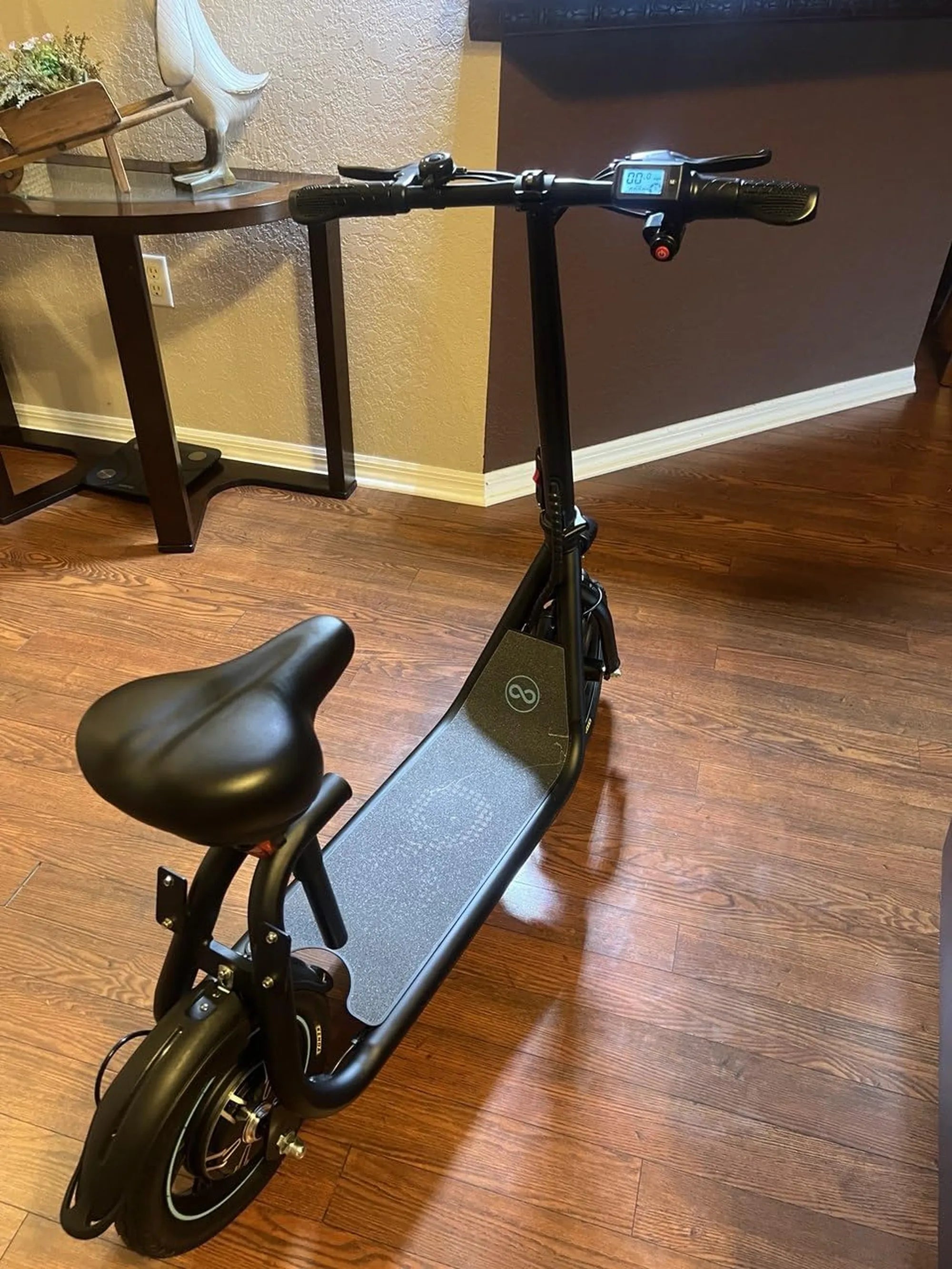
These models prioritize a blend of portability, comfort, and urban durability. Look for weight limits between 265 lbs and 330 lbs, powered by motors in the 500W to 800W range. Key features include dual suspension systems (spring and hydraulic) to smooth out city streets, IPX5 or higher water resistance for all-weather reliability, and reinforced folding mechanisms. For example, commuter-focused models are engineered with these exact stresses in mind, ensuring daily reliability.
Off-Road and All-Terrain Powerhouses
Built for extreme conditions, these scooters often feature the highest weight limits, sometimes exceeding 330 lbs. They are characterized by ultra-powerful motors (1000W and above), large 10-inch or 11-inch pneumatic off-road tires, and advanced suspension systems with long travel. The deck is wider and longer for stability, and the frame uses thicker tubing. These beasts sacrifice some portability for unparalleled durability and traction on any surface.
The Critical Importance of Warranty and Support
A comprehensive warranty is a direct reflection of a manufacturer's confidence in their product's durability. For heavy riders, a strong warranty is non-negotiable, as components are under greater mechanical stress. A reputable brand will offer at least a 1-year warranty covering the frame, motor, and battery. Accessible customer support for troubleshooting is equally important, as it ensures you can maintain your scooter's peak performance and safety over years of use.
Data-Driven Comparison: Your Evaluation Framework
Instead of a static list, use this framework to compare any scooter model. It emphasizes the synergy of components that create a truly capable machine for heavier riders.
Comparison Checklist: What to Look For
| Criteria | Minimum Recommendation for Heavy Riders | Why It Matters |
|---|---|---|
| Weight Limit | 265 lbs (120 kg) minimum, 300 lbs+ ideal | Ensures structural safety and provides a performance buffer. |
| Motor Power | 500W continuous minimum, 800W+ preferred | Provides necessary torque for acceleration and hill climbing under load. |
| Tire Type & Size | 10-inch pneumatic tires | Offers better shock absorption, traction, and stability than solid tires. |
| Brake System | Dual braking (Disc + Electronic or Dual Disc) | Manages higher kinetic energy for safe, reliable stopping. |
| Suspension | Front and rear (dual) suspension | Protects the frame and rider from impact forces, improving control. |
| Battery Certification | UL 2271 or UL 2843 Certified | Guarantees safety standards for electrical and fire hazards. A core feature of reputable brands. |
| Warranty Length | 1 year comprehensive minimum | Covers stress on high-load components like the frame, motor, and controller. |
| IP Rating | IPX5 or higher | Ensures protection against water jets, making the scooter viable in rain and wet conditions. |
Real-World Performance vs. Paper Specs
Manufacturer specs are a baseline. The true test for a heavy rider is hill-climbing ability, stable acceleration without bogging down, and effective range. These depend on the controller's programming, the battery's discharge capability (C-rating), and the overall thermal management of the system. A well-engineered scooter will maintain performance throughout a ride, not just in the first five minutes. Look for user reviews that specifically mention performance under load.
Safety and Maintenance: Protocols for Maximum Load Riding
Operating at higher capacities demands heightened diligence. These practices ensure safety, maximize your scooter's lifespan, and maintain its performance.
Pre-Ride and Riding Best Practices
Before every ride, conduct a thorough inspection. Check tire pressure in pneumatic tires—under-inflation is a major cause of pinch flats and reduced stability. Inspect all bolts, especially on the stem and folding mechanism, for tightness. During your ride, practice smooth, progressive acceleration and braking. Sudden, jerky inputs place immense stress on the motor, controller, and brake calipers. This mindful riding style conserves battery and reduces mechanical wear.
Long-Term Care for Your Investment
Establish a maintenance schedule. Every few months, check and tighten all fasteners. Annually, have the brakes inspected and bled (if hydraulic). For the battery, avoid complete discharges; charge after use and store in a cool, dry place. Even with a robust IPX5 rating, avoid submerging the scooter. When storing for extended periods, keep the battery at a 50-80% charge. This care is especially crucial for high-load use, where every component is working harder.
FAQ: Electric Scooters for Heavy Riders
Q: Is it safe to ride an electric scooter at its maximum weight limit every day?
A: While the scooter is engineered to handle its stated limit, daily operation at the absolute maximum will accelerate wear on tires, brakes, bearings, and the battery. For optimal safety, longevity, and performance, choose a model with a weight capacity that exceeds your weight by 20-30%.
Q: How much does my weight actually affect the scooter's range and speed?
A: Significantly. A rider at the weight limit can expect a 25-40% reduction in real-world range compared to the advertised figure. Top speed may also be slightly reduced, especially on inclines. A high-torque motor and quality battery mitigate but do not eliminate this effect.
Q: Can I increase a scooter's weight limit by upgrading parts like the motor or suspension?
A: We strongly advise against this. The weight limit is a certification for the entire integrated system, including the frame, forks, and welds. Upgrading individual components does not increase the structural rating, voids the manufacturer's warranty, and can create dangerous failure points. Always choose a scooter designed for your weight from the start.
Q: Are solid tires or pneumatic tires better for heavy riders?
A: Pneumatic (air-filled) tires are almost always superior for riders over 220 lbs. They provide crucial shock absorption, which protects the scooter's frame and components from impact forces and offers a much more comfortable, stable ride. Solid tires risk transferring excessive vibration to the frame and can lead to a harsher, less controllable experience.
Q: Why is a UL-certified battery so important for a heavy rider?
A> A UL certification (like UL 2271) means the battery pack has passed rigorous safety tests for electrical, mechanical, and environmental hazards. Under high load, batteries experience greater current draw and heat. A certified pack is engineered with higher-quality cells and better battery management systems to handle these stresses safely, drastically reducing risks of failure or fire.
Finding Your Perfect, Powerful Match
Selecting the right electric scooter as a heavier rider is an exercise in prioritizing holistic engineering over any single flashy spec. The goal is to find a machine where a high-torque motor, a reinforced frame, large pneumatic tires, and a robust braking system are designed to work together under load. This synergy, backed by a solid warranty and safety certifications, transforms the riding experience from anxious to empowered.
Your weight is not a limitation but a key design parameter. By choosing a scooter built with durability as a core principle, you invest in safety, reliability, and the pure enjoyment of the ride. The confidence that comes from a well-engineered vehicle, with features like UL-certified batteries and IPX5 water resistance, allows you to focus on the journey ahead. Discover a range of scooters engineered for performance and durability that meet these rigorous standards. Browse the full Gyroor collection at gyroorboard.com to find your ideal, high-capacity ride.
Five Best Electric Scooters for Urban Commuters in 2024: A Data-Driven Guide
Are Pure Electric Scooters Legal? A Complete Guide to Rules and Regulations