



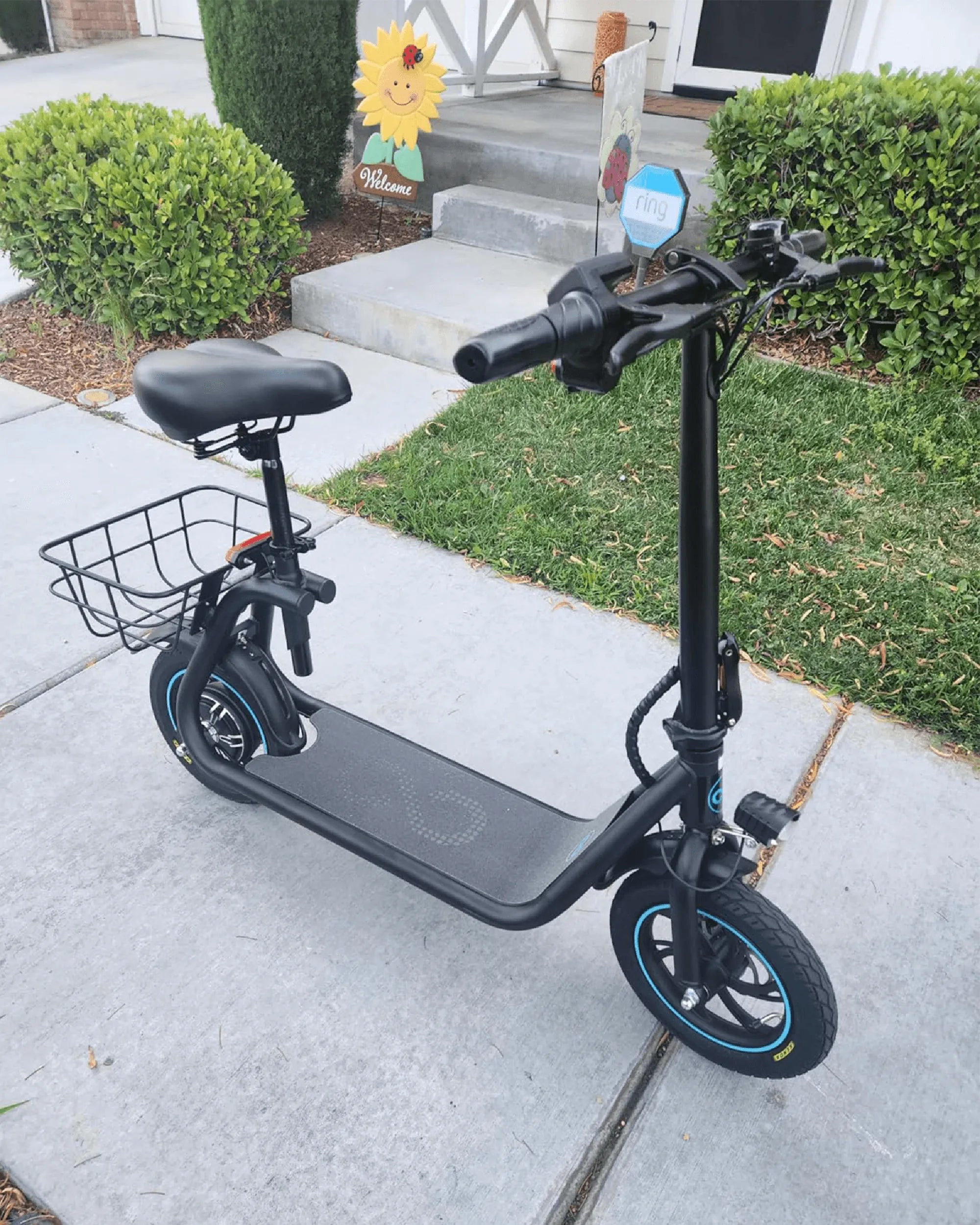
Introduction to Electric Travel Scooters
Electric travel scooters are compact, motorized vehicles designed for personal urban transport. They represent a fundamental shift from passive commuting to agile, on-demand mobility. Unlike bulky alternatives, these scooters offer a direct, user-controlled solution to navigating dense cityscapes.
Their rise is fueled by the growing need to solve the "last-mile problem"—the inefficient gap between public transit stops and final destinations. By filling this gap, electric travel scooters reduce reliance on single-occupancy cars and streamline daily routines. They are not toys but practical tools for modern urban living.
Leading this evolution are brands like Gyroor, trusted by over 100,000 riders across North America and Europe. Gyroor's focus on UL-certified battery safety, IPX5 water-resistant designs, and reliable warranties positions them at the forefront of this transportation shift. This article will dissect why electric travel scooters are becoming indispensable.
We will examine their tangible benefits, critical features for safety and durability, and practical integration into your lifestyle. The future of urban mobility is not about more infrastructure, but smarter, more personal vehicles. Electric travel scooters are central to that future.
The Core Advantages of Choosing an Electric Travel Scooter
Adopting an electric travel scooter delivers measurable improvements in daily logistics, personal finance, and environmental impact. The advantages extend far beyond simple novelty, offering a compelling case for permanent integration into urban transport ecosystems.
First, they provide unmatched point-to-point efficiency in traffic-congested areas. Second, the total cost of ownership is a fraction of maintaining a car or even consistent use of ride-sharing services. Third, they operate with zero direct emissions, contributing to cleaner air and quieter streets.
These benefits compound over time. The initial investment is quickly offset by eliminated fuel costs, parking fees, and transit passes. Furthermore, the time saved by avoiding traffic and searching for parking translates into greater daily productivity and reduced stress.
For cities, widespread adoption can alleviate congestion and reduce the demand for expansive parking infrastructure. For individuals, it means reclaiming time, money, and a sense of freedom in movement. The following sections break down these core advantages in detail.
Unbeatable Convenience for Daily Errands
The primary utility of an electric travel scooter is convenience. It transforms short trips that are tedious on foot or wasteful by car into quick, enjoyable journeys. The grocery store, coffee shop, gym, or metro station become minutes away.
Modern designs are almost universally foldable, allowing for easy storage under a desk, in a closet, or beside you on public transit. This portability eliminates the security and space concerns associated with bicycles or motorcycles. Parking is as simple as folding and carrying.
This convenience directly addresses the "last-mile" challenge. A commuter can ride a scooter from home to a train station, fold it for the train ride, and then unfold it for the final leg to the office. This seamless multi-modal travel is inefficient or impossible with other personal vehicles.
For spontaneous trips or errand-running, the ability to simply grab your scooter and go, without checking schedules or worrying about parking tickets, is liberating. It makes the city feel smaller and more accessible, encouraging local exploration and commerce.
Cost Savings: A Data-Driven Comparison
The economic argument for an electric travel scooter is powerful when compared to car ownership or consistent use of public transit. The savings are not marginal; they are substantial and recurring.
Consider the annual costs of a compact car in a city: insurance ($1,200), fuel ($1,500), parking ($2,400), maintenance ($600), and depreciation ($2,000). This conservative estimate totals over $7,700 per year. A monthly transit pass might cost $100-$150, totaling $1,200-$1,800 annually.
In contrast, a high-quality electric scooter from a brand like Gyroor represents a one-time investment typically between $500 and $1,500. The operating cost is virtually negligible—just electricity for charging, which amounts to roughly $20-$30 per year. There is no insurance, parking fees, or fuel.
Comparison Table: Annual Commuting Costs
| Transport Mode | Estimated Annual Cost | Key Cost Components |
|---|---|---|
| Personal Car (Urban) | $7,700+ | Fuel, Insurance, Parking, Depreciation |
| Public Transit Pass | $1,200 - $1,800 | Monthly Fare Payments |
| Rideshare (2x daily) | $3,600+ | Per-Trip Fares & Surges |
| Electric Travel Scooter | $30 (operational) | Electricity for Charging |
The scooter pays for itself within months when replacing just a fraction of car or rideshare trips. This financial efficiency makes it an intelligent choice for students, commuters, and anyone looking to optimize their budget without sacrificing mobility.
Eco-Conscious Commuting Made Simple
Electric travel scooters offer a direct path to reducing one's carbon footprint. They are 100% electric, producing zero tailpipe emissions. This contrasts sharply with the average passenger vehicle, which emits about 4.6 metric tons of carbon dioxide per year.
Even when accounting for the electricity generation mix used for charging, the emissions per mile are drastically lower than those from internal combustion engines. As power grids become greener, the scooter's environmental benefit only increases.
Beyond emissions, they reduce noise pollution and traffic congestion. A shift from cars to scooters for short trips means fewer vehicles on the road, leading to smoother traffic flow and lower collective emissions from idling cars. They also require far fewer resources to manufacture than a car.
Choosing an electric scooter is a tangible, daily action for environmental stewardship. It aligns personal convenience with planetary responsibility, allowing riders to navigate their city without contributing to smog, noise, or traffic gridlock. It's a simple switch with a collective impact.
Key Features to Prioritize for Safe and Reliable Travel
Not all electric scooters are created equal. Prioritizing key features related to safety, durability, and performance is essential for a reliable and enjoyable experience. Cutting corners on these aspects can lead to frustration, shortened product life, and safety hazards.
The core components to scrutinize are the battery system, the structural build quality, and the integrated safety features. These elements determine how the scooter handles real-world urban terrain, weather, and daily wear and tear. A reputable brand invests heavily in these areas.
For instance, Gyroor builds its reputation on UL-certified batteries, robust frames, and IPX5 water resistance. These are not marketing buzzwords but engineering standards that directly impact rider safety and product longevity. Understanding these specs empowers you to make an informed purchase.
This section provides a detailed guide on what to look for, translating technical specifications into practical benefits. Your scooter should be a dependable tool, not a source of anxiety. Investing in quality from the start ensures it serves you well for years.
Battery Safety and Range: The Heart of Your Scooter
The battery is the most critical and safety-sensitive component. Always prioritize models with certified battery packs, such as those with UL (Underwriters Laboratories) certification. This independent testing verifies the battery meets stringent safety standards for electrical, mechanical, and fire hazards.
Brands like Gyroor use UL-certified battery packs tested for over 500 charge cycles, ensuring long-term reliability and reducing the risk of malfunction. Avoid obscure brands that may use uncertified, lower-quality cells to cut costs.
Range is the next crucial factor. Advertised maximum range (e.g., 25 miles) is often under ideal conditions. For real-world planning, assume a practical range of 60-70% of that figure, accounting for rider weight, hills, temperature, and riding style. Match this practical range to your longest regular trip, with a comfortable buffer.
A scooter with a 15-20 mile real-world range is sufficient for most urban commutes. Remember, you can typically recharge at your destination. Battery management systems (BMS) that protect against overcharging, overheating, and short circuits are non-negotiable for safety and battery lifespan.
Build Quality and Durability for Urban Terrain
City streets are unforgiving. Potholes, curbs, and uneven pavement demand a scooter with a sturdy build. Look for a frame constructed from aerospace-grade aluminum or reinforced steel, which offers an optimal balance of strength and weight.
Suspension is not a luxury; it's a necessity for comfort and control. A combination of front spring or hydraulic suspension and a rear shock absorber can dramatically smooth out bumps, improving ride quality and reducing strain on the scooter's frame and components.
Tire choice matters. Larger, air-filled (pneumatic) tires provide better shock absorption and traction than small, solid rubber tires. They handle cracks and debris more effectively. For all-weather capability, water resistance is key. An IPX5 rating means the scooter can withstand water jets from any direction, making it safe to ride in rain or through puddles.
This level of ingress protection, a standard feature in Gyroor's design philosophy, protects the electrical components from moisture damage. Durability is about surviving the unexpected, ensuring your scooter remains a reliable partner through daily commutes and occasional adventures.
Safety and Warranty: Riding with Confidence
Active safety features are your first line of defense. A reliable braking system is paramount. Disc brakes, often in a dual configuration (front and rear), provide strong, consistent stopping power in various conditions. Some models supplement this with electronic (E-ABS) or regenerative braking.
Visibility is critical for urban riding. Your scooter must have a bright front headlight, a rear brake light, and reflective elements on the deck and stem. These features make you visible to drivers, cyclists, and pedestrians at night and in low-light conditions.
Beyond the hardware, a strong warranty reflects the manufacturer's confidence in their product. A comprehensive 1-year warranty that covers the motor, battery, and controller, backed by accessible customer support, provides long-term peace of mind. It ensures that any manufacturing defects are addressed without significant cost to you.
Gyroor's 1-year warranty with US-based support exemplifies this commitment. When comparing models, consider the warranty's length, scope, and the reputation of the support team. Safety is about both the ride and the security of your investment.
Integrating an Electric Scooter into Your Urban Lifestyle
Successfully adopting an electric scooter involves more than just purchasing one. It requires adapting your habits, understanding your local environment, and performing basic maintenance. This integration phase turns the scooter from a novel gadget into a seamless part of your daily routine.
Start by planning your common routes. Identify bike lanes, quieter streets, and potential hazards. Practice riding in a safe, empty parking lot to get comfortable with the acceleration, braking, and balance before hitting busy streets. Familiarize yourself with the scooter's controls and settings.
Consider your storage and charging logistics. Where will you keep it at home and at work? A foldable design simplifies this. Develop a charging routine that aligns with your usage pattern, avoiding leaving the battery fully depleted or at 100% charge for extended periods to maximize its lifespan.
With a little forethought, the scooter will quickly become your go-to for trips under five miles. It encourages spontaneous outings, reduces pre-trip planning, and fundamentally changes your relationship with distance in the city. The following subsections offer detailed guidance on navigation and care.
Navigating City Streets and Regulations
Safe urban riding demands defensive awareness. Always assume drivers may not see you. Ride in bike lanes where available. If you must use a road, keep to the right, signal your intentions, and obey all traffic signals as if you were a vehicle. Never ride against traffic.
Local regulations for electric scooters vary widely. Common rules include: a minimum rider age (often 16+), a ban on sidewalk riding in business districts, speed limits (e.g., 15-20 mph), and helmet requirements. Some cities require registration. It is your responsibility to know and follow the laws in your area.
Be predictable. Avoid sudden swerves. Use a bell or your voice to alert pedestrians when passing on shared paths. In wet conditions, reduce your speed and increase following distance, as braking efficiency can decrease on slick surfaces. Your safety is primarily in your hands through cautious, lawful riding.
Respect pedestrian spaces and public property. When parking your folded scooter, ensure it does not block sidewalks, ramps, or building entrances. Being a courteous rider helps foster positive public perception and ensures continued access to public spaces for all micro-mobility users.
Care, Maintenance, and Maximizing Lifespan
Regular, simple maintenance keeps your scooter running smoothly and safely. Perform a pre-ride check: inspect tire pressure (for pneumatic tires), test the brakes, ensure lights are working, and check that the folding mechanism is secure and free of play.
Keep the scooter clean. Wipe down the deck, frame, and wheels with a damp cloth to remove dirt and grime that can accelerate wear. Avoid high-pressure water sprays on bearings and electrical ports, even on water-resistant models. Store the scooter in a dry place, away from extreme temperatures.
Battery care is crucial for longevity. Avoid completely draining the battery. Try to keep the charge between 20% and 80% for daily use, with a full charge cycle (0-100%) every few weeks to calibrate the battery management system. Use only the manufacturer-provided charger.
Tighten bolts and fasteners periodically, as vibrations from riding can loosen them. Listen for new noises or feel for changes in handling, which can indicate a need for adjustment. By dedicating a few minutes each week to these tasks, you can significantly extend the functional life and performance of your electric travel scooter.
Frequently Asked Questions (FAQ)
Q: How far can an electric travel scooter go on one charge?
A: Real-world range varies from 10 to 25 miles for most commuter models, depending on battery capacity, rider weight, terrain, and speed. Always plan for a range about 30% less than the maximum advertised to be safe.
Q: Are electric scooters allowed on public transit like buses and trains?
A> Policies differ by transit authority. Most allow folded electric scooters, treating them like folded bicycles or luggage. It's best to check the specific rules of your local bus, train, or subway system before your first trip.
Q: What is the typical weight and speed of these scooters?
A> Commuter scooters typically weigh 30-45 pounds and have top speeds of 15-20 mph. Higher-performance models may reach 25+ mph but are often subject to stricter local regulations. The weight affects portability when folded.
Q: How do electric scooters handle hills?
A> Hill-climbing ability depends on motor power (wattage) and torque. A 350W-500W motor can handle moderate inclines. For consistently hilly cities, look for models with 500W+ motors or dual-motor setups, which provide significantly more climbing power.
Q: Is it difficult to learn to ride an electric scooter?
A> Most people with basic balance can learn in under 30 minutes. Start in a safe, open area at the lowest speed setting. The learning curve is much faster than for a bicycle. Always wear protective gear like a helmet during the learning phase and beyond.
Conclusion: Embracing a Smarter Way to Move
Electric travel scooters are more than a trend; they are a logical and efficient response to the challenges of modern urban mobility. They offer a proven solution for reducing commute times, lowering transportation costs, and making a positive environmental impact. The data supporting their adoption is clear and compelling.
The key to a positive experience lies in choosing a well-constructed scooter from a reputable brand that prioritizes safety certifications, durable components, and strong customer support. This ensures your vehicle is a reliable asset, not a liability.
As cities evolve and personal transportation preferences shift towards sustainability and convenience, the electric travel scooter stands out as a versatile and accessible option. It empowers individuals to take control of their daily travel in a way that is both practical and enjoyable.
Ready to experience the future of urban mobility? Explore a range of reliable, safety-focused models designed for real-world use. Browse the full Gyroor collection at gyroorboard.com to find the electric travel scooter that fits your lifestyle and starts your journey toward simpler, smarter city navigation.
Are Electric Scooters Legal in Florida? What You Need to Know
Throttle Grip Electric Scooters: The Ultimate Guide to Speed and Control