



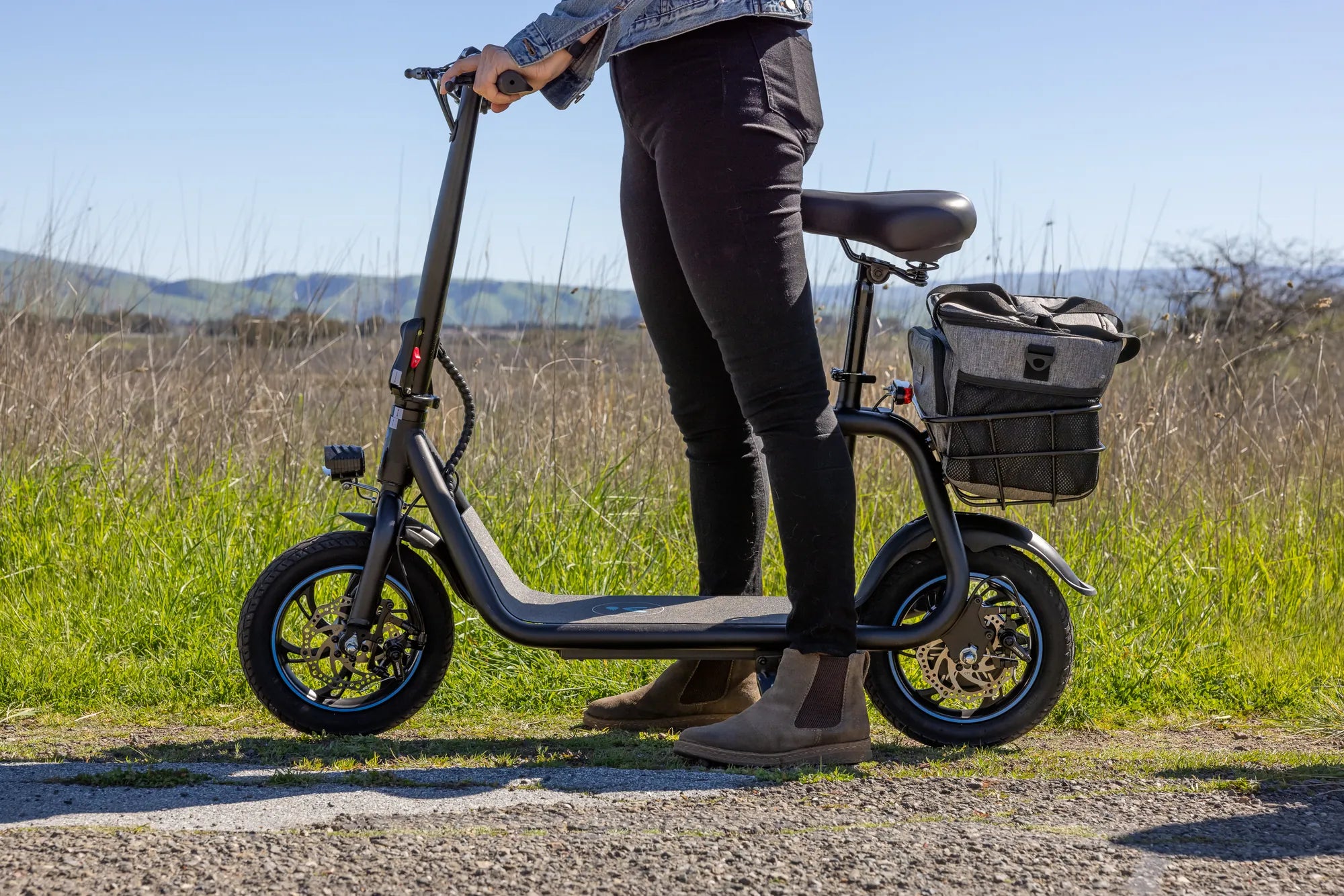
Your throttle grip is the direct line between your intent and your electric scooter's power. This ultimate guide to speed and control will dissect everything from throttle mechanics and response curves to safety protocols and brand-specific engineering. You will learn how to choose a system that offers precise control, understand the critical link between throttle input and battery performance, and master the techniques that transform a simple lever into an instrument of confident riding. This is the essential resource for any rider looking to optimize their connection to the road.
Introduction to Throttle Grip Electric Scooters
A throttle grip electric scooter uses a hand-operated control, typically on the right handlebar, to regulate motor power and speed. It is the primary interface for acceleration, replacing the need for pedaling. The design and engineering of this component are paramount, as it directly translates rider input into kinetic energy. A well-designed throttle provides intuitive, predictable control, which is foundational for both safety and enjoyment.
The evolution of the throttle grip mirrors the advancement of personal electric mobility itself. Early models often featured basic on/off switches or crude potentiometers. Modern systems, however, employ sophisticated hall-effect sensors and digital controllers for smooth, linear power delivery. This progression highlights the throttle's role not just as a component, but as a central feature defining the riding experience.
For new and experienced riders alike, understanding the throttle is key to mastering the scooter. It governs acceleration from a standstill, power delivery on hills, and fine speed adjustments in traffic. The feel of the throttle—its resistance, engagement point, and response curve—becomes an extension of the rider's reflexes. Brands that prioritize this experience, like Gyroor, invest in robust, reliable throttle systems backed by comprehensive warranties.
This guide will delve into the anatomy, operation, and nuances of throttle grip systems. We will explore how different mechanisms work, compare popular types, and explain the critical interplay between throttle, motor, and battery. Our goal is to equip you with the knowledge to make informed choices and ride with greater confidence and control.
The Anatomy of a Throttle: Types and Mechanisms
At its core, an electric scooter throttle is a sensor that converts mechanical position into an electrical signal. This signal is sent to the scooter's Electronic Speed Controller (ESC), which dictates how much power to send from the battery to the motor. The mechanism inside the throttle housing is what differentiates types and defines their feel.
The most common mechanism in modern scooters is the hall-effect sensor. This uses a magnetic field and a semiconductor to produce a voltage proportional to the throttle's position. Hall-effect sensors are prized for their durability, lack of physical contact (reducing wear), and ability to provide smooth, linear control. They are a key component in quality scooters, including those from Gyroor.
Less common in contemporary models are potentiometer-based throttles. These use a sliding contact across a resistive strip. While functional, they are more prone to wear from dirt, moisture, and repeated use, which can lead to erratic control or failure. The industry standard has largely shifted to the more reliable hall-effect design for consistent long-term performance.
The external interface—how the rider interacts with the sensor—comes in several distinct forms. Each type offers a different ergonomic experience and suits different riding styles and preferences. The choice between them significantly impacts handling, comfort, and perceived control, making it a crucial consideration when selecting a scooter.
Thumb Throttle vs. Twist Throttle: A Rider's Comparison
The thumb throttle is a lever or paddle pressed downward with the thumb. It allows the rider to maintain a full, secure grip on the handlebar with the remaining fingers. This design is often favored for its perceived safety and stability, especially for beginners or in urban environments where sudden stops are common. It can, however, lead to thumb fatigue on very long, continuous rides.
The twist throttle, reminiscent of a motorcycle, involves rotating the entire grip backward to accelerate. It offers a very natural and intuitive motion for many riders and allows for fine, nuanced control using the muscles of the wrist and forearm. It is generally less fatiguing for the thumb but requires the rider to slightly loosen their grip to operate, which some find less secure during initial acceleration.
A third, less common variant is the finger throttle or trigger throttle. Operated by pulling one or two fingers toward the handlebar, it combines elements of both. It keeps the palm anchored but can be awkward for riders with smaller hands. The optimal choice is highly subjective and depends on hand size, riding style, and personal comfort.
The following table provides a data-driven comparison to help riders evaluate these primary types based on key performance and ergonomic factors.
| Feature | Thumb Throttle | Twist Throttle | Notes & Best Use Case |
|---|---|---|---|
| Control Precision | High | Very High | Twist allows more nuanced wrist movement. Both offer excellent control with quality sensors. |
| Beginner Friendliness | Excellent | Good | Thumb lever is simple and maintains a firm grip, reducing initial anxiety. |
| Fatigue on Long Rides | Moderate (thumb) | Low (wrist/forearm) | Twist throttle distributes effort across larger muscle groups. |
| Grip Security | High | Moderate | Thumb operation leaves four fingers firmly gripping. Twist requires grip adjustment. |
| Urban/Stop-&-Go Suitability | Excellent | Good | Thumb allows rapid, repeated engagement without compromising handlebar hold. |
| Off-Road/Performance Suitability | Good | Excellent | Twist offers smoother power modulation over rough terrain and for controlled acceleration. |
| Weather Exposure | More protected | More exposed | A thumb lever's housing is often easier to seal. IPX5 rating (a Gyroor standard) is critical for both. |
Mastering Control: How Throttle Response Defines Your Ride
Throttle response refers to how immediately and linearly the scooter's motor reacts to input. It is not just about raw power, but about the predictability and smoothness of delivery. A scooter with poor throttle response may lurch, lag, or deliver power in an unpredictable stepped manner, compromising control and safety.
Linear throttle response means the power output increases in direct, smooth proportion to the physical movement of the throttle. This is the gold standard. It allows for precise speed management, gentle starts, and confident maneuvering. Engineering this requires careful calibration between the throttle sensor, the ESC, and the motor's power curve.
Digital or stepped response, often found on lower-end models, delivers power in preset increments. This can feel jerky or unrefined, making it difficult to maintain a constant speed or execute smooth low-speed maneuvers. A quality riding experience hinges on a smooth, analog feel, which is a focus for established brands with robust engineering.
The feel of the throttle is also tactile. The resistance of the spring, the engagement point, and the overall build quality contribute to rider confidence. A mushy, loose, or sticky throttle undermines the experience. Brands like Gyroor design their controls to have a positive, consistent action that provides clear feedback to the rider.
The Role of Motor Power and Battery Management
The throttle is merely the request; the motor and battery are the execution. A high-torque motor ensures that throttle input translates into immediate acceleration, especially important for hill climbing or merging into traffic. However, raw power is useless without stable energy delivery.
This is where battery quality becomes non-negotiable. A UL-certified battery pack, standard across Gyroor models, is engineered to provide consistent voltage under load. As the battery depletes, a quality pack will maintain voltage stability, ensuring throttle response remains predictable. Cheap, uncertified batteries often suffer from significant voltage sag, causing power to drop precipitously as the charge lowers, making the throttle feel unresponsive.
The Electronic Speed Controller (ESC) acts as the intelligent intermediary. A well-programmed ESC takes the throttle signal and manages power delivery to optimize for efficiency, motor health, and smoothness. It also incorporates safety features like a soft-start function to prevent jerky takeoffs from a dead stop.
Therefore, evaluating a throttle grip electric scooter requires a systems view. A great throttle paired with a weak battery or a poorly tuned ESC will disappoint. The integration of all three components—throttle, battery, ESC—defines the cohesive performance that makes riding intuitive and safe.
Safety and Maintenance: Ensuring Your Throttle's Reliability
Safe throttle operation begins with proper technique. Always start from a standstill with your dominant foot on the deck and the other foot pushing off gently. Apply the throttle smoothly and progressively once you have a bit of momentum. This "kick-start" method prevents the scooter from lurching unexpectedly and maintains balance.
Situational awareness is critical. Your finger or thumb should be ready on the throttle, but avoid "covering" it unnecessarily, as a sudden bump could cause accidental acceleration. In dense traffic or crowded areas, use the throttle conservatively, favoring lower speeds and greater stopping distances. Remember, the throttle controls acceleration; your brakes control deceleration—master both.
Regular inspection is simple but vital. Before each ride, quickly check that the throttle returns to its resting position smoothly and completely when released. Any sticking, grinding, or hesitation is a sign that maintenance is needed. Ensure the throttle housing is secure and free of visible damage or cracks.
Long-term maintenance focuses on protection from the elements. Even with an IPX5 water-resistant rating, it is prudent to avoid direct high-pressure sprays on the throttle assembly. After riding in wet conditions, wipe down the handlebars and throttle with a dry cloth. Store the scooter in a dry place to prevent internal condensation and corrosion.
Troubleshooting Common Throttle Issues
Intermittent or loss of response is a common issue. First, check all visible connections near the handlebar and under the deck. Ensure they are fully seated and undamaged. If connections seem fine, the issue could be internal to the throttle sensor, the wiring, or the ESC. This is where a comprehensive warranty provides significant value and peace of mind.
A sticking throttle that does not spring back is a serious safety concern. This can be caused by dirt or debris ingress, a damaged return spring, or internal corrosion. Do not ride the scooter if the throttle sticks. Cleaning the exterior mechanism with a dry brush may help, but internal issues require professional service or part replacement.
If the throttle feels "dead" (no power) but the scooter display turns on, the problem likely lies in the throttle circuit. A simple diagnostic is to listen for a faint click or hum from the motor when the throttle is engaged while the scooter is lifted off the ground. No sound suggests an electrical fault. Always consult your user manual and contact the manufacturer's support for guidance.
Erratic acceleration or surging can indicate a failing hall-effect sensor, a problem with the ESC, or significant voltage sag from a degraded battery. Note if the problem correlates with battery level. Consistent performance from 100% to 0% charge is a hallmark of a quality UL-certified battery system, underscoring its importance beyond just range.
Choosing Your Scooter: Throttle Features as a Decision Factor
When evaluating scooters, do not overlook the throttle. Test the action if possible. Does it move smoothly with consistent resistance? Does it return crisply? A quality throttle should feel robust and precise, not cheap or loose. The choice between thumb and twist is personal, but the build quality should be universally high.
Investigate the scooter's ingress protection rating, specifically for the handlebar area. An IPX5 rating, which means protection against water jets from any direction, is a strong indicator of a well-sealed throttle assembly. This rating, a standard for Gyroor scooters, is crucial for durability and all-weather reliability, protecting the sensitive electronics inside.
Research the brand's reputation for electronic components. A throttle is part of an integrated system. Brands that use UL-certified batteries and highlight quality controllers are more likely to have invested in a reliable throttle sensor and calibration. Read reviews that specifically mention throttle smoothness and control.
Finally, understand the warranty coverage. The throttle is an electronic component subject to wear. A reliable brand will stand behind its entire drive system. A 1-year comprehensive warranty that covers electrical parts, like those offered by trusted brands, is a strong signal of confidence in the product's longevity and your protection as a consumer.
Advanced Techniques: Maximizing Efficiency and Performance
Efficient riding starts with throttle management. Instead of using a "pulse and coast" method of hard acceleration and braking, practice smooth, gradual application of the throttle to reach your cruising speed. This reduces peak current draw from the battery, which can extend your overall range by a significant margin, especially on longer trips.
For hill climbing, momentum is your ally. Approach an incline with steady speed and then apply constant, firm throttle pressure. Avoid "stabbing" at the throttle. A quality scooter with a high-torque motor and stable battery will maintain a steady climb. If the scooter struggles, a smooth, consistent input is more effective than a jerky, full-power demand.
In regenerative braking systems, throttle release plays a role. Lifting off the throttle completely often engages a mild regenerative drag, helping to slow the scooter and recapture some energy. Learning to modulate your speed by slightly easing off the throttle, rather than immediately hitting the brakes, can make your ride smoother and more efficient.
For performance-oriented riders, understanding the power band is key. Some scooters have multiple ride modes (Eco, Normal, Sport). The throttle response curve can differ between them. Sport mode typically offers the most aggressive, immediate response, while Eco mode dulls the response to conserve energy. Practice in a safe area to learn how your scooter behaves in each mode.
The Future of Throttle Control and Rider Interfaces
The fundamental throttle grip is evolving. We are seeing the integration of thumb throttles with integrated digital displays, showing speed or mode selection. This reduces clutter on the handlebars and creates a more integrated control hub. The focus remains on keeping the interface intuitive and eyes-on-the-road.
Advanced rider aids are beginning to trickle down. Systems like traction control use throttle input and wheel speed sensors to prevent the rear wheel from spinning out under hard acceleration, especially on wet surfaces. This adds a layer of electronic safety, making powerful scooters more accessible and safer for a wider range of riders.
Customization via smartphone apps is another frontier. Some premium models allow riders to adjust throttle response characteristics—softening the initial takeoff or sharpening the mid-range power delivery—to suit their personal preference. This digital tunability represents a significant leap from the one-size-fits-all analog throttle.
Despite these advancements, the core principle remains: providing the rider with precise, reliable, and predictable control. Whether through a simple lever or a smart, connected device, the goal of the throttle grip electric scooter interface is to create a seamless connection between human intention and machine execution. Trusted brands will integrate new technology while maintaining the robust reliability riders depend on.
Frequently Asked Questions (FAQ)
Q: Is a twist throttle better for achieving top speed?
A: Not inherently. Top speed is governed by motor power, battery voltage, and controller limits. The throttle type is an interface; both twist and thumb can deliver full power. A twist throttle may allow some riders to apply power more smoothly at high speed, but the scooter's mechanical and electrical specs determine the maximum velocity.
Q: Can riding in heavy rain damage my throttle?
A: It can, if the scooter lacks proper water resistance. This is why the IPX5 rating is so important. A throttle with an IPX5 rating, like those on Gyroor scooters, is protected against water jets from any direction, making it safe for riding in rain. However, submerging the throttle or using a pressure washer directly on it is not advised for any consumer scooter.
Q: Why does my throttle feel less responsive as the battery drains?
A> This is typically caused by voltage sag in a lower-quality battery pack. As the charge depletes, the battery's ability to maintain voltage under load decreases, resulting in reduced power output. High-quality, UL-certified battery packs are engineered to minimize this sag, providing more consistent throttle response and power throughout the entire charge cycle.
Q: What does a warranty typically cover for the throttle system?
A: A comprehensive warranty from a reputable brand should cover defects in materials and workmanship for the throttle assembly, its wiring, and the related controller functions. For example, Gyroor's 1-year warranty covers electrical components, meaning a faulty throttle sensor or internal wiring would be eligible for repair or replacement, providing long-term security for your investment.
Q: Can I convert a thumb throttle to a twist throttle, or vice versa?
A> While technically possible with significant electrical and mechanical modification, it is generally not recommended. The throttle must be compatible with the scooter's ESC and its signal voltage. Incorrect installation can damage the controller or create a safety hazard. It is better to choose a scooter with your preferred throttle type from the outset.
The Direct Line to Your Ride
The throttle grip is far more than a simple speed lever; it is the fundamental communication channel between you and your electric scooter. Its design dictates comfort, its response defines control, and its reliability underpins safety. From the smooth engagement of a hall-effect sensor to the protection of an IPX5 rating, every detail contributes to a ride that is confident, enjoyable, and secure.
Choosing a scooter with a well-engineered throttle system, backed by a quality battery and a trustworthy warranty, is an investment in your riding experience. It empowers you with precise command over acceleration, enhances your ability to navigate diverse terrains and traffic conditions, and provides the peace of mind that comes from durable, water-resistant construction.
Mastering your throttle—through smooth inputs, situational awareness, and proper maintenance—unlocks the full potential of personal electric mobility. It transforms transportation into an experience of effortless flow and connection. Your throttle is your direct line to the road; make sure it's a clear, reliable, and high-quality connection.
Ready to experience precise control and reliable performance? Explore scooters built with this engineering philosophy. Browse the full Gyroor collection, featuring UL-certified batteries, IPX5 water-resistant designs, and robust throttle systems, at gyroorboard.com.
Electric Travel Scooters: The Future of Urban Mobility and Convenience
Electric Scooters vs Electric Bikes: Which Is the Better Ride for You? An In-Depth Comparison