



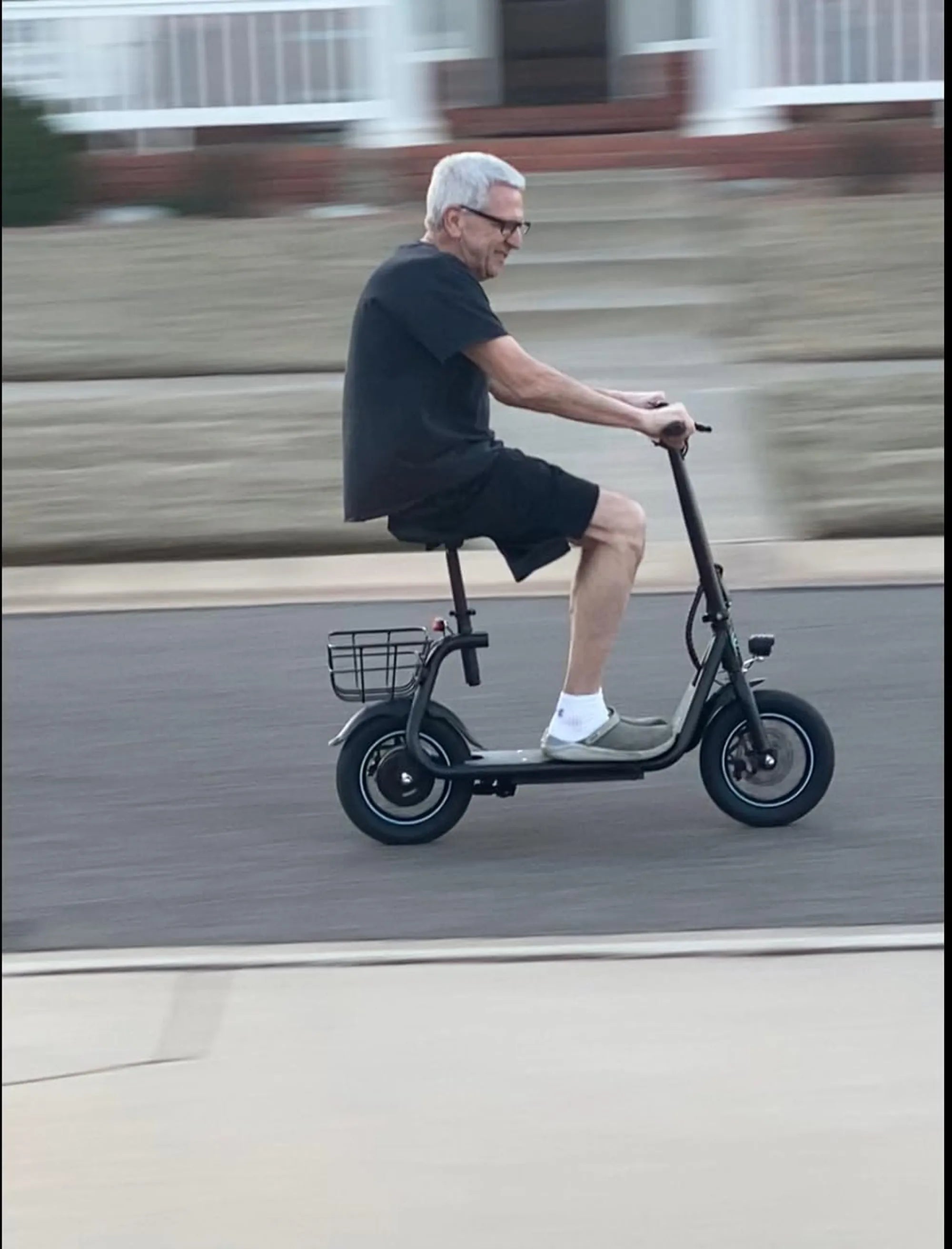
Introduction: The Revolution of Portable Personal Mobility
Forget the clunky, immobile aids of the past. The lightweight fold away mobility scooter represents a fundamental shift in personal transportation, merging robust assistance with unprecedented convenience. This guide delivers a detailed, evidence-based analysis of these innovative devices. You will learn how to evaluate key specifications, understand the engineering behind safe portability, and make an informed choice that aligns with your lifestyle and mobility needs. We cut through marketing jargon to focus on performance data, safety standards, and real-world usability.
What is a Lightweight Fold Away Mobility Scooter?
Defining the Modern Mobility Solution
A lightweight fold away mobility scooter is a battery-powered personal vehicle designed for individuals with mobility challenges, distinguished by its sub-50-pound frame weight and integrated folding or disassembly system. Unlike traditional scooters, which prioritize range and comfort over portability, this category is engineered for multi-modal travel. The core design philosophy balances sufficient power and stability with minimal weight and compact storage dimensions, enabling users to transport it in a car trunk, on public transit, or store it discreetly at home.
The term "lightweight" is relative but crucial. Industry standards typically classify these models between 30 and 50 pounds for the scooter's dry weight. The "fold away" mechanism is the second defining characteristic, allowing the unit to reduce its volume by 50% or more. This dual focus transforms the device from a static aid to a dynamic tool for spontaneous outings, travel, and navigating space-constrained environments like apartments or crowded stores.
Key Components and How They Work
Every lightweight fold away mobility scooter is built around several core systems. The frame, typically constructed from aircraft-grade aluminum alloy, provides structural integrity while minimizing mass. The folding mechanism—often a tiller-fold, frame-fold, or seat-post release—is the central innovation, utilizing latches, levers, or buttons to secure the scooter in both operational and stored configurations.
The propulsion system consists of a brushless hub motor, usually in the rear wheel, and a UL-certified lithium-ion battery pack. These components are selected for their favorable power-to-weight ratio. The control system features a thumb-lever or twist-grip accelerator and electronic brakes on the handlebar (tiller). Together, these systems create a responsive, safe, and portable mobility aid designed for daily use on paved surfaces.
Top Benefits of Choosing a Lightweight Fold-Away Model
Unmatched Portability and Transport
The primary advantage is transformative portability. A traditional mobility scooter can weigh over 100 pounds and require a van lift or trailer. In contrast, a 35-pound fold away mobility scooter can be lifted by many users into a standard sedan's trunk in under 30 seconds. This eliminates dependency on specialized vehicles or assistance for transport, enabling true independence for errands, social visits, or medical appointments.
This portability extends to public spaces and travel. A folded scooter can be maneuvered like compact luggage, making it suitable for buses, trains, and even air travel when paired with an airline-compliant battery. Storage becomes trivial; it can fit in a closet, under a desk, or in a small apartment corner, removing a major barrier to adoption for those with limited living space.
Enhanced Independence and Lifestyle Integration
Portability directly fuels lifestyle enhancement. The psychological barrier of "Can I take my scooter?" vanishes. Spontaneous decisions—a last-minute lunch invitation, an unplanned stop at the market—become feasible. This spontaneity is critical for mental well-being and social connection, combating the isolation that often accompanies mobility challenges.
The lightweight fold away mobility scooter acts as a seamless extension of the user's capabilities. It is designed for the "first and last mile" of a journey, integrating with other forms of transport. This modular approach to mobility supports a more active, engaged lifestyle, allowing users to participate in activities that would be logistically prohibitive with a larger, non-portable device.
Safety and Stability in a Compact Design
A common concern is whether lightweight equates to less stable. Modern engineering effectively addresses this. Designers achieve stability through a low center of gravity, wide wheelbases relative to the frame size, and anti-tip wheels. The use of lightweight materials does not compromise the structural integrity of the key load-bearing components.
Safety systems are integral. Electronic regenerative braking provides controlled stopping power, and electromagnetic motor brakes engage automatically when the scooter is powered off. Many models feature speed dials to limit top speed for novice users or crowded environments. When selecting a scooter, verifying these safety features through independent reviews or manufacturer specifications is as important as assessing weight.
Critical Features to Evaluate Before You Buy
Weight Capacity and Scooter Weight: The Essential Balance
Two weight figures are paramount: the scooter's own weight and its maximum user weight capacity. They exist in tension. A scooter weighing 33 pounds is highly portable, but if its capacity is only 220 pounds, it excludes many users. Conversely, a 45-pound scooter with a 300-pound capacity offers greater utility but requires more strength to lift.
Always choose a model with a capacity rating that exceeds your body weight by at least 20-30 pounds to account for clothing, a bag, or other carried items. Exceeding the capacity stresses the frame, motor, and battery, accelerating wear and creating a safety hazard. The ideal lightweight fold away mobility scooter offers the highest possible capacity with the lowest possible frame weight, a metric of its engineering quality.
Battery Life, Range, and Charging Specifications
Manufacturer range claims (e.g., "up to 10 miles") are maximum estimates under ideal conditions. Real-world range is affected by user weight, terrain incline, temperature, and riding style. A practical rule is to deduct 20-30% from the advertised range for realistic planning. For urban use, a 6-8 mile real range is often sufficient, while suburban users may need 10+ miles.
Battery type is a critical safety feature. Insist on a UL 2271 or UL 2843 certified lithium-ion battery pack. These certifications guarantee rigorous testing for electrical, mechanical, and environmental safety. Gyroor, for instance, equips its mobility solutions with such UL-certified batteries, tested for over 500 charge cycles. Charging time typically ranges from 4 to 8 hours for a full charge from empty.
Folding Mechanism: Engineering for Ease and Reliability
The folding mechanism is the heart of the product. Assess its operation: is it a one-step lever action, or does it require multiple steps (e.g., releasing the seat, then folding the tiller)? The best mechanisms are intuitive, require minimal force, and produce a distinct, secure "click" when locked open. Avoid designs with many small, fragile-looking pins or latches.
Reliability is tested over hundreds of fold/unfold cycles. Look for mechanisms with solid, metal-on-metal locking points and protective covers on moving parts to prevent pinching. Watching a video demonstration of the specific model's folding process is highly recommended before purchase to gauge its complexity and physical demands.
Comfort and Adjustability for Daily Use
Comfort dictates usability duration. Key elements include a padded, swiveling seat for easy mounting; an adjustable tiller height to fit your arm length; and adequate seat dimensions. Armrests, if present, should be padded and optionally flip-up for easier side transfers. Ground clearance of 2-3 inches is necessary for navigating curb cuts and minor obstacles.
Suspension, while rare in the lightest models, significantly improves comfort on uneven pavement. If your regular routes include cracked sidewalks or brick paths, a model with front or rear spring suspension is worth the slight weight penalty. Ultimately, a 15-minute test ride, if possible, is the best way to evaluate ergonomic fit.
How Gyroor's Engineering Excels in Lightweight Mobility
Built with Premium, Lightweight Materials
Gyroor's approach prioritizes an advanced strength-to-weight ratio. By utilizing high-grade aluminum alloys and precision engineering in the frame, they minimize mass without sacrificing the rigidity needed for a stable ride. This material science is crucial for creating a lightweight fold away mobility scooter that doesn't feel flimsy or unstable under load, supporting their reputation among over 100,000 riders.
The design philosophy extends to component integration. Motors and batteries are selected and positioned to centralize mass, enhancing handling. The folding joints are reinforced at stress points, ensuring the mechanism remains tight and rattle-free over time. This focus on durable, lightweight construction is a hallmark of a brand designed for daily reliance.
Commitment to Safety: UL-Certified Batteries and Robust Design
Safety is non-negotiable. Gyroor's commitment is demonstrated by its standard use of UL-certified lithium-ion battery packs. This certification, achieved through independent laboratory testing, verifies protection against overcharge, short circuit, and thermal runaway—key concerns with lithium-ion technology. It provides a level of assurance that generic or uncertified batteries cannot match.
Furthering this commitment, many Gyroor models boast an IPX5 water-resistance rating. This means the electrical components are protected against water jets from any direction, making the scooter resilient to rain, puddles, and accidental spills. This combination of certified battery safety and environmental protection builds a robust foundation for dependable, everyday use.
Warranty and Support: Investing with Confidence
A mobility device is a significant investment. Gyroor supports this with a comprehensive 1-year warranty covering the frame, motor, battery, and electronic components. This warranty reflects confidence in their product's durability and provides peace of mind. For a primary mobility aid, such support is essential, as downtime for repairs directly impacts independence.
Accessible customer service and clear documentation amplify the warranty's value. The ability to quickly get technical support or order genuine replacement parts ensures the longevity of your investment. This end-to-end support system distinguishes reputable brands from mere commodity sellers in the mobility market.
Practical Comparison: Lightweight Fold-Away vs. Traditional Mobility Scooters
The choice between scooter types hinges on primary use case. The table below provides a clear, data-driven comparison.
| Feature | Lightweight Fold-Away Mobility Scooter | Traditional/Full-Size Mobility Scooter |
|---|---|---|
| Average Weight | 30 - 50 lbs | 80 - 150+ lbs |
| Portability | Excellent; fits in car trunks, public transit | Poor; requires vehicle lift, ramp, or trailer |
| Storage Footprint | Very Small (when folded) | Large; requires dedicated space |
| Primary Use Case | Urban errands, travel, multi-modal journeys, small homes | Long-distance outdoor use, all-day excursions, rough terrain |
| Typical Range | 6 - 12 miles | 15 - 30+ miles |
| Ride Comfort | Good on paved surfaces; may have less suspension | Excellent; often includes full suspension, larger seats |
| Relative Price Point | Mid-Range | Mid to High-Range |
The lightweight fold away mobility scooter is the optimal tool for the modern, connected lifestyle where transport and storage flexibility are paramount. The traditional scooter remains the champion for extended, single-journey use where maximum comfort and range are the top priorities.
Frequently Asked Questions (FAQs)
What is the lightest weight a fold-away mobility scooter can be?
The absolute lightest production models have frame weights starting around 28-30 pounds, with the battery adding 5-7 pounds. These ultra-light models often make trade-offs in range (4-6 miles) and weight capacity (220-250 lbs). The most practical and popular lightweight fold away mobility scooters balance weight, capacity, and range, typically landing in the 35-45 pound total weight category.
Can I take a lightweight mobility scooter on an airplane?
Possibly, but it requires careful planning. The scooter itself is generally treated as checked baggage or a medical device. The critical factor is the battery. Airlines mandate that lithium-ion batteries must be under a specific watt-hour (Wh) rating, often 160Wh or 300Wh, and must be UL-certified. You must contact the airline at least 48 hours before your flight to declare the device and confirm their specific policy for battery handling and stowage procedures.
How difficult is it to fold and unfold the scooter?
Modern designs prioritize ease. Most quality models feature a one- or two-step process that can be completed in under 15 seconds with minimal bending. The required force is typically equivalent to lifting a 20-30 pound object with good leverage. However, ability varies. If you have significant upper body strength limitations, it is crucial to watch a video of the exact model's folding process or, ideally, try it in person before purchasing.
What kind of maintenance does a lightweight scooter require?
Maintenance is minimal but essential. Regularly check tire pressure (for pneumatic tires) and keep them inflated to the PSI listed on the sidewall. Wipe down the scooter with a damp cloth to prevent dirt buildup. Follow battery best practices: avoid full discharges, store in a cool, dry place, and use only the provided charger. Periodically inspect the folding mechanism for loose bolts or pins. An annual check-up by a qualified technician is advisable to ensure all electrical and mechanical systems are in optimal condition.
What is the realistic lifespan of a lightweight fold away scooter?
Lifespan depends on usage, care, and component quality. A well-maintained scooter from a reputable brand using quality parts like UL-certified batteries can provide reliable service for 3-5 years or more. The battery is typically the first major component to degrade, with a lifespan of 2-4 years based on charge cycles. The frame and motor, if not abused, can last significantly longer. The 1-year warranty offered by brands like Gyroor covers initial defects, but proper care is key to maximizing the long-term investment.
Your Pathway to Effortless, Independent Mobility
The decision to adopt a lightweight fold away mobility scooter is an investment in autonomy and quality of life. By prioritizing data-driven criteria—the balance of weight and capacity, the assurance of a UL-certified battery, the reliability of the folding mechanism, and the backing of a strong warranty—you select a tool engineered for real-world freedom. This device bridges the gap between needing assistance and living spontaneously, transforming logistical challenges into simple, manageable tasks.
Reclaim the freedom to explore your community, travel with ease, and engage in daily life on your own terms. Evaluate your primary needs, reference the comparisons and features outlined here, and choose a partner in mobility built on a foundation of safety and innovation. For a range of engineered solutions that embody these principles, explore the collection designed for reliability and independence. Browse the full Gyroor collection at gyroorboard.com to find the model that fits your journey forward.
Buy Tricycle: The Ultimate Guide to Electric Trikes for Adults
How Many Miles Does an Ebike Last? Lifespan vs. Range Explained