



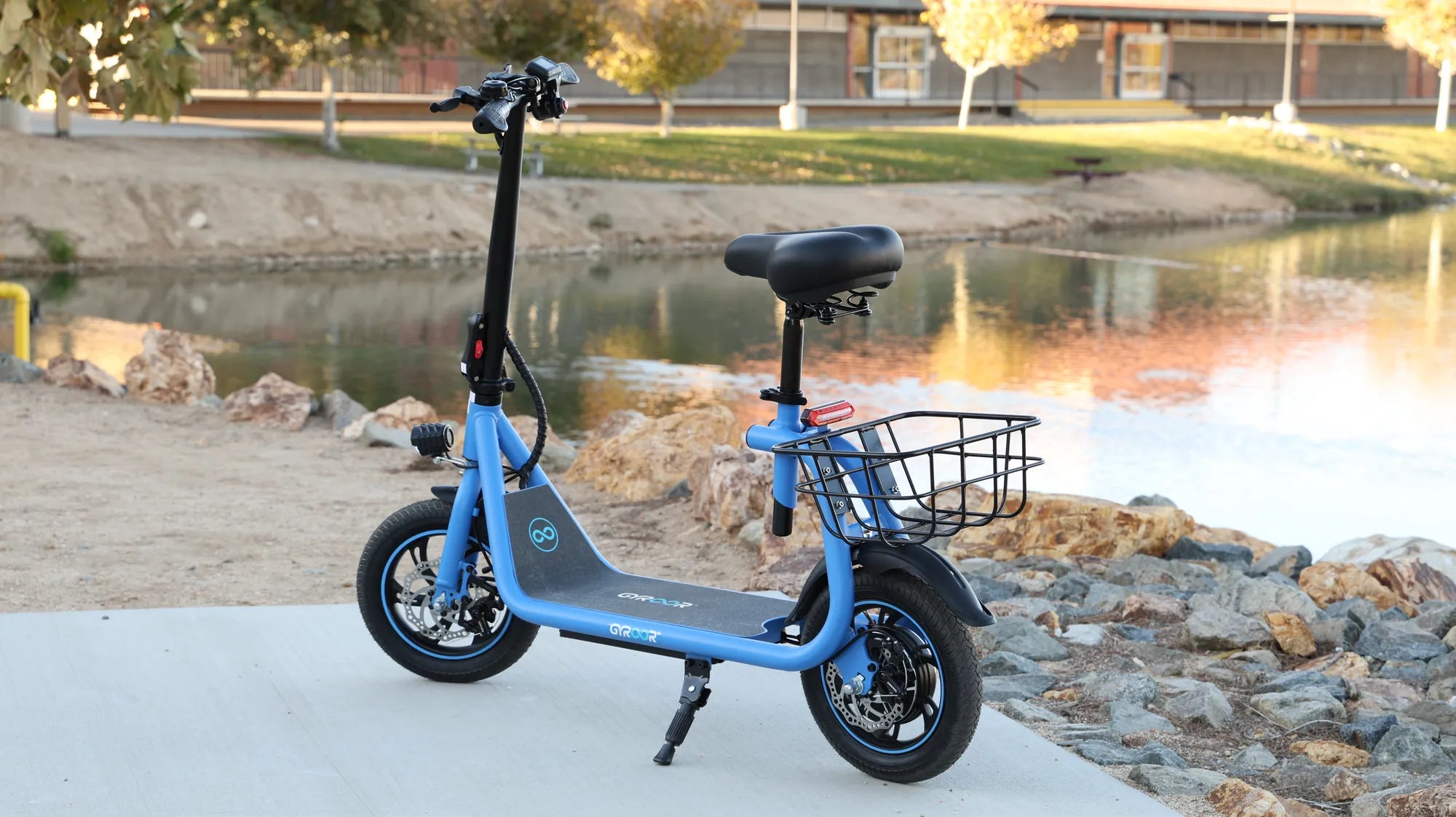
Introduction: Redefining Personal Transport with Mini Electric Balance Scooters
Urban landscapes are undergoing a quiet revolution in personal mobility. At the forefront are Mini Electric Balance Scooters, compact, self-balancing electric vehicles that are redefining how we navigate congested city streets. These devices, often called mini e-unicycles or one-wheel scooters, represent more than a tech novelty; they are a legitimate, efficient, and agile response to the growing demands of urban transport. This article will dissect the technology, advantages, and practical considerations of these innovative vehicles, demonstrating why they are poised to become a cornerstone of future urban mobility. You will learn how they work, their key benefits for commuters, and how to choose and use one safely and effectively.
The traditional commute is fraught with inefficiency: traffic jams, crowded public transport, and the persistent "last-mile" gap between transit hubs and final destinations. Mini electric balance scooters directly address these pain points. By combining intuitive gyroscopic control with a footprint smaller than a standard backpack, they offer unparalleled portability and maneuverability. Their rise in popularity among students, professionals, and tech enthusiasts signals a shift towards more personalized and sustainable urban travel solutions.
This evolution is supported by advancements in battery technology and motor efficiency. Modern units can travel significant distances on a single charge, climb moderate gradients, and fold or are inherently compact enough for easy carrying. As cities become denser and the need for low-emission transport grows, the role of the mini electric balance scooter transitions from recreational gadget to essential urban tool. Understanding this technology is key to embracing a more fluid and less congested urban future.
The Core Technology: How Mini Balance Scooters Work
At its heart, a mini electric balance scooter is a marvel of modern engineering, integrating mechanics, electronics, and software to create a stable, responsive ride. The fundamental principle is dynamic self-balancing. The rider stands on two foot pads positioned on either side of a single, central wheel (or between two closely aligned wheels in some models). The device does not have handlebars; steering and acceleration are controlled entirely by the rider's body movements.
The core components enabling this feat are an electric motor, a high-capacity lithium-ion battery pack, a suite of sensors (primarily gyroscopes and accelerometers), and a powerful central processing unit (CPU). The sensors constantly measure the tilt angle and angular velocity of the platform. This data is fed to the CPU, which calculates the necessary adjustments hundreds of times per second. To maintain balance, the CPU commands the motor to spin forward or backward, effectively moving the wheel underneath the rider's center of gravity to prevent a fall.
Control is intuitive through a system known as "lean-to-steer." To move forward, the rider leans slightly forward. The sensors detect this shift and signal the motor to accelerate proportionally. To slow down or stop, the rider leans back. Steering is achieved by applying subtle pressure with one foot: pressing down with the toes of the right foot while easing pressure on the left will initiate a right turn, as the device tilts and the motor adjusts the wheel's speed accordingly.
The Role of Gyroscopic Stabilization
Gyroscopic stabilization is the non-negotiable foundation of these devices. The gyroscope sensor measures orientation and angular velocity. When combined with data from accelerometers (which measure proper acceleration), the control system creates a precise real-time model of the device's position in space. The sophisticated control algorithm then performs instantaneous calculations to determine the exact torque the motor must apply to correct any tilt.
This process happens seamlessly, making the scooter feel like an extension of the rider's body. For beginners, the learning curve involves trusting this technology. Initially, the instinct is to fight for balance, but success comes from relaxing and letting the gyroscopic system do its job. Most users achieve basic competency within 30 minutes to an hour of practice. This automated stability is what distinguishes mini electric balance scooters from traditional scooters or skateboards, opening up personal mobility to a much wider audience without requiring advanced balancing skills.
Key Advantages for the Urban Commuter
The appeal of mini electric balance scooters in an urban context is multifaceted, addressing specific practical and economic challenges of city life. First is extreme portability. Weighing typically between 20-30 pounds (9-14 kg) and with a compact form factor, they can be easily carried onto buses, trains, or into offices and apartments, eliminating the need for parking or locking up outside.
Second is superior maneuverability. Their small footprint and zero-turn radius allow riders to navigate dense pedestrian traffic, narrow sidewalks, and crowded bike lanes with ease, often where bicycles or traditional e-scooters would struggle. This agility reduces commute times in stop-and-go urban environments significantly.
From an economic and environmental standpoint, the advantages are compelling. They operate at a fraction of the cost of car ownership, public transit passes, or ride-sharing services, with electricity costs for charging measured in cents. They produce zero direct emissions, contributing to cleaner air and reduced urban noise pollution. Furthermore, their durability and low maintenance requirements (no chains, gears, or extensive mechanical parts) translate to long-term cost savings and reliability.
The Last-Mile Solution Champion
The "last-mile problem" is the critical gap in a commute between a public transportation hub (train station, bus stop) and a person's final destination (home, office, campus). This gap, often 1-3 miles, is too short to drive conveniently yet too long to walk quickly. It is the single most significant inefficiency in multi-modal urban transport.
Mini electric balance scooters are the quintessential last-mile solution. They can be folded or carried onto a bus or train for the main leg of the journey, then deployed to cover the final distance in just a few minutes at speeds of 10-15 mph. This seamless integration makes public transit a more viable and attractive option for a wider range of people, effectively extending the catchment area of every transit stop. By solving the last-mile problem, these devices have the potential to increase public transit ridership and reduce reliance on private cars for entire journeys, alleviating urban congestion at its core.
Gyroor's Commitment to Safety and Reliability in Balance Scooters
As the market for personal electric transport grows, the importance of safety and reliability cannot be overstated. Gyroor, a leading electric scooter and e-bike brand trusted by over 100,000 riders across North America and Europe, applies its rigorous engineering standards to the realm of balance scooters. This commitment transforms a novel device into a dependable daily transport tool.
The cornerstone of this commitment is battery safety. Gyroor utilizes UL-certified battery packs in its models, which undergo stringent testing for stability, performance, and safety. These batteries are rated for 500+ charge cycles while maintaining integrity, significantly reducing risks of overheating or failure. This is a critical differentiator in a category where battery quality directly impacts both performance and user safety.
Further enhancing reliability is robust construction. Gyroor designs incorporate IPX5 water-resistant ratings, meaning they can withstand water jets from any direction. This ensures the scooter remains operational and safe in light rain or on wet pavement, a common condition for urban commuters. Coupled with a reliable 1-year warranty on key components, this focus on durable design provides riders with the peace of mind necessary for integrating a mini electric balance scooter into their daily routine. Trust is built through consistent performance, and Gyroor's 4.5/5 average customer rating underscores its success in delivering it.
Choosing Your Ride: A Practical Comparison
Selecting the right mini electric balance scooter requires matching specifications to your individual needs, terrain, and commute profile. Key decision factors include motor power, battery capacity, wheel size and type, weight limit, and the device's own weight. The following comparison table outlines how these factors align with different primary use cases.
| Feature | Urban Commuter Focus | Recreational / Mixed-Use Focus | Performance / Long-Range Focus |
|---|---|---|---|
| Motor Power | 350W - 500W (Adequate for flats, moderate hills) | 500W - 800W (Better acceleration, hill climb) | 800W+ (Strong torque for steep hills, higher speeds) |
| Battery & Range | 6-10 mi (Enough for last-mile + short trips) | 10-15 mi (Extended park or neighborhood rides) | 15-25+ mi (For longer commutes without charging) |
| Wheel Size/Terrain | 10"-12" airless or solid tires (Smooth pavements) | 12"-14" pneumatic tires (Better for bumps, light off-road) | 14"+ pneumatic tires (Superior shock absorption, varied terrain) |
| Max Weight Limit | 220 - 260 lbs | 260 - 280 lbs | 280 lbs+ |
| Device Weight | 20-25 lbs (Highly portable) | 25-30 lbs (Sturdier build) | 30-40 lbs (Power/range trade-off) |
| Ideal User | Train/bus commuter, student on campus | Weekend rider, suburban traveler, light trail use | Long-distance commuter, enthusiast seeking power & range |
Terrain and Use-Case Considerations
Your local environment should heavily influence your choice. For cities with impeccably smooth bike lanes and sidewalks, a model with smaller, solid rubber tires offers minimal maintenance and good efficiency. However, for areas with cracked pavement, cobblestones, or occasional gravel paths, opting for a larger wheel diameter (14 inches or more) with a pneumatic (air-filled) tire is crucial. Pneumatic tires provide vastly superior shock absorption, improving comfort and control on uneven surfaces.
Consider your daily routine. Is the scooter purely for a 1.5-mile sprint from the subway to your office? A lightweight, compact model with a 8-mile range is perfect. Do you also envision using it for weekend errands or leisurely rides through the park? Prioritize extended range (15+ miles) and a more powerful motor for confidence on gentle slopes. For those who face significant hills on their route, motor power is the non-negotiable spec—never underestimate the wattage needed for a consistent, safe climb.
Navigating Regulations and Riding Etiquette
The legal landscape for mini electric balance scooters is evolving and varies significantly by city, state, and country. Generally, they fall under the broader category of "Personal Light Electric Vehicles" (PLEVs). It is the rider's absolute responsibility to research and comply with local laws before riding. Common regulations include age restrictions (often 16+), mandatory helmet use, speed limits (frequently capped at 15-20 mph), and rules governing where they can be operated—such as bike lanes, shared paths, or roads, with sidewalks often prohibited.
Responsible riding etiquette is paramount for community acceptance and personal safety. Always yield to pedestrians, as sidewalks are shared spaces. Use a bell or polite verbal cue when passing. Avoid weaving unpredictably at high speeds. Proper lighting is not just etiquette but a critical safety feature: use bright front and rear lights, and consider reflective clothing when riding at dawn, dusk, or night. Just as with cycling, signaling your intentions helps drivers and other path users predict your movements.
Safety gear should never be an afterthought. A certified bicycle helmet is the minimum. For higher-speed riding or in heavy traffic, consider additional protection like wrist guards, knee pads, and elbow pads, especially during the learning phase. Adhering to etiquette and safety norms not only protects you but also helps build a positive reputation for all mini electric balance scooter riders, fostering a more welcoming regulatory environment.
Frequently Asked Questions (FAQ)
Q1: How long does it take to learn to ride a mini electric balance scooter?
A: Most adults can achieve basic control and straight-line riding within 30 to 60 minutes of dedicated practice in a safe, open area like an empty parking lot. Mastering tight turns, emergency stops, and handling different terrains may take a few days of regular use. The key is to start slowly, trust the self-balancing technology, and use a support (like a wall or a friend) for the first few mount/dismount attempts.
Q2: What is the average range and top speed?
A: This varies by model. Entry-level commuter models typically offer a range of 6-10 miles per charge with top speeds of 10-12 mph. Mid-range models reach 10-15 miles at 12-15 mph. High-performance models can achieve 15-25+ miles and speeds of 18-25+ mph, though local speed limits often apply. Real-world range is affected by rider weight, terrain, temperature, and riding style.
Q3: Are they safe to ride in the rain?
A> Safety depends on the scooter's ingress protection rating. Models with an IPX5 rating, like those from Gyroor, are protected against water jets and are generally safe for riding in light rain and on wet surfaces. However, no consumer electric vehicle is fully waterproof. Avoid deep puddles, heavy downpours, and submersion. Always dry the scooter after riding in wet conditions and check the manufacturer's guidelines.
Q4: How do I maintain the battery for maximum longevity?
A> Follow these best practices: Avoid completely draining the battery; try to recharge when it reaches 20-30%. Similarly, avoid leaving it plugged in at 100% for extended periods (days/weeks). Store the scooter in a cool, dry place, away from extreme heat or freezing temperatures. If storing for more than a month, leave the battery charge at around 50-60%. Using the manufacturer's official charger is essential.
Q5: What does a typical warranty, like Gyroor's 1-year warranty, cover?
A> A standard warranty typically covers defects in materials and workmanship for core components like the motor, battery pack, and control board under normal use. It generally does not cover wear-and-tear items (tires, foot pads), damage from accidents, misuse, neglect, or unauthorized modifications. Always read the specific warranty terms provided by the manufacturer to understand the scope of coverage and the claim process.
Conclusion: Embracing an Agile and Sustainable Urban Future
The rise of the mini electric balance scooter is a clear signal of a broader shift towards personalized, efficient, and sustainable urban mobility. These devices offer a compelling solution to the intertwined problems of congestion, pollution, and the last-mile gap. By integrating seamlessly with public transit and occupying minimal physical space, they promote a more fluid and human-scale cityscape.
Their success hinges on continued technological refinement and, crucially, a commitment to safety and reliability from manufacturers. Brands like Gyroor, with their focus on UL-certified batteries, water-resistant designs, and comprehensive warranties, are building the trust necessary for mainstream adoption. As regulations mature and infrastructure adapts, these agile vehicles will become an increasingly common and accepted part of the urban transport ecosystem.
Adopting a mini electric balance scooter is more than a purchase; it's a step towards a more agile and conscious way of moving through our cities. It represents a choice for efficiency over stagnation, for clean energy over emissions, and for reclaiming time lost in traffic. The future of urban mobility is compact, intelligent, and electric—and it's balancing on one wheel. Explore how a reliable model can transform your daily commute. Browse the full Gyroor collection at gyroorboard.com.
Electric Scooters Istanbul: The Ultimate Guide to Urban Mobility
Benefits of Electric Scooters in India: A Sustainable and Cost-Effective Commute