



Introduction: Redefining Comfort and Freedom for Senior Riders
Finding the most comfortable ebike for seniors is about more than just a soft seat. It's about engineering a machine that restores independence, prioritizes safety, and makes every ride a joy. For older adults, the right e-bike can transform short errands, leisurely park visits, and gentle exercise from daunting tasks into accessible pleasures.
This transformation hinges on specific design principles that address common physical considerations like balance, joint flexibility, and strength. A truly senior-friendly e-bike minimizes effort while maximizing stability and control. It must be intuitive from the first pedal stroke, building confidence rather than anxiety.
Brands that excel in this category, like Gyroor, focus on these human factors. With a philosophy centered on reliable, user-friendly personal transportation for over 100,000 riders, they build e-bikes that prioritize peace of mind through certified components and thoughtful ergonomics. The goal is seamless integration into daily life.
This guide will dissect the anatomy of comfort, providing a clear framework for evaluation. You will learn the five non-negotiable pillars of a senior-optimized e-bike, see how leading manufacturers implement them, and discover the essential accessories that complete the experience. Your journey to confident, comfortable riding starts with understanding what truly matters.
What Makes an E-Bike "Senior-Friendly"? The 5 Pillars of Comfort
Evaluating an e-bike for senior comfort requires looking beyond marketing claims. We define comfort through five foundational pillars that directly impact safety, ease of use, and enjoyment. These pillars work together to create a riding experience that feels natural, secure, and empowering for older adults.
The first pillar is physical accessibility—how easy it is to get on, off, and support the bike at a stop. The second is riding posture, which affects strain on the body over time. The third is operational simplicity, ensuring the technology aids rather than complicates the ride.
The fourth pillar is power delivery; the motor should feel like a gentle, predictable assist, not a sudden jolt. The fifth and final pillar is integrated safety, where features like braking and lighting are designed to prevent accidents. A deficiency in any one pillar can undermine the entire experience.
When searching for the most comfortable ebike for seniors, use this checklist. A model that scores highly across all five areas will provide lasting value and become a trusted companion for daily adventures, promoting an active lifestyle without unnecessary struggle or risk.
Stable, Low-Step-Through Frame Design
The frame is the most critical element for accessibility. A traditional diamond frame requires swinging a leg high over the rear wheel, a motion that challenges balance and hip flexibility. A low-step or step-through frame eliminates this hurdle.
This design features a dramatically lowered top tube or no top tube at all, creating a clear, open space to simply step through. The rider can plant both feet flat on the ground while seated, which is crucial for stability at traffic lights or on uneven terrain. It reduces the fear of tipping over when stopping.
Furthermore, a lower center of gravity, often inherent in these designs, contributes to a more planted, secure feel while riding. The best frames also incorporate mounting points for easy-access baskets and use lightweight yet strong aluminum alloys to keep overall weight manageable for handling.
For seniors, this design isn't a luxury; it's a fundamental safety feature. It empowers riders to mount and dismount confidently, which is the first step toward enjoying the ride. Always prioritize a low standover height—the distance from the ground to the top tube—when making your selection.
Upright, Ergonomic Riding Position
Comfort over distance is dictated by posture. Sporty e-bikes with forward-leaning geometries strain the back, neck, wrists, and shoulders. A senior-optimized bike promotes an upright, "sit-and-be-seen" riding position.
This posture distributes weight evenly across the sit bones, reduces pressure on the hands and wrists, and keeps the spine in a neutral alignment. It allows for a full, unobstructed view of the road ahead and surrounding traffic, enhancing situational awareness. The handlebars should be swept back toward the rider to facilitate this natural arm position.
An adjustable stem and seat post are invaluable, allowing for fine-tuning the fit to individual body proportions. The saddle itself should be wider and more cushioned than a performance saddle, often with a central cutout for pressure relief. This ergonomic focus minimizes fatigue and makes longer rides not just possible, but pleasant.
Remember, the most comfortable ebike for seniors will make you feel like you're sitting *in* the bike, not perched *on top* of it. This stable, commanding position is key to reducing physical strain and building riding confidence mile after mile.
Intuitive, Simple-to-Use Controls
Technology should simplify, not complicate. Senior-friendly e-bikes feature control systems designed for clarity and ease. The display should be large, backlit, and show essential information at a glance: battery level, assist level, speed, and odometer. Buttons should be tactile, well-spaced, and easy to press, even with gloves on.
The pedal-assist level selector is the most frequently used control. It should offer distinct levels (typically 3-5) that are easy to cycle through without looking down. Many comfort models integrate the control into the handlebar grip for intuitive thumb operation. The gear system should also be simple—internal gear hubs with a twist shifter or automatic shifting are preferable to complex external derailleurs.
Other controls, like the power button, headlight switch, and walk-assist mode, should be logically placed and clearly marked. The goal is minimal cognitive load; the rider focuses on the joy of the ride and the environment, not on operating the machine. A cluttered or confusing interface can be a significant barrier to adoption.
Brands like Gyroor understand this, designing dashboards that prioritize legibility and logical layout. When testing a bike, ask yourself: Can I understand and operate all the controls within 30 seconds? If the answer is yes, the designer has succeeded.
Smooth and Predictable Power Delivery
How the motor engages is paramount to comfort and safety. There are two primary sensor types: cadence and torque. Cadence sensors simply activate the motor when they detect pedaling, which can lead to a sudden, jerky "on/off" feeling. For seniors, this unpredictability can be unsettling.
A torque sensor is the superior choice for the most comfortable ebike for seniors. It measures how hard you are pedaling and provides proportional assistance. Pedal softly, get a gentle boost; pedal with more force, get more power. This creates a sensation that the bike is an extension of your own effort—natural, intuitive, and incredibly smooth.
This system prevents the bike from lurching forward from a stop and allows for precise control in tight spaces or crowded areas. Coupled with multiple assist levels, it lets the rider fine-tune the workout, from a light nudge on flat paths to significant help on hills. The transition between power levels should be seamless, without jarring jumps in speed.
Smooth power delivery builds trust. The rider knows exactly what to expect from the motor, which reduces anxiety and allows them to relax and enjoy the scenery. Always inquire about the type of sensor used; a torque sensor is a hallmark of a quality, comfort-focused e-bike.
Confidence-Inspiring Safety Features
True comfort is rooted in feeling safe. A senior-friendly e-bike integrates multiple layers of safety into its design. The braking system is the most critical. Hydraulic disc brakes offer superior, consistent stopping power in all weather conditions with minimal hand effort—a significant advantage over traditional rim brakes or mechanical discs.
Integrated lighting is non-negotiable. A bright front headlight and a rear brake light (that illuminates when braking) ensure visibility to others, crucial for dawn, dusk, or overcast days. The lights should be powered by the main battery so they never need separate charging.
The tires play a dual role in safety and comfort. Wider tires (at least 2.2 inches) provide more stability and grip, and they can be run at lower pressures to absorb road vibrations from cracks and bumps. A front suspension fork, while adding weight, can further smooth out rough pavement. Finally, a sturdy, double-legged kickstand ensures the bike stays firmly upright when parked, preventing tip-overs.
These features work together to create a protective envelope around the rider. When these elements are well-executed, the senior cyclist can ride with assurance, knowing the bike is designed to help them avoid and handle potential hazards effectively.
Gyroor's Approach to Senior Comfort: Engineering for Ease of Use
Gyroor's product philosophy aligns directly with the five pillars of senior comfort. As a leading electric mobility brand trusted by a global community, they engineer e-bikes with a focus on reliability, intuitive operation, and durable construction. This approach transforms the theoretical pillars into practical, ride-ready features.
Their comfort-oriented models typically showcase low-step frames, swept-back handlebars, and plush seating. But beyond ergonomics, Gyroor emphasizes foundational reliability. They understand that for seniors, confidence comes from knowing the bike won't fail unexpectedly. This is achieved through rigorous component selection and stringent testing protocols.
Every design decision is filtered through the lens of user experience. Can the battery be removed easily for charging? Are the wires internally routed for a clean, snag-free look? Is the assembly process straightforward? By answering "yes" to these questions, Gyroor reduces friction points from unboxing to everyday use.
This holistic engineering mindset ensures that the most comfortable ebike for seniors isn't just about a list of specs, but about a cohesive, dependable, and enjoyable product. It's about building a machine that riders can forget about and simply enjoy the ride.
UL-Certified Batteries and Warranty for Peace of Mind
Battery anxiety is a real concern for new e-bike owners. Gyroor directly addresses this by exclusively using UL-certified lithium-ion battery packs. UL certification is the gold standard for safety in North America, indicating the battery has passed rigorous tests for electrical, mechanical, and fire safety.
These batteries are engineered for longevity, rated for over 500 charge cycles while maintaining significant capacity. For a senior rider using the bike several times a week, this translates to years of dependable range. The battery management system (BMS) protects against overcharging, deep discharge, and short circuits.
This commitment is backed by a comprehensive 1-year warranty on the bike and supported by a U.S.-based customer service team. For seniors, this warranty is more than a policy; it's a promise of support. Knowing that help is readily available from a reputable brand eliminates a major source of post-purchase worry and contributes significantly to long-term comfort and satisfaction.
Built for Real-World Conditions: The IPX5 Advantage
Comfort is compromised if you're constantly worrying about the weather. Gyroor designs its e-bikes with an IPX5 water-resistance rating on critical components. This means the bike can withstand water jets from any direction, making it resistant to rain, road spray, and accidental splashes.
This engineering choice has profound implications for senior riders. It means a sudden light shower doesn't force an immediate end to a ride or create anxiety about damaging expensive electronics. It allows for casual commuting without meticulous weather-watching. It also speaks to the overall durability and quality of construction—a bike built to IPX5 standards is assembled with greater care and better seals.
This resilience translates to lower long-term maintenance and greater reliability. The bike becomes a truly all-weather companion for errands and recreation, enhancing its utility and value. For seniors seeking a dependable form of transportation, this practical durability is a core component of comfort, ensuring the bike is ready to ride whenever they are.
Key Features Comparison: Comfort-Focused E-Bike Models
To visualize the difference between a standard e-bike and one optimized for senior comfort, the following table contrasts their typical feature sets. This comparison highlights how design priorities shift to accommodate safety, accessibility, and ease of use.
| Feature | Standard Commuter E-Bike | Senior-Optimized Comfort E-Bike |
|---|---|---|
| Frame Type | High-step or mid-step diamond frame | Low-step or step-through frame |
| Riding Position | Moderately aggressive, forward-lean | Fully upright, "cruiser" style |
| Handlebar | Flat or slightly riser | Swept-back, adjustable rise |
| Motor Sensor | Often cadence sensor | Preferably torque sensor |
| Brake Type | Mechanical disc brakes | Hydraulic disc brakes |
| Seat Design | Narrower, firmer sport saddle | Wide, cushioned comfort saddle |
| Step-Over Height | High (22+ inches) | Very Low or None (10-15 inches) |
| Tire Width | 1.75 - 2.0 inches | 2.2 - 2.4 inches |
| Integrated Lighting | Often optional or add-on | Standard front & rear with brake light |
| Kickstand | Single-legged, side-mounted | Double-legged, center-mounted |
This table demonstrates that the most comfortable ebike for seniors is a distinct category. It sacrifices sporty aesthetics and minimal weight for foundational stability and user-centric design. The senior-optimized column represents a checklist for your search; the more boxes a bike ticks, the better suited it is for long-term, comfortable use.
Beyond the Bike: Essential Accessories for Enhanced Comfort
The right accessories can elevate a good e-bike into a perfect personal mobility solution. For seniors, these add-ons focus on augmenting safety, convenience, and physical comfort. Investing in a few key items completes the riding ecosystem and personalizes the experience.
Start with fundamentals that address visibility and security. Then, consider additions that reduce physical strain or add practical utility. The goal is to solve small annoyances before they become reasons not to ride. These accessories are often universal, fitting a wide range of e-bike models, including those from Gyroor's versatile lineup.
When selecting accessories, prioritize quality and ease of use. A complicated mounting system defeats the purpose. Look for tools-free installation, robust materials, and designs that complement the bike's aesthetics and function. A well-equipped bike feels like a trusted, ready-for-anything partner.
Prioritizing Safety and Visibility
Even with integrated lights, supplemental visibility is crucial. Add a high-visibility vest or jacket, especially for riding at dusk. A helmet-mounted or handlebar-mounted rearview mirror is invaluable for monitoring traffic without twisting your neck, greatly reducing a common source of strain and improving situational awareness.
Consider a louder, electronic horn or bell to ensure you can alert pedestrians and motorists effectively. For the bike itself, adding reflective tape to the fenders or frame creates additional passive visibility from the sides. A sturdy, high-quality lock (U-lock or heavy-duty chain) is essential for peace of mind when stopping at shops or cafes.
These items form a defensive layer around the rider. They empower you to be seen, to see your surroundings, and to secure your investment. This proactive approach to safety is a cornerstone of comfortable, stress-free cycling at any age.
Adding Practical Convenience
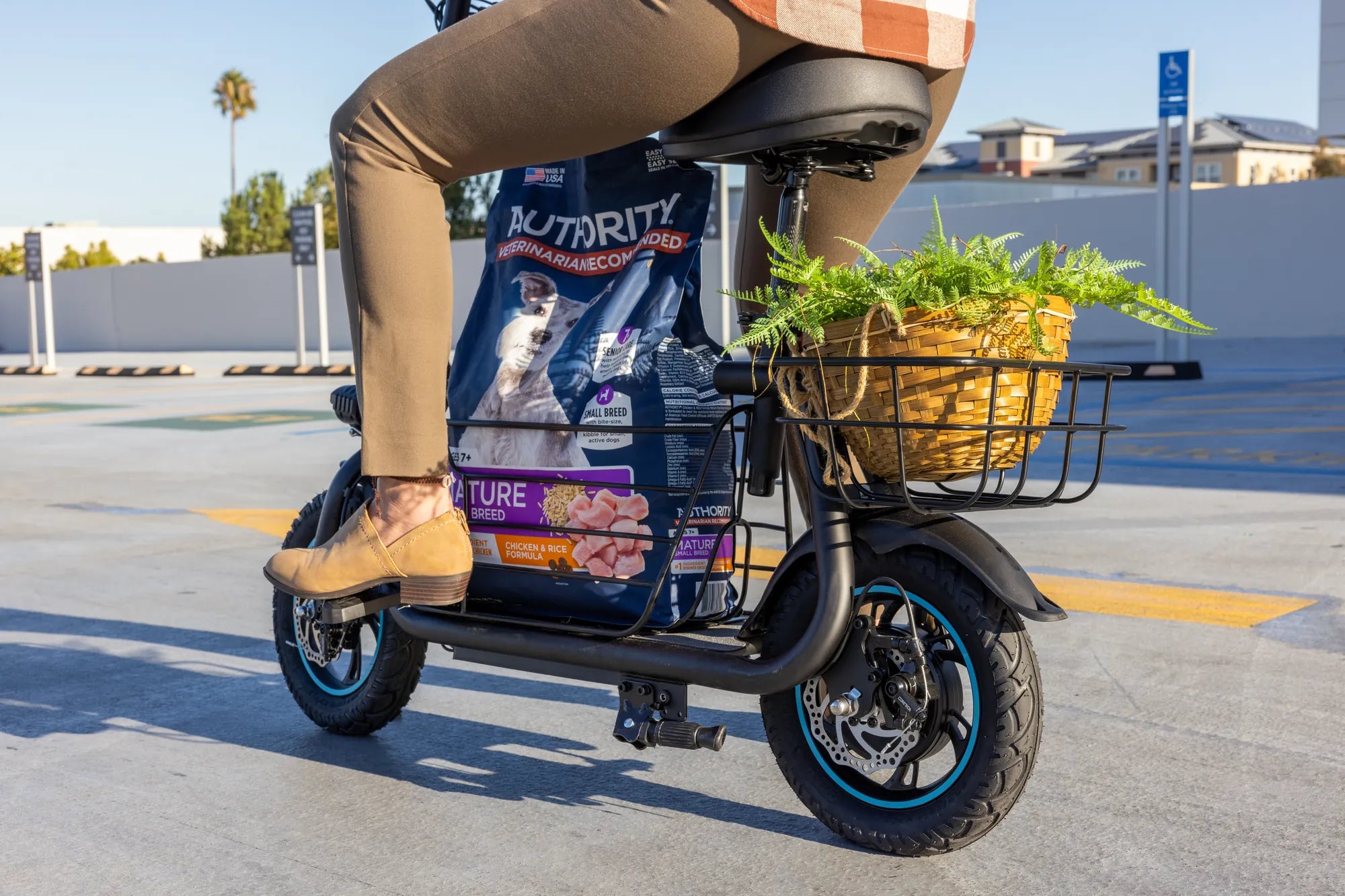
Convenience accessories directly impact daily usability. A large, easy-access front basket or rear panniers eliminate the need for a backpack, which can affect balance and cause back sweat. Look for baskets that attach securely and can hold a purse, groceries, or a small pet carrier.
A smartphone mount on the handlebar allows for easy navigation via GPS without fumbling in a pocket. For additional shock absorption, a suspension seatpost can be a game-changer, soaking up bumps that travel through the frame. If the existing saddle isn't perfect, invest in a high-quality aftermarket comfort seat with extra gel padding.
Finally, consider a rear-wheel lock that engages with the kickstand, acting as a theft deterrent and preventing the bike from rolling when parked on a slope. Each of these items solves a real-world problem, making the e-bike a more integrated and effortless part of your daily routine.
Frequently Asked Questions: E-Bikes for Seniors
Q1: Is it hard to learn to ride an e-bike, especially if I haven't ridden in years?
A: Most seniors find e-bikes easier to ride than traditional bicycles. The pedal assist helps you start from a stop and climb hills, reducing the physical effort required. Start in a low assist level (1) in a safe, empty parking lot to get used to the feeling. The balance and steering are identical to a regular bike, and it typically comes back quickly. Focus on a model with a low-step frame and stable geometry to build confidence.
Q2: How far can I realistically go on a single charge?
A: Range varies based on battery size, assist level, terrain, and rider weight. A typical comfort e-bike with a 500Wh battery can provide 20-50 miles per charge. Using a lower assist level on flat ground maximizes range. For most seniors using the bike for local errands and leisure rides, this is more than sufficient for several days of use between charges. Always check the manufacturer's estimated range, which is usually based on ideal conditions.
Q3: What happens if the battery runs out while I'm riding?
A: The bike doesn't stop; it simply becomes a heavier, but fully functional, traditional bicycle. You can pedal it home without any assist. This is why choosing a bike with a manageable weight (under 60 lbs) is important. To avoid this, get in the habit of charging after each use or monitoring the battery level on the display. Planning shorter routes than your maximum range provides a comfortable buffer.
Q4: How much maintenance does an e-bike require?
A: E-bikes require similar basic maintenance to regular bikes: keeping tires properly inflated, checking brake pads for wear, and occasionally lubricating the chain. The electrical components (motor, battery, display) generally require no maintenance beyond keeping connections clean and dry. Having a local bike shop perform an annual tune-up is recommended. Brands like Gyroor with UL-certified batteries and IPX5 ratings are designed for low-maintenance reliability.
Q5: Are e-bikes safe for riders with minor balance or arthritis issues?
A: A properly chosen e-bike can be an excellent option. The stable, upright position and wide tires improve balance. The motor assist reduces the strain on knees and joints, making pedaling possible where it might not be on a regular bike. The key is choosing the right model: a trike (three-wheeled) e-bike is the ultimate solution for severe balance concerns, while a two-wheeled low-step model with a walk-assist mode (which helps you walk the bike up hills) is great for mild issues. Always consult with your physician regarding your specific condition.
Conclusion: Your Journey to Comfortable Riding Starts Here
Identifying the most comfortable ebike for seniors is a deliberate process centered on stability, simplicity, and safety. The five pillars—low-step frame, upright posture, intuitive controls, smooth power, and integrated safety—provide a reliable blueprint for evaluation. A bike that excels in these areas becomes a tool for liberation, reconnecting you with your community and the simple pleasure of movement.
Remember, the ultimate comfort comes from trust in your machine. This trust is built through certified components like UL-listed batteries, durable construction evidenced by IPX5 ratings, and the backing of a clear warranty and support network. These are the hallmarks of a brand like Gyroor, which engineers not just for performance, but for long-term rider confidence and satisfaction.
Use the comparison table as your checklist. Consider the accessory recommendations to tailor the bike to your life. Revisit the FAQs to solidify your understanding. Armed with this knowledge, you can move beyond marketing hype and make an informed decision that prioritizes your well-being and enjoyment.
The open path awaits. Rediscover the freedom of cycling, amplified by thoughtful electric assist. Explore a range of e-bikes designed with these principles in mind and find the perfect match for your next adventure. Browse the full Gyroor collection of reliable, comfort-focused e-bikes and scooters at gyroorboard.com.
750 Watt Ebike Top Speed: The Complete Data-Driven Guide
110cc Mini Dirt Bike: The Ultimate Guide to Power, Specs & Riding