



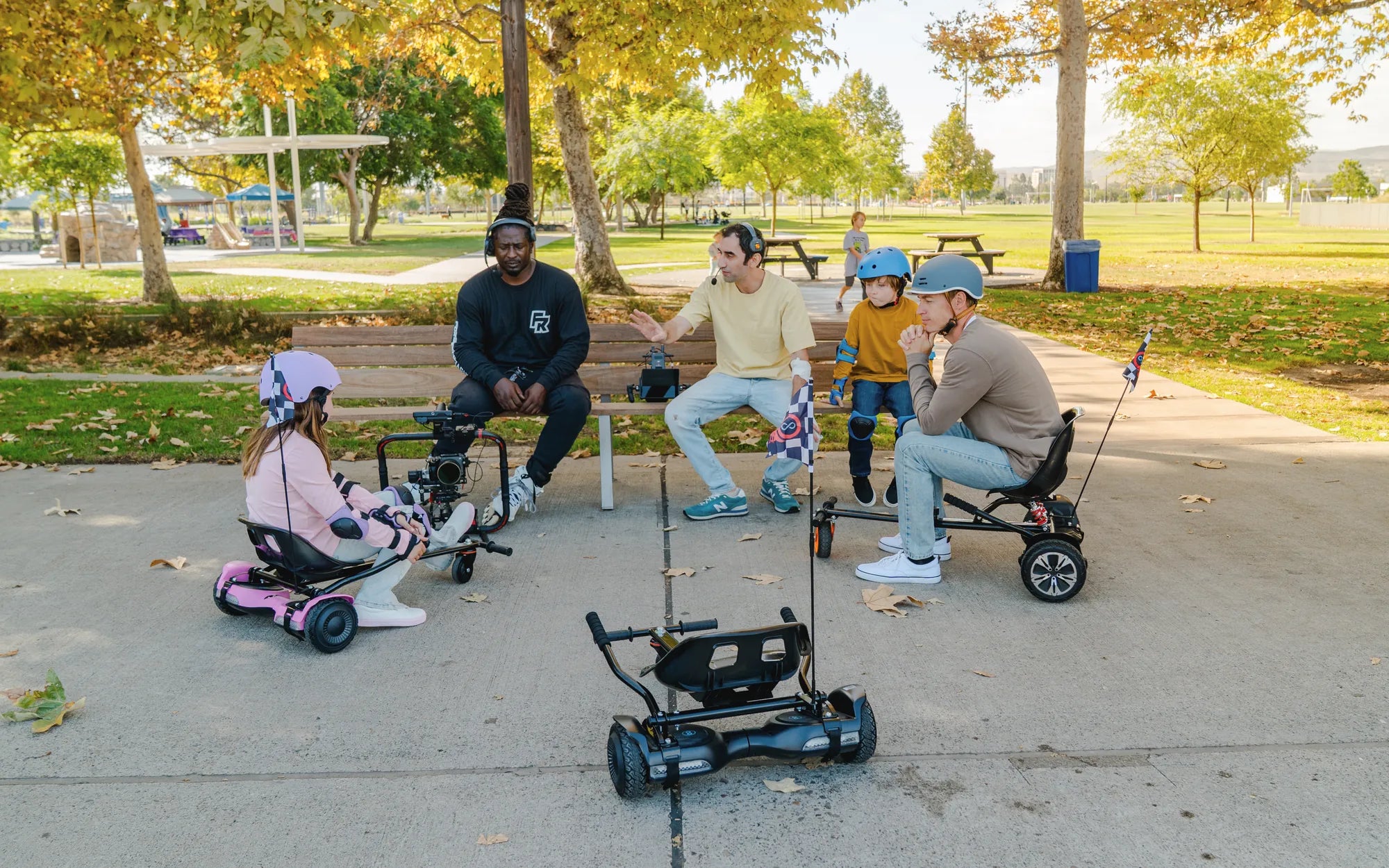
Introduction: Why a Gyroor Electric Scooter or Bike is a Game-Changer for Your Child
Choosing your child's first powered ride involves balancing excitement with essential safety concerns. Parents seek products that deliver fun while ensuring robust construction, predictable performance, and long-term value. This guide cuts through the noise to provide a data-driven framework for your decision.
We focus on the scooter electric kids scooter bike category, analyzing key differences and optimal use cases. Leading brands like Gyroor have redefined expectations by merging UL-certified battery safety, IPX5 water-resistant designs, and a reliable 1-year warranty. This combination directly addresses parental priorities.
You will learn to match a model to your child's age, skill level, and riding environment. We provide a detailed comparison of electric scooters versus e-bikes, a model selection matrix, and non-negotiable safety protocols. This guide serves as your definitive resource for fostering independence and outdoor adventure safely.
Understanding the Basics: Scooter vs. E-Bike for Kids
The fundamental choice lies between an electric kick scooter and an electric bike. Each offers distinct developmental benefits and suits different riding scenarios. Understanding their core mechanics is the first step toward a suitable purchase.
Electric scooters typically feature a standing deck, a vertical handlebar for steering, and a hand-operated brake. They are lightweight, highly portable, and excel in urban or suburban settings. E-bikes for kids often start as balance bikes (without pedals) for younger children or as pedal-assist models for older ones, promoting traditional cycling skills.
The decision hinges on your child's age, coordination, and where they will ride most often. A scooter may be ideal for short trips to the park, while an e-bike could be better for family trail rides. Both types from reputable manufacturers include multiple speed modes for graduated learning.
The Electric Scooter: For Agile Urban Adventures
The electric scooter format is designed for agility and convenience. Operation is intuitive: the child stands on the deck, accelerates via a thumb throttle, and steers using the handlebar. This design is particularly appealing to children aged 8 and above who have some experience with non-motorized scooters.
Key advantages include portability and ease of storage. Many models, like those in Gyroor's lineup, feature folding mechanisms and weigh under 20 pounds. This makes them perfect for commuting short distances to school or friends' houses, provided safe pathways are available.
Performance is tailored for control. Top speeds are generally capped between 10-12 mph for this age group, with beginner modes starting as low as 5 mph. The hand brake system allows for quick, deliberate stopping, which is a critical safety skill for young riders to master in controlled environments.
The Electric Bike: Building Confidence on Two Wheels
Electric bikes for children focus on building foundational riding confidence and transitioning to standard bicycles. For toddlers and preschoolers (ages 3-6), balance bike versions without pedals use a low-speed motor to help them learn steering and balance without the complexity of pedaling.
For older kids, pedal-assist e-bikes provide a boost while they pedal, making longer family rides less daunting and more enjoyable. This encourages physical activity while eliminating the frustration that can come with steep hills or long distances.
The seated position and larger wheelbase offer greater stability compared to a scooter, which is beneficial for off-road paths or uneven terrain. Models are built with lower center of gravity and often include training wheel compatibility, making them a versatile tool for skill progression over several years.
The Gyroor Advantage: Safety & Durability Engineered for Kids
When evaluating a scooter electric kids scooter bike, brand engineering philosophy is paramount. Gyroor designs its products with specific guardrails that prioritize long-term safety and durability over fleeting gimmicks. This approach is reflected in third-party certifications and robust construction standards.
With over 100,000 riders across North America and Europe, Gyroor's reliability is field-tested. An average 4.5/5 customer rating underscores a commitment to quality control and customer support. For parents, this translates to reduced long-term risk and a better overall ownership experience.
The core advantages are not just marketing claims but tangible, testable features. These include battery safety certification, environmental protection ratings, and a comprehensive warranty. Each element works in concert to provide the peace of mind that parents rightfully demand.
UL-Certified Battery Safety: Our #1 Priority
The lithium-ion battery is the most critical safety component in any electric rideable. Gyroor's use of UL-certified battery packs is a non-negotiable standard. UL certification means the battery cells, circuitry, and housing have undergone rigorous independent testing for electrical, mechanical, and fire safety.
These batteries are engineered to prevent overcharging, short-circuiting, and thermal runaway—a key concern with uncertified power packs. Each battery is rated for 500+ charge cycles, ensuring consistent performance and range over the product's lifespan when maintained properly.
This certification directly addresses the foremost concern for parents: fire risk. Choosing a product with a UL-certified battery is the single most important decision you can make for in-home safety. It is a baseline that should not be compromised.
Built to Last: IPX5 Water Resistance and Robust Frames
Kids' products must withstand real-world use, which includes puddles, light rain, and inevitable drops. Gyroor's IPX5 water-resistant rating means the electrical components are protected against low-pressure water jets from any direction. While not submersible, this rating allows riding on damp pavement or through accidental splashes without immediate damage.
Frame construction utilizes reinforced aluminum or steel alloys designed to absorb impact. Critical weld points are strengthened, and components like the stem and handlebar clamp are tested for stress far beyond normal use. This durability ensures the product remains safe and functional even after the bumps and falls of learning.
Tires are another durability factor. Many models use air-filled (pneumatic) or solid rubber tires with good tread patterns, providing better shock absorption and traction than cheap plastic wheels. This contributes to a smoother, safer ride on varied surfaces.
Peace of Mind: The 1-Year Comprehensive Warranty
A strong warranty is a brand's promise behind its product. Gyroor's 1-year comprehensive warranty covers defects in materials and workmanship for the entire vehicle, including the motor, battery, and frame. This is significantly more supportive than the limited 90-day or 180-day warranties common with unbranded alternatives.
This warranty period aligns with the typical first year of ownership, where any manufacturing flaws are most likely to appear. It ensures parents are not left with a costly repair bill for a faulty component. The warranty is backed by accessible, US-based customer support to streamline the process.
Coupled with clear documentation and available spare parts, this warranty transforms the purchase from a disposable toy into a reliable piece of equipment. It represents a long-term investment in your child's fun.
Choosing the Right Gyroor Model: A Parent's Decision Matrix
Selecting the perfect model requires cross-referencing your child's specifics with product specifications. The following table provides a clear comparison based on primary use cases and age groups. This data-driven approach removes guesswork from the selection process.
| Primary Factor | For Young Riders (Ages 3-6) | For Growing Explorers (Ages 7-12) |
|---|---|---|
| Recommended Type | Electric Balance Bike or Low-Speed Scooter | Electric Kick Scooter or Pedal-Assist E-Bike |
| Ideal Max Speed | 5 - 7 mph | 10 - 12 mph (with speed modes) |
| Key Safety Feature | Parental Remote Control, Low Speed, Stability Focus | Hand Brakes, Multiple Speed Modes, Enhanced Suspension |
| Battery Range | 6 - 9 miles (sufficient for short play) | 9 - 15 miles (for longer adventures) |
| Weight Capacity | Up to 110 lbs | Up to 160 lbs |
| Tire Type | Solid Rubber or Foam for Low Maintenance | Air-Filled (Pneumatic) for Better Grip & Comfort |
Always verify the manufacturer's stated age, weight, and height recommendations. The best fit allows your child to comfortably reach the handlebars and place feet flat when stopped, ensuring they maintain full control at all times.
For the Young Rider (Ages 3-6): Starting with Stability
The primary goal for this age group is building confidence in a controlled, low-risk environment. Models designed for young riders prioritize stability and limited speed. Electric balance bikes are an excellent choice, as they teach the fundamentals of balancing on two wheels without the complexity of pedals.
A crucial feature for this cohort is a parental remote control. This allows you to override the throttle, stop the vehicle remotely, and limit the maximum speed from a distance. It provides an essential layer of supervision as your child learns the basics of operation and spatial awareness.
Speed should be strictly capped, often with a single speed mode around 5 mph. Frames are lower to the ground, and turning radius is often limited to prevent sharp, unpredictable maneuvers. The focus is on predictable, gentle movement that feels exciting to the child but remains manageable for parents.
For the Growing Explorer (Ages 7-12): Balancing Power & Control
Older children have better motor skills and judgment, allowing for more capable machines. The focus shifts to providing adjustable power that grows with them. Multiple speed modes (e.g., Beginner: 7 mph, Intermediate: 9 mph, Advanced: 12 mph) are essential for graduated learning.
Enhanced suspension systems become important. Front or dual suspension absorbs vibrations from cracks and bumps, providing a smoother ride and better tire contact with the ground for improved safety. This is especially valuable for riding on bike paths or slightly uneven terrain.
Braking systems are more robust, often featuring disc or regenerative braking in addition to standard friction brakes. This ensures reliable stopping power at higher speeds. The increased battery range supports longer adventures, like riding a full loop at the park or accompanying parents on a neighborhood walk.
Essential Gear & Riding Best Practices: Beyond the Purchase
Owning a scooter electric kids scooter bike carries the responsibility of establishing a safety-first culture. The right gear and clear rules are as important as the vehicle itself. This proactive approach minimizes risk and ensures riding remains a positive experience.
Safety gear is non-negotiable, every single time. Its purpose is to mitigate the consequences of a fall, which is a statistical inevitability during the learning process. Alongside gear, pre-ride checks and defined riding parameters create a structured environment for fun.
Parents must lead by example, both in enforcing rules and in demonstrating safe behavior. This includes inspecting the riding area, checking the scooter or bike's condition, and discussing the plan for the ride before it begins. Consistency is key to forming safe habits.
Non-Negotiable Safety Gear Checklist
Every ride must start with properly fitted safety equipment. This is not an area for compromise or assumption.
- CPSC-Certified Helmet: This is the absolute minimum. The helmet must fit snugly, sitting level on the head and covering the forehead. The chin strap should be tight enough that only one or two fingers fit between the strap and the chin.
- Knee and Elbow Pads: These protect the joints most vulnerable in a forward or sideways fall. Ensure they are sized correctly—too loose and they will slide out of place; too tight and they will restrict movement and be uncomfortable.
- Closed-Toe, Sturdy Shoes: Sandals or flip-flops are unacceptable. Shoes should have grippy soles to help the child maintain footing when pushing off or stopping.
- High-Visibility Vest or Clothing (for low-light): If riding near dusk or in shaded areas, adding reflective elements dramatically increases visibility to others.
Make gearing up a non-debatable part of the routine, like buckling a seatbelt. This sets a clear expectation that safety is a prerequisite for fun.
Setting Rules for Safe Riding: A Family Contract
Establish written or verbal rules that everyone agrees to before the first ride. This "family contract" creates shared accountability.
- Designated Riding Zones: Specify exactly where riding is permitted (e.g., the driveway, a specific park path, the sidewalk on your street only). Explicitly forbid riding on public roads, near traffic, or in parking lots.
- Supervision Requirement: Define the level of adult supervision needed. For young riders, this means direct, attentive supervision at all times. For older children, it may mean staying within sight and checking in at intervals.
- Speed Mode Agreement: Agree on which speed mode is allowed for the current riding area. A beginner mode is for crowded spaces; advanced modes are only for open, hazard-free zones.
- Environmental Conditions: No riding in the rain, on wet surfaces, or in the dark. Poor visibility and reduced traction significantly increase accident risk.
- Pre-Ride Check: The child should learn to check tire pressure (if applicable), brake function, and ensure the battery is securely latched before every ride.
Consistently enforcing these rules teaches responsible ownership and situational awareness.
Maintenance and Care: Ensuring Long-Term Performance and Safety
Regular, simple maintenance extends the life of the vehicle and keeps it operating safely. A well-maintained scooter electric kids scooter bike is a predictable and reliable one. Most tasks are quick and can even be turned into learning opportunities with your child.
Establish a monthly maintenance checklist. This includes inspecting the frame for any new cracks or significant damage, checking that all bolts and fasteners (especially on the handlebar, stem, and folding mechanisms) are tight, and verifying that the brakes engage smoothly and bring the vehicle to a complete stop.
Tire care is crucial. For pneumatic tires, maintain the recommended PSI (found on the tire sidewall) using a bicycle pump. Under-inflated tires increase rolling resistance, reducing range and making the vehicle harder to control. Over-inflated tires are more prone to punctures and provide a harsher ride.
Battery care dictates the product's usable lifespan. Adhere strictly to the manufacturer's charging instructions. Typically, this involves not leaving the battery on the charger for more than 24 hours after it's full, avoiding complete discharges, and storing the vehicle in a cool, dry place away from direct sunlight when not in use for extended periods.
Frequently Asked Questions (FAQs) for Concerned Parents
Q1: What is the appropriate age for a child's electric scooter or bike?
Appropriateness is based on physical size, coordination, and maturity, not just chronological age. Most manufacturers recommend electric balance bikes from age 3, simple electric scooters from age 6, and more powerful models from age 8. Always check the specific product's recommended age and weight limits, and ensure your child can demonstrate the motor skills and attention span required for safe operation.
Q2: How do I ensure the battery is charged and stored safely?
Always use the provided charger from the manufacturer. Charge the battery on a non-flammable surface in a well-ventilated area, away from heat sources and direct sunlight. Do not charge unsupervised or overnight. For storage, if the vehicle won't be used for a month or more, follow the manual's instructions for putting the battery into a long-term storage charge state (often around 50-60% capacity). Store in a cool, dry place.
Q3: Are Gyroor kids' models easy to control and slow down?
Yes. Gyroor models are designed with progressive learning in mind. They feature intuitive thumb throttles for acceleration and responsive hand-lever brakes for deceleration. Multiple speed modes allow you to lock the top speed to a safe limit. The acceleration curve is tuned to be gradual, not jerky, preventing unexpected lurches that could startle a young rider.
Q4: What maintenance does it require?
Basic maintenance includes monthly checks: tightening bolts, checking brake pad wear and adjustment, ensuring tires are properly inflated (for pneumatic types), and cleaning the vehicle with a damp cloth (never a hose). The most important practice is proper battery charging and storage as outlined in the manual. More complex repairs should be handled by qualified technicians or customer support.
Q5: Can it be used on sidewalks or off-road paths?
Usage depends on local laws and the product's design. Many electric scooters are suitable for smooth sidewalks and paved park paths. Models with pneumatic tires and suspension can handle packed gravel or smooth dirt paths. They are not designed for true off-road terrain like mountain bike trails. Always prioritize safety: sidewalks shared with pedestrians require slow speeds and extreme caution, and riding on public roads is generally unsafe and illegal for children.
Conclusion: Empowering Independence, Ensuring Joy
Selecting the right electric rideable for your child is an investment in their outdoor engagement, motor skill development, and sense of responsible independence. By prioritizing verified safety standards like UL-certified batteries, choosing a model matched to your child's current abilities, and committing to consistent safety practices, you create a foundation for countless hours of healthy, enjoyable fun.
The scooter electric kids scooter bike category, when approached with this informed perspective, offers a remarkable tool for family adventure. Trusted brands like Gyroor provide the engineering integrity that allows parents to confidently say "yes" to this new experience.
Ready to explore models that put safety and durability first? Browse the full collection of UL-certified, parent-tested electric scooters and bikes designed for young riders at gyroorboard.com.
How to Make a Hoverboard Charge Faster: Top Tips and Tricks
Sit and Ride Scooter for Kids: The Ultimate Parent's Guide to Safe, Fun Rides