



Introduction: Why a Scooter is a Fantastic First Ride for Your 1-Year-Old
Selecting a scooter for kids 1 year old is about more than just play; it's a strategic choice for early childhood development. At this pivotal age, toddlers are rapidly developing gross motor skills, balance, and spatial awareness. A properly designed scooter acts as a dynamic tool that encourages these skills in a fun, engaging way outdoors. Many parents understandably have concerns about safety and appropriateness, which is why understanding what makes a scooter truly suitable for a one-year-old is crucial. This guide will demystify the process, focusing on safety-first design principles exemplified by brands like Gyroor, which applies its rigorous engineering standards from adult electric mobility to create a foundation of trust for toddler products.
The right scooter transforms wobbly first steps into confident, coordinated movement. It introduces the concepts of steering, leaning, and pushing—all fundamental to later physical activities. Unlike passive toys, a scooter requires active participation, which boosts cognitive development through problem-solving and cause-and-effect learning. For parents, it's an opportunity to encourage a love for active play from the very beginning, setting a positive precedent for a healthy lifestyle.
Concerns about safety are paramount and valid. The key is to distinguish between generic ride-on toys and scooters specifically engineered with a one-year-old's capabilities and limitations in mind. Features like an ultra-low deck, multiple contact points for stability, and limited speed potential are non-negotiable. By prioritizing these elements, a scooter becomes a safe avenue for exploration and growth rather than a hazard.
This guide will serve as your comprehensive resource. We will define age-appropriate design, highlight the developmental benefits, and provide a practical framework for choosing, using, and maintaining a scooter. Our goal is to ensure that your child's first riding experience is not only immensely fun but also profoundly beneficial and, above all, safe.
What Makes a Scooter "Age-Appropriate" for a 1-Year-Old?
An age-appropriate scooter for a one-year-old is fundamentally different from models designed for preschoolers or older children. It is not a scaled-down version of an older kid's scooter but a specialized piece of equipment built for a child who may have just started walking. The core design philosophy must prioritize absolute stability and safety over speed, distance, or complex features.
The primary goal is to provide a secure platform that allows the toddler to focus on the basic mechanics of standing, balancing, and perhaps gentle steering without fear of tipping over. This builds confidence in small, manageable increments. The scooter should feel like a natural extension of their newfound mobility, not a challenging obstacle.
Key Safety Features You Cannot Compromise On
When evaluating any scooter for kids 1 year and older, these features are essential. First, the wheel configuration is critical. A three-wheel design is mandatory, with the most stable option being two wheels in the front and one in the rear. This creates a triangular base of support that prevents the scooter from tipping forward or sideways during tentative, off-center steps or pushes.
Second, the deck must be low to the ground. A deck height of 2 inches or less drastically lowers the center of gravity, making it easier for a toddler to step on and off safely and reducing the impact of a potential fall. The deck should also have a non-slip surface to provide secure footing.
Third, the handlebars should be wide, padded, and adjustable. Wide handlebars offer better control and leverage, while padding protects against bumps. Adjustability ensures the scooter can grow with your child over the crucial 12- to 36-month period. Finally, all materials must be non-toxic, free of BPA and phthalates, with all edges and components rounded and smooth to the touch.
Developmental Benefits: More Than Just a Toy
The developmental impact of a well-chosen scooter is significant. Physically, it strengthens core muscles, leg muscles, and improves overall balance and coordination. The act of pushing off the ground propels gross motor skill development, while steering enhances hand-eye coordination and fine motor control as the child learns to grip and turn the handlebars.
Cognitively, riding a scooter introduces basic principles of physics and spatial relationships. Toddlers learn about speed (their own), direction, and cause and effect ("I push, I move"). It also fosters independence and decision-making in a controlled environment. Successfully maneuvering their scooter builds immense self-esteem and a sense of accomplishment.
Socially and emotionally, it can be a shared activity with parents or peers, encouraging communication and turn-taking. It gets children outdoors, promoting sensory engagement with their environment—feeling the breeze, seeing the world from a new height, and navigating different textures on the ground. This holistic engagement is why a scooter is a valuable developmental tool.
The Gyroor Difference: Engineered for Toddler Safety First
Gyroor brings a unique perspective to the toddler mobility market. As a leading brand in electric scooters and e-bikes for older riders, trusted by over 100,000 users, their foundational principles are battery safety, durable construction, and reliable performance. This engineering-first mindset directly translates to their approach for younger children, where safety is even more critical.
While Gyroor's core lineup focuses on powered models for older ages, their design philosophy sets a benchmark for what parents should seek: products built to rigorous standards. When considering a scooter for kids 1 year old, looking for brands that apply this level of intentional engineering is key. It means a focus on structural integrity, material quality, and user-centric design from the ground up.
Unmatched Stability and Control
Stability is the cornerstone of a toddler scooter. The ideal design mimics the principles Gyroor uses in its stable, multi-wheeled hoverboards and wide-deck e-scooters: a broad, reliable base. For a toddler, this means a scooter with a wheelbase wider than the child's shoulders and a lean-to-steer mechanism or very limited turning radius on the front wheels to prevent sudden, sharp turns that could lead to falls.
This engineered stability allows the child to use the scooter as intended—a balance aid. They can place their weight confidently on the deck, using the handlebars for light support rather than as a crutch to prevent a total collapse. This correct form is what accelerates skill development and ensures the activity remains safe and enjoyable.
Durable, Child-Safe Construction
Durability is a hallmark of quality. A toddler scooter must withstand being dropped, stepped on, left in the sun, and used daily. High-quality ABS plastic and reinforced aluminum components, similar to those used in Gyroor's UL-certified products, offer this resilience. The construction should feel solid, not flimsy, with no concerning flex in the deck or stem.
Child-safe construction goes beyond durability. It encompasses the use of non-toxic, lead-free paints and coatings, securely fastened parts that cannot be easily pulled apart by small hands, and a overall weight that is light enough for a toddler to maneuver but substantial enough not to flip over with minimal contact. This careful balance is what separates a toy from a true developmental riding tool.
Choosing the Right Scooter for Your 1-Year-Old: A Practical Guide
Selecting the perfect scooter involves assessing your child's individual readiness and matching it to a model's specific features. Not every 12-month-old is ready on their first birthday, and that's perfectly normal. This step-by-step guide will help you make an informed decision that aligns with your child's current abilities.
Start by observing your child's mobility. The scooter should complement their development, not rush it. Consider where you plan for them to ride—primarily indoors on smooth floors, or outdoors on patios and sidewalks? This will influence your choice regarding wheel type (soft, quiet urethane for indoors vs. harder plastic for outdoors) and overall sturdiness.
Readiness Checklist: Is Your Toddler Ready?
Before making a purchase, ensure your child exhibits these key milestones. First, they should be a confident walker, able to navigate across a room without frequent stumbling. Second, they should demonstrate the ability to stand on one foot briefly while holding onto support, indicating developing balance.
Third, look for good coordination, such as the ability to squat and stand back up steadily or carry an object while walking. Finally, observe their interest in push-and-ride toys. If they are drawn to pushing carts or riding on toys they sit on, they will likely be intrigued by a scooter. If they show no interest, it may be beneficial to wait a few months.
Model Comparison: Features to Look For
Use the following comparison table to evaluate potential models. This framework applies whether you are considering a Gyroor-inspired design or any other brand on the market. Focus on how each feature contributes to safety and suitability for a one-year-old.
| Feature | Ideal Specification for a 1-Year-Old | Why It Matters |
|---|---|---|
| Wheel Configuration | 3 wheels (2 front, 1 rear preferred) | Provides maximum stability, prevents forward and lateral tipping. |
| Deck Height | 2 inches or less from the ground | Lowers center of gravity for safety; easy to step on/off. |
| Weight Limit | At least 44 lbs (20 kg) | Ensures the scooter can accommodate your child through toddlerhood. |
| Handlebar Adjustability | Yes, with a range covering 18" to 22" | Allows the scooter to grow with your child for proper posture. |
| Wheel Material | Wide, soft-roll urethane or silent rubber | Offers a smooth, quiet ride indoors; provides better grip. |
| Frame Material | Reinforced ABS plastic or aluminum | Ensures durability and safety without excessive weight. |
| Special Features | Sit-to-stand convertible, interactive buttons/sounds | Adds versatility and engagement for younger toddlers. |
Essential Safety Gear and Riding Rules for Toddlers
The scooter itself is only one component of a safe riding experience. Proper protective gear and clear, consistent rules are equally important. Never allow a child to ride a scooter, even the most stable model, without this basic safety protocol in place. Supervision must be constant and hands-on.
Establishing these habits from the very first ride ingrains them as a non-negotiable part of the activity. This teaches your child to respect their equipment and their own safety, lessons that will extend to bicycles, skateboards, and other activities as they grow.
Must-Have Protective Gear
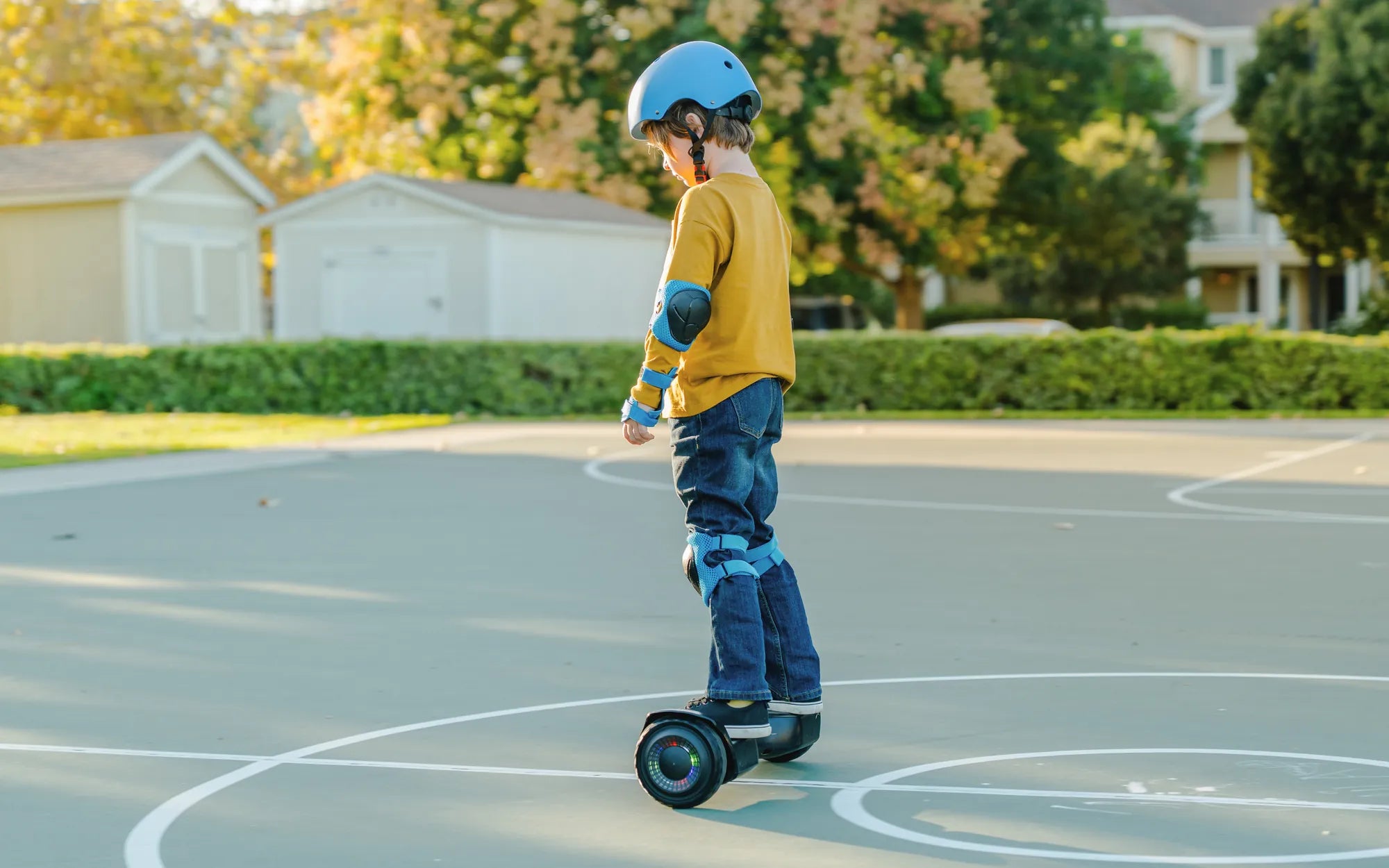
This gear is not optional. A properly fitted, CPSC-certified helmet is the absolute priority. It should sit level on the head, covering the forehead, with straps snug under the ears and around the chin. For a one-year-old, look for helmets specifically designed for toddlers, which often have more coverage at the back of the head.
Knee pads and elbow pads are also essential. Toddlers fall differently than older children; they often tip over sideways or straight down, instinctively putting their hands and knees out. Pads protect these vulnerable joints from scrapes and impacts. Finally, always ensure your child wears closed-toe shoes with a grippy sole to prevent slips on the scooter deck and during push-offs.
Setting Ground Rules for Safe Play
Keep rules simple, clear, and consistent. Rule One: Riding only happens on smooth, flat, paved surfaces like driveways (away from cars), patios, or indoor playrooms. Avoid grass, gravel, slopes, or areas near streets or pools. Rule Two: An adult must be within arm's reach at all times during the early stages.
Rule Three: Feet belong on the deck when coasting. Teach them to place both feet on the scooter after pushing. Rule Four: The scooter is for one rider only. Rule Five: When not riding, the scooter is laid on its side or placed in a designated spot to prevent tripping hazards. Enforcing these rules creates a safe environment for exploration.
Parent FAQs: Your Top Questions Answered
Q1: Can a 1-year-old really use a scooter safely?
A1: Yes, absolutely—but with critical caveats. They must use a scooter specifically engineered for their age group, characterized by extreme stability (3 wheels, low deck), and they must be under direct, hands-on adult supervision at all times. The activity is less about independent "riding" and more about guided exploration and balance practice.
Q2: What is the difference between a balance bike and a toddler scooter?
A2: Both are excellent for developing balance. A balance bike teaches a child to stride and glide while seated, focusing on leg coordination and eventual pedaling preparation. A toddler scooter develops balance in a standing position, engaging the core differently and introducing the coordination of steering while standing. For some very young toddlers, the standing position on a stable scooter can feel more secure initially than straddling a balance bike.
Q3: Are scooters with sounds and lights recommended?
A3: Interactive features can increase engagement for a hesitant child, making the scooter more appealing. However, ensure these features do not compromise the primary safety design. Lights and sounds should be secondary to a stable frame, secure handlebars, and a low deck. The best models integrate these features without adding unnecessary weight or creating distracting elements that could hinder supervision.
Q4: How do I maintain a toddler scooter?
A4: Regular maintenance is simple but important. Weekly, check for and tighten any loose screws, especially on the handlebar clamp and wheels. Wipe down the scooter with a damp cloth; avoid harsh chemicals. Inspect wheels for wear or debris buildup. Store the scooter indoors to protect it from weather-related wear. A well-built scooter from a reputable brand should require minimal maintenance beyond these basic checks.
Q5: When should we transition to a two-wheel scooter?
A5: There is no set age; transition based on skill and confidence. Most children are ready for a two-wheel, kick-style scooter between ages 3 and 5. Signs of readiness include mastering the three-wheel scooter at high speed with excellent control, demonstrating strong balance while gliding with both feet on the deck, and expressing a desire for more speed and challenge. Always move to the next level with appropriate new safety gear.
Conclusion: Fostering a Lifetime Love of Active Play
Introducing a scooter for kids 1 year old is a wonderful decision that blends fun with foundational development. By choosing a model built with non-negotiable safety features—a stable three-wheel base, a low deck, and durable, child-safe materials—you provide a secure platform for your toddler to build confidence, coordination, and strength. This early positive experience with independent mobility can spark a lifelong enthusiasm for active play and outdoor adventure.
The journey is a shared one, reliant on your vigilant supervision, the consistent use of proper safety gear, and the establishment of simple, clear riding rules. When these elements combine with a well-designed scooter, every ride becomes a valuable milestone. It's an investment in your child's physical capabilities and their joy of movement.
As your child grows and their skills advance, the principles of quality, safety, and reliable performance remain constant. For parents looking ahead to future electric mobility options, these are the very hallmarks of trusted brands. To explore a range of rider-focused, engineered vehicles for older children and adults, browse the full Gyroor collection at gyroorboard.com. Start your child's journey on the right path—one safe, fun, and confident push at a time.
Good Scooter for Kids: The Ultimate Guide to Choosing the Best Ride
Hoverboard for Sale That Works: The Ultimate Guide to Finding the Best Ride