



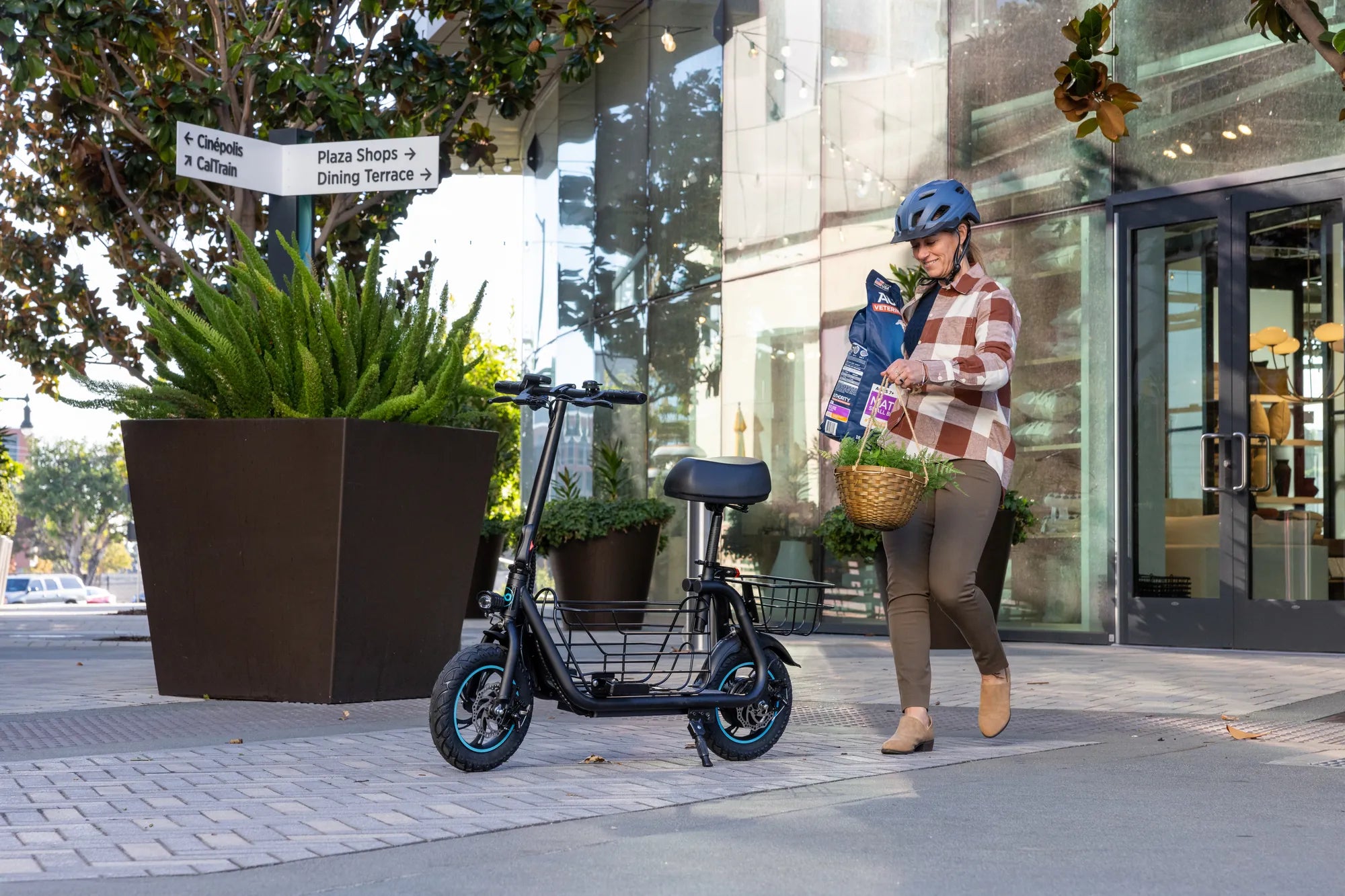
Selecting the right electric scooter for a youngster is a significant decision that blends practicality with parental responsibility. It’s about more than just a fun toy; it's a vehicle that can foster independence, encourage outdoor activity, and serve as a first lesson in personal mobility and care. This guide provides a detailed, data-driven framework to help you navigate the market, prioritize critical safety features, and choose a reliable scooter that will deliver lasting value and peace of mind. We will analyze key specifications, compare models suited for different age groups, and outline essential practices for safe and responsible riding, using the engineering standards and product lineup from Gyroor, a leading electric scooter and e-bike brand trusted by over 100,000 riders, as our reference point for quality and safety.
Key Considerations for Choosing a Youth Scooter
The first step in choosing a scooter for a youngster is moving beyond flashy advertisements and focusing on objective criteria. The ideal scooter must match the child's physical capabilities, the intended use environment, and, above all, provide a foundation of safety. A well-considered purchase prevents frustration, reduces risk, and ensures the scooter is a source of joy, not concern.
Parents should start by evaluating the scooter's power and speed specifications against their child's age and maturity. A scooter with a top speed of 20+ mph is unsuitable for a ten-year-old, just as a 10 mph model may underwhelm a responsible sixteen-year-old. The goal is to find a scooter that offers a thrilling yet controlled experience, allowing skills and confidence to grow safely over time.
Equally important is understanding local regulations. Many municipalities have specific laws governing electric scooter use by minors, including minimum age requirements (often 12-16 years), mandatory helmet use, and restrictions on where they can be ridden (e.g., prohibited on sidewalks, restricted to bike lanes). Ignoring these rules can lead to fines and, more importantly, increase the risk of accidents. Always verify local ordinances before purchasing.
Age Appropriateness and Local Regulations
Matching a scooter to a youngster's age is not just about physical size; it's about cognitive maturity and motor skills. A younger child, typically between 10-13 years old, requires a scooter with a lower center of gravity, a moderate speed limit (under 12 mph), and intuitive, simple controls. This allows them to master balance, braking, and steering fundamentals in a safe, low-stakes environment.
For teenagers aged 14 and above, needs evolve. The scooter may transition from a recreational toy to a legitimate mode of transport for commuting to school, sports practice, or a friend's house. Here, factors like range (distance per charge), higher but still regulated top speeds (15-20 mph), and durability for daily use become paramount. The scooter must be robust enough to handle varied pavement conditions and occasional curb hops.
Local laws directly influence which scooter is appropriate. A common regulation is a minimum age of 16 for operating an electric scooter on public roads or bike paths. Some areas also impose speed limits for devices used on public thoroughfares. Choosing a scooter with adjustable speed modes allows you to lock it to a legal, age-appropriate limit, providing a built-in compliance and safety feature.
Safety as the Non-Negotiable Priority
When it comes to a scooter for a youngster, safety is the absolute cornerstone. This extends far beyond just wearing a helmet. It encompasses the fundamental engineering and components of the scooter itself. The two most critical safety aspects are battery integrity and water resistance, areas where brand provenance matters immensely.
The battery is the heart of the scooter and its greatest potential hazard if poorly made. Reputable brands like Gyroor use UL-certified battery packs, which have undergone rigorous independent testing for short-circuit prevention, thermal stability, and durability over 500+ charge cycles. This certification is a non-negotiable safeguard against the risk of battery fires, a known issue with uncertified, off-brand units.
Secondly, a youngster's scooter will inevitably encounter puddles, damp grass, or light rain. An IPX5 water-resistant rating, as found on Gyroor models, means the scooter's electrical components are protected against low-pressure water jets from any direction. This prevents sudden failure, corrosion, and electrical shorts, ensuring reliable operation in common real-world conditions and significantly extending the scooter's lifespan.
Build Quality and Durability for Active Lifestyles
Young riders are not gentle. A scooter must be built to withstand jumps off curbs, sudden stops, and the general rigors of daily adventure. Build quality directly impacts safety, performance, and long-term cost-of-ownership. A flimsy frame or weak brakes don't just break; they fail catastrophically during use.
Key durability factors include the frame material (aircraft-grade aluminum is a strong, lightweight standard), the type of braking system (disc brakes offer more consistent stopping power than foot brakes, especially for faster models), and tire construction. Pneumatic (air-filled) tires provide better shock absorption and traction than solid tires, leading to a smoother, safer ride on uneven surfaces.
Investing in a scooter with high-quality components from a brand that stands behind its product with a comprehensive warranty is economically wise. It reduces the frequency of repairs and replacements. Gyroor's standard 1-year warranty on the scooter, coupled with its use of proven components, offers parents tangible peace of mind, knowing that the manufacturer is committed to the product's reliability.
Why Gyroor is a Trusted Choice for Young Riders
In a market flooded with options, Gyroor distinguishes itself by aligning its core engineering principles directly with the primary concerns of parents: safety, durability, and reliable performance. Their commitment to certified safety standards and robust design makes them a standout choice for a youngster's first or next electric scooter.
With a community of over 100,000 riders and an average customer rating of 4.5/5, Gyroor has demonstrated consistent performance and customer satisfaction across North America and Europe. This track record is built on a foundation of transparent specifications, adherence to international safety protocols, and a product range that caters to different skill levels and use cases.
Choosing a Gyroor scooter is not just buying a product; it's investing in an ecosystem designed for responsible ownership. From the unboxing experience to long-term maintenance, the focus is on creating a positive, secure introduction to electric mobility for the young rider and their family.
Engineered for Safety and Peace of Mind
Gyroor’s safety philosophy is proactive and integrated. It starts with the UL-certified battery, a feature that should be a baseline requirement but is often sacrificed in lower-cost models. This certification is your guarantee that the energy source powering your child's scooter has passed exhaustive tests for electrical, mechanical, and environmental safety.
The IPX5 water-resistant design is another critical engineering choice. It acknowledges how scooters are actually used. This protection level ensures that splashes from wet roads or accidental exposure won't lead to a malfunction, protecting both the rider and the scooter's internal circuitry. Combined with bright LED headlights and taillights for visibility, these features create a multi-layered safety system.
Furthermore, many Gyroor models include beginner or eco-speed modes. These allow parents to initially limit the scooter's top speed, letting a youngster build confidence and handling skills at a slower pace before unlocking more power. This graduated approach to performance is a hallmark of user-centric, safety-oriented design.
Designed for Real-World Use and Reliability
Gyroor scooters are built with the understanding that they will be used daily and actively. The frames are constructed from reinforced aluminum alloy, striking an optimal balance between strength and weight. A lightweight scooter is easier for a youngster to maneuver and carry, while a strong frame ensures it can handle impacts.
Stability is enhanced through thoughtful design elements like a wide, textured deck that provides secure footing, and on some models, a dual suspension system (spring or hydraulic) that absorbs bumps from cracks and curbs. This improves control and comfort, making the riding experience less jarring and more enjoyable, which in turn encourages safer riding practices.
The reliability is underscored by the included 1-year warranty, which covers manufacturing defects. This warranty is a statement of confidence in their build quality. For parents, it means a direct line of support if any issue arises, transforming a potential headache into a manageable service interaction.
Support That Empowers Parents
Post-purchase support is a critical differentiator. Gyroor provides accessible, U.S.-based customer service to assist with assembly questions, troubleshooting, and warranty claims. For parents who may not be tech experts, this accessible support is invaluable for quickly resolving minor issues and ensuring the scooter remains in safe operating condition.
The availability of genuine replacement parts—from tires and tubes to brake pads and chargers—is another key advantage. It ensures that maintenance can be performed correctly, preserving the scooter's integrity, rather than relying on potentially incompatible third-party parts that could compromise safety or performance.
This comprehensive support structure empowers parents to manage the scooter's lifecycle effectively. It turns the scooter from a disposable gadget into a maintainable vehicle, teaching the youngster valuable lessons about product stewardship and responsible ownership.
Top Gyroor Models for Different Age Groups
Gyroor's diverse lineup offers specific models that cater to the distinct needs of different age brackets. The following recommendations are based on key performance parameters, ensuring a good fit between the rider's ability and the scooter's capabilities. Remember, parental supervision and judgment based on individual maturity are always the final arbiters.
For younger or first-time riders, the priority is stability, manageable speed, and ease of use. Models in this category emphasize a lower top speed, a design that promotes confidence, and features that simplify the learning process. The goal is to build foundational skills in a safe, controlled manner.
For older, more experienced teenagers, performance parameters shift. Range becomes crucial for practical commuting, higher speed (within legal and safe limits) is expected, and enhanced suspension for comfort on longer rides is a significant benefit. The scooter should feel like a capable and reliable tool for expanding their independence.
For Tweens (Ages 10-13): The Starter Model
A model like the Gyroor F1 Max (or similar entry-level variant in their lineup) is an excellent starting point. It typically features a top speed capped around 10-12 mph, which is exciting yet controllable. The motor power (often 250W) provides enough torque for small hills without being overwhelming.
Key features for this age group include a lightweight frame (under 30 lbs), a low deck height for easy mounting and dismounting, and a simple thumb throttle combined with an intuitive brake lever. Many such models also have a kick-start function, requiring a gentle push-off before the motor engages, which naturally teaches balance and control.
Safety is reinforced with a bright headlight, rear reflectors, and a bell. The inclusion of Gyroor's standard UL-certified battery and IPX5 rating provides the essential safety backbone. This type of scooter is perfect for supervised rides in cul-de-sacs, parks, and on smooth bike paths, building the rider's confidence and skill set.
For Teens (Ages 14+): The Commuter & Explorer
For the teenage demographic, a model like the Gyroor C1 or a comparable commuter-focused scooter is ideal. These models boast higher performance, with top speeds in the 15-20 mph range and ranges extending to 15-20 miles on a single charge, enabling practical trips to school or around town.
They often feature more powerful motors (350W-500W) for better hill-climbing ability, larger pneumatic tires for improved shock absorption, and a front and/or rear suspension system for a smoother ride over urban terrain. The deck is longer and wider, offering a more stable platform for a growing rider.
Enhanced braking systems, such as front and rear disc brakes or electronic regenerative braking combined with a disc brake, provide reliable stopping power at higher speeds. These models maintain the core Gyroor safety standards (UL battery, IPX5) while adding performance features that match a teen's need for efficiency, range, and a more dynamic riding experience.
Comparison Table: Key Specs at a Glance
| Feature / Model Type | Starter Model (e.g., for Tweens) | Commuter Model (e.g., for Teens) |
|---|---|---|
| Recommended Age | 10-13 years | 14+ years |
| Max Speed | 10-12 mph | 15-20 mph |
| Approx. Range | 8-12 miles | 15-22 miles |
| Motor Power | 250W | 350W - 500W |
| Max Weight Limit | ~150 lbs | ~220 lbs |
| Tire Type | Pneumatic or Solid | Pneumatic (Larger) |
| Suspension | Basic or Front Only | Front & Rear / Dual |
| Key Safety Features | UL Battery, IPX5, Speed Modes, Kick-start | UL Battery, IPX5, Disc Brakes, Bright Lights |
Fostering Responsible Riding Habits
Providing a safe scooter is only half the equation. Equally important is teaching and reinforcing responsible riding habits. This education is a collaborative process between parent and child, establishing rules that prioritize safety and respect for others. It transforms the scooter from a simple possession into a tool for learning responsibility.
Start by creating a clear rider agreement. Outline where the scooter can be used, what safety gear is mandatory, and the consequences for violating rules. This formalizes expectations and gives the youngster a framework for safe operation. Consistent enforcement is key to making these habits second nature.
Lead by example. If you ride an e-bike or scooter yourself, demonstrate proper helmet use, obey traffic laws, and show courtesy to pedestrians. Your behavior is the most powerful teaching tool. Discuss near-misses or observations about other riders' behavior to create ongoing learning moments.
The Essential Pre-Ride Checklist
Instilling a routine inspection habit is a fundamental safety practice. Before every ride, the youngster should be taught to perform a quick but thorough check. This takes less than a minute but can prevent accidents caused by equipment failure.
The checklist should include: 1) Helmet and Gear: Is the helmet securely fastened? Are knee/elbow pads (recommended for beginners) in good condition? 2) Battery & Lights: Is the battery charged sufficiently for the planned trip? Do the headlight and taillight function? 3) Tires & Brakes: Are tires properly inflated? Do the brakes engage smoothly and bring the scooter to a quick, controlled stop? 4) Hardware: Give the scooter a shake. Are the handlebars, stem, and folding mechanisms (if applicable) tight and secure?
Making this a non-negotiable ritual, much like buckling a seatbelt, builds a mindset of proactive safety and ownership over the vehicle's condition. It empowers the young rider to be an active participant in their own safety.
Rules of the Road and Trail
Understanding and following the rules of where they ride is critical. Emphasize that an electric scooter is a vehicle, not a toy, when used in shared spaces. The core rules are: Always wear a helmet—this is non-negotiable and is legally required for minors in most jurisdictions. Ride on the right side of bike paths or roads, in the direction of traffic if on the street (where legal).
Yield to pedestrians always, whether on a sidewalk (where permitted) or a multi-use path. Use a bell or verbal cue (“passing on your left”) politely. Obey all traffic signals and signs if riding on the road. Never use headphones at a volume that blocks ambient noise; situational awareness is vital. Use hand signals to indicate turns or stops to those behind you.
Finally, establish clear zones: No riding at dusk or dawn without lights, and absolutely no riding in the dark. Define off-limits areas like busy streets, steep hills, or crowded parking lots until they demonstrate advanced skill and judgment.
Maintenance Basics for Young Owners
Teaching basic maintenance fosters responsibility and extends the scooter's life. Start with simple, age-appropriate tasks. Cleaning: Wipe down the deck, frame, and wheels with a damp cloth after riding on dirt or wet surfaces. Avoid direct water jets on the deck. Charging Protocol: Teach them to plug in the charger to the wall first, then to the scooter. Store and charge the scooter in a dry, cool place, and avoid leaving it plugged in for more than 12 hours after a full charge.
Tire Pressure: Show them how to use a bicycle pump with a pressure gauge to keep pneumatic tires inflated to the PSI listed on the tire sidewall. Soft tires reduce range and make steering harder. Visual Inspection: Encourage them to notice changes—unusual noises, brake lever feel, or wobbles—and report them immediately.
Performing these tasks together initially builds their competence and confidence. It connects the fun of riding with the responsibility of upkeep, creating a more mature and invested owner.
Frequently Asked Questions (FAQs)
Q: What is the recommended age for an electric scooter?
A: There is no universal age, as it depends on the child's maturity, coordination, and local laws. Generally, responsible use can start around 10-12 years for beginner models with low speeds and under strict supervision. Most manufacturers and regulations suggest a minimum of 12-16 years for unsupervised use on public paths. Always check your local ordinances first.
Q: How do I ensure the battery is safe?
A> The single most important step is to choose a scooter with a UL-certified battery pack, like those used by Gyroor. This independent certification verifies safety standards. At home, follow the manufacturer's charging instructions: use only the provided charger, charge in a dry area away from flammable materials, and avoid charging overnight or immediately after a long, hot ride.
Q: Are Gyroor scooters easy to control for beginners?
A> Yes. Many Gyroor models are designed with beginners in mind. Features like multiple speed modes (allowing parents to set a low maximum speed), a kick-start function that requires a push-off to engage the motor (helping with balance), and stable, wide decks make the learning curve much gentler and safer for a youngster.
Q: What does the warranty cover?
A> Gyroor offers a standard 1-year warranty that covers defects in materials and workmanship under normal use. This typically includes the motor, battery, controller, and frame. It does not cover damage from accidents, misuse, neglect, or normal wear-and-tear items like tires and brake pads. Always register your product and keep your proof of purchase.
Q: Where is it safe for my child to practice riding?
A> Begin in a completely controlled, vehicle-free environment. Ideal locations include empty school parking lots on weekends, paved tennis or basketball courts, smooth park paths during quiet hours, or quiet cul-de-sacs. The surface should be smooth, flat, and free of gravel or major cracks. Only progress to bike paths or quiet neighborhood streets after they have mastered full control, including braking, turning, and obstacle avoidance.
Q: How can I teach my child about scooter etiquette?
A> Start with the golden rule: be predictable and courteous. Role-play scenarios: “What do you do if you see a walker ahead on the path?” (Slow down, ring bell, say “passing on your left”). Discuss right-of-way, the importance of not weaving, and always looking behind before changing position. Praise them when they demonstrate good etiquette, reinforcing the positive behavior.
Conclusion: Empowering Independence, Ensuring Safety
Choosing the right scooter for a youngster is a meaningful investment in their independence, outdoor activity, and understanding of personal responsibility. The journey is defined by a careful balance: the thrill of speed and freedom must be carefully weighted against uncompromising standards of safety and durability. By prioritizing certified components like UL-approved batteries, water-resistant construction, and robust mechanical design, parents can lay a secure foundation for this new adventure.
The data and guidelines presented here underscore that the best choice is rarely the cheapest or most powerful option. It is the one that aligns precisely with the rider's age, skill level, and local environment, backed by a brand that validates its safety claims through independent certification and stands behind its products with reliable support. Gyroor’s commitment to these principles across its 20+ model range provides a trusted benchmark in the market.
Ultimately, success comes from combining a well-chosen, quality scooter with proactive parental guidance. Establishing clear rules, teaching maintenance basics, and modeling responsible behavior are just as crucial as the specifications on the box. This holistic approach ensures that a youngster's experience with electric mobility is not only incredibly fun but also safe, educational, and built to last. Ready to explore models that match your child's next adventure? Browse the full Gyroor collection at gyroorboard.com to find the perfect scooter for your youngster.
5th Wheel Ebike: The Ultimate Guide to Heavy-Duty Electric Cargo Transport
Best Big Wheel Scooter: The Ultimate Guide to Stability, Comfort & Performance