


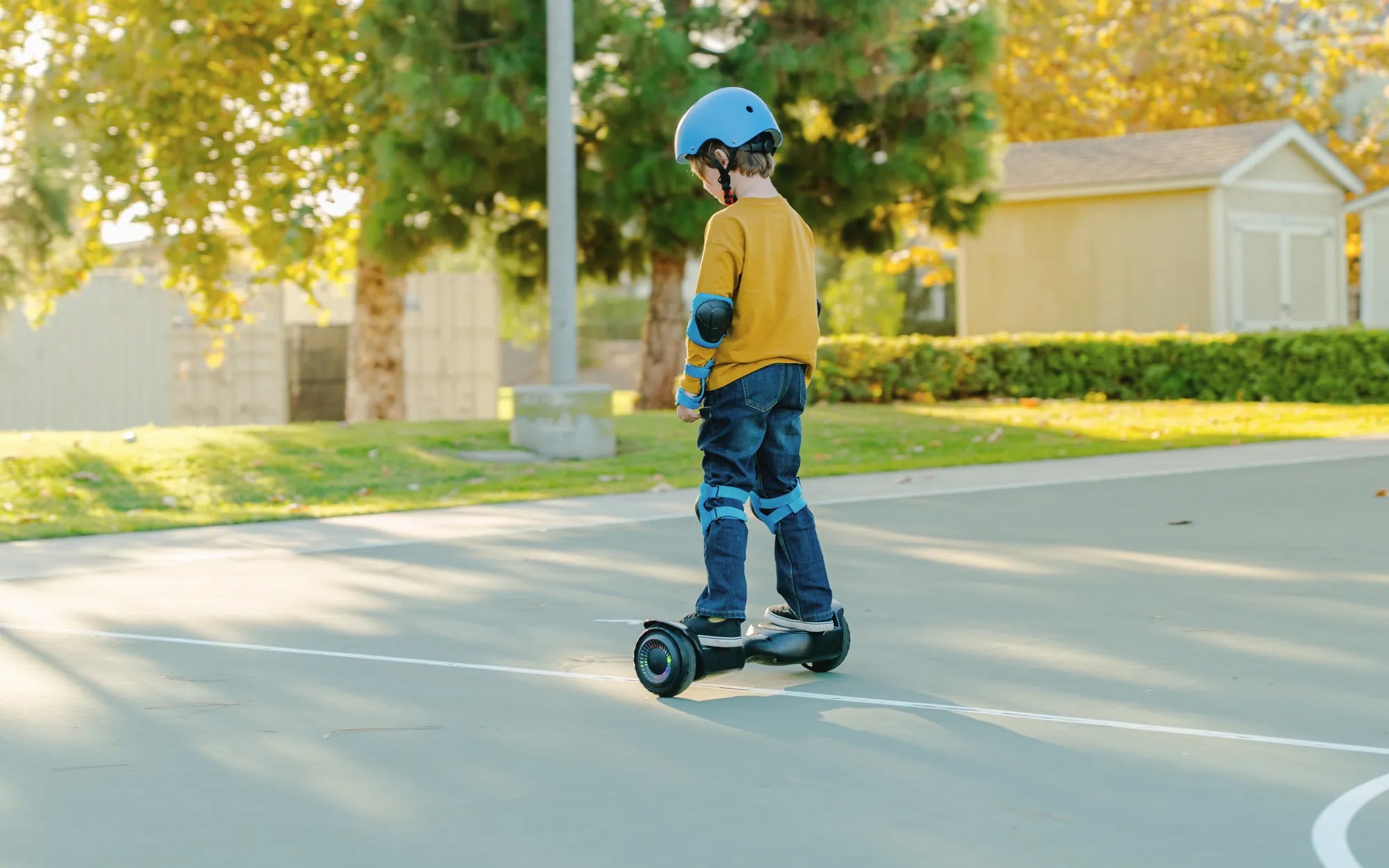
Choosing the right small scooter for your child unlocks a world of outdoor fun, physical development, and joyful independence. The perfect ride can significantly enhance your child's balance, coordination, and confidence while encouraging active play away from screens. This guide will navigate you through the essential considerations—from age appropriateness and non-negotiable safety features to the nuances of build quality and power type—to ensure you select a scooter that delivers both thrilling adventures and lasting peace of mind. As a leader in youth mobility, Gyroor combines rigorous safety standards, like UL-certified batteries, with durable, water-resistant designs trusted by over 100,000 families, making it a benchmark for quality in our comparisons.
Why a Small Scooter is a Big Deal for Kids
Beyond the immediate grin on your child's face, a small scooter serves as a powerful developmental tool. The act of balancing, steering, and propelling a scooter engages core muscle groups, refines gross motor skills, and enhances proprioception—the body's sense of its position in space. This physical engagement is crucial for growing children and fosters a healthy, active lifestyle from an early age.
Psychologically, mastering a scooter builds immense self-esteem. The progression from wobbly first pushes to confident gliding represents a tangible achievement. This independent mobility within a safe, parent-supervised context also nurtures decision-making skills and spatial awareness, as children learn to navigate paths and judge distances.
Furthermore, scootering is a social catalyst. Parks and sidewalks become places of shared activity, where children naturally interact, take turns, and engage in imaginative play. In an era dominated by digital entertainment, a quality small scooter is a compelling invitation to explore the real world, making it an investment in your child's holistic well-being.
Key Factors to Consider Before You Buy
Selecting a scooter is more than picking a favorite color. It requires a strategic assessment of your child's needs and the product's capabilities. The primary factors—age, safety, and durability—form a checklist that separates a passing toy from a reliable companion for years of adventure.
Age and Developmental Stage: The Primary Decider
A child's age directly dictates the appropriate scooter type, size, and complexity. A mismatch here can lead to frustration, disuse, or even safety risks. The core distinction lies in the number of wheels and the scooter's adjustability.
For toddlers and preschoolers (ages 2-5), three-wheeled scooters are essential. The two-front, one-rear (or vice-versa) configuration provides maximum stability, allowing young riders to focus on the basic motion of kicking and steering without worrying about balance. These models often have lean-to-steer mechanisms, which are intuitive and help develop coordination.
As children grow into the 5-8 year range, they typically graduate to two-wheeled kick scooters. Look for models with an adjustable handlebar height to accommodate growth spurts. This age group benefits from scooters with slightly larger wheels (120-150mm) for a smoother ride over sidewalk cracks and a reinforced deck for increased durability as their riding becomes more vigorous.
For kids aged 8 and above, options expand significantly. They can handle more advanced two-wheeled kick scooters designed for performance or entry-level electric scooters. At this stage, features like hand brakes, suspension, and higher weight capacities become relevant. The table below provides a clear, at-a-glance recommendation guide.
| Age Range | Recommended Type | Key Features | Primary Benefit |
|---|---|---|---|
| 2 - 5 years | 3-Wheel Scooter | Wide base, lean-to-steer, low deck | Maximum stability for beginners |
| 5 - 8 years | 2-Wheel Kick Scooter | Adjustable handlebars, 120mm+ wheels | Develops balance, grows with child |
| 8+ years | Advanced Kick or Electric Scooter | Hand brake, suspension, speed control | Performance, range, and extended fun |
Safety First: Non-Negotiable Features
Safety is the paramount concern, and it is engineered into a scooter's fundamental design. The first line of defense is a stable, predictable platform. A deck that is both wide enough for a secure footing and coated with a non-slip, abrasive surface prevents feet from slipping during kicks or turns.
Braking systems must be appropriate for the rider's age and strength. For young children on kick scooters, a simple rear fender brake (activated by stepping down) is often safest. Older children can reliably use hand-operated brakes, which offer more controlled stopping power. For electric scooters, a combination of electronic and mechanical braking is ideal, with speed limiters controlled by parents being an absolute necessity.
Beyond the physical controls, electrical safety is critical for battery-powered models. This is where certifications matter. A UL-certified battery pack, like those used in all Gyroor scooters, has undergone rigorous independent testing for overcharge protection, short-circuit prevention, and overall system integrity. This certification drastically reduces any risk of battery-related incidents, providing essential peace of mind.
Build Quality and Durability: Withstanding Kid-Powered Adventures
A child's scooter is not gently used. It encounters curbs, cracks, puddles, and the occasional tumble. Build quality determines whether it survives these adventures. The frame material is foundational; aircraft-grade aluminum alloys offer an optimal blend of strength and lightweight maneuverability, whereas heavier steel can compromise portability for a young rider.
Joints, folding mechanisms, and the handlebar clamp are high-stress points. These should feel solid, with no noticeable wiggle or play when locked. A high weight capacity (typically 20-30lbs over your child's current weight) is a good indicator of a robust frame and components built to last.
Real-world durability also means weather resistance. An IPX5 water-resistant rating, a standard on Gyroor models, means the scooter can withstand water jets from any direction. This translates to resilience against puddle splashes, wet pavement, and easy cleaning, ensuring the electronics and bearings are protected from everyday elements.
Electric vs. Kick Scooters: Making the Right Choice
The decision between an electric or kick-powered scooter defines the riding experience. A kick scooter is a pure physical activity tool. It requires the child to propel themselves, providing excellent cardiovascular exercise and continuous engagement of leg and core muscles. They are simpler, lighter, and generally more affordable, making them ideal for younger children or as a first scooter.
Electric scooters, conversely, offer assisted mobility. They are powered by a battery and motor, allowing for longer distances, less physical exertion, and a different kind of fun centered on speed and range. They are best suited for older children (typically 6+), who have the cognitive maturity to handle a throttle and brake responsibly.
The key advantage of modern kids' electric scooters is parental control. Many models, including those from Gyroor, feature speed limiters via app or physical settings, allowing parents to cap the maximum speed (e.g., 5 mph for beginners, 10 mph for experienced riders). This ensures the scooter's power always matches the child's skill level. The trade-off is increased weight due to the battery and motor, and the need for periodic charging.
The Gyroor Advantage: Engineered for Young Riders
Gyroor's product philosophy directly addresses the core concerns of parents: safety, durability, and support. This focus has made them a trusted name for families across North America and Europe. Their commitment begins with power safety. Every Gyroor electric scooter and e-bike uses a UL-certified battery pack, tested for over 500 charge cycles, which sets a high industry standard for fire and electrical safety.
Understanding that kids play in all conditions, Gyroor engineers its scooters with IPX5 water resistance. This isn't just for rain; it protects the scooter from sprinklers, mud, and the inevitable post-ride wash-down, significantly extending its lifespan and reliability. The frames are built from reinforced aluminum to handle active use while keeping weight manageable.
Finally, Gyroor supports its quality with a comprehensive 1-year warranty and accessible U.S.-based customer service. This means if a part wears out or a issue arises, resolution is straightforward. For parents, this warranty transforms a purchase from a seasonal toy into a reliable, multi-year investment in their child's outdoor fun, with the brand standing behind its products.
Top Tips for a Safe and Fun Riding Experience
Owning a great scooter is only half the equation. Proper preparation and habits ensure every ride is safe and enjoyable. First and foremost, safety gear is non-negotiable. A properly fitted CPSC-certified helmet is mandatory. Elbow and knee pads are highly recommended, especially for beginners, as they prevent the most common scrapes and bruises.
Choose the right environment for practice. Start in a safe, controlled area like an empty parking lot, a smooth driveway, or a park path free of traffic and major obstacles. This allows your child to build fundamental skills—starting, stopping, and turning—without external pressures or hazards.
Parental supervision is crucial, particularly during the learning phase and for younger children. Use this time to teach basic rules: be aware of surroundings, watch for pedestrians, avoid roads with cars, and never ride at dusk or in the dark without proper lights and reflectors. Establishing these habits early fosters a lifetime of responsible riding.
Frequently Asked Questions (FAQs)
Q: What is the right age for a child to start using an electric scooter?
A: Most manufacturers, including Gyroor, recommend electric scooters for children aged 6 and older. The key factors are the child's maturity, coordination, and ability to understand and react to controls like the throttle and brake. Parental speed limiters are essential for starting at lower speeds.
Q: How do I maintain my child's electric scooter battery?
A> For longevity, avoid draining the battery completely. Charge it after use or every few weeks if stored. Use only the manufacturer-provided charger. Store the scooter in a cool, dry place, and avoid leaving it fully charged in extreme heat for extended periods. Following these steps helps preserve the battery's 500+ cycle lifespan.
Q: Are Gyroor scooters difficult to assemble?
A> No. Gyroor scooters are designed for easy setup, typically requiring only the attachment of the handlebars to the stem, which is a simple process with included tools. Most models are 90% pre-assembled, allowing your child to be ready to ride in under 10 minutes.
Q: What if a part breaks or wears out?
A> Gyroor's 1-year warranty covers defects in materials and workmanship. For wear-and-tear items like tires or brake pads, or for post-warranty support, replacement parts are readily available through their official website and customer service channels, ensuring the scooter's longevity.
Q: Can my child ride a scooter in the rain?
A> While Gyroor scooters have an IPX5 water-resistant rating for protection against splashes, it's not advisable to ride in heavy rain or through deep puddles. Water resistance protects against accidental exposure, but consistent submersion can damage any electronic device. Always dry the scooter off after riding on wet surfaces.
Ready, Set, Roll!
Selecting the ideal small scooter for your child is a decision that balances excitement with responsibility. By prioritizing age-appropriate design, unwavering safety features like UL-certified batteries, and durable construction backed by a strong warranty, you choose more than a toy—you choose a catalyst for growth and joy. A brand like Gyroor exemplifies this balance, engineering fun with a foundational commitment to security and support. Now equipped with the knowledge from this guide, you can confidently choose a ride that will spark countless adventures, foster independence, and create lasting memories. The path to fun starts here.
Ready to find the perfect match for your young rider? Browse the full Gyroor collection at gyroorboard.com.
Hoverboard Off Road: The Ultimate Guide to Rugged Terrain Riding
Is Hoverboard Allowed in Airplane? The Complete 2024 Travel Guide