


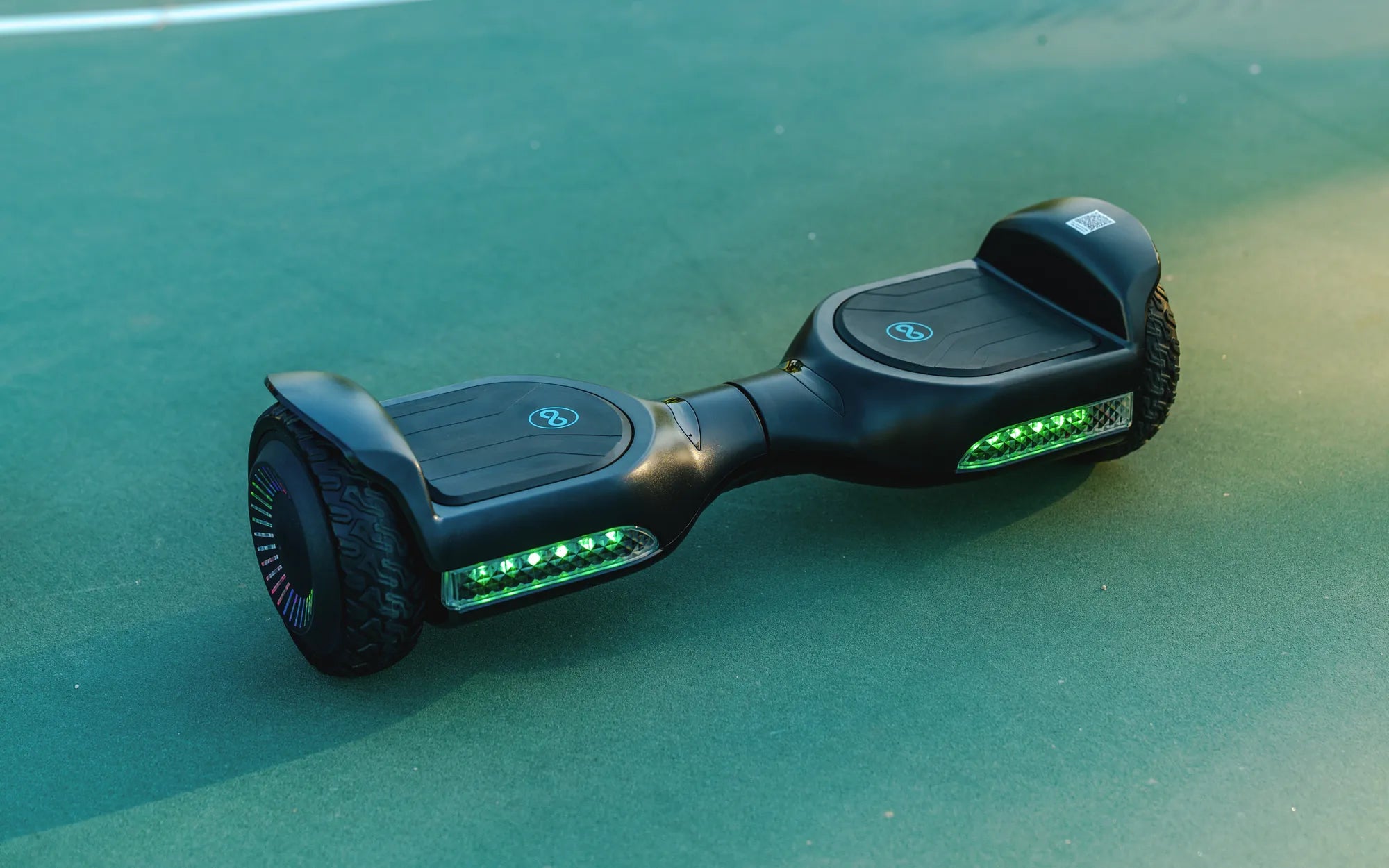
Introduction: Beyond the Pavement – The Rise of the Off-Road Hoverboard
Forget smooth sidewalks and polished floors. The true evolution of self-balancing transportation is happening on dirt trails, grassy hills, and gravel paths. The hoverboard off road represents a significant engineering leap, transforming a novelty urban commuter into a legitimate adventure vehicle. This guide is your comprehensive manual to understanding, choosing, and mastering these rugged machines.
We will decode the specific features that separate a true off-road model from a standard one. You'll learn where you can safely ride, how to ride effectively, and how to maintain your board for years of reliable exploration. The appeal is clear: unlocking new terrain, experiencing the thrill of nature, and enjoying a unique form of outdoor recreation. The question is no longer if you can ride off-road, but how to do it right.
The market has responded to demand with models boasting larger tires and more power. However, not all are created equal. A genuine hoverboard off road is built with a specific philosophy of durability, traction, and power delivery. This guide cuts through the marketing to focus on the tangible specifications and riding principles that matter most when the pavement ends.
Our goal is to equip you with the knowledge to make an informed purchase and become a skilled, safe rider. From tire technology to post-ride maintenance, every aspect is covered to ensure your off-road adventures are exhilarating, not exhausting.
What Makes a Hoverboard "Off-Road"? Key Features Decoded
Standard hoverboards are designed for predictable, hard surfaces. Off-road models are engineered for the unpredictable. The distinction lies in a combination of critical hardware upgrades that work together to handle bumps, inclines, and loose surfaces. Understanding these features is the first step to choosing a capable board.
The core triad of off-road capability consists of tire technology, motor performance, and structural integrity. Compromise on any of these, and the board's off-road performance—and longevity—will suffer. A true off-road hoverboard is a system where each component is reinforced to handle greater stress than its urban counterpart.
When evaluating models, look beyond cosmetic "rugged" styling. Focus on the technical specifications related to these key areas. A board that excels on trails will explicitly advertise features like pneumatic tires, high-wattage dual motors, and an IP rating for water resistance. These are not luxuries; they are necessities for the environment.
Investing in a properly equipped hoverboard off road means investing in safety and durability. A board pushed beyond its design limits on rough terrain is prone to failure, which can lead to accidents or costly repairs. The right features provide the confidence to explore.
Tire Technology: Air vs. Solid, Tread Patterns, and Size
Tires are the single most important feature for off-road performance. They are your sole point of contact with the ground, responsible for traction, shock absorption, and obstacle clearance. Standard hoverboards use small, solid rubber tires—wholly inadequate for anything but perfect pavement.
Pneumatic (Air-Filled) Tires: These are the gold standard for off-road hoverboards. The air chamber acts as a natural shock absorber, smoothing out vibrations from rocks, roots, and bumps. This protects the board's internal components and provides a much more comfortable ride for the rider. They typically require occasional pressure checks.
Tread Pattern: Look for deep, aggressive, knobby treads similar to all-terrain vehicle (ATV) or mountain bike tires. This lugs dig into soft dirt, grass, and gravel to prevent slippage. A smooth or lightly treaded tire will slide dangerously on loose or wet surfaces. The tread design is crucial for lateral stability during turns.
Size and Diameter: Off-road tires start at 8.5 inches and can go up to 10 inches or more. Larger diameter tires roll over obstacles more easily and provide greater ground clearance, preventing the board's underside from scraping or getting hung up on rocks or curbs. Wider tires also offer a more stable footprint on uneven ground.
Motor Power and Torque: Conquering Inclines and Rough Terrain
Off-road terrain demands constant power adjustments. Motors must provide enough torque to climb hills and enough sustained wattage to plow through resistance like thick grass or sand. Dual motors are non-negotiable, with each wheel independently powered for better control.
Total Wattage: While a 300W-400W combo is sufficient for pavement, genuine off-road hoverboards feature combined wattage of 800W, 1000W, or even higher. This raw power is needed to maintain speed and momentum when the going gets tough. It directly translates to the ability to tackle steeper inclines, often rated for 25-30% grades.
Torque Output: Wattage speaks to top speed potential, but torque is the twisting force that gets you moving from a stop and powers up hills. High-torque motors provide immediate response and prevent the board from stuttering or bogging down on an incline. This is critical for technical trail sections where slow, controlled power is needed.
Battery Synergy: Powerful motors require a robust battery to match. A high-capacity battery (e.g., 36V/7.5Ah or larger) ensures the motors can draw the current they need without causing rapid voltage sag, which would lead to a sudden loss of power mid-ride. The battery's quality and certification are paramount for safety under this high-demand use.
Frame and Build Quality: Durability for the Demands of Dirt
The frame is the skeleton that holds everything together. On an off-road hoverboard, it undergoes constant stress from impacts, vibrations, and torsional flex. A flimsy frame will fatigue, crack, or cause components to come loose, leading to premature failure.
Material and Construction: Look for frames constructed from reinforced or aircraft-grade aluminum alloy. This material offers an excellent strength-to-weight ratio, resisting bending and corrosion. The footpad platforms should be textured, non-slip rubber, and securely mounted to the main chassis.
Protective Features: Essential additions include reinforced fender covers over the tires to block mud and debris from spraying into the wheel wells and motors. A protective skid plate on the underside shields the battery compartment and internal wiring from rocks, logs, and scrapes during aggressive riding.
Weight Capacity and IP Rating: A higher maximum load capacity (300 lbs or more) often indicates a more robust frame, motor, and wheel assembly. Equally important is the Ingress Protection (IP) rating. A rating of IPX4 or higher is good, with IPX5 being ideal for off-road use, as it certifies protection against water jets from any direction—vital for puddles, mud, and light rain.
Top Terrain Types: Where Your Off-Road Hoverboard Can Thrive
Not all dirt is created equal. Understanding the capabilities and limitations of your board on different surfaces will maximize fun and minimize risk. A capable hoverboard off road opens up a spectrum of environments, each offering a unique riding experience and requiring slightly different techniques.
Start with easier terrain to build confidence and learn your board's handling characteristics before progressing to more challenging landscapes. Always perform a visual inspection of a new trail, walking it first if possible, to identify potential hazards like large rocks, deep ruts, or hidden obstacles.
Riding surfaces can be categorized by their traction and deformation. Hard-packed dirt offers good traction, while loose gravel or sand provides less. Soft surfaces like grass or mud deform under weight, requiring more power. Matching your speed and riding style to the terrain is key to control.
The following breakdown will help you set expectations and prepare for the conditions you're likely to encounter, ensuring you and your board are ready for the adventure.
Packed Dirt Trails and Gravel Paths
This is the quintessential and most forgiving off-road terrain. Well-maintained hiking, biking, or equestrian trails with packed dirt are ideal for beginners and experts alike. They offer a challenging yet predictable surface that allows you to focus on handling and enjoy the scenery.
The firm surface provides excellent feedback and traction for knobby tires. You can practice cornering, learn to absorb small bumps with your knees, and get a feel for the board's power delivery. Gravel paths behave similarly but require slightly more caution during sharp turns, as the loose top layer can cause the tires to slide.
Maintain a moderate, controlled speed. Be vigilant for sudden changes in trail conditions, such as patches of loose gravel, mud, or exposed tree roots. These are excellent terrains for maximizing your board's range, as the rolling resistance is higher than pavement but lower than soft surfaces.
Riding on these trails demonstrates the core value of an off-road hoverboard: accessing peaceful, car-free paths and enjoying a quiet, electric glide through nature. It's where the machine's capabilities feel perfectly matched to the environment.
Grass Fields, Parks, and Light Turf
Riding on grass is deceptively demanding. The even, soft appearance belies the significant power drain and resistance it creates. Short, dry grass on a flat field is very manageable for a capable off-road board, while tall, wet grass on a slope can be a formidable challenge.
The key here is tire size and motor torque. Larger tires (9.5"+) distribute weight better and sink less into the turf. High-torque motors are essential to maintain momentum. Expect your battery range to drop by 40-50% compared to riding on pavement over the same distance.
Riding technique shifts to a more upright, balanced stance. Avoid sudden acceleration or sharp turns, as the reduced traction can cause the wheels to spin out or the tail to slide. Gentle, sweeping turns are more stable. Be extra cautious of hidden holes, sprinkler heads, or other lawn irregularities.
Grass riding is perfect for park exploration, backyard fun, or crossing fields. It's a great way to test your board's low-speed power and get a thrilling sensation of floating across a green landscape, but always respect public park rules and private property.
Sandy Beaches and Loose Surfaces
Sand represents the pinnacle of challenging terrain for an off-road hoverboard. It requires the most specific equipment and advanced skill. Firm, wet sand near the water's edge is the most rideable, while soft, dry dune sand can quickly immobilize even powerful boards.
Success in sand depends on tire floatation. Extra-wide tires with a paddle-like tread pattern are best, as they spread the board's weight over a larger area to prevent sinking. Standard knobby tires will dig in, causing high resistance and rapid battery depletion. Control is minimal in deep, loose sand.
This environment is hardest on your board. Sand is abrasive and can infiltrate seals, bearings, and motors. A high IP rating (IPX5 or better) is crucial. After any beach ride, a thorough cleaning is mandatory. Use compressed air or a soft brush to remove all sand from the wheel wells, axles, and footpads before storing or charging.
Ride only on hard-packed sand, keep speeds low, and be prepared to step off and carry the board if it bogs down. The reward is a unique and unforgettable riding experience along the shoreline, but it comes with the highest risk of component wear and requires diligent post-ride maintenance.
Safety and Performance: Gear, Techniques, and Maintenance
Owning a capable machine is only half the equation. Your preparedness, skill, and care for the board determine the quality and longevity of your off-road experience. Safety is non-negotiable, technique enhances enjoyment, and maintenance ensures reliability. This holistic approach separates a seasoned rider from a casual one.
Off-road riding inherently involves more risk than pavement cruising. The surfaces are uneven, obstacles are common, and falls are more likely. Adopting the right mindset—one of preparedness and respect for the terrain—is the foundation of safe adventure. Never push your limits in an unfamiliar or hazardous area.
Performance is a partnership between rider and machine. Learning proper technique reduces strain on the board and increases your control, making rides smoother and less fatiguing. Similarly, a well-maintained board responds predictably and is less likely to fail at a critical moment.
Integrating these three pillars—safety gear, riding technique, and maintenance—into your routine transforms off-road hoverboarding from a risky novelty into a sustainable and deeply rewarding hobby.
Essential Safety Gear for Rugged Riding
Full protective gear is mandatory, not optional. The consequences of a fall on a rocky trail are significantly greater than on a sidewalk. Investing in quality gear is an investment in your well-being and your ability to continue riding.
Helmet: A certified multi-impact helmet (CPSC, DOT, or CE EN1078) is the most important piece of equipment. A full-face mountain biking helmet offers the best protection for off-road use, shielding your chin and face in a forward fall. Never ride without one.
Wrist Guards: These are critical. In a fall, the instinct is to put your hands out. Wrist guards absorb impact and prevent hyperextension, drastically reducing the risk of sprains, fractures, or scaphoid breaks. They are lightweight and should be worn every single time.
Knee and Elbow Pads: These protect the large, vulnerable joints that are highly likely to make contact with the ground. Look for hard-shell pads with comfortable lining. For serious trail riding, consider padded shorts or hip protection for added safety during sideways falls.
Dress appropriately with closed-toe shoes with good grip (like hiking or skate shoes), long pants, and a long-sleeve shirt to protect against scrapes from branches or falls. Visibility vests or bright colors are also recommended if riding near shared trails.
Mastering Off-Road Riding Techniques
Proper technique conserves energy, improves control, and reduces wear on your board. It's about working with the terrain, not fighting against it. Start by practicing these fundamentals in a safe, open off-road area like a flat, empty field.
Stance and Posture: Adopt an athletic stance: knees slightly bent, back straight, and head up looking ahead at the trail (not down at your feet). This "suspension" posture allows your legs to absorb bumps and maintain balance. Keep your weight centered over the board.
Navigating Obstacles and Inclines: For small obstacles like roots or rocks, approach at a moderate speed, bend your knees deeply as you go over, and let the tires roll. For hills, lean your body forward slightly when climbing to keep weight on the front wheel for traction. When descending, lean back slightly and use gentle, controlled braking—never slam on the brakes.
Speed and Cornering: Maintain a speed where you feel in full control; slower is often better on technical trails. For corners on loose terrain, slow down before entering the turn, lean smoothly with the board (don't jerk), and avoid sharp steering inputs that can cause a slide. Practice turning in both directions.
Learn to dismount safely by stepping backwards off the board, not jumping off the front or sides. Most importantly, know your limits and the limits of your hoverboard off road. If a section of trail looks too steep, rocky, or muddy, it's okay to get off and walk.
Post-Adventure Maintenance Checklist
Regular maintenance is the price of admission for reliable off-road performance. Dirt, mud, water, and impacts take a toll. A simple 10-minute post-ride routine can prevent most major issues and extend the life of your board significantly.
1. Clean Thoroughly: Use a damp cloth, soft brush, and compressed air (if available) to remove all mud, sand, grass, and debris. Pay special attention to the wheel wells, around the motors, and the underside. Never use a high-pressure hose, as it can force water into sealed components.
2. Inspect Tires: Check pneumatic tires for proper pressure (refer to manual, usually 25-35 PSI). Look for cuts, excessive wear, or embedded objects like thorns or glass. Inspect the tread depth. For solid tires, check for deep gouges or chunks missing.
3. Check Hardware and Structure: Gently try to wiggle the footpads and fenders. Ensure all visible screws are tight (use the provided tool). Look for new cracks or significant scratches on the frame, especially near stress points like the wheel axles and central hinge.
4. Final Steps: Ensure the board is completely dry before connecting the charger. Store it in a cool, dry place away from direct sunlight or extreme temperatures. Periodically check the charger port for debris. Following this checklist after every major off-road outing will keep your board in adventure-ready condition.
Why Gyroor Off-Road Hoverboards Are Built for the Challenge
When the terrain gets tough, the engineering behind your board matters more than ever. Gyroor designs its off-road hoverboards with the specific demands of rugged riding in mind, integrating features that address the core challenges of power, durability, and environmental protection.
As a leading electric mobility brand trusted by over 100,000 riders, Gyroor's philosophy centers on reliability and safety. This is critical for off-road use, where a component failure can strand a rider far from help. Every design decision is tested against the harsher realities of trail and field use.
The brand's commitment is evidenced in three key areas that directly correlate to off-road performance and peace of mind. These aren't just spec sheet bullet points; they are foundational to a trustworthy hoverboard off road experience.
From the battery pack to the outer shell, Gyroor models are built to handle the strain of constant motor load, the jarring of uneven ground, and the exposure to the elements that define adventurous riding.
UL-Certified Battery Packs for Demanding Use: Off-road riding places the highest possible demand on a battery. Gyroor's use of UL 2272 certified lithium-ion battery packs is non-negotiable. These batteries are rigorously tested for safety, including overcharge, short circuit, and impact tests. For off-road use, this certification means stability and reliability even during the high-current draws required for hill climbs and soft terrain, significantly reducing any risk of thermal issues.
IPX5 Water-Resistant Design for the Elements: An IPX5 rating is a defining feature for a true off-road board. It certifies protection against low-pressure water jets from any direction. On the trail, this translates to resilience against puddle splashes, muddy spray, light rain, and the general dampness of outdoor environments. This protection extends the life of internal electronics and gives riders the confidence to explore without fear of a sudden shower ending their ride.
Robust Warranty and Support for Peace of Mind: Off-road riding is rigorous. Gyroor backs its products with a comprehensive 1-year warranty, covering manufacturer defects in materials and workmanship. Coupled with accessible US-based customer support, this provides tangible peace of mind. If an issue arises from the stresses of normal off-road use, you have a direct path to resolution, ensuring your investment is protected as you explore.
Off-Road vs. On-Road: A Feature Comparison
Choosing the right tool for the job is essential. This comparison table highlights the fundamental design differences between a standard urban hoverboard and a dedicated off-road model. Understanding these distinctions will prevent you from under-buying for your intended use and ensure your safety and satisfaction.
| Feature | Standard On-Road Hoverboard | True Off-Road Hoverboard |
|---|---|---|
| Primary Use | Smooth pavement, indoor surfaces | Dirt trails, grass, gravel, uneven terrain |
| Tire Type | Small (6.5"-8") solid rubber, smooth tread | Large (8.5"-10"+) pneumatic (air-filled), deep knobby tread |
| Shock Absorption | Minimal; reliant on tire hardness | Excellent; provided by air-filled tires and often additional suspension |
| Motor Power | Dual 250W-350W (500W-700W total) | Dual 400W-500W+ (800W-1000W+ total) |
| Key Strength | Torque for flat acceleration | High torque for hills & sustained power for resistance |
| Frame/Build | Standard plastic or light alloy | Reinforced alloy, skid plates, reinforced fenders |
| Environmental Protection | Minimal or no IP rating | IPX4 or higher (IPX5 ideal) for water/dust resistance |
| Weight Capacity | ~220 lbs (100 kg) | 300 lbs (136 kg) or more |
| Ride Experience on Pavement | Smooth, quiet, efficient | Stable, smoother over cracks, but less agile |
| Ride Experience Off-Road | Unsafe, unstable, prone to damage | Controlled, capable, designed for the terrain |
Frequently Asked Questions (FAQ)
Q: Can I use an off-road hoverboard on regular pavement?
A: Absolutely. Off-road hoverboards perform excellently on pavement. The larger, air-filled tires often provide a smoother, more comfortable ride over cracks and bumps than standard solid-tire models. You may sacrifice some top-end speed and agility for this comfort and stability.
Q: How far can I ride on a single charge off-road?
A: Range decreases significantly off-road due to constant motor strain. Expect 30-50% less than the manufacturer's stated pavement range. For example, a board rated for 12 miles on pavement may only achieve 6-8 miles on mixed off-road trails. Factors like hill frequency, surface softness (grass/sand), rider weight, and temperature all impact range.
Q: Are off-road hoverboards safe for beginners?
A: It is strongly recommended that absolute beginners first master basic balancing, starting, stopping, and turning on a flat, smooth, open paved area. Off-road models are more powerful and responsive. Once foundational skills are secure, a beginner can cautiously progress to easy off-road terrain like flat, packed dirt while wearing full safety gear.
Q: How do I maintain the air pressure in pneumatic tires?
A: Check tire pressure every few rides with a standard bicycle pump with a pressure gauge. The correct PSI (usually 25-35) will be in your user manual. Proper inflation is crucial for performance, range, and preventing pinch flats. Carry a portable pump for longer adventures.
Q: What is the most common mistake new off-road riders make?
A: Overconfidence in speed. Riding too fast for the terrain is the leading cause of falls and loss of control. Off-road requires constant scanning for obstacles and adjusting speed accordingly. Start slow, learn how your board reacts to different surfaces, and gradually increase speed as your skill and familiarity with a specific trail improve.
Your Passport to Adventure Awaits
The world of off-road hoverboarding offers a unique blend of technology, outdoor exploration, and pure fun. By choosing a board built with the right features—robust tires, powerful motors, and a durable, protected frame—you invest in countless hours of adventure beyond the confines of city streets. The hoverboard off road is more than a toy; it's a key to unlocking landscapes you'd otherwise walk past.
Remember, capability is a partnership. Your board provides the mechanical potential, but your commitment to safety gear, deliberate practice of riding techniques, and consistent maintenance unlocks that potential safely and sustainably. Respect the terrain, know your limits, and always prioritize preparedness.
The thrill of gliding silently up a forest trail, across a sun-drenched field, or along a beach is an experience that redefines personal mobility. It connects you with the outdoors in a novel and exhilarating way. With the knowledge from this guide, you are equipped to make an informed choice and embark on your adventures with confidence.
Ready to leave the pavement behind? Explore rugged, reliable models designed for the trail. Browse the full Gyroor off-road collection and find your perfect adventure vehicle at gyroorboard.com.
Real Life Hoverboard: The Future of Personal Transportation Is Here
Small Scooter for Kids: The Ultimate Guide to Choosing the Best Ride