



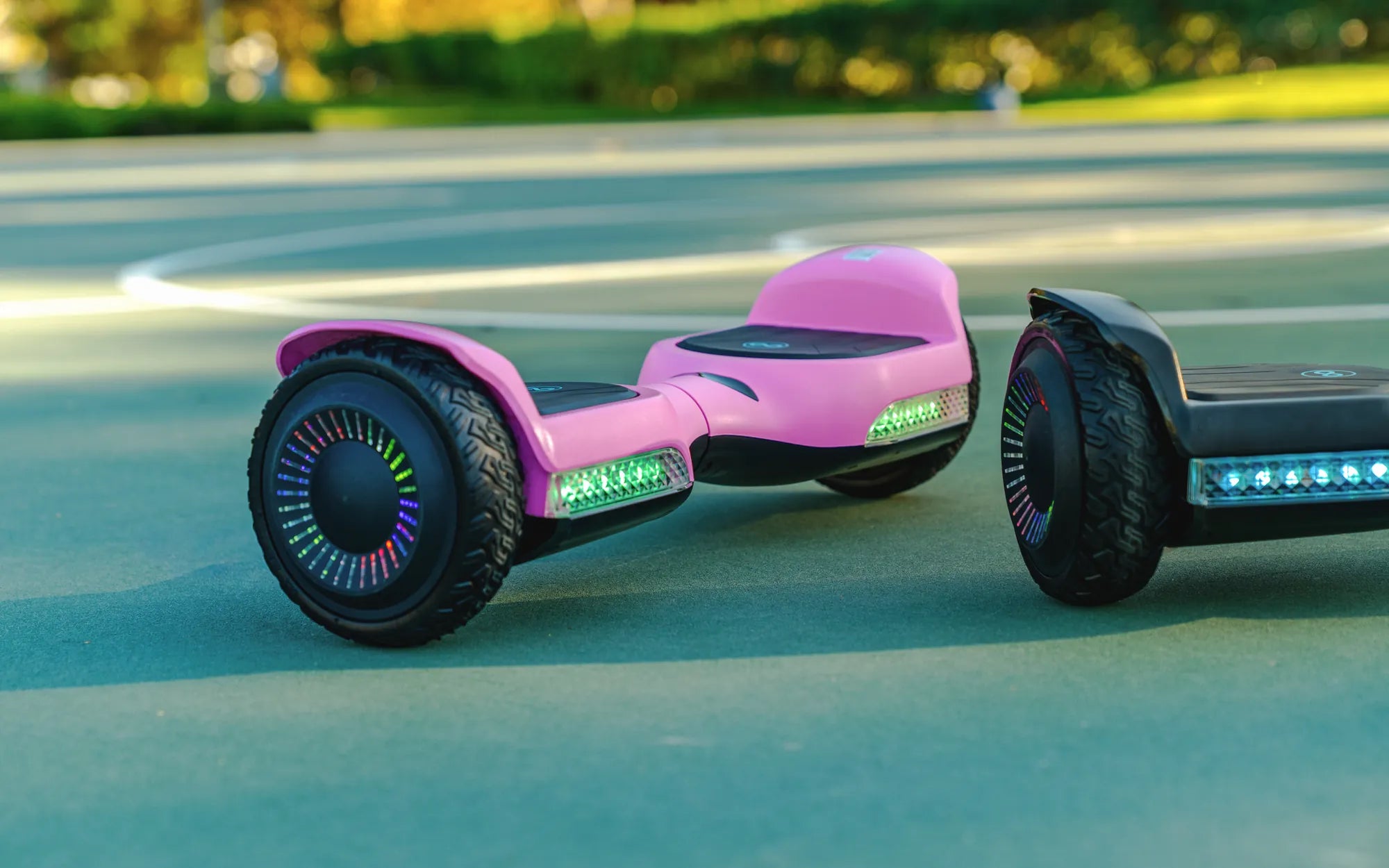
Introduction: Redefining Urban Mobility with 10-Inch Tires
Urban commuting is broken. Gridlocked traffic, scarce parking, and the soaring costs of car ownership and public transit drain time, money, and patience. The solution isn't a faster car or a new subway line; it's a fundamental reimagining of personal transportation. Enter the 10 inch tire self balancing scooter, a vehicle that has evolved from a tech novelty into a sophisticated, practical, and transformative tool for navigating the modern cityscape.
This article will dissect why this specific configuration represents the pinnacle of urban electric mobility. We will explore the physics behind the 10-inch tire's superiority, demystify the self-balancing technology that makes riding intuitive, and provide a comprehensive framework for selecting a scooter built for durability and safety. For over 100,000 riders across North America and Europe, brands like Gyroor have proven that a reliable, well-engineered electric scooter isn't just a gadget—it's a legitimate commuting solution.
The journey from a niche product to a mainstream mobility option hinges on solving real-world problems. A 10 inch tire self balancing scooter directly addresses the harsh realities of urban terrain: potholes, curbs, wet roads, and uneven pavement. It combines the portability of micro-mobility with the stability and confidence traditionally reserved for larger vehicles.
By the end of this guide, you will understand the key specifications that matter, the safety features you cannot compromise on, and how integrating a 10-inch tire self-balancing scooter into your daily routine can save you time, money, and untold frustration. This is more than a product review; it's an analysis of a smarter way to move.
Why Tire Size Matters: The 10-Inch Advantage for Urban Terrain
In the world of personal electric vehicles, tire size is the single most critical determinant of ride quality, safety, and versatility. While smaller 6 to 8.5-inch tires dominate the budget and ultra-portable segments, they come with significant compromises for the urban commuter. The 10-inch tire represents the optimal balance, offering a substantial upgrade in performance without sacrificing the compact form factor essential for last-mile travel.
The primary advantage is simple physics: a larger diameter wheel rolls over obstacles more easily than a smaller one. Think of navigating a speed bump with a toy car versus a bicycle. The 10-inch tire's geometry allows it to bridge gaps, absorb impacts, and maintain momentum where a smaller wheel would jarringly impact or even stop. This translates directly to a smoother, safer, and more controlled riding experience on imperfect city streets.
Furthermore, the larger air volume in a 10-inch pneumatic (air-filled) tire acts as a natural suspension system. It compresses to soak up vibrations from cracked concrete, cobblestones, and expansion joints, reducing fatigue on the rider and stress on the scooter's frame and electronics. This inherent cushioning is a passive safety feature, helping to maintain tire contact with the road for better braking and handling.
For the urban environment, where conditions change rapidly—from smooth asphalt to grated bridge decks to brick-paved pathways—the 10-inch tire provides a consistent and confident ride. It is the minimum size recommended for adults seeking a serious commuting tool, as it moves beyond the limitations of toy-grade products into the realm of legitimate transportation.
Stability and Control at Speed
Stability at commuting speeds (typically 15-25 mph) is non-negotiable. Smaller tires have a higher rotational speed for a given road speed, which can amplify wobbles and make the scooter feel nervous or "twitchy." The 10-inch tire, with its larger diameter, rotates slower. This, combined with a greater gyroscopic effect, creates a profoundly more stable platform.
The increased contact patch—the area of the tire actually touching the ground—is another key factor. A 10-inch tire, especially a wider variant, places more rubber on the road. This enhances lateral grip during turns and improves straight-line tracking, preventing the scooter from being easily unsettled by crosswinds or minor road imperfections. For commuters who need to share space with cars and bicycles, this instilled confidence is paramount.
Control is a function of stability. A stable scooter requires less corrective input from the rider, reducing mental load and physical fatigue. The rider can focus on traffic and navigation rather than constantly micro-correcting balance. This makes longer commutes not only possible but enjoyable. The 10 inch tire self balancing scooter excels here, providing a planted, car-like feel that smaller-wheeled counterparts cannot match.
This stability directly correlates with safety. A predictable vehicle is a safer vehicle. When emergency braking or an evasive maneuver is required, the rider of a 10-inch tire scooter has a solid foundation from which to act, with less risk of loss of control due to wheel hop or skidding.
Conquering Urban Obstacles with Ease
The urban jungle is littered with terrain challenges. From the dreaded pothole and raised sewer grate to transition lips between road and bike lane, these are more than inconveniences; they are potential crash hazards for inadequately equipped scooters. The 10-inch tire is specifically engineered to handle these obstacles.
Its rolling diameter allows it to effectively "step over" gaps and depressions that would swallow a smaller wheel. A 2-inch deep pothole that could stop an 8.5-inch tire dead in its tracks is simply rolled over by a 10-inch wheel. This capability drastically reduces the frequency of sudden stops or ejections, which are primary causes of rider injury.
Navigating curbs is another area of superiority. While no scoter is designed for aggressive curb-hopping, the reality of city riding sometimes requires going up or down a standard 6-inch curb cut. The 10-inch tire has the clearance and roll-over angle to manage this maneuver smoothly when approached correctly, whereas a smaller tire may impact the curb face, potentially damaging the rim or throwing the rider.
The result is a expanded operational domain. Riders are not forced to divert to perfectly smooth paths. They can confidently take direct routes, use bike lanes of varying quality, and traverse construction zones with a dramatically reduced risk of incident. This freedom is a core component of what makes the 10 inch tire self balancing scooter the ultimate urban commuting solution.
Safety and Traction in All Conditions
Urban commuting doesn't stop when the weather turns. Morning dew, light rain, spilled fluids, metal manhole covers, and painted crosswalk lines are all common traction hazards. The safety advantage of a 10-inch tire becomes most apparent in these variable conditions.
The larger surface area provides more opportunities for the tire's tread pattern to engage with the road surface. Quality 10-inch tires feature tread designs that channel water away from the contact patch, reducing hydroplaning risk on wet pavement. This is a critical safety feature often overlooked in scooter design, where many budget models use completely slick tires.
Traction on uneven or loose surfaces is also superior. Gravel, sand, and dirt that might accumulate on bike paths or road shoulders can cause smaller, narrow tires to lose grip and slide out. The wider profile and larger contact patch of a premium 10-inch tire dig in and find purchase, maintaining control where a less capable scooter would falter.
Finally, the material and construction of the tire matter. Many high-end models, including those from Gyroor, use high-quality, wear-resistant rubber compounds that maintain grip over time and across a wider temperature range. When combined with the mechanical advantages of the 10-inch size, the result is a scooter you can trust in the real-world, four-season conditions of a city.
The Self-Balancing Revolution: How Gyroscopic Technology Enhances Commuting
At first glance, a self-balancing scooter can seem like magic. The ability to stand upright, move forward, backward, and turn with subtle leans defies our intuition about two-wheeled vehicles. However, the technology, rooted in gyroscopic sensors and sophisticated control algorithms, is brilliantly pragmatic. It's not a gimmick; it's a fundamental enhancement that makes electric scooters accessible and efficient for daily commuting.
The core system consists of inertial measurement units (IMUs)—sensors that detect the scooter's angle and rate of tilt—and a powerful microprocessor. This computer, operating hundreds of times per second, takes the sensor data and commands the wheel motors to spin precisely to counteract any lean, keeping the platform stable beneath the rider. This is the "self-balancing" mechanism. The rider's forward or backward lean is interpreted not as a fall, but as a command to accelerate or decelerate to "catch" the lean, thus propelling the scooter.
This integration of human input and machine response creates an incredibly intuitive riding experience. The vehicle becomes an extension of the rider's body, responding to instinctive weight shifts. For commuting, this has profound implications for ease of use, safety, and maneuverability, setting it apart from traditional kick-scooters or even throttle-controlled electric scooters that require manual balancing.
Intuitive Riding for Beginners and Experts
The learning curve for a self-balancing scooter is famously short. Most adults with reasonable coordination can learn the basic controls—mounting, dismounting, starting, stopping, and gentle turning—within 30 to 60 minutes of practice. This is because the hardest part of riding a two-wheeled vehicle—maintaining balance at low speeds—is handled by the machine.
The rider is free to focus on higher-order tasks: observing traffic, planning a path, and controlling speed. This dramatically lowers the barrier to entry, making the technology viable for a wide demographic, not just the athletic or mechanically inclined. It transforms the scooter from a recreational toy for the daring into a practical tool for the everyday commuter, student, or professional.
For the expert rider, the technology enables precision. The direct connection between lean and acceleration allows for nuanced speed control without ever touching a throttle. Braking is similarly intuitive and can be modulated finely by leaning back. This level of control is advantageous in dense urban settings where smooth, predictable movements are safer and more efficient than jerky throttle inputs.
The system's consistency is also key. Unlike a human learning to balance a bicycle, the gyroscopic system never gets tired or distracted. It provides the same rock-solid stability on the first ride of the day as on the last, in rain or shine, ensuring a reliable and predictable commuting experience every time.
Effortless Maneuverability in Tight Spaces
Urban commuting is a dance of tight spaces: weaving through stalled traffic, navigating crowded bike racks, maneuvering on crowded sidewalks (where legally permitted), and executing precise U-turns. The self-balancing scooter, particularly a 10 inch tire self balancing scooter, is arguably the most maneuverable vehicle in the city short of walking.
The combination of a zero-turn radius (achieved by driving the wheels in opposite directions) and intuitive lean-to-steer control allows the scooter to pivot within its own footprint. This is invaluable for navigating cluttered environments where a bicycle or traditional scooter would need multiple-point turns. You can effortlessly glide around pedestrians, street furniture, and other obstacles with minimal clearance.
This agility enhances safety. The ability to make quick, controlled adjustments to your path is a critical defensive riding skill. If a car door opens or a pedestrian steps out unexpectedly, the responsive handling of a self-balancing scooter can mean the difference between a near-miss and a collision. The stability provided by the 10-inch tires ensures these maneuvers are executed with control, not panic.
Furthermore, this maneuverability extends to low-speed control. Traffic jams and crowded intersections become manageable, as the scooter can inch forward with perfect balance, come to a complete stop without putting a foot down (though it's good practice to do so), and then accelerate smoothly when space opens up. This stop-and-go efficiency mirrors the best traits of pedestrian mobility but with the speed and range of a vehicle.
Key Features to Look for in a Premium 10-Inch Tire Self-Balancing Scooter
Not all 10-inch tire scooters are created equal. The market is flooded with options that prioritize low cost over quality, safety, and longevity. For a device you will rely on for daily transportation, cutting corners is not an option. Here is a data-driven checklist of features that separate a premium, commuter-ready 10 inch tire self balancing scooter from the rest of the pack.
Focus on specifications that translate directly to real-world performance: sustained power for hills, real-world range for your commute, and build quality that withstands daily abuse. The goal is to identify a scooter that is an investment, not a disposable gadget. Leading brands like Gyroor design their products with these principles, incorporating features like UL-certified batteries and IPX5 water resistance as standard, not premium add-ons.
Use the following table as a comparative guide when evaluating models. It outlines the minimum specifications for a serious commuter scooter versus the enhanced features found in top-tier models.
| Feature Category | Commuter Minimum | Premium Benchmark (e.g., Gyroor) |
|---|---|---|
| Motor Power | 350W Sustained | 500W+ Dual Motor (1000W+ Peak) |
| Real-World Range | 12-15 miles | 18-25+ miles |
| Battery Certification | FCC, CE | UL 2271 / UL 2849 Certified |
| Max Speed | 15 mph | 18-22 mph (Mode Selectable) |
| Water Resistance | IPX4 (Splash Resistant) | IPX5 (Water Jet Resistant) |
| Tire Type | 10" Pneumatic | 10" Pneumatic, Puncture-Resistant Layer |
| Weight Capacity | 220 lbs | 265-285 lbs |
| Warranty & Support | 90 Days, Overseas | 1 Year Comprehensive, US-Based |
| Braking System | Electronic + Foot | Regenerative + Dual Mechanical Disc |
Power, Range, and Battery Safety (Highlighting Gyroor's USPs)
Power dictates capability. A motor rated at 500W sustained (with a 1000W+ peak) is the baseline for handling the moderate hills (10-15% grade) common in many cities. Dual motor configurations provide exceptional torque for acceleration and hill climbs, offering a performance reserve that enhances safety when merging into traffic or climbing steep ramps. Avoid models with inflated "peak" wattage ratings and focus on sustained power output.
Range anxiety kills utility. Advertised range is often calculated under ideal laboratory conditions. For real-world commuting, factor in variables like rider weight, hills, wind, and temperature. A scooter with a 15-mile advertised range may only deliver 10-12 miles in practice. Look for models with large-capacity, high-quality battery cells (e.g., Samsung, LG) that offer a realistic 18-25 mile range. This ensures you can complete a round-trip commute with a safety margin, reducing the need for daily charging.
Battery safety is paramount. This is the most critical non-negotiable feature. Insist on a UL 2271 (for the battery pack) or UL 2849 (for the entire electrical system) certification. This independent testing verifies the battery's resilience against overcharge, short circuit, and thermal runaway—the primary causes of lithium-ion battery fires. Brands like Gyroor build their reputation on this foundation, using exclusively UL-certified battery packs tested for 500+ charge cycles, providing peace of mind that is worth every penny.
Build Quality and Weather Resistance
The frame is the scooter's skeleton. A high-grade aluminum alloy frame is essential for achieving a balance of strength and lightweight portability. Look for reinforced welding at stress points, such as the stem and deck. The weight capacity rating should comfortably exceed your own weight; a 265 lb+ rating indicates a robust construction suitable for daily adult use.
Weather resistance is what makes a scooter a true all-weather commuter. An IPX5 water resistance rating means the scooter can withstand water jets from any direction, making it safe to ride in rain and through puddles. This is a Gyroor hallmark and a feature that distinguishes commuter-grade models from fair-weather toys. It protects the sensitive electronics and battery from moisture ingress, which is the leading cause of long-term electrical failure.
Component quality extends to the deck surface (should be grippy and scratch-resistant), the folding mechanism (should lock securely with no play), and the handlebar controls (should be tactile and well-sealed). These details collectively determine whether the scooter will be a reliable workhorse or a source of constant maintenance headaches.
Commuter-Centric Amenities
Beyond the core mechanics, thoughtful amenities elevate the commuting experience. Integrated lighting is a legal and safety necessity. A bright LED headlight (200+ lumens) and a responsive brake light/taillight are essential for visibility at dawn, dusk, or night. Some models add side deck lights or turn signals for even greater conspicuity.
App connectivity, while not essential, offers valuable functionality. A companion app can provide diagnostic data (battery health, error codes), allow for speed mode customization, control lighting, and track ride statistics. It turns the scooter into a smart device, aiding in maintenance and personalization.
Regenerative braking is a smart feature that converts some kinetic energy back into battery charge during deceleration, subtly extending range. Combined with a primary braking system—ideally dual mechanical or hydraulic disc brakes for the most powerful models—it creates a confident and efficient stopping system. Finally, consider portability: a folding design with a manageable weight (under 35 lbs for 10-inch models) is crucial for carrying the scooter onto public transit or into an office.
The Urban Commuter's Verdict: Benefits Beyond Convenience
Choosing a 10 inch tire self balancing scooter is often framed as a choice for convenience, and while that's true, the benefits run much deeper. It represents a strategic decision that impacts personal economics, environmental footprint, and overall quality of life. The value proposition extends far beyond simply avoiding traffic.
When analyzed holistically, this form of transportation solves multiple modern urban problems simultaneously. It decouples mobility from fossil fuels and fixed schedules, it reclaims time lost to congestion, and it reintroduces a sense of agency and enjoyment into the daily grind. For many of the over 100,000 riders served by brands like Gyroor, the scooter has transitioned from a novel purchase to an indispensable life tool.
The following sections break down the multifaceted return on investment that a high-quality electric scooter delivers, proving that its classification as the "ultimate urban commuting solution" is well-earned.
Cost-Efficiency and Time Savings
The financial calculus is compelling. The upfront cost of a premium scooter ($700-$1500) is recouped surprisingly quickly when compared to alternatives. Consider the monthly costs of car ownership (loan payment, insurance, fuel, parking, maintenance), a public transit pass ($70-$150/month in many cities), or daily rideshare fares ($10-$30 per trip). A scooter's "fuel" cost is mere cents per charge.
For example, operating a 500Wh battery scooter for 15 miles costs approximately $0.15-$0.20 in electricity. Annual maintenance might involve a new tire tube and brake pads, totaling under $50. This operational frugality makes the scooter one of the most cost-effective motorized transportation methods available.
Time is the ultimate non-renewable resource. A scooter consistently outperforms cars in dense urban cores during rush hour. By legally using bike lanes and pathways, it bypasses gridlocked traffic. A 3-mile commute that takes 30 minutes by car or bus can often be completed in 10-12 minutes on a scooter. Over a year, this saves hundreds of hours—time that can be reinvested in work, family, or leisure.
Eco-Friendly Last-Mile Transportation
Transportation is a leading source of urban carbon emissions and air pollution. Electric scooters, when charged on a standard grid, have a minuscule carbon footprint compared to internal combustion vehicles. They produce zero tailpipe emissions, contributing directly to cleaner air and reduced noise pollution in city centers.
More importantly, they solve the "last-mile problem" that plagues public transit systems. Many people live or work just beyond a comfortable walking distance from a subway or bus stop. A scooter seamlessly bridges this gap, making public transit a more viable primary option for more people. This symbiotic relationship reduces reliance on personal cars for entire journeys, having a multiplicative positive effect on traffic congestion and emissions.
By choosing an electric scooter, the commuter makes a direct, measurable contribution to urban sustainability. It is a personal action with a collective impact, aligning individual convenience with broader environmental goals.
The Joy of the Ride: Health and Exploration
The benefits are not purely utilitarian. Riding a self-balancing scooter is fun. It engages the core and leg muscles for balance, promotes better posture compared to hunching over a smartphone, and provides a dose of fresh air and sensory stimulation that is wholly absent from a sealed car or crowded train carriage. This can have positive effects on mental well-being, turning a stressful commute into a daily highlight.
It also fosters a new connection with the city. Riders discover new shortcuts, parks, and neighborhoods they would miss when traveling underground or isolated in a car. The scooter enables spontaneous exploration and a greater sense of place. It returns a sense of freedom and agency to the daily routine.
This "joy factor" is a powerful motivator for consistent use. A commute that is enjoyed is a commute that is sustained, locking in all the economic, temporal, and environmental benefits for the long term.
Making the Right Choice: Warranty and Support Considerations
The final, and often most decisive, factor in choosing a 10 inch tire self balancing scooter is the manufacturer's commitment to standing behind their product. A scooter is a complex electromechanical device that will experience wear and tear. The quality of after-sales support determines whether a minor issue becomes a major frustration or a quickly resolved inconvenience.
A robust warranty is a signal of confidence. Look for a comprehensive 1-year warranty that covers the frame, motor, battery, and electronic controller. This is the industry standard for reputable brands. Be wary of warranties shorter than 6 months or those that prorate coverage, as they often indicate a product not built for longevity.
Equally important is the nature of the support. US-based or local customer service is invaluable. It means accessible communication during business hours, faster response times, and often a more streamlined process for troubleshooting or parts replacement. Brands like Gyroor prioritize this local support network, ensuring riders aren't left waiting weeks for an email response from an overseas factory.
Before purchasing, research the brand's reputation for honoring warranties and the availability of replacement parts (tires, tubes, batteries, fenders). A brand that sells a scooter but doesn't stock consumable parts is not a partner for your long-term commuting needs. The right choice is a brand that views the sale as the beginning of a relationship, not the end of a transaction.
Frequently Asked Questions (FAQ)
Q: Is it difficult to learn to ride a self-balancing scooter?
A: Not at all. Most adults learn the basic controls within 30-60 minutes in a safe, open area. The self-balancing technology manages stability, so you focus on leaning to go and turn. The stable platform of a 10-inch tire model makes the initial learning process even smoother and more confidence-inspiring than on smaller-wheeled versions.
Q: How far can I typically travel on a single charge?
A: Real-world range varies based on rider weight, terrain, speed, and temperature. For a commuter-focused 10-inch tire scooter with a quality battery, you can expect 15 to 25 miles per charge. Always plan your commute with a 20-30% range buffer to account for variables and preserve battery health.
Q: Are they legal to ride on roads and bike paths?
A: Laws are highly localized and evolving. In most U.S. jurisdictions, electric scooters are treated similarly to bicycles and are permitted in bike lanes and on streets with speed limits at or below 25-35 mph. They are typically prohibited on sidewalks. Speed limits for scooters are often capped at 15-20 mph. It is your responsibility to check the specific regulations in your city and state.
Q: Can it handle hills?
A: Yes, but power is key. A scooter with a sustained 500W motor can handle hills with a 10-15% grade. Dual-motor models (e.g., 500W x2) provide even more torque for steeper or longer climbs. The 10-inch tire provides the necessary traction for effective hill climbing without slipping.
Q: How important is water resistance?
A: Crucial for a true commuter vehicle. An IPX5 rating means you can ride in the rain and through puddles without immediate worry of water damage. This feature protects the expensive electronics and battery, ensuring reliability and longevity. Never ride a scooter without a suitable IP rating in wet conditions.
Q: What safety gear should I use?
A: Always wear a properly fitted bicycle or multi-impact helmet. Consider additional gear like wrist guards, knee pads, and elbow pads, especially while learning. Use lights and reflective clothing at night. Safety is a non-negotiable part of responsible riding.
Conclusion: Your Ticket to a Smarter, Freer Commute
The evidence is clear: the 10 inch tire self balancing scooter stands alone as the optimal synthesis of stability, safety, practicality, and enjoyment for the urban environment. It is a vehicle engineered for reality, not just a parking lot. By prioritizing the 10-inch tire's mechanical advantages and pairing it with reliable self-balancing technology and UL-certified safety, you aren't just buying a scooter—you're investing in a paradigm shift for your daily life.
This shift means trading traffic reports for fresh air, gas station stops for a wall outlet, and monthly transit passes for the silent, efficient power of an electric motor. It means arriving at your destination energized, not drained. The ultimate urban commuting solution isn't about finding a faster way to endure your commute; it's about transforming the commute itself into something valuable.
Your journey begins with an informed choice. Prioritize certified battery safety, robust weather resistance, and a warranty backed by accessible support. Choose a brand that engineers for durability, not just a headline specification. Experience the difference that a properly designed vehicle can make.
Ready to redefine your ride? Browse the full collection of UL-certified, IPX5-rated electric scooters and e-bikes, including premium 10-inch tire models, at gyroorboard.com. Join over 100,000 riders who have already discovered a smarter way to move.
Hoverboard Under $200: The Ultimate Budget-Friendly Ride
Best Kids Scooter for 5 Year Old: Safety, Fun & Development Guide