


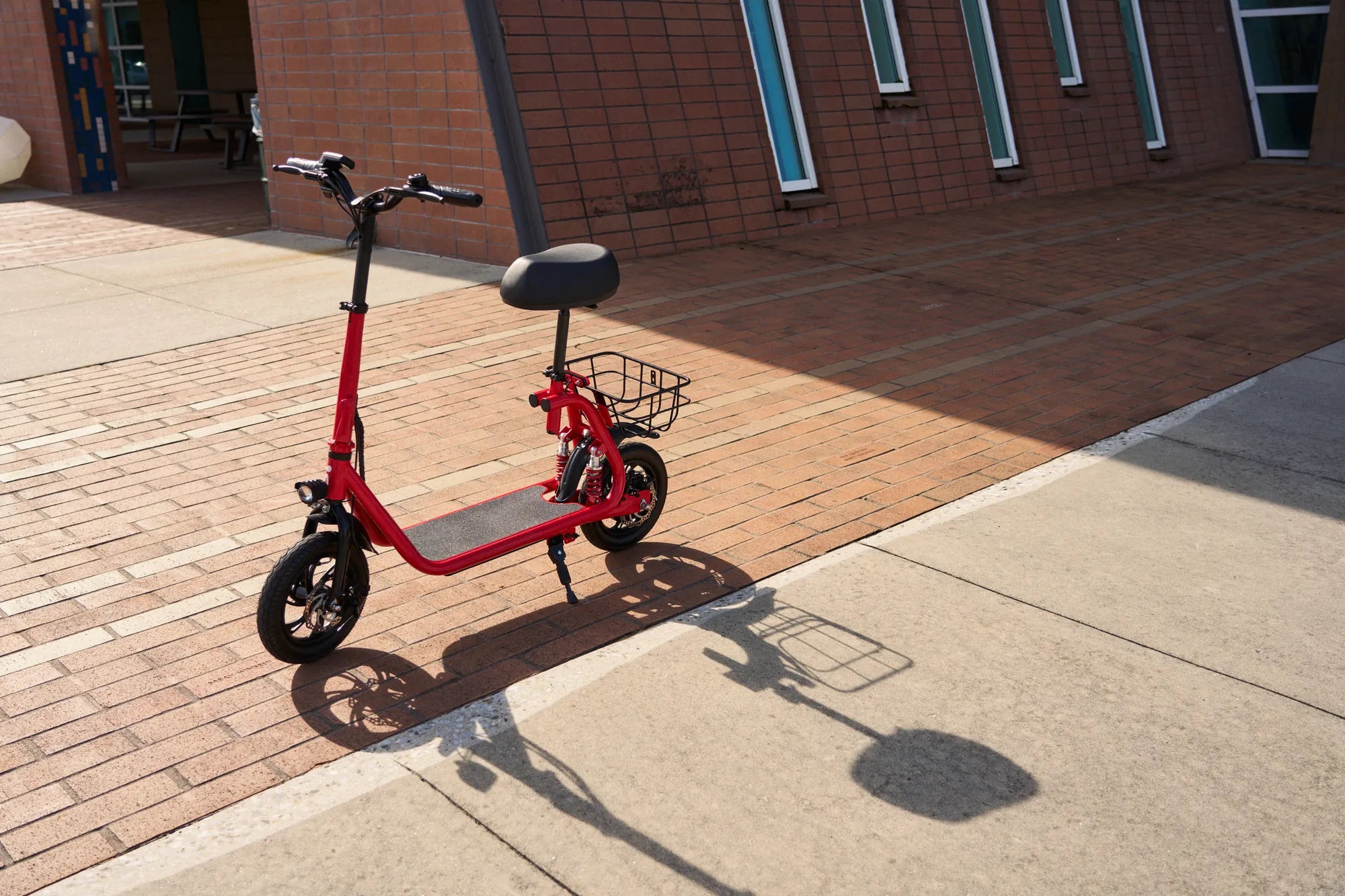
Introduction to 1000 Watt Scooter Motors
Electric scooter performance hinges directly on its motor. A 1000 watt scooter motor represents the definitive sweet spot in the personal electric vehicle market, offering a compelling fusion of acceleration, hill-climbing prowess, and practical range. This article provides a comprehensive, data-driven analysis of this power class, explaining its advantages, technical underpinnings, and ideal applications. You will learn how a 1000W motor transforms the riding experience, what supporting components are critical, and how to select a model that balances thrilling performance with everyday reliability and safety.
Why Power Matters: The 1000W Advantage
Motor wattage is a direct indicator of potential power output. While entry-level commuter scooters often use 350W or 500W motors, a 1000 watt scooter motor delivers a substantial performance leap. This increase translates to more torque for acceleration, greater thermal capacity for sustained power, and enhanced capability across diverse terrains. The 1000W class sits strategically between basic commuter and extreme performance models, providing ample power for most riders without the excessive weight, cost, and range penalties of ultra-high-wattage systems.
For the urban rider, this means confidently merging with traffic from a stoplight. For the suburban explorer, it means tackling that steep hill on the way home without a drastic speed drop. The 1000 watt scooter motor is engineered for those who refuse to compromise. It delivers the power needed for real-world conditions where gradients, headwinds, and payloads are constant variables, not theoretical ideals.
Compared to a 500W motor, a 1000W unit typically offers nearly double the hill-climbing ability and a 30-50% increase in top speed. Conversely, compared to a 1500W or 2000W motor, it maintains far better energy efficiency during typical cruising, preserving battery range. This balance makes it the most versatile and widely applicable power rating for adults seeking a primary transportation device.
Conquering Urban Terrain: Hills, Acceleration, and Traffic
City riding is a dynamic challenge of stop-and-go traffic, intersections, and unexpected inclines. A 1000 watt scooter motor excels here. Its high torque output enables rapid acceleration from zero, allowing you to safely clear an intersection or move with the flow of traffic. This acceleration is not just about thrill; it's a critical safety feature, enabling predictable and controlled maneuvers.
Hill climbing is where the 1000W advantage becomes undeniable. While a 500W motor may struggle on a 10% grade, slowing to a crawl, a quality 1000W motor can maintain 15-18 mph on the same incline with a 180 lb rider. This capability opens up more routes and eliminates the anxiety of encountering a steep street. The motor's power reserve also means you can carry a backpack or a bag of groceries without a significant performance degradation.
Beyond the Pavement: Light Trail and Variable Surface Capability
The versatility of a 1000 watt scooter motor extends beyond smooth asphalt. When paired with appropriate pneumatic tires and a suspension system, it empowers light off-road and mixed-surface exploration. This motor provides the necessary torque to navigate gravel paths, compact dirt trails, grassy fields, and uneven pavement that would stall or overheat a lower-powered unit.
This capability transforms the scooter from a pure commuter tool into a recreational vehicle for weekend adventures. The key is sustained power delivery. The motor's robust design can handle the variable loads of off-road traction without overheating, provided the scooter's overall build quality supports such use. It’s the ideal powerplant for riders who encounter a variety of surfaces on their daily route or who seek to explore park paths and light trails.
Efficiency and Range: The Smart Power Balance
A common misconception is that higher wattage always equates to shorter range. While maximum power draw is higher, a 1000 watt scooter motor operates with remarkable efficiency at cruising speeds. Once at a steady pace on flat ground, the motor may only draw 250-400 watts to maintain speed, similar to a lower-powered model working harder.
The range benefit comes from the reduced strain. Because the motor isn't operating near its limit during normal cruising, it runs cooler and more efficiently. Furthermore, the quick acceleration gets you to cruising speed faster, allowing the system to settle into its most efficient power band for a longer portion of your ride. This intelligent balance means you can enjoy powerful performance without sacrificing the practical range needed for a 10-15 mile commute.
Key Specifications and What to Look For
The motor's wattage is the headline, but true performance is defined by a symphony of specifications. Understanding these will help you discern between a genuinely capable 1000W scooter and one that may overpromise. The motor does not work in isolation; its potential is unlocked or limited by the components around it.
First, consider the nominal and peak power ratings. A 1000 watt scooter motor is typically a nominal (sustained) rating. The peak power, often 1200W to 1600W, is the maximum short-term output available for several seconds during intense acceleration or hill climbing. A higher peak power indicates a stronger performance envelope. Secondly, voltage is crucial. Most quality 1000W scooters operate on 48V or 52V systems, not 36V. Higher voltage allows the same power (watts) to be achieved with lower current (amps), improving efficiency and reducing heat buildup in the wiring and controller.
Motor Types: Hub Drive vs. Chain Drive, and Gear Systems
Most modern electric scooters use hub motors integrated into one or both wheels. A 1000 watt scooter motor in a hub configuration can be direct-drive or geared. Direct-drive hub motors are simple and durable with fewer moving parts, offering smooth operation and regenerative braking. They can be slightly less efficient at low speeds and heavier.
Geared hub motors use an internal planetary gear reduction. This makes them lighter and provides higher torque at the wheel for better acceleration and hill climbing from a standstill, though they may produce a faint whirring sound. Some performance-oriented scooters may use a traditional chain drive, which allows for external gearing and can be highly efficient, but requires more maintenance (chain lubrication, tensioning). For most riders seeking a balance of power and low maintenance, a robust geared or direct-drive hub motor is the preferred choice.
The Supporting Cast: Battery, Controller, and Tires
The battery is the fuel tank. A 1000W motor paired with a small battery will deliver impressive but short-lived performance. Look for a battery capacity of at least 15Ah (at 48V or 52V) for a realistic 15-25 mile range. The battery's quality is paramount; it must deliver high, stable current. This is where brands like Gyroor differentiate themselves by using UL-certified battery packs, ensuring safety and longevity over hundreds of charge cycles.
The electronic speed controller (ESC) is the brain. It regulates power from the battery to the motor. A high-quality controller with sufficient amperage rating (e.g., 25-35A) is essential to deliver the motor's full potential without overheating. Finally, tires are the critical interface. For a 1000W scooter, 10-inch pneumatic (air-filled) tires are highly recommended over solid tires. They provide essential shock absorption, better traction, and a safer, more comfortable ride, especially at higher speeds and on variable surfaces.
Gyroor's 1000W Philosophy: Power Meets Trust
Implementing a powerful motor requires an engineering philosophy that prioritizes holistic system integrity. Gyroor integrates 1000 watt scooter motor technology into models designed for real-world durability and rider safety. The power is not an isolated feature but part of a carefully engineered ecosystem where performance is balanced with reliability, backed by a proven track record with over 100,000 riders.
This approach means every component, from the motor windings to the battery management system, is selected and tested to work in harmony. The result is a scooter that delivers consistent power day after day, without the reliability issues that can plague poorly integrated high-wattage systems. For the rider, this translates to confidence—knowing the vehicle will perform predictably under load, whether climbing a bridge or navigating a busy street.
UL-Certified Power: Safety as a Foundation
The core of Gyroor's safety-first approach is the use of UL-certified lithium-ion battery packs across its lineup, including models featuring a 1000 watt scooter motor. This certification is not merely a marketing term; it signifies the battery has passed rigorous independent testing for electrical, mechanical, and environmental safety. For a high-power system, this is non-negotiable.
A UL-certified battery ensures stable power delivery under high current draw, preventing voltage sag that can damage the motor or controller. More importantly, it drastically reduces the risk of thermal runaway—a potential cause of battery fires. This certification, coupled with robust battery management systems (BMS), protects the investment and, most critically, the rider. It's the essential foundation that allows you to enjoy the 1000W motor's performance with peace of mind.
Built for the Real World: IPX5 and Warranty Assurance
Power is useless if the scooter can't handle everyday conditions. Gyroor builds its 1000W-capable scooters with IPX5 water-resistant ratings. This engineering standard means the critical electrical components, including the motor housing and deck electronics, are protected against low-pressure water jets from any direction. In practical terms, you can confidently ride through puddles, in light rain, or on wet roads without immediate concern for water damage.
This durability is backed by a comprehensive 1-year warranty on the vehicle, covering the motor, battery, controller, and frame. This warranty is a testament to the confidence in their build quality and component integration. For a rider investing in a 1000 watt scooter motor, this warranty provides long-term assurance that the powertrain is built to last, protecting against defects in materials and workmanship for a full year of ownership.
1000W Scooter Comparison: Use Cases and Rider Profiles
Choosing the right scooter power level depends entirely on your needs, weight, and terrain. The following table provides a clear, data-driven comparison to help you understand where the 1000W class excels.
| Specification / Use Case | Commuter Class (500W) | Performance Class (1000W) | Extreme Performance (1500W+) |
|---|---|---|---|
| Typical Top Speed | 18-22 mph | 24-28 mph | 30-40+ mph |
| Hill Climbing (10% Grade) | Slows significantly (8-12 mph) | Maintains good speed (15-18 mph) | Climbs aggressively (20+ mph) |
| Rider Weight Capacity | Up to 220 lbs | Up to 265-285 lbs | Up to 330 lbs |
| Ideal Terrain | Flat to moderate urban streets | Hilly cities, light trails, variable surfaces | Steep off-road, high-speed asphalt |
| Range Efficiency | High (best for pure range) | Very Good (balanced power/range) | Moderate (power prioritizes range) |
| Best For Rider Profile | Lightweight commuter, short flat trips, first-time buyer. | Average/heavy commuter, hilly routes, weekend explorer seeking versatility. | Experienced enthusiast, off-road focused, maximum speed seeker. |
As the table illustrates, the 1000 watt scooter motor is the quintessential choice for the rider who demands more. It's for the commuter with a longer or hillier route, the rider who carries a laptop and groceries, or the individual who values the ability to explore beyond perfect pavement on weekends. It offers a substantial upgrade from entry-level models without venturing into the specialized, heavier, and less efficient realm of extreme performance scooters.
Frequently Asked Questions (FAQ)
Q: How fast does a 1000 watt electric scooter go?
A: Under optimal conditions (flat terrain, average rider weight), a quality 1000W electric scooter typically reaches a top speed of 24 to 28 mph (39 to 45 km/h). Actual speed can be influenced by rider weight, wind, tire pressure, and battery charge level.
Q: Is a 1000W scooter legal for road and bike path use?
A> Laws vary significantly by country, state, and municipality. In many U.S. jurisdictions, electric scooters with a top speed under 20 mph are allowed on bike paths, while those capable of 20-28 mph may be restricted to roads or have specific class designations (often aligning with Class 3 e-bike rules). It is the rider's responsibility to check and comply with all local regulations regarding speed limits, helmet laws, and permitted riding areas.
Q: Can a 1000W scooter handle a heavy rider or very steep hills?
A: Yes, this is a primary strength of the 1000W class. A well-built scooter with a 1000 watt scooter motor can typically support riders up to 265-285 lbs (120-130 kg) and tackle hills with a 15-20% grade while maintaining a reasonable speed. Performance will decrease with extreme weight or incline, but it remains vastly superior to 500W models.
Q: How does motor wattage affect battery range?
A: Wattage indicates power potential, not constant consumption. A 1000W motor will use more energy than a 500W motor during hard acceleration or steep climbing. However, at a steady cruising speed on flat ground, both might draw similar power. Therefore, range impact is most tied to riding style and terrain. A larger battery capacity (measured in Amp-hours, Ah) is the key to maintaining good range with a powerful motor.
Q: What maintenance does a 1000W scooter motor require?
A: Modern hub motors are largely maintenance-free. Primary care involves keeping the scooter clean, ensuring tire pressure is correct (for pneumatic tires), and periodically checking that all bolts, especially around the wheel axles, are tight. For chain-drive models, regular chain lubrication and tension adjustment are necessary. The most important maintenance is for the battery: avoiding full discharges, not leaving it at 100% charge for extended periods, and storing it in a cool, dry place.
Finding Your Power Match
The 1000 watt scooter motor stands as the benchmark for versatile, adult-oriented electric mobility. It delivers the acceleration for urban safety, the torque for confident hill climbing, and the robustness for light adventure—all while maintaining a sensible balance with battery efficiency. This power class is engineered for the rider who views their scooter not as a toy, but as a legitimate tool for daily transportation and recreation.
Choosing a scooter with this capability requires looking beyond the wattage number alone. The integration of a high-quality UL-certified battery, a robust controller, durable tires, and protective features like IPX5 water resistance is what separates a truly reliable performance vehicle from a potentially problematic one. Brands that prioritize this holistic engineering, such as Gyroor with its proven track record and comprehensive warranty, offer a trustworthy path to unlocking the full potential of a 1000W motor.
Ready to experience the perfect balance of power, range, and reliability? Explore Gyroor's lineup of high-performance electric scooters engineered around capable and safe 1000W motor systems. Browse the full Gyroor collection at gyroorboard.com to find the model that matches your ambition and transforms your daily commute into an exhilarating journey.
Cheapest 50 mph Scooter: Finding True Value in High-Speed Electric Rides
Lightest Single Speed Bike: The Ultimate Guide to Minimalist Weight