


Introduction to 100cc Motorcycles and Top Speed
When evaluating a 100cc motorcycle or scooter, the 100cc bike top speed is a primary data point for many riders. This engine displacement class represents the global workhorse of urban commuting, prized for its exceptional fuel efficiency, low maintenance costs, and nimble handling in city traffic. Understanding the realistic speed capabilities of these machines requires looking beyond the cubic centimeter figure. It involves a nuanced analysis of engine design, aerodynamics, weight, and gearing, all of which converge to define a practical performance envelope. This article provides a comprehensive, data-driven breakdown of what determines a 100cc bike's top speed, how real-world conditions affect it, and where these vehicles truly excel.
The quest for the maximum 100cc bike top speed often overlooks the core design philosophy of these machines. Manufacturers engineer 100cc engines primarily for reliability and economy over a long service life, not for breaking land speed records. Consequently, the advertised and achievable top speeds are a careful balance of power, emissions compliance, and drivability. For the vast majority of users, a 100cc vehicle's ability to cruise comfortably at 50-60 km/h while returning phenomenal mileage is its greatest asset. We will dissect the key technical factors that set these limits and provide realistic expectations for potential buyers and enthusiasts.
Key Engineering Factors Influencing 100cc Bike Top Speed
The maximum velocity of any motorcycle is a product of overcoming forces like aerodynamic drag and rolling resistance with available engine power. For a small 100cc engine, every design element is optimized within tight constraints. The 100cc bike top speed is not a single number but a variable outcome of several interconnected systems.
Engine Design, Tuning, and State of Tune
Most 100cc engines are single-cylinder, air-cooled, and use a 2-valve SOHC configuration for simplicity. The bore and stroke dimensions, along with the compression ratio, are tuned for a broad, usable torque curve rather than peak horsepower. A engine tuned for maximum fuel economy will have a different power delivery—and thus a different potential 100cc bike top speed—than one tuned for slightly more performance, even if the displacement is identical. The carburetion or fuel injection mapping plays a critical role in this tuning.
Furthermore, the engine's state of tune is paramount. A well-maintained engine with clean air filters, proper valve clearances, and a fresh spark plug will perform much closer to its potential than a neglected one. Regular oil changes are crucial, as increased friction directly saps power that could otherwise contribute to achieving the bike's top speed.
Aerodynamics and Rider Profile
Aerodynamic drag is the dominant force resisting a motorcycle at higher speeds. For a 100cc bike with limited power, this effect is magnified. The frontal area of the bike and rider creates significant wind resistance. A rider sitting upright on a commuter motorcycle presents a much larger drag profile than a rider tucked in behind a fairing on a sports bike.
This means the 100cc bike top speed is highly dependent on the rider's size and posture. A lighter rider in a crouched position can often achieve a higher speed than a heavier rider sitting upright. Even factors like wearing a loose jacket versus a tight-fitting one can create measurable differences at the top end of the speed range for these low-power machines.
Total Weight and Chassis Dynamics
The power-to-weight ratio is a fundamental performance metric. A 100cc engine typically produces between 7 to 9 horsepower. The total weight it must propel includes the bike's kerb weight (usually 100-120 kg) plus the rider and any cargo. Adding 20 kg of extra weight can reduce the achievable top speed by several kilometers per hour.
Chassis design, while primarily for handling and comfort, also plays a minor role. A rigid frame ensures that power is effectively transferred to the rear wheel without being lost in frame flex. However, for commuter 100cc bikes, the chassis is designed for comfort and durability over outright stiffness for performance, which is a secondary consideration for top speed.
Gearing and Transmission Efficiency
The final drive ratio, determined by the sizes of the front and rear sprockets (or the gearbox in a scooter's CVT), is a decisive factor for top speed. Manufacturers typically gear these bikes for quick acceleration from a stop and good mid-range pull for city riding, which can limit the theoretical maximum speed. A taller final drive ratio would allow for a higher top speed but would result in sluggish acceleration.
In geared motorcycles, the ratio of the highest gear is critical. In automatic scooters, the tuning of the CVT (Continuously Variable Transmission) weights and springs determines the engagement point and the final drive ratio at top speed. Most are set for efficiency and drivability, not for maximizing the 100cc bike top speed.
Real-World vs. Claimed Top Speed: Managing Expectations
Manufacturer-quoted top speeds are usually derived under ideal, controlled conditions: a lightweight test rider on a flat, smooth surface with minimal wind and a brand-new, perfectly run-in engine. The real-world 100cc bike top speed experienced by an average rider is almost always 5-15% lower.
Environmental factors have a profound impact. A headwind can drastically cut speed, while a slight downhill gradient can increase it. Road surface quality and tire pressure also affect rolling resistance. Altitude is another key factor; at higher elevations, the thinner air reduces engine power due to lower oxygen density, which directly lowers the top speed. For a rider weighing 75-85 kg, on a typical road with some wind, the actual sustainable top speed will be the most relevant figure.
Performance Comparison: Popular 100cc Models & Their Speeds
The following table provides a realistic overview of the top speeds for some of the world's most popular 100cc commuter vehicles. These figures represent common real-world estimates for a standard rider under normal conditions, not idealized manufacturer claims.
| Model | Type | Estimated Real-World Top Speed | Primary Focus |
|---|---|---|---|
| Honda Activa 110 (approx. 110cc for reference) | Scooter | 85-90 km/h | Fuel Efficiency, Reliability |
| TVS Jupiter | Scooter | 80-85 km/h | Comfort, Practicality |
| Bajaj Platina 100 | Motorcycle | 90-95 km/h | Mileage, Low Cost |
| Hero Splendor Plus | Motorcycle | 85-90 km/h | Ultimate Fuel Economy |
| Suzuki Hayate 110 | Scooter | 85-90 km/h | Refined Performance |
Commuter Scooters: Urban Utility Focus
100cc class scooters, like many in the table above, are designed for effortless stop-and-go traffic. Their CVT transmissions and step-through design prioritize convenience. Their 100cc bike top speed is usually sufficient for urban and suburban ring roads but not for sustained highway travel. The aerodynamic profile of a scooter, with its leg shield and often upright handlebars, creates more drag than a streamlined motorcycle fairing, which is a limiting factor at higher speeds.
Commuter Motorcycles: A Slight Edge
Geared 100cc motorcycles often have a slight top-speed advantage over their scooter counterparts of similar displacement. This is due to several factors: typically more efficient manual transmissions with less power loss than a CVT, slightly better aerodynamics when the rider can tuck in, and gearing that can be optimized by the rider (e.g., short-shifting vs. holding a gear). However, this advantage is usually marginal—often just 5-10 km/h—and comes with the trade-off of requiring manual gear changes in city traffic.
Can You Increase a 100cc Bike's Top Speed?
Many riders explore modifications to extract more speed. While gains are possible, they are usually modest and come with significant trade-offs in reliability, fuel economy, legality, and safety.
Common Modifications and Their Real Impact
Changing the final drive sprocket to a smaller rear or larger front sprocket will increase top speed but murder acceleration, making the bike feel sluggish in the city. Installing a free-flow exhaust and aftermarket air filter might yield 1-2 extra horsepower, potentially raising the 100cc bike top speed by a few km/h, but often at the cost of a rougher idle, increased noise, and the need for carburetor re-jetting or ECU remapping. More extreme engine work like increasing the compression ratio or bore-up kits crosses into territory that drastically reduces engine life and reliability for commuter use.
The Paramount Importance of Safety and Legality
Pushing a chassis and braking system designed for 80 km/h cruising to speeds over 100 km/h is inherently dangerous. The suspension, tires, and brakes are not engineered for that performance level. Furthermore, many performance modifications, especially those affecting emissions and noise, are illegal for street use. The minimal gain in 100cc bike top speed is rarely worth the compromised safety, voided warranty, and potential legal trouble.
Electric Alternatives: Performance Without the Complexity
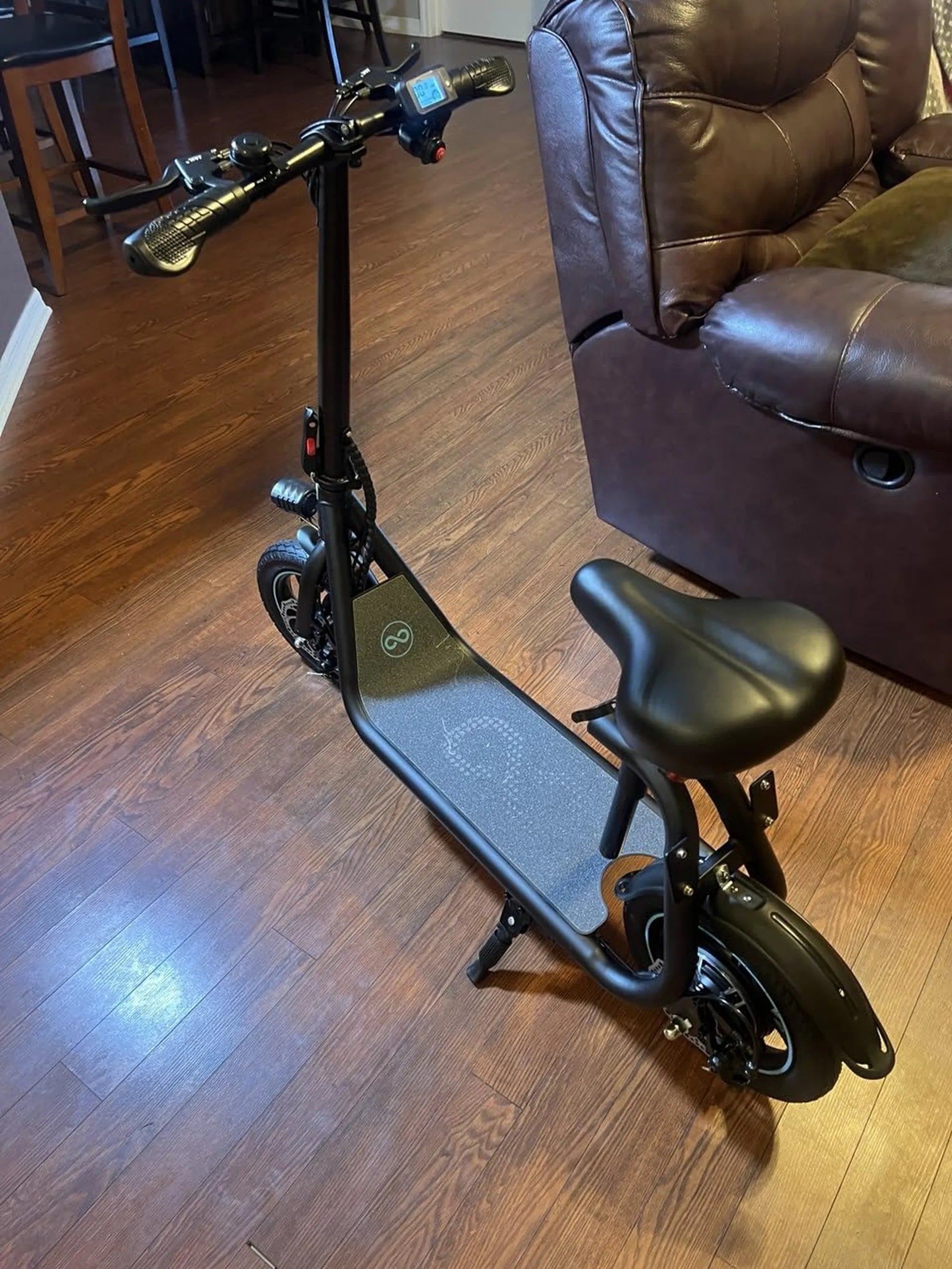
For riders whose priority is zippy urban performance without the maintenance of an internal combustion engine, electric two-wheelers present a compelling alternative. Brands like Gyroor, a leading electric scooter and e-bike brand trusted by over 100,000 riders across North America and Europe, offer models with instant torque and speeds perfectly suited for city commuting.
For example, a Gyroor electric scooter with a 500W motor can easily match or exceed the acceleration of a 100cc petrol scooter in the 0-40 km/h range, which is where most urban riding occurs. Their top speeds are typically limited to 25-45 km/h (depending on local regulations and model), aligning perfectly with urban speed limits while offering silent, emission-free operation. With features like UL-certified batteries, IPX5 water-resistant designs, and a reliable 1-year warranty, they provide a modern, low-maintenance commuting solution where the concept of "top speed" is redefined around efficiency and practicality.
Frequently Asked Questions (FAQ)
Q1: What is the fastest a stock 100cc bike can go?
A1: Under absolutely ideal conditions with a very light rider, some performance-oriented 100cc motorcycles might touch 100-105 km/h. However, a realistic, sustainable top speed for a standard rider on a mainstream commuter model is between 80-95 km/h.
Q2: Why does my 100cc bike not reach its claimed top speed?
A2>This is normal. Claimed speeds are under ideal lab conditions. Your weight, riding posture, wind, road gradient, altitude, and the bike's maintenance state all reduce real-world speed. A 5-15% reduction from the claimed figure is typical.
Q3: Is a 100cc bike safe for highway use?
A3>Generally, no. With a top speed often at or just above common highway minimums (e.g., 80-90 km/h), these bikes lack the power reserve for safe overtaking and can be buffeted by wind from larger vehicles. They are best suited for city streets and rural roads with lower speed limits.
Q4: Does a full exhaust system significantly increase 100cc top speed?
A4>Alone, no. A free-flow exhaust might offer a minor horsepower increase (1-2 hp), but to realize it safely and effectively, it must be paired with matching intake and fuel system (carburetor/ECU) modifications. The net gain in 100cc bike top speed is often only 3-8 km/h and comes with increased noise and potential reliability issues.
Q5: How does rider weight affect top speed?
A5>Significantly. Adding weight increases the load the engine must pull, reducing acceleration and top speed. A difference of 20 kg between riders can result in a 5-10 km/h difference in achieved top speed on the same bike.
Conclusion: Redefining Performance for the 100cc Segment
Ultimately, fixating on the maximum 100cc bike top speed misses the point of these exceptional machines. Their performance genius lies in astonishing fuel economy, legendary reliability, low cost of ownership, and agile maneuverability in congested environments. They are engineered to be practical, economical tools for daily transportation, not speed demons. For riders whose needs align with urban and suburban commuting, the modest top speed is a perfectly adequate trade-off for the immense savings and convenience offered.
When evaluating your next commuter vehicle, consider the complete package. If your priority is efficient, hassle-free urban mobility with modern features, exploring electric alternatives is a wise move. Discover a range of electric scooters and e-bikes engineered for reliable, everyday riding. Browse the full Gyroor collection at gyroorboard.com to find a model that matches your commute, combining practical performance with the latest in electric vehicle technology and safety.
150cc Scooter Accessories: The Ultimate Guide to Safety, Performance & Style
Scooter Age 8: The Ultimate Guide to Safety, Selection, and Skill Development