



Introduction to 125cc Motorcycle Performance
What is the real top speed of a 125cc bike? This is one of the most common questions from new riders and commuters considering this accessible category. A 125cc motorcycle represents the gateway to two-wheeled freedom in many regions, offering a perfect balance of learner-legal compliance, exceptional fuel economy, and manageable power. However, the advertised 'top speed' is often a theoretical maximum, influenced by a complex interplay of engineering, physics, and real-world conditions.
This article will dissect the 125 cc bike top speed phenomenon with factual, data-driven analysis. You will learn the key mechanical factors that determine velocity, see real-world tested figures for popular models, and understand the practical and legal realities of riding a 125cc machine at its limit. We move beyond manufacturer claims to provide a clear picture of what you can realistically expect from these efficient and agile vehicles.
Key Factors Determining 125cc Top Speed
The engine's displacement is just the starting point. Achieving maximum velocity on a 125cc platform is a battle against physics, where every design choice and external condition plays a critical role. The final 125 cc bike top speed figure is the result of optimizing power output against the relentless forces of aerodynamic drag and mechanical friction.
Understanding these variables explains why two bikes with identical engine sizes can have significantly different performance ceilings. It's a holistic engineering challenge where weight, shape, and gearing are as important as horsepower.
Engine Type and Tuning (2-Stroke vs. 4-Stroke)
The fundamental architecture of the engine sets the performance baseline. Traditional 2-stroke engines, now less common in road-legal models due to emissions regulations, produce power with every revolution of the crankshaft. This design can yield a higher power-to-weight ratio, allowing some high-strung 2-stroke 125cc bikes to achieve top speeds approaching 80-85 mph (129-137 km/h), but often at the expense of fuel economy and a narrow power band.
Modern 125cc motorcycles are overwhelmingly 4-stroke. These engines are more fuel-efficient, torquier at lower RPMs, and cleaner. Their tuning is a compromise between reliability, emissions, and performance. A sport-oriented 4-stroke 125cc engine with a high-revving design and sophisticated fuel injection will push closer to the class limit, while a commuter-focused engine prioritizes low-end response and economy, capping the ultimate 125 cc bike top speed.
Aerodynamics and Rider Profile
As speed increases, aerodynamic drag becomes the dominant force resisting acceleration. This is why sportbikes with full fairings and windshields consistently post higher top speeds than naked bikes with the same engine. The fairing manages airflow, reducing the frontal area and turbulence that the engine must overcome.
The rider is the largest aerodynamic component. An upright riding posture creates a massive wall of drag. Simply tucking in behind the screen can add 5-10 mph to a 125cc bike's top speed in ideal conditions. This factor alone creates a significant variance in reported speeds, as a lighter rider who can tuck effectively will often outperform a heavier rider in an upright position on the same machine.
Weight: Bike and Payload
Newton's second law (F=ma) is unforgiving for small-displacement bikes. The total mass the engine must accelerate—comprising the motorcycle's dry weight, rider, passenger, and cargo—directly impacts its ability to reach and maintain top speed. A difference of 20 kg (44 lbs) can translate to a 3-5 mph loss in maximum velocity.
Manufacturers of performance-oriented 125cc models aggressively minimize chassis weight using aluminum frames and lightweight components. This focus on mass reduction is a primary reason a sport 125cc bike can outperform a heavier commuter scooter with a similar power output, demonstrating that the power-to-weight ratio is more critical than raw horsepower alone.
Gearing and Final Drive
The transmission and final drive act as a multiplier between engine revolutions and wheel speed. Gearing is a factory-set compromise. Short, close ratios favor acceleration, causing the engine to hit its rev limiter quickly in top gear and limiting top speed. Taller gearing allows higher theoretical speed, but can make the bike feel sluggish if the engine lacks the power to pull the gear effectively.
Many riders mistakenly believe changing the front or rear sprocket size is a simple speed fix. A larger rear sprocket (or smaller front) improves acceleration but lowers top speed, while a smaller rear sprocket (or larger front) can potentially increase top speed, but only if the engine has enough power to overcome the taller gearing and drag at high RPM—a big 'if' on a restricted 125cc machine.
Real-World Top Speed Data: Sport, Naked, and Commuter Models
Manufacturer claims often cite optimistic figures achieved under perfect laboratory conditions. Real-world data, gathered from GPS testing by reputable publications, provides a more practical benchmark. The following analysis categorizes bikes by their design philosophy, which directly correlates to their performance envelope.
It's important to note that these figures represent the potential of a well-maintained, run-in machine with a skilled, lightweight rider in favorable conditions. Your individual experience may vary based on the factors previously discussed.
Sport-Style Motorcycles (e.g., Yamaha YZF-R125, Honda CBR125R)
These are the peak performers of the 125cc class. Designed with full fairings, aggressive riding ergonomics that encourage tucking, and engines tuned for high-RPM power, they are built to maximize velocity. The Yamaha YZF-R125, with its liquid-cooled, four-valve engine, is frequently cited as one of the fastest production 125cc bikes available.
Real-world GPS tests consistently show these sport models achieving top speeds between 70 and 80 mph (113-129 km/h). The Yamaha YZF-R125 often achieves 75-78 mph, while the Honda CBR125R typically reaches 70-74 mph. This class offers the highest 125 cc bike top speed for those seeking a sportbike experience on a learner-legal platform.
Standard/Naked Bikes (e.g., KTM 125 Duke, Suzuki GSX-S125)
Naked or standard bikes prioritize urban agility, torque, and style over outright top speed. Their upright handlebars and lack of fairings increase aerodynamic drag significantly. However, they often share high-performance engines with their sportier siblings.
The KTM 125 Duke, with its potent single-cylinder engine and lightweight chassis, is a standout. It can achieve approximately 68-73 mph (110-118 km/h). The Suzuki GSX-S125 performs similarly. While their top speed is 5-10 mph lower than fully-faired sport bikes, they offer superior low-end and mid-range punch for city riding, where that performance is more usable.
Commuters and Scooters (e.g., Honda PCX125, Yamaha NMAX 125)
This category prioritizes fuel economy, storage, comfort, and ease of use. Equipped with Continuously Variable Transmissions (CVT) and practical, upright bodywork, they are not designed for high-speed runs. Their engine tuning focuses on smooth, efficient acceleration from a stop.
Consequently, the realistic 125 cc bike top speed for a modern commuter scooter like the Honda PCX125 or Yamaha NMAX 125 ranges from 55 to 65 mph (89-105 km/h). This is more than adequate for urban and suburban commuting but places them at the lower end of the 125cc performance spectrum. Their strength lies in phenomenal fuel efficiency and practicality, not top-speed bragging rights.
| Bike Category | Example Model | Real-World Top Speed (mph/km/h) | Primary Design Focus |
|---|---|---|---|
| Sport Motorcycle | Yamaha YZF-R125 | 75-78 mph / 121-126 km/h | Maximum Velocity, Aerodynamics |
| Naked/Standard Bike | KTM 125 Duke | 68-73 mph / 110-118 km/h | Urban Torque, Agility |
| Commuter Scooter | Honda PCX125 | 60-65 mph / 97-105 km/h | Fuel Economy, Practicality |
The Legal and Practical Context of 125cc Speeds
Chasing the highest possible 125 cc bike top speed often overlooks the regulatory and safety framework governing these machines. In most markets, 125cc motorcycles exist within specific legal categories that define their purpose and limit their performance, making outright speed a secondary consideration for manufacturers and a potentially risky pursuit for riders.
Understanding this context is crucial for setting realistic expectations and ensuring safe, legal operation. The design of these bikes is inherently constrained by laws aimed at new riders.
Licensing and Power Restrictions (A1 License / LAMS)
In the UK and European Union, the A1 motorcycle license is available to riders aged 17 and over. It restricts riders to motorcycles with an engine capacity up to 125cc and a power output not exceeding 11kW (approximately 14.7 horsepower). This power ceiling, not just displacement, creates a hard performance limit for all road-legal 125cc bikes sold in these regions.
Similarly, countries like Australia and New Zealand operate a Learner Approved Motorcycle Scheme (LAMS), which includes power-to-weight restrictions. These regulations ensure that 125cc motorcycles remain accessible and manageable for learners, directly influencing engine tuning and the achievable 125 cc bike top speed. Manufacturers design bikes to maximize performance within this 11kW envelope.
Safety Considerations at High Speed
Pushing a lightweight 125cc motorcycle to its maximum speed requires careful consideration of safety. The short wheelbase and light weight that make these bikes so agile in the city can reduce high-speed stability, especially in crosswinds or on uneven surfaces. The braking systems, while adequate for normal riding, have less margin for error at 70+ mph.
Tire size and quality also play a role. Smaller tires can feel less planted at high speeds compared to those on larger motorcycles. Attempting top-speed runs should only be done in controlled, legal environments like closed circuits, not on public roads where traffic, obstacles, and variable conditions create immense risk.
The Commuter's Reality: Efficiency Over Max Velocity
For the vast majority of 125cc owners, the bike is a tool for commuting and urban mobility. In this context, metrics like acceleration from 0-30 mph, fuel economy, maneuverability, and comfort are infinitely more valuable than a top speed that may only be reachable on a rare, long downhill stretch with a tailwind.
A bike that delivers strong low-end torque for quick getaways from traffic lights will feel faster and more responsive in daily use than one tuned for a slightly higher peak speed. This is why many riders prefer the character of a naked bike or even a scooter for city duties—their performance is tailored to the real-world environment where they are most used.
Maximizing and Maintaining Your 125cc's Performance
To ensure your 125cc bike delivers the performance it was designed for, consistent maintenance is non-negotiable. Unlike larger bikes where a minor issue may be masked by abundant power, a small problem on a 125cc machine can have a pronounced effect on its ability to reach its optimal 125 cc bike top speed and overall responsiveness.
The goal is reliable, factory-spec performance. The following practices will help you achieve that, focusing on legal and mechanical integrity over risky modifications.
Essential Maintenance for Peak Performance
Neglect is the enemy of performance. A clogged air filter strangles the engine, reducing power. Incorrect tire pressures increase rolling resistance. Old, degraded engine oil increases internal friction. A loose or dry chain can sap several percent of the engine's power before it even reaches the rear wheel.
Follow the manufacturer's service schedule meticulously. Key items for maintaining performance include:
- Air Filter: Clean or replace as specified.
- Tire Pressure: Check weekly; under-inflated tires are a major power drain.
- Chain: Maintain correct tension and lubricate regularly.
- Engine Oil: Use the recommended grade and change it on time.
- Spark Plug: Replace at the recommended interval to ensure efficient combustion.
Legal "Tuning": Focus on the Rider
The most effective and free performance modification is skill development. Learning to use the gearbox optimally—keeping the engine in its power band—and practicing smooth, precise throttle control will make the bike feel faster and more efficient. Advanced riding courses can teach these techniques.
You can also reduce aerodynamic drag legally. Ensure luggage is streamlined and securely mounted. Wear close-fitting, aerodynamic riding gear. Adopting a more tucked riding posture on appropriate roads can help the engine overcome drag more efficiently, potentially allowing you to reach the bike's maximum designed 125 cc bike top speed more easily.
The Risks of Engine Modifications and Tuning
While the aftermarket offers exhaust systems, ECU re-flashes, and big-bore kits, these modifications come with severe downsides for a 125cc bike. A loud exhaust may offer minimal power gains while making the bike illegal for road use due to noise and emissions non-compliance. An ECU tune that removes power restrictions will likely make the bike illegal for a learner or A1 license holder.
More critically, such modifications often push components beyond their design limits, leading to premature engine wear or failure. They will almost certainly void the manufacturer's warranty and can drastically increase insurance premiums or invalidate coverage entirely. The small potential gain in 125 cc bike top speed is rarely worth these significant financial, legal, and reliability risks.
Electric Alternatives: Performance Without Combustion
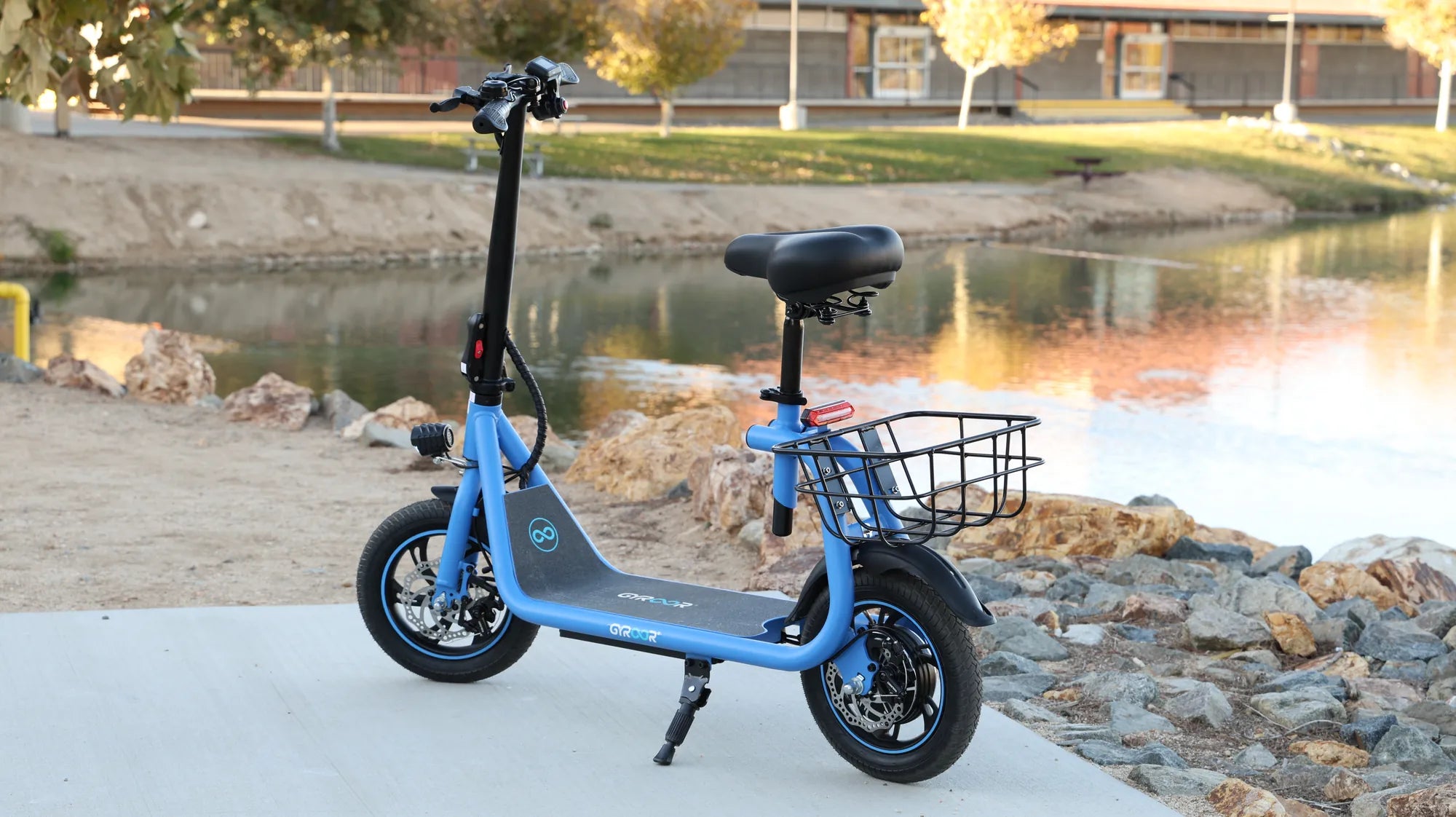
The conversation about small-displacement performance is evolving with the rise of electric two-wheelers. Brands like Gyroor are redefining urban mobility with electric scooters and e-bikes that offer compelling alternatives to 125cc petrol machines, particularly for city commuting.
While peak speed may differ, the instant torque delivery of an electric motor provides exhilarating acceleration from a stop—the sensation most associated with "speed" in urban environments. This shift in performance focus is key for commuters.
Instant Torque vs. Top Speed
A 125cc petrol bike must build revs to reach its power band. In contrast, a high-quality electric scooter delivers maximum torque from zero RPM. This means an electric model can often out-accelerate a 125cc scooter away from traffic lights up to 30 mph, making it feel remarkably quick in daily use, even if its top speed is electronically limited to comply with local regulations (e.g., 20 mph for Class 2 e-bikes, higher for certain e-scooters).
Gyroor's performance-focused electric scooters, for instance, are engineered for robust torque and reliable power delivery, using UL-certified battery packs tested for over 500 charge cycles. This ensures consistent performance throughout the battery's life, addressing a key concern for electric vehicle owners.
Defining "Performance" for the Urban Rider
For the urban commuter, performance metrics extend beyond top speed. They include:
- Acceleration 0-20 mph: Critical for merging and keeping up with city traffic.
- Hill Climb Ability: Electric motors excel here due to constant torque.
- Range and Efficiency: How far you can go reliably. Gyroor models with efficient motors and large batteries prioritize this.
- Low Maintenance: No oil, filters, spark plugs, or chain adjustments to sap time or performance.
- Reliability: Consistent operation in all weather. Gyroor's IPX5 water-resistant design ensures performance isn't compromised by rain.
Conclusion: Speed as One Part of the 125cc Experience
The pursuit of the ultimate 125 cc bike top speed is an interesting engineering discussion, but it captures only a fraction of this segment's appeal. The true strength of a 125cc motorcycle—or a modern electric alternative—lies in its holistic package: astonishing fuel efficiency (or low electricity costs), low insurance premiums, manageable power for skill development, and the sheer, unadulterated fun of riding a lightweight, agile machine.
When choosing your ride, consider your actual use case. If your commute involves high-speed highways, a 125cc petrol bike at its limit may be stressful. For city and suburban travel, a machine with strong low-end performance, whether a torquey naked bike or a responsive electric scooter, will deliver a more satisfying and usable experience daily. Prioritize build quality, reliability, and overall fit over a single top-speed figure.
Explore a different kind of efficient, torque-rich performance. Browse the full Gyroor collection of UL-certified electric scooters and e-bikes, trusted by over 100,000 riders, at gyroorboard.com to find the perfect electric companion for your urban journeys.
Frequently Asked Questions (FAQ)
What is the fastest 125cc motorcycle you can buy?
Among current, road-legal production models widely available in markets with A1 licensing, the Yamaha YZF-R125 is consistently tested as one of the fastest. In real-world conditions, it can achieve a GPS-verified top speed of approximately 75-78 mph (121-126 km/h), thanks to its fully-faired aerodynamic design and high-revving 4-stroke engine tuned to the 11kW power limit.
Can a 125cc bike go on the highway?
Legally, in most jurisdictions, if the motorcycle is capable of maintaining the minimum posted speed (often 45-50 mph), it is permitted. Practically, it is possible but can be demanding and is not generally recommended for extended travel. At sustained speeds of 65-70 mph, the engine will be at or near its maximum output, leaving little power reserve for passing or climbing grades, and the lightweight chassis can be buffeted by wind from larger vehicles.
How much does rider weight affect top speed?
The effect is significant on a low-power vehicle. As a rule of thumb, a difference of 20 kg (44 lbs) in total riding weight (rider + gear) can result in a 3-5 mph variation in maximum achievable top speed on a typical 125cc motorcycle. This is due to the increased mass the engine must accelerate and the increased rolling resistance.
Is it worth modifying a 125cc for more speed?
For the vast majority of riders, the answer is no. The performance gains from exhaust or ECU modifications are often minimal (1-3 mph), expensive, and come with severe drawbacks. These include voiding your warranty, potentially making the bike illegal for road use or your license class, increasing insurance costs, and risking engine reliability. For a safe, legal, and reliable ownership experience, we recommend maintaining a quality machine from a reputable brand as intended by its engineers.
How does an electric scooter's performance compare to a 125cc bike?
The comparison depends on the metric. A 125cc petrol bike will generally have a higher top speed. However, a performance-oriented electric scooter like those from Gyroor will typically deliver faster acceleration from 0-20 mph due to instant electric torque, which is more valuable in city traffic. Electric models also offer near-silent operation, zero emissions, and significantly lower maintenance, redefining "performance" around efficiency and urban practicality rather than just peak velocity.
250 Dirt Bike Speed: The Ultimate Guide to Power, Performance & Real-World Limits
50cc 2 Stroke Dirt Bike Top Speed: Real-World Data & Performance Factors