



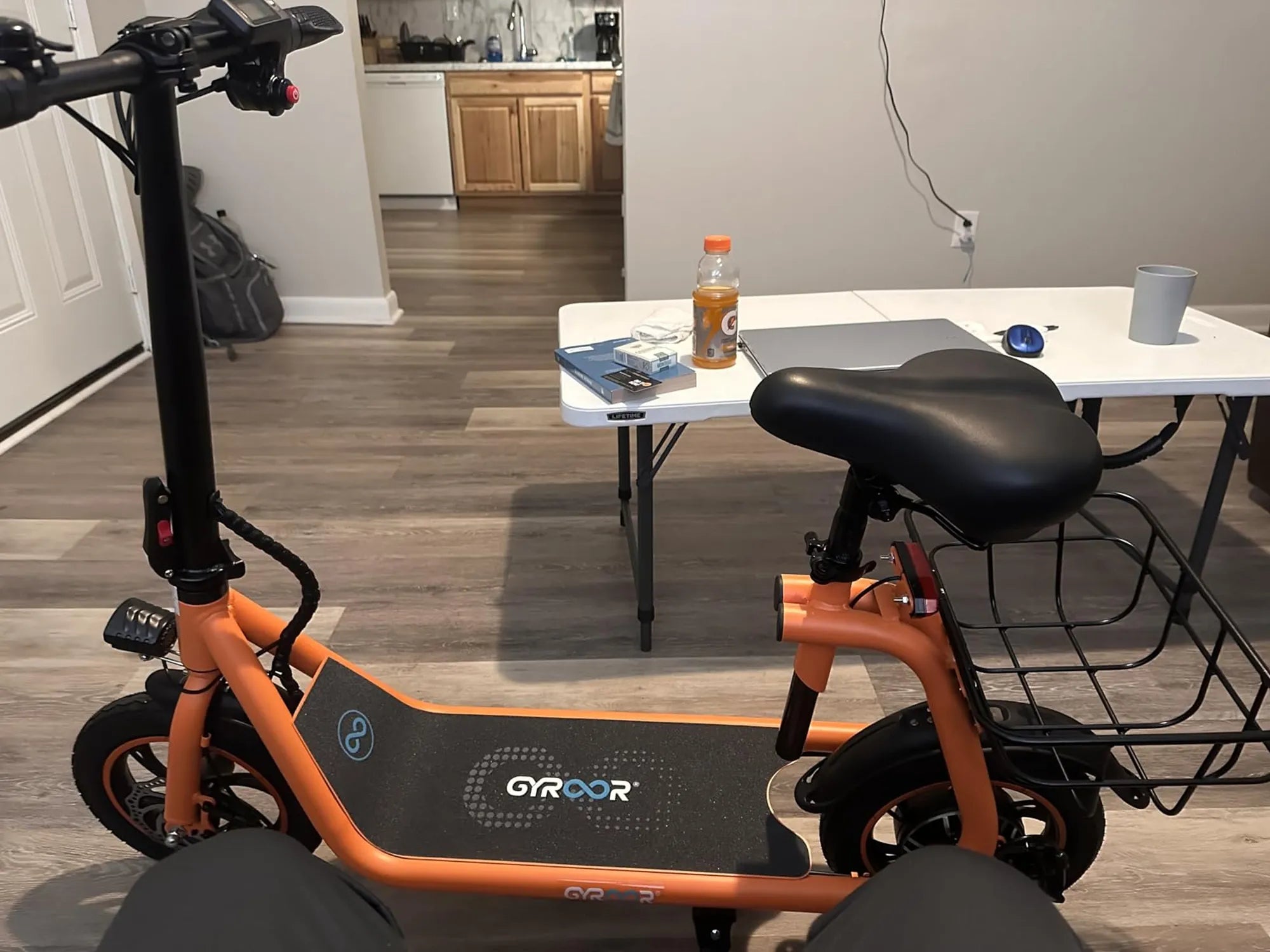
Introduction: Why the 14-Inch E-Bike is a Game-Changer for Urban Mobility
Navigating dense city streets requires a vehicle that is agile, portable, and powerful. The 14 inch e bike emerges as the definitive solution, perfectly bridging the gap between bulky traditional bicycles and ultra-compact electric scooters. This guide will explore how this specific wheel size category redefines urban commuting, offering unparalleled convenience for those dealing with limited storage, public transit integration, and the need for reliable daily transport. You'll learn about its core advantages, critical specifications, and how to choose a model built for longevity and safety.
The rise of micro-mobility has highlighted a need for vehicles that fit seamlessly into an urban lifestyle. Full-size e-bikes can be cumbersome in elevators and apartments, while e-scooters lack the comfort for longer rides. The 14 inch e bike strikes a critical balance. Its design directly addresses key urban pain points: tight traffic, staircases, small living spaces, and mixed-mode travel. This isn't just a smaller bike; it's a tool engineered for connected city living.
For over 100,000 riders across North America and Europe, brands like Gyroor have demonstrated that compact does not mean compromised. The 14 inch e bike category leverages smart engineering to deliver a full riding experience in a footprint that disappears when not in use. This article provides a data-driven look at why this format is gaining rapid adoption and what you must know before investing in one.
Defining the 14-Inch E-Bike: More Than Just Wheel Size
A 14 inch e bike is defined primarily by the diameter of its wheels, which measures 14 inches. This measurement dictates the entire frame geometry, resulting in a significantly lower standover height and a more condensed wheelbase than a standard 20-inch folding bike or a 26-inch hybrid. The overall package is notably more compact, often folding into a shape that is easy to carry and store.
Typical motor configurations for this class range from 250W to 500W hub motors, providing ample power for urban flats and moderate inclines. Battery packs are usually integrated into the frame or designed as removable units, with capacities that support realistic ranges of 15 to 30 miles per charge. The focus is on creating a lightweight yet capable machine, with total weights often between 30 to 45 pounds.
The construction prioritizes a low center of gravity. This enhances stability, especially at lower speeds and when starting and stopping—a frequent occurrence in city traffic. The smaller wheels contribute to quicker acceleration from a standstill, making it easier to keep pace with the flow of traffic from red lights. Understanding these foundational specs is key to evaluating any model in this growing category.
Key Advantages of the Compact Design
The benefits of the 14-inch wheel size are profound for urban environments. First is exceptional maneuverability. The short wheelbase and responsive steering allow riders to navigate through stalled traffic, tight bike lanes, and crowded streets with confidence and precision that larger bikes cannot match.
Second is unparalleled portability. Weighing significantly less than full-sized e-bikes, a quality 14 inch e bike can be carried up a flight of stairs, onto a bus, or into a subway car with relative ease. This eliminates the fear of theft associated with locking a bike outside all day and solves the storage problem for apartment dwellers without secure bike rooms.
Finally, storage simplicity is a major advantage. A folded 14 inch e bike can fit in a car trunk, be tucked under a desk at work, or leaned in a closet at home. This "disappearing act" makes e-bike ownership feasible for people with very limited space, removing a significant barrier to adoption for city residents.
Ideal Use Cases and Rider Profiles
The primary beneficiary of a 14 inch e bike is the urban commuter with a short-to-medium distance trip, typically between 3 and 10 miles. It replaces walking, waiting for buses, and paying for ride-shares with a direct, predictable, and enjoyable ride. The efficiency gain in daily logistics is substantial.
Residents of walk-up apartments or buildings with small elevators find these e-bikes transformative. The ability to easily bring the bike inside for secure storage and charging is a non-negotiable feature for many, and the 14-inch format excels here. It also perfectly suits the "bike-and-ride" commuter who combines cycling with public transit for longer journeys.
Smaller-framed adults, older riders, or those seeking extra stability also benefit. The low standover height makes mounting and dismounting simple and safe, reducing the risk of falls. The manageable weight builds confidence for handling the bike off the road, whether loading it or maneuvering it in tight spaces.
Critical Features to Evaluate in a 14-Inch E-Bike
Choosing the right model requires careful attention to specifications that impact performance, safety, and longevity. A focus on quality components from reputable manufacturers is essential for a satisfying ownership experience. This buyer's guide highlights the non-negotiable features.
Prioritize models from established brands with clear warranties and customer support. The upfront cost should reflect durable construction and reliable electronics, not just the lowest price point. Investing in proven quality prevents frustration and potential safety issues down the line, ensuring your 14 inch e bike remains a trusted daily companion.
Motor Power & Performance: Navigating City Terrain
Motor power is critical for urban riding. A 350W motor is a common and effective baseline for a 14 inch e bike, providing enough torque for quick starts and handling gentle hills. For cities with more pronounced inclines, a 500W motor offers greater assurance and less battery drain when climbing.
Pay attention to the motor type—typically a rear-hub motor—and its torque rating (measured in Newton-meters, Nm). Higher torque translates to better hill-climbing ability and acceleration. Even with small wheels, sufficient power ensures the bike feels zippy and responsive under pedal-assist or throttle, keeping you safe in traffic.
Test the pedal-assist system (PAS) levels if possible. A smooth, intuitive PAS that provides natural-feeling boost is far superior to a jerky, on/off system. This affects ride comfort and control significantly, especially when navigating unpredictable urban landscapes.
Battery Range & Charging: Planning Your Commute
Battery capacity, measured in Watt-hours (Wh), dictates your realistic range. Manufacturers often advertise maximum range under ideal conditions. For practical urban commuting with stops, starts, and some hills, derate that number by 30-40%. A 360Wh battery, for example, may reliably deliver 18-22 miles.
A removable battery is arguably the most important feature for city dwellers. It allows you to secure the battery indoors for charging, protecting it from extreme temperatures and theft. It also enables "range extension" by carrying a spare battery for longer trips, though this is less common with 14-inch models.
Charging time is another consideration. A standard charger typically replenishes a battery in 4-6 hours. Look for batteries that use high-quality, brand-name lithium-ion cells and, crucially, come with a UL certification. This independent safety standard is your assurance against battery fire risks, a critical factor for indoor charging.
Build Quality, Safety, and Warranty
The frame material is the bike's backbone. Aluminum alloy is standard, offering a good balance of strength, corrosion resistance, and light weight. Inspect the folding mechanism; it should feel robust, lock securely with a safety latch, and not develop play over time. A wobbly hinge compromises safety and ride quality.
Braking systems are paramount. Disc brakes, whether hydraulic or mechanical, provide superior stopping power and consistency in wet weather compared to rim brakes. Given the stop-and-go nature of city riding, reliable brakes are non-negotiable. Integrated front and rear lights are also essential for visibility and safety, not an optional accessory.
The warranty is a direct reflection of the manufacturer's confidence in their product. A comprehensive warranty, like the 1-year coverage offered on Gyroor e-bikes, should cover the frame, motor, battery, and controller. Strong after-sales support and accessible service channels provide long-term peace of mind for your investment.
14-Inch E-Bike vs. The Competition: Finding Your Fit
Understanding how a 14 inch e bike compares to other popular micro-mobility options helps clarify its unique position. The right choice depends on your specific commute, storage situation, and comfort preferences. The following comparisons highlight key trade-offs.
| Feature | 14-Inch E-Bike | 20-Inch Folding E-Bike | Electric Scooter |
|---|---|---|---|
| Primary Advantage | Optimal balance of portability & ride comfort | Smoother ride; often fits taller riders | Maximum portability & "last-foot" convenience |
| Portability (Weight/Size) | Very Good (30-45 lbs, very compact fold) | Good (40-55 lbs, larger folded size) | Excellent (25-35 lbs, most compact) |
| Ride Comfort | Good (seated position, smaller wheels) | Better (larger wheels absorb bumps) | Fair (standing only, small wheels) |
| Storage Ease | Excellent (fits in trunks, under desks) | Good (requires more space) | Excellent (can be carried like a briefcase) |
| Typical Range | 15-30 miles | 20-40 miles | |
| Ideal User | Apartment commuter, multi-modal traveler | Commuters wanting a near-full-size feel | Ultra-short trip specialist, mixed-mode expert |
Comparison with 20-Inch Folding E-Bikes
The 20-inch folding e-bike is the closest relative and most common alternative. The 14 inch e bike wins decisively on portability and storage footprint. Its smaller folded dimensions and lighter weight make it genuinely easy to carry for short distances, a task that can be awkward with a heavier 20-inch model.
The trade-off often comes in ride smoothness. The 20-inch wheels roll over pavement cracks, potholes, and debris more easily, providing a slightly more comfortable and stable feel at higher speeds. Some 20-inch models also offer more frame sizing flexibility, potentially accommodating taller riders more comfortably.
Your decision hinges on priority. If carrying the bike up stairs, onto transit, or into a tight space is a daily requirement, the 14-inch model is superior. If your commute is longer, has rougher roads, and storage is less constrained, a 20-inch bike might be the better ride.
Comparison with Electric Scooters
Electric scooters are kings of minimalist portability. They are lighter, often fold smaller, and can be carried with one hand. For the "last mile" of a trip where you need to walk into a building or store, a scooter is less intrusive. However, the experience is fundamentally different.
A 14 inch e bike provides a seated, bicycle-style riding posture. This is far more comfortable for distances over 2-3 miles, reduces fatigue, and offers better control and stability. E-bikes also typically have higher legal speed limits (often 20 mph vs. 15 mph for scooters) and are more widely permitted on bike paths.
For a pure commuting tool that replaces longer walks or bus rides, the e-bike's comfort and utility win. For hyper-local errands or as a supplement to another primary transport mode where carrying is constant, a scooter may suffice. The 14 inch e bike sits comfortably between these two worlds.
The Gyroor Advantage: Engineered for Confidence in the City
When selecting a 14 inch e bike, the manufacturer's commitment to safety and reliability is paramount. Gyroor's engineering philosophy directly addresses the core concerns of urban riders, building trust through transparent standards and robust design. This focus makes their models a compelling choice in this category.
Every Gyroor e-bike is powered by a UL-certified lithium-ion battery pack. This certification means the battery has passed rigorous independent testing for electrical and fire safety—a critical assurance when charging in an apartment, office, or home. These batteries are also rated for 500+ charge cycles, ensuring long-term capacity retention and value.
Urban riding means encountering wet conditions. Gyroor designs its e-bikes with IPX5 water-resistant ratings. This level of protection means the electrical components can withstand water jets from any direction, allowing you to ride confidently in the rain or through urban puddles without fear of immediate damage or corrosion, ensuring daily reliability.
Backing this hardware is a clear 1-year warranty and accessible customer support. For a community of over 100,000 riders, this safety net minimizes ownership risk. Knowing that the brand stands behind its product with US-based support allows riders to focus on the journey, not potential mechanical worries.
FAQ: Your Questions About 14-Inch E-Bikes, Answered
Q: Is a 14 inch e bike too small for a 6-foot-tall rider?
A: Not necessarily. Most models are designed for riders from about 5'2" to 6'2", thanks to highly adjustable seat posts and handlebar stems. The key is the weight limit (typically 220-265 lbs) and achieving a comfortable leg extension. A taller rider should prioritize models with the longest seat post extension and consider a test ride for fit.
Q: How does the ride comfort compare to bikes with larger wheels?
A> Smaller wheels transmit more road vibration. However, quality 14-inch e-bikes mitigate this with air-filled (pneumatic) tires, which provide crucial cushioning. Some models add a suspension fork or a suspension seat post, which dramatically improves comfort on rough surfaces. Proper tire pressure is also essential for a smooth ride.
Q: Are 14-inch e-bikes legal on bike paths and roads?
A: In most jurisdictions in the US and Europe, they are classified as bicycles if they are pedal-assist up to 20 mph (Class 1) or have a throttle limited to 20 mph (Class 2). They are generally permitted anywhere a traditional bicycle is allowed. Always check your local and state regulations, as laws regarding throttle use can vary.
Q: How difficult is it to pedal a 14 inch e bike without power?
A> Pedaling without assist is more challenging than on a standard bike due to the smaller wheels, motor drag, and additional weight. It is possible for short distances on flat ground, but these bikes are designed to be used with electric assist. They are not intended as primary non-powered bicycles.
Q: What is the most important maintenance task for a folding e-bike?
A> Regularly inspecting and maintaining the folding mechanism is critical. Ensure all latch points are clean, lubricated as per the manual, and lock securely before every ride. A loose hinge is a major safety hazard. Second to that is keeping tires properly inflated to the recommended PSI to avoid pinch flats and ensure range efficiency.
Conclusion: The Smart Choice for Connected Urban Living
The 14 inch e bike represents a pinnacle of pragmatic urban vehicle design. It solves real-world problems of storage, portability, and daily commuting efficiency without sacrificing the essential joy and freedom of riding. By choosing a model built with quality components, certified safety standards, and strong warranty support, you invest in a tool that simplifies and enhances city life for years to come.
Your decision should prioritize the features that guarantee safety and reliability: a UL-certified battery for peace of mind, a water-resistant design for all-weather capability, and a robust warranty from a trusted brand. These are the hallmarks of a product designed for the rigors of daily use, not just a temporary novelty.
Explore how a compact, powerful e-bike can transform your commute and expand your urban radius. For a range of models that embody these principles of safety, durability, and smart design, browse the full Gyroor collection at gyroorboard.com. Discover the electric mobility solution engineered to keep you moving confidently through the city.
E-Bike News Today UK: Your Ultimate Guide to Laws, Tech & Trends
4x4 Dirt Bike: The Ultimate Guide to All-Wheel-Drive Off-Road Motorcycles