



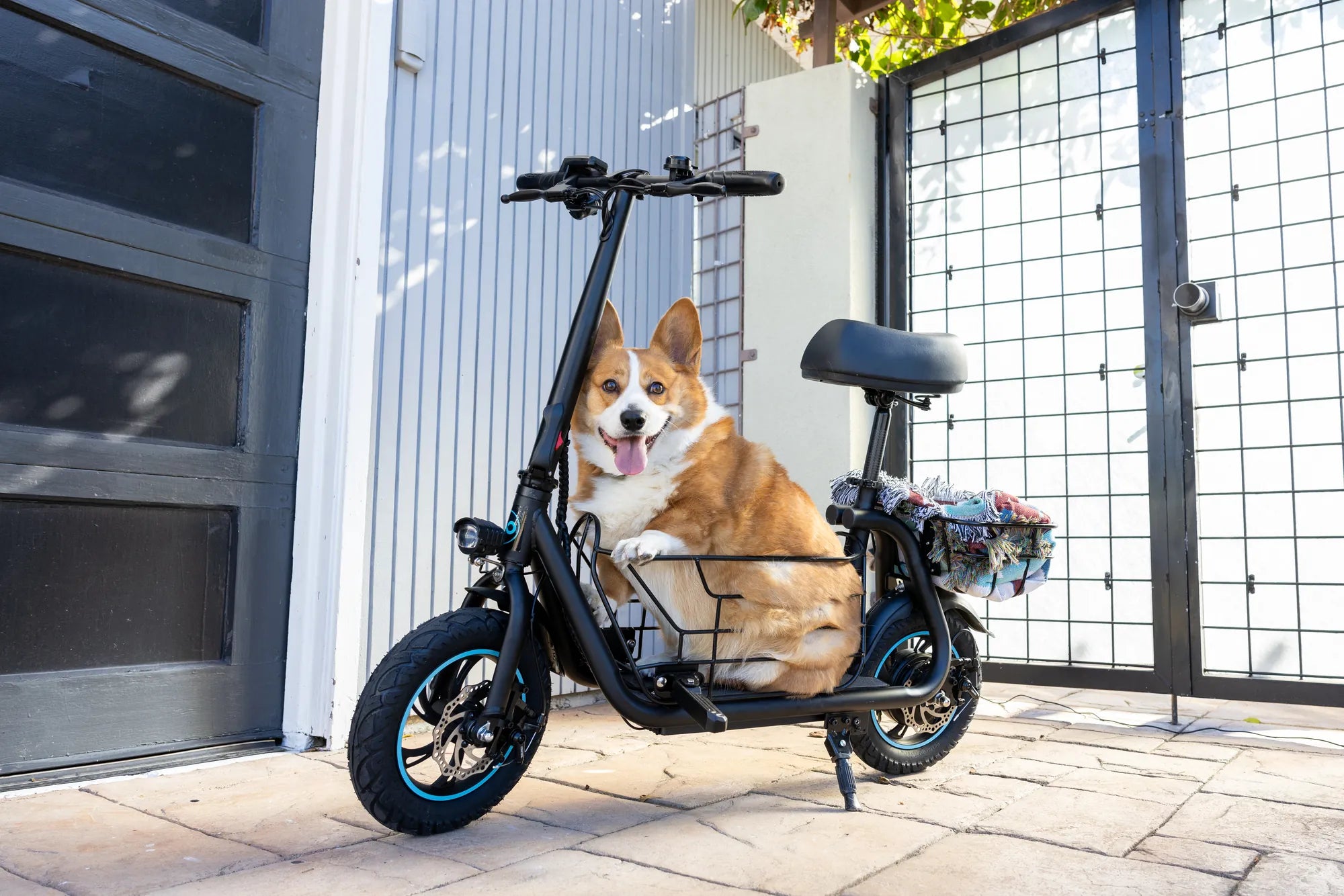
Introduction to 1500W E-Bikes: Power Meets Practicality
A 1500 watt e bike represents the high-performance tier of electric bicycles, offering substantial power that transforms how riders tackle challenging terrain and demanding commutes. Unlike standard 250W-750W commuter models, a 1500W motor delivers exceptional torque and acceleration, positioning these e-bikes as versatile tools for both urban adventurers and off-road enthusiasts. This guide will provide a detailed examination of what makes these powerful machines unique, who they're best suited for, and the critical factors you must consider before purchasing one.
You'll learn about the technical specifications that define 1500W e-bike performance, including motor types, battery requirements, and real-world speed and range expectations. We'll explore the specific rider profiles that benefit most from this power level, from commuters facing steep urban hills to those needing to transport heavy cargo. Perhaps most importantly, we'll address the legal landscape surrounding high-wattage e-bikes and the safety considerations that come with increased power.
The appeal of a 1500 watt e bike extends beyond raw speed to include remarkable hill-climbing capability and the ability to maintain consistent performance even with additional weight. Whether you're considering your first high-power e-bike or looking to upgrade from a less powerful model, understanding the complete picture of ownership is essential. This guide provides the data-driven insights you need to make an informed decision about whether a 1500W electric bicycle aligns with your riding needs and local regulations.
Key Features and Performance Specifications of a 1500W E-Bike
A 1500 watt e bike operates with significantly more power than standard electric bicycles, which typically range from 250W to 750W. This increased wattage translates directly to enhanced performance metrics that experienced riders can immediately notice. The motor's power output determines acceleration capability, hill-climbing performance, and maximum speed potential, making 1500W models particularly suited for demanding applications where standard e-bikes might struggle.
Most 1500W e-bikes utilize either hub motors or mid-drive systems, each with distinct advantages. Hub motors, mounted directly in the wheel, offer simpler installation and can provide strong acceleration from a stop. Mid-drive motors, positioned at the bike's crank, leverage the bicycle's gears for more efficient power delivery, especially beneficial for climbing steep inclines. The choice between these systems often comes down to intended use and personal preference regarding power delivery characteristics.
Motor and Power Delivery
The 1500W rating typically refers to nominal power, with many motors capable of brief peak outputs reaching 2000W or more during maximum acceleration or steep climbing. This power reserve provides the strong torque needed to tackle challenging terrain without straining the motor. Unlike lower-wattage e-bikes that might slow significantly on hills, a properly configured 1500 watt e bike maintains momentum and rider confidence even on sustained inclines.
Power delivery in these systems is managed through sophisticated controllers that regulate current flow from the battery to the motor. Quality controllers offer smooth acceleration curves and multiple assist levels, allowing riders to tailor power output to specific conditions. This control is particularly important with high-wattage systems, as it prevents jerky starts and provides predictable handling characteristics that enhance both safety and riding enjoyment.
Battery, Range, and Charging
Supporting a 1500W motor requires a substantial battery pack, typically ranging from 48V to 52V systems with capacities between 15Ah and 20Ah (approximately 720Wh to 1040Wh). These high-capacity batteries provide the necessary current for sustained high-power operation while offering reasonable range between charges. Actual range varies significantly based on riding style, terrain, rider weight, and assist level usage, with most 1500W e-bikes offering 25-50 miles per charge under typical mixed conditions.
Battery quality is paramount with high-wattage systems, as they demand high discharge rates that can stress inferior cells. UL-certified battery packs, like those used by Gyroor in their e-bike lineup, undergo rigorous testing for safety and longevity, typically rated for 500+ charge cycles while maintaining performance. These certified batteries incorporate advanced battery management systems that prevent overcharging, over-discharging, and thermal issues that could compromise safety or reduce battery life.
Who is a 1500W E-Bike Best Suited For? (Use Cases)
Not every rider needs or benefits from the substantial power of a 1500 watt e bike. These high-performance machines serve specific purposes that justify their increased capability and often more complex regulatory status. Understanding these use cases helps potential buyers determine whether this power class aligns with their actual riding needs rather than simply pursuing maximum specifications.
The primary beneficiaries of 1500W systems are riders who regularly encounter challenging terrain that would overwhelm less powerful e-bikes. This includes sustained steep grades, loose or uneven surfaces, and situations requiring frequent acceleration in traffic. Additionally, riders who regularly carry substantial cargo or passengers benefit from the extra torque that prevents performance degradation under load.
The Urban Commuter with Challenging Terrain
For urban commuters facing significant elevation changes, a 1500 watt e bike transforms challenging routes into manageable journeys. Cities with steep bridges, hilly neighborhoods, or extended inclines that would leave riders of standard e-bikes sweating arrive become effortless with 1500W of assist. This power level also enables maintaining pace with urban traffic flow more comfortably, reducing the speed differential that can create safety concerns in mixed traffic situations.
Beyond hill climbing, the acceleration capability of high-power e-bikes provides practical benefits in stop-and-go urban environments. Quicker acceleration from traffic lights and through intersections can enhance safety by minimizing time spent in conflict zones. For commuters covering longer distances or those with limited time, the ability to sustain higher speeds (where legally permitted) reduces overall travel time without excessive physical exertion.
The Off-Road and Trail Enthusiast
While not full-fledged electric mountain bikes in most cases, 1500W e-bikes with appropriate tires and suspension components handle light to moderate trail riding exceptionally well. The extra torque proves invaluable on loose surfaces like gravel, dirt, or sand where traction is limited and additional power helps maintain forward momentum. For fire roads, unpaved paths, and moderate singletrack, these e-bikes open up recreational possibilities beyond pavement.
The power advantage becomes particularly apparent when navigating technical sections with obstacles or steep, loose climbs that would stall less powerful e-bikes. Riders should ensure their specific model includes features suited for off-road use, such as knobby tires, adequate ground clearance, and suspension systems capable of handling uneven terrain. Proper gearing also enhances off-road capability, making mid-drive systems particularly well-suited for trail applications.
The Hauler and Utility Rider
For riders using e-bikes as practical transportation tools, the 1500 watt e bike offers unparalleled utility. Whether carrying groceries, work equipment, or child passengers, the additional weight significantly impacts performance on standard e-bikes. The 1500W motor's substantial torque output prevents the sluggish acceleration and poor hill performance that often plagues loaded lower-power e-bikes.
This makes 1500W models ideal for delivery services, mobile businesses, or anyone regularly transporting substantial cargo via bicycle trailer or integrated racks. The consistent power delivery ensures predictable performance regardless of load, enhancing safety and reducing rider fatigue during utility-focused trips. When configured with appropriate cargo accessories, these e-bikes can effectively replace car trips for many local transportation needs.
Critical Considerations Before You Buy
Purchasing a 1500 watt e bike involves considerations beyond those for standard electric bicycles. The increased power brings additional responsibilities regarding safety, legality, and long-term ownership costs that prospective buyers must carefully evaluate. These factors often prove more important to overall satisfaction than raw performance specifications alone.
High-wattage e-bikes represent a more significant investment in both initial cost and ongoing maintenance requirements. Component quality becomes increasingly important as power increases, with inferior parts potentially failing under the stresses of regular high-power operation. Understanding these considerations before purchase helps ensure your e-bike meets both performance expectations and practical ownership requirements.
Understanding Local Laws and Regulations
The most critical consideration for any 1500 watt e bike purchase is local legality. In most jurisdictions, 1500W exceeds the legal limit for classification as a standard electric bicycle. In the United States, for example, federal law defines three classes of e-bikes with maximum motor outputs of 750W. Many states adopt these classifications, meaning 1500W models may be classified as mopeds or motorcycles requiring registration, insurance, and operator licensing.
European regulations typically limit pedal-assist e-bikes to 250W with speed restrictions, placing 1500W models firmly outside standard e-bike categories. Canadian regulations vary by province but generally restrict power outputs well below 1500W for street-legal e-bikes. Riders must research their specific state, provincial, and local laws before purchasing, as riding an improperly classified vehicle can result in fines, impoundment, or liability issues in the event of an accident.
Build Quality, Safety, and Warranty
High-power operation demands robust components throughout the e-bike system. Frames must withstand increased torque and higher speeds, brakes must provide reliable stopping power under demanding conditions, and electrical systems must manage substantial current flows safely. Compromising on component quality with a 1500 watt e bike introduces significant safety risks that don't exist with lower-power models.
Essential safety features include hydraulic disc brakes for consistent, powerful stopping in all conditions, high-quality torque sensors for smooth power delivery, and comprehensive battery protection systems. Water resistance is another critical factor, with ratings like IPX5 (capable of withstanding water jets from any direction) ensuring reliable operation in wet conditions. Gyroor incorporates these safety priorities across their lineup, combining UL-certified batteries with IPX5 water-resistant designs and comprehensive one-year warranties for rider peace of mind.
Total Cost of Ownership
While 1500W e-bikes typically command higher initial prices than lower-power models, the true cost of ownership extends beyond the purchase price. Quality batteries represent a significant portion of both initial cost and eventual replacement expense, making long-term durability particularly important. UL-certified batteries like those used in Gyroor e-bikes offer better longevity and safety, potentially reducing long-term ownership costs despite higher initial investment.
Maintenance requirements may also differ from standard e-bikes, with brake systems experiencing more wear due to higher speeds and weights, and drivetrain components potentially requiring more frequent attention. Factoring in these ongoing costs provides a more accurate picture of ownership expenses. Investing in a reputable brand with strong warranty support and available replacement parts can significantly reduce long-term ownership challenges and costs.
1500W E-Bike vs. Other Power Classes: A Quick Comparison
Understanding where 1500W fits within the broader e-bike power spectrum helps contextualize its capabilities and limitations. This comparison highlights how different power classes serve distinct riding needs and regulatory environments, helping riders select the appropriate wattage for their specific requirements rather than simply choosing the highest available number.
| Power Class | Typical Use Cases | Legal Status | Key Advantages |
|---|---|---|---|
| 500W-750W E-Bikes | Flat to moderate urban commuting, recreational paved path riding | Generally street-legal as bicycles in most areas with proper classification | Lightweight, affordable, minimal regulatory concerns |
| 1000W E-Bikes | Hilly urban terrain, faster commuting, light cargo hauling | Varies significantly by jurisdiction; often requires verification | Strong hill capability without extreme regulatory challenges |
| 1500W E-Bikes | Steep hills, off-road trails, heavy cargo, high-speed commuting | Often exceeds bicycle limits; frequently classified as moped/motorcycle | Exceptional torque, true all-terrain capability, heavy load capacity |
| 2000W+ E-Bikes | Dedicated off-road/private land use, extreme performance applications | Typically not street-legal; classified as electric motorcycles | Maximum power and speed for specialized applications |
This comparison reveals that 1500W occupies a distinct position as the highest power level that some riders might practically use on varied terrain while potentially navigating complex regulatory environments. The jump from 1000W to 1500W represents a significant increase in capability that justifies the additional regulatory attention for riders with specific performance needs.
Riders considering a 1500 watt e bike should carefully evaluate whether their actual use case requires this power level or if a 1000W model might serve their needs with fewer regulatory complications. For those regularly tackling extreme grades, carrying heavy loads, or venturing onto challenging terrain, the 1500W advantage proves substantial. For more moderate needs, lower-power classes often provide better balance of performance and practicality.
Technical Deep Dive: Components That Make a Difference
The performance and reliability of a 1500 watt e bike depend heavily on specific component choices beyond just the motor rating. Understanding these technical elements helps buyers evaluate different models and identify quality construction that will deliver lasting satisfaction. This section examines the key components that distinguish exceptional high-power e-bikes from merely powerful ones.
Motor controllers represent one of the most critical yet overlooked components in high-power e-bike systems. Quality controllers manage power delivery smoothly, prevent overheating, and offer programmable features that customize riding experience. They also protect the motor and battery from damage due to excessive current, making them essential for long-term reliability in demanding 1500W applications.
Frame Design and Material Considerations
E-bike frames supporting 1500W motors require robust construction to handle increased torque and potential higher speeds. Aluminum alloys offering optimal strength-to-weight ratios are common, with butted tubing providing reinforcement at stress points without excessive weight. Frame geometry also plays a role, with longer wheelbases often enhancing stability at higher speeds while slightly reducing maneuverability.
Integration of battery compartments and motor mounts requires careful engineering to maintain structural integrity while accommodating larger components. Quality frames feature reinforced areas around these mounting points and proper cable routing that protects electrical connections from damage. The frame represents the foundation of any e-bike, and its design significantly impacts both performance characteristics and long-term durability under high-power operation.
Braking Systems for High-Performance Needs
Stopping power becomes increasingly critical as speed and weight increase, making braking system selection particularly important for 1500W e-bikes. Hydraulic disc brakes offer the consistent performance needed for high-power applications, with better modulation and reduced maintenance than mechanical systems. Larger rotor diameters (180mm or more) provide additional heat dissipation and stopping power for sustained downhill braking.
Brake lever design also matters, with some systems incorporating motor cutoff sensors that immediately disengage power when brakes are applied. This feature enhances safety by preventing the motor from working against the braking system during stops. Regular brake maintenance becomes more important with high-performance e-bikes, as worn brake pads or contaminated rotors can significantly extend stopping distances at higher speeds.
Maintenance and Safety Best Practices
Owning a 1500 watt e bike involves specific maintenance routines and safety practices that differ from standard bicycles or lower-power e-bikes. These practices ensure reliable performance, extend component life, and most importantly, keep riders safe while enjoying the capabilities of high-power electric cycling. Establishing proper maintenance habits from the beginning prevents minor issues from becoming major problems.
Regular inspection of critical components should occur before each ride, with more thorough maintenance on a weekly or monthly basis depending on usage. Electrical connections require particular attention in high-power systems, as loose connections can overheat under heavy current loads. Visual inspection of battery housings, motor connectors, and controller wiring helps identify potential issues before they cause failures.
Battery Care and Longevity
Proper battery management significantly impacts both performance and lifespan in 1500W systems. Avoiding complete discharges and extreme states of charge (below 20% or above 90% for regular use) reduces cell stress and extends overall battery life. Storage at moderate charge levels (40-60%) during extended periods of non-use helps maintain battery health.
Charging practices also affect battery longevity. Using only the manufacturer-provided charger prevents compatibility issues that could damage battery management systems. Charging in a cool, dry environment away from flammable materials represents a basic safety precaution that becomes increasingly important with high-capacity batteries. Gyroor's UL-certified battery packs incorporate advanced protection circuits, but proper charging practices further enhance safety and performance.
Rider Safety Gear and Practices
The increased speed and acceleration capabilities of 1500W e-bikes necessitate appropriate safety gear beyond what might suffice for standard cycling. A properly fitted helmet meeting current safety standards represents the minimum protection, with full-face helmets offering additional protection for off-road riding at higher speeds. Protective eyewear shields riders from debris while enhancing visibility in various conditions.
High-visibility clothing improves conspicuity to other road users, particularly important when riding at speeds that may exceed typical bicycle expectations. Gloves provide better grip and protection in the event of a fall, while appropriate footwear ensures secure contact with pedals during acceleration and braking. Developing defensive riding habits that account for the e-bike's capabilities helps prevent accidents, as other road users may not anticipate the acceleration or speed of a 1500 watt e bike.
Frequently Asked Questions (FAQ)
Q: Do I need a license to ride a 1500 watt e bike?
A: Licensing requirements depend entirely on your local jurisdiction's classification of electric vehicles. In many areas, 1500W exceeds the power limit for license-free e-bike operation, potentially requiring motorcycle or moped registration, insurance, and operator licensing. Always consult your local department of motor vehicles or transportation authority for specific regulations before purchasing or riding.
Q: How fast can a 1500W e-bike go?
A: While capable of speeds exceeding 35 mph (56 km/h) in optimal conditions, most production 1500W e-bikes are electronically limited to comply with various regulations. Typical speed-limited models reach 28-32 mph (45-51 km/h), though actual speed depends on factors including rider weight, terrain, battery charge, and specific motor programming. Always obey local speed limits regardless of your e-bike's capabilities.
Q: Is a 1500W e-bike safe for beginners?
A: Due to their high torque and speed potential, 1500W e-bikes require more experience and caution than lower-power models. Beginners should start with lower assist levels, practice in controlled environments, and prioritize models with excellent braking systems and smooth power delivery. Proper safety gear and gradual familiarization with the bike's capabilities help reduce risks for new riders.
Q: Can I use a 1500W e-bike in the rain?
A: With proper water-resistant construction, yes. Look for IP ratings specifically for electrical components; IPX5 rating (protection against water jets from any direction) indicates suitability for wet weather riding. However, reduced traction on wet surfaces requires adjusted riding techniques, and electrical components should be inspected after exposure to heavy rain. Gyroor's IPX5 rated designs provide this weather capability across their e-bike lineup.
Q: How does a 1500W e-bike handle hills compared to lower-power models?
A: The difference is substantial. While 750W e-bikes may slow significantly on steep grades, a 1500 watt e bike maintains much better momentum and requires less rider effort. The additional torque prevents the motor from straining on inclines, resulting in cooler operation and more consistent performance on extended climbs. This hill-climbing capability represents one of the primary advantages of higher-wattage systems.
Q: What's the typical range of a 1500W e-bike on a single charge?
A: Range varies widely based on battery capacity, riding style, terrain, and assist level usage. With typical 48V 17.5Ah batteries (approximately 840Wh), expect 25-40 miles of range using moderate assist on mixed terrain. Conservative riding on lower assist levels can extend this to 50+ miles, while maximum power usage on challenging terrain may reduce range to 20 miles or less. Larger capacity batteries obviously extend these ranges proportionally.
Conclusion: Is a 1500W E-Bike the Right Choice for You?
A 1500 watt e bike represents a serious investment in electric mobility that delivers exceptional performance for specific riding needs. The substantial power transforms challenging terrain, enables practical cargo transportation, and provides exhilarating acceleration that standard e-bikes cannot match. However, this capability comes with increased responsibility regarding safety awareness, maintenance diligence, and regulatory compliance that prospective owners must carefully consider.
The decision ultimately depends on your specific requirements, local regulations, and willingness to manage the additional considerations of high-power e-bike ownership. For riders regularly facing steep hills, venturing onto unpaved trails, or carrying substantial loads, the performance benefits justify the additional complexity. For those with more moderate needs, lower-power e-bikes often provide better balance of capability and practicality with fewer regulatory concerns.
Prioritizing quality and safety over raw specifications ensures a satisfying ownership experience regardless of power level. Trusted brands like Gyroor combine high-performance components with essential safety features including UL-certified batteries, water-resistant construction, and comprehensive warranty support. This approach delivers reliable performance that enhances riding enjoyment while addressing the practical realities of high-power electric cycling.
If the capabilities of a 1500 watt e bike align with your riding ambitions and local regulations allow their operation, explore models that balance performance with quality construction and safety certifications. Browse the full Gyroor collection at gyroorboard.com to discover e-bikes engineered for performance and reliability, backed by the confidence of UL-certified safety systems and proven customer satisfaction across North America and Europe.
110cc Mini Dirt Bike: The Ultimate Guide to Power, Specs & Riding
What Does Class 2 Ebike Mean? The Complete Guide to Throttle-Assisted E-Bikes