


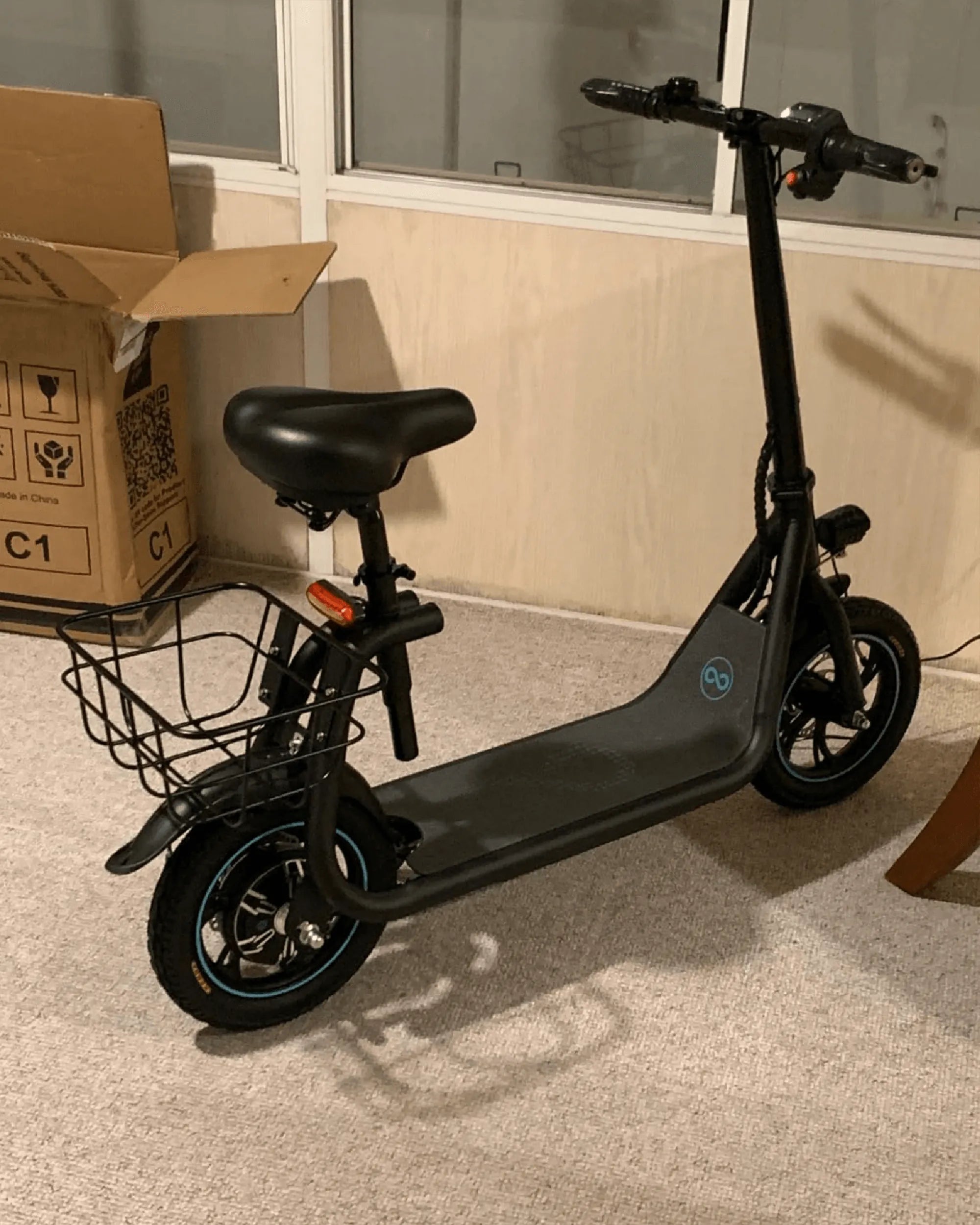
Introduction: Why Wheel Size is the Game-Changer for Your 2-Wheel Scooter
If you've ever winced crossing a sidewalk crack or felt your scooter wobble on a patch of gravel, you understand the core limitation of small wheels. The solution isn't just more power or a bigger battery; it's fundamentally about the contact point with the ground. This is where the 2 wheel scooter big wheels configuration becomes a transformative choice.
This article is your comprehensive guide to understanding why larger wheels are the single most important upgrade for ride quality. We'll dissect the tangible benefits, from crushing commuter potholes to exploring light trails, and provide the technical knowledge to evaluate specifications beyond just diameter. You'll learn how to match wheel size to your lifestyle and why integrated engineering from trusted brands like Gyroor—known for UL-certified safety and robust performance—is critical for unlocking the full potential of a big-wheel scooter.
The Big Advantage: Unpacking the Benefits of Larger Wheels on Electric Scooters
Moving from standard 8-inch wheels to a 2 wheel scooter with big wheels, typically 10 inches or larger, delivers immediate and measurable improvements. The primary benefit is a dramatic increase in stability. A larger wheel has a greater gyroscopic effect, which helps the scooter stay upright and track straight, especially at higher speeds or when encountering crosswinds.
Shock absorption is the next major leap. Larger wheels can roll over obstacles like cracks, pebbles, and uneven pavement with far less disruption. They effectively "bridge" gaps that would jar a small wheel, translating to a significantly smoother and less fatiguing ride for your joints and posture. This makes a 2 wheel scooter big wheels model ideal for longer commutes.
Increased ground clearance is a direct mechanical advantage. With more space between the deck and the road, you can confidently tackle raised manhole covers, transition onto curbs, and navigate debris without the fear of a damaging "deck strike." This capability expands where you can ride safely.
Finally, these factors collectively enhance safety and rider confidence. Better stability reduces wobble, improved traction from a larger contact patch aids in braking, and the overall composed feel allows you to focus on your surroundings rather than the pavement directly in front of you.
Urban Commute vs. Off-Road Adventure: Matching Wheel Size to Your Ride
Your primary riding environment dictates the optimal wheel size. For the urban commuter, a 2 wheel scooter with 10-inch big wheels is often the sweet spot. It provides the perfect balance of compactness and capability, easily handling potholes, tram tracks, and broken concrete while remaining portable enough for last-mile logistics and storage.
For riders seeking versatility beyond pavement, models with even larger wheels (10.5-inch or more) and air-filled, treaded tires enter the conversation. These are designed for packed gravel paths, hard-packed dirt, and light trail use. The increased diameter and pneumatic tires work together to absorb larger impacts like roots and rocks, while the tread provides essential grip on loose surfaces.
Brands like Gyroor design models for this spectrum. Their urban-focused scooters feature robust 10-inch wheels for all-city dominance, while their adventure-oriented builds incorporate larger, pneumatic tires to confidently expand your riding terrain, always backed by the power and battery life to support the demand.
Key Specifications to Evaluate Beyond Just Diameter
Choosing a 2 wheel scooter big wheels model requires looking at the entire system. Wheel diameter is the starting point, but it must be supported by complementary components. First, motor power is non-negotiable. Larger wheels have greater rotational mass and inertia, requiring a more powerful motor to provide the same acceleration and hill-climbing torque as a smaller-wheeled scooter with an equivalent motor.
Battery capacity and range are directly impacted. A more powerful motor driving larger wheels can consume energy faster. Furthermore, if you opt for air-filled tires (which have higher rolling resistance than solid tires), your range may see a slight decrease in exchange for vastly improved comfort. Always check the manufacturer's real-world range estimates for big-wheel configurations.
Deck height and overall scooter weight are practical considerations. The increased ground clearance from big wheels often means a higher deck. This can affect your stance and the scooter's center of gravity. Additionally, the components that enable big-wheel performance—stronger forks, larger tires, bigger motors—often result in a heavier overall scooter, impacting portability.
The type of tire—pneumatic (air-filled), solid, or honeycomb—is a critical specification that defines the ride feel and maintenance routine. This decision is so pivotal it warrants its own deep dive.
The Air vs. Solid Tire Debate for Big-Wheel Scooters
The choice between pneumatic and solid tires defines your ownership experience. Pneumatic (air-filled) tires are the gold standard for comfort and grip. The air chamber acts as a primary suspension system, absorbing high-frequency vibrations and small impacts that would otherwise travel to the deck. This provides the plush, smooth ride that big wheels are famous for, especially on a 2 wheel scooter big wheels model designed for rough terrain.
Solid or honeycomb tires, made from a single piece of rubber or an elastic polymer lattice, offer ultimate convenience. They are completely puncture-proof, eliminating the worry of flats and the need to carry repair kits or a pump. They have zero maintenance but come with a trade-off: a noticeably firmer, less forgiving ride, as they lack the cushioning effect of air.
For the urban rider who prioritizes a hassle-free, low-maintenance commute over absolute plushness, a quality honeycomb tire on a big-wheel scooter is a valid choice. For anyone seeking maximum comfort, off-road capability, or the purest expression of what a 2 wheel scooter big wheels can offer, pneumatic tires are the recommended path, accepting the minimal maintenance of checking tire pressure periodically.
Why Gyroor’s Engineering Makes a Difference for Big-Wheel Models
Integrating larger wheels into a scooter is more than a simple parts swap; it requires holistic engineering. This is where a brand's philosophy and technical prowess become paramount. Gyroor designs its big-wheel scooters as complete systems, ensuring every component is matched for balanced performance.
The core of this balance is pairing appropriately powerful motors with the wheel size. A Gyroor 2 wheel scooter with big wheels is equipped with a motor that delivers consistent torque, ensuring responsive acceleration and reliable hill-climbing power without straining the battery or controller. This prevents the sluggish performance that can plague poorly matched scooters.
Power delivery is only as good as the source. Every Gyroor scooter is powered by a UL-certified battery pack, a critical safety benchmark. These batteries are rigorously tested for over 500 charge cycles and are managed by intelligent Battery Management Systems (BMS) to ensure stable, safe power output, which is especially important when driving the higher demands of a big-wheel setup.
Furthermore, Gyroor builds its scooters to IPX5 water-resistant standards. When you're riding a capable 2 wheel scooter big wheels model through puddles or in light rain, this protection safeguards the electrical components from moisture damage. Combined with a reliable 1-year comprehensive warranty, this engineering approach means you're investing in a durable, integrated vehicle, not just a collection of parts.
Practical Considerations Before You Buy
Before committing to a 2 wheel scooter big wheels model, run through this practical checklist. First, assess portability. Big-wheel scooters are often heavier (35-50 lbs is common). Check the folded dimensions and weight to ensure you can comfortably carry it up stairs or lift it into a car trunk if needed.
Storage space is another factor. The longer wheelbase and taller handlebars of some big-wheel models mean they occupy more space in an apartment closet or under a desk. Measure your intended storage area and compare it to the scooter's folded specs.
If you choose pneumatic tires, embrace simple maintenance. A small digital pressure gauge and a portable pump are wise investments. Keeping tires inflated to the manufacturer's recommended PSI (usually 40-50 PSI) is crucial—it maximizes range, improves ride quality, and helps prevent pinch flats. Inspect tires regularly for embedded debris.
Finally, understand local regulations. Many regions have laws governing electric scooter power (wattage), top speed, and where they can be ridden. High-performance big-wheel models often have powerful motors capable of higher speeds. Ensure your chosen model complies with local rules for a safe and legal riding experience.
Comparison: Big-Wheel Scooter Use Cases & Recommended Specs
| Primary Use Case | Ideal Wheel Size | Recommended Tire Type | Key Feature Priority | Motor Power Guidance |
|---|---|---|---|---|
| Urban Commuting (Smooth to Average Roads) | 10-inch | Honeycomb or Pneumatic | Portability, Range, Reliability | 350W - 500W |
| Urban Commuting (Rough Roads, Lots of Debris) | 10-inch or 10.5-inch | Pneumatic | Shock Absorption, Stability, Ground Clearance | 500W - 800W |
| Recreational & Park Path Riding | 10.5-inch | Pneumatic | Ride Comfort, Smoothness, Aesthetics | 350W - 650W |
| Light Off-Road / Trail & Gravel Paths | 10.5-inch or larger | Pneumatic with Tread | Traction, Suspension, Durability, Power | 650W+ (Dual Motor options ideal) |
Frequently Asked Questions (FAQ)
Q: Are big-wheel scooters significantly harder to carry or fold?
A: They can be, due to increased weight from sturdier frames and components. However, design matters. Look for models with efficient folding mechanisms that lock securely and manage the weight distribution well. The trade-off for a vastly superior ride is often a few extra pounds.
Q: Do larger wheels always mean a slower scooter?
A: Not necessarily. Top speed is a function of motor power, controller limits, and wheel diameter. A larger wheel circumference can actually allow for a higher top speed if the motor has enough power to reach its RPM limit. The more common impact is on acceleration; a more powerful motor is needed to achieve quick acceleration with larger wheels.
Q: Can I replace the tires on my big-wheel scooter myself?
A: It depends on the model and your mechanical skill. Replacing a honeycomb tire is very difficult and often requires professional tools. Changing a pneumatic tire is similar to a bicycle tire but can be challenging due to tight tolerances, motor cables, and potential sealant. For most riders, having it done by a professional or utilizing the manufacturer's warranty service is the most reliable option to avoid damage.
Q: Is a big-wheel scooter with pneumatic tires worth the maintenance risk of flats?
A: For most riders seeking comfort, yes. Modern scooter tires are often durable, and flats are less common than on bicycles. The maintenance is minimal: check pressure every few weeks and visually inspect for damage. The unparalleled ride quality and grip provided by properly inflated pneumatic tires on a 2 wheel scooter big wheels model justify this small routine for the vast majority of users.
Q: How does a 2 wheel scooter big wheels model handle in wet conditions compared to smaller wheels?
A: Generally, larger wheels with pneumatic tires offer better wet-weather performance. The larger contact patch can improve grip, and they are less prone to hydroplaning over thin water films than small, hard wheels. However, braking distances will always increase on wet surfaces. Always ride with extreme caution in the rain, regardless of wheel size, and ensure your scooter has a good IP water-resistance rating like Gyroor's IPX5 standard.
Conclusion: Finding Your Perfect Ride
Choosing a 2 wheel scooter big wheels model is a decisive step towards a more capable, confident, and enjoyable riding experience. It's an investment in conquering your daily commute with ease or unlocking new paths for weekend adventure. Remember, the best scooter is a harmonious system where wheel size, motor power, battery endurance, and build quality are engineered in concert.
This synergy is what defines a superior product. Brands that understand this, like Gyroor, deliver scooters where the promise of big-wheel performance is fully realized through UL-certified safety, water-resistant durability, and robust power systems backed by warranty. Your journey to a smoother ride starts with the right foundation.
Ready to experience the transformation? Explore Gyroor's collection of high-performance electric scooters and e-bikes, engineered for real-world riding. Find the model that matches your terrain and ambition, and join over 100,000 riders who trust Gyroor for their journey. Browse the full Gyroor collection at gyroorboard.com.
300 Dollar Scooter: A Realistic Guide to Value, Safety, and Performance
3 Scooter: The Ultimate Guide to Stable, Accessible Electric Mobility