

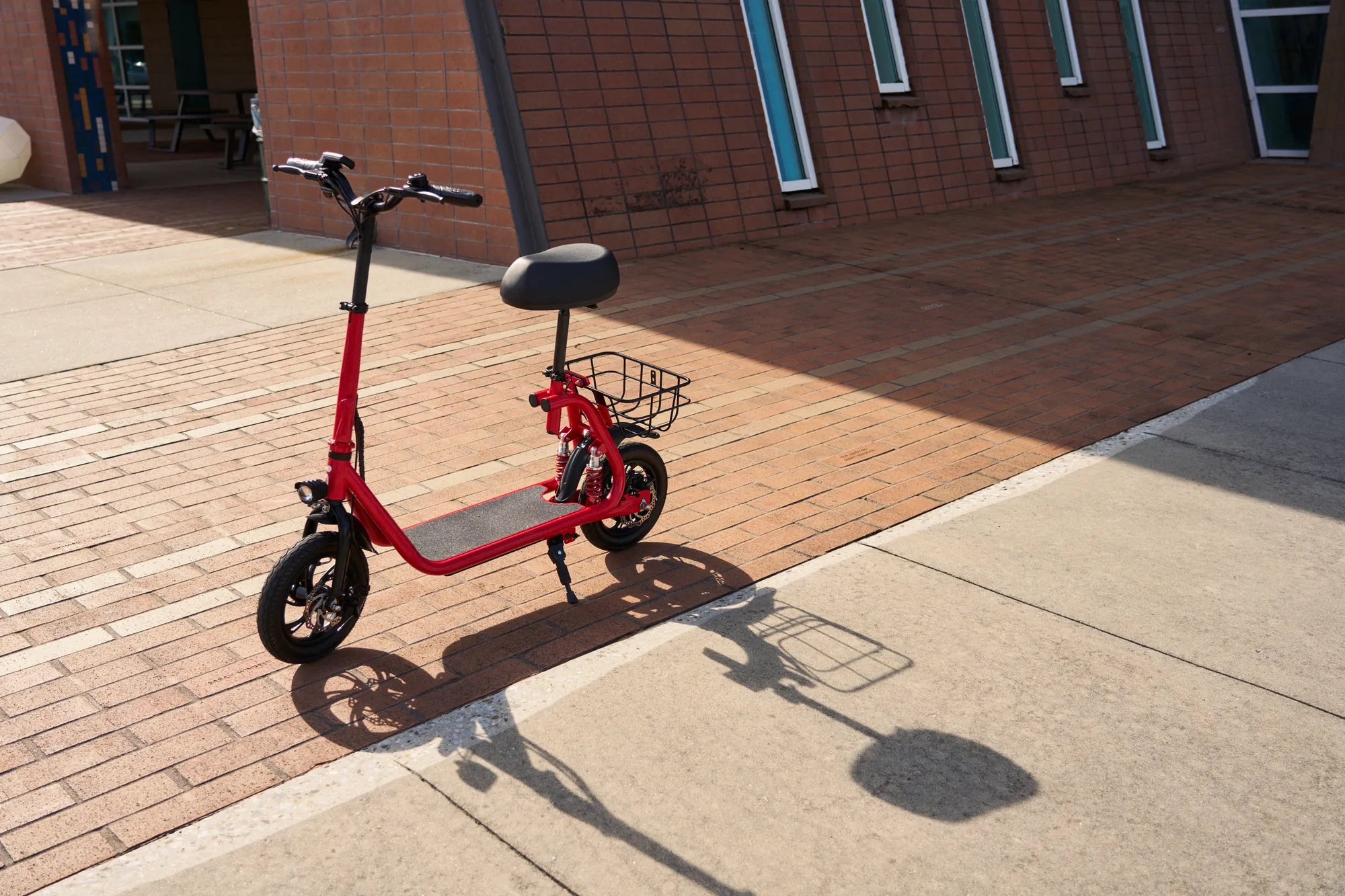
Introduction to 3-Wheel Foldable Mobility Scooters
A 3 wheel foldable mobility scooter is a transformative personal mobility device engineered for independence, combining electric power with a compact, storable design. It represents a significant evolution from traditional mobility aids, offering a unique trifecta of benefits: the inherent stability of a three-point stance, the convenience of a folding frame for transport and storage, and clean electric propulsion. For individuals seeking to maintain an active lifestyle despite mobility challenges, this category of scooter provides a practical solution for navigating both indoor environments and outdoor community spaces.
The core purpose of a 3 wheel foldable mobility scooter is to enhance personal freedom without sacrificing practicality. Unlike bulky, non-folding models, these scooters are designed for real-world use where space is at a premium—be it in a small apartment, the trunk of a car, or on public transportation. The electric motor provides effortless travel over distances that would be exhausting or impossible to walk, while the three-wheel configuration offers superior maneuverability in tight quarters compared to four-wheel models.
This guide will provide a data-driven analysis of what makes a high-quality 3 wheel foldable mobility scooter, from its mechanical specifications to its real-world application. We will dissect the key features that determine performance, compare it to alternative mobility solutions, and offer a user-centric framework for making the best purchase decision. Leading brands in this space, such as Gyroor, have pioneered engineering that prioritizes not just mobility but also certified safety and long-term reliability, trusted by over 100,000 riders globally.
You will learn how to evaluate motor power, battery range, folding mechanisms, and build quality. By the end, you will understand how to match a scooter's capabilities to your specific needs, whether you're an urban commuter, an active senior, or someone who loves to travel. The goal is to empower you with the knowledge to select a device that truly expands your world.
Key Features to Consider Before Buying
Selecting the right 3 wheel foldable mobility scooter requires a careful evaluation of its specifications and features. These elements directly impact daily usability, comfort, and safety. A methodical approach to understanding these components will ensure your investment delivers the freedom and reliability you expect. This section serves as a practical buying guide, breaking down the essential factors that separate a good scooter from a great one.
First, assess the scooter's intended use case. Will it primarily be used indoors for shopping and home navigation, or outdoors on park paths and sidewalks? The answer will dictate priorities for features like turning radius, ground clearance, and suspension. Second, consider the user's physical capabilities, including strength for handling the folded scooter and dexterity for operating controls. Finally, evaluate the logistical aspects, such as available storage space at home and the type of vehicle used for transport.
Key specifications to scrutinize include the motor's continuous power rating (typically 250W to 350W), the battery's voltage and amp-hour (Ah) capacity, the scooter's overall weight and folded dimensions, and the stated weight capacity. Do not rely solely on marketing claims for range; instead, look at the battery's watt-hour (Wh) rating and understand that real-world range is affected by user weight, terrain, and speed. A robust warranty and accessible customer support are also critical features, as they protect your investment long-term.
By focusing on these tangible metrics, you can cut through promotional language and identify a scooter built for durability and performance. Brands that provide transparent specifications and back their products with strong warranties, like Gyroor with its 1-year comprehensive coverage, demonstrate confidence in their engineering and build quality. This foundational knowledge prepares you to delve into the specifics of maneuverability, portability, and power.
Maneuverability & Stability: The 3-Wheel Advantage
The three-wheel configuration is the defining characteristic of this scooter category, offering a distinct balance between agility and stability. The geometry creates a stable triangle, with two wheels at the rear and one at the front, which provides a smaller turning radius than a four-wheel (quad) scooter. This makes the 3 wheel foldable mobility scooter exceptionally adept at navigating crowded aisles, making U-turns in hallways, and maneuvering in tight spaces like elevators or small apartments.
Stability is governed by the wheelbase (distance between front and rear axles) and the track width (distance between the two rear wheels). A wider track and a balanced wheelbase contribute to a stable ride, especially during turns and on slight inclines. The center of gravity is also crucial; a well-designed scooter positions the battery and seat low to the ground to prevent tipping. It's important to note that while three-wheel models excel in maneuverability, they are generally best suited for smooth to moderately uneven surfaces compared to some four-wheel models built for rougher terrain.
The front-wheel steering mechanism allows for precise control. A tighter turning radius, often between 40 to 55 inches, is a key metric for indoor usability. When testing maneuverability, consider how the scooter handles at low speeds in confined spaces. This agility is a primary reason many users choose a 3 wheel foldable mobility scooter over bulkier alternatives, as it mirrors the natural flow of foot traffic in public spaces.
For optimal stability, proper weight distribution is essential. Users should always remain seated while the scooter is in motion and avoid making sharp turns at high speeds. The design inherently manages stability during normal operation, but user adherence to operational guidelines is the final component for safe and confident riding. This combination of engineering and responsible use makes the three-wheel design a superior choice for daily urban and suburban navigation.
Portability & Storage: The Folding Mechanism
The folding mechanism is what transforms a personal mobility vehicle from a permanent fixture into a portable companion. Portability is measured by two main factors: the folded dimensions and the scooter's weight. A high-quality 3 wheel foldable mobility scooter should collapse into a compact form that can fit into a standard car trunk, be stored in a closet, or be placed in a dedicated corner without obstructing living space.
There are generally two types of folding systems: manual and semi-automatic. A manual system may require loosening a latch or lever and physically folding the frame, often separating the seat from the base. A semi-automatic or one-step folding system uses a central lever or button to disengage the frame lock, allowing the scooter to fold under its own weight or with minimal user effort. The choice depends on the user's strength and preference for convenience versus simplicity.
The practical outcome is measured in numbers. Look for folded dimensions such as Height x Length x Width. A compact fold might be around 30" H x 40" L x 20" W. The weight of the scooter is equally critical; models range from approximately 50 to 80 pounds. While the lighter models are easier to lift, they may trade off some features like a larger battery or a more robust frame. Consider if you will need a lightweight 3 wheel foldable mobility scooter for frequent lifting or if a slightly heavier model with more features is acceptable if you have assistance or a lift mechanism for your vehicle.
This feature directly enables a multi-modal lifestyle. The ability to fold the scooter means you can drive to a shopping center, unfold it in the parking lot, and then after your trip, load it back into your car. It empowers travel, whether across town or across the country, by removing the major barrier of size and fixed storage. When evaluating models, the ease, speed, and security of the folding process are as important as the final folded size.
Power, Range & Terrain Capability
The performance of a 3 wheel foldable mobility scooter is dictated by its motor, battery, and drivetrain. These components determine how far you can go, how steep a hill you can climb, and what kinds of surfaces you can confidently traverse. Understanding these specs in context is key to setting realistic expectations and avoiding range anxiety or performance disappointment.
Motor power is typically measured in watts (W). A 250W to 350W motor is common in this category, providing enough torque for daily use on sidewalks, slight inclines (often rated for 6-10 degree grades), and smooth pathways. Higher wattage generally translates to better hill-climbing ability and acceleration. The motor is usually located in the rear hub, driving one or both of the rear wheels. Paired with the motor is the controller, which regulates power delivery for smooth acceleration and braking.
Range is the most frequently asked-about specification. It is primarily a function of battery capacity, measured in Amp-hours (Ah) at a given Voltage (V). Multiplying these (V x Ah) gives Watt-hours (Wh), a more universal measure of energy. For example, a 36V 10Ah battery has 360Wh. Manufacturer range estimates (e.g., 15-20 miles) are based on ideal conditions: a lightweight rider on flat, smooth terrain at low speed. Real-world range is often 60-70% of the maximum estimate. Factors like user weight, frequent stops/starts, hills, wind, and tire pressure all reduce range.
Terrain capability is influenced by ground clearance, tire type, and motor power. Ground clearance of 2-4 inches is standard, sufficient for curbs and sidewalk cracks. Tires are either air-filled (pneumatic) or solid (airless). Pneumatic tires offer a smoother ride by absorbing bumps but require maintenance to check air pressure. Solid tires are puncture-proof and maintenance-free but provide a firmer ride. A 3 wheel foldable mobility scooter with pneumatic tires and adequate motor power can handle packed gravel paths, park trails, and grass, though it is not designed for off-roading. Always match the scooter's capabilities to your most common routes.
Safety & Build Quality: Non-Negotiables
When relying on a device for personal mobility, safety and durability are not optional features—they are the foundation of trust and confidence. A well-constructed 3 wheel foldable mobility scooter integrates multiple safety systems and is built from quality materials to withstand daily use. Compromising on these aspects can lead to premature failure or hazardous situations.
The braking system is paramount. Look for a dual or triple braking system that may include: 1) Electronic (Regenerative) Braking: Uses the motor to slow the scooter and can partially recharge the battery. 2) Disc or Drum Brakes: Mechanical brakes that provide reliable stopping power, even on inclines. 3) Parking Brake (Manual): A lever or switch that locks the wheels when parked. Effective braking gives the rider control in all situations.
Visibility and lighting are critical for outdoor use. A bright LED headlight illuminates the path ahead in low-light conditions, while a red taist light and reflectors make the rider visible to others from behind. Turn signals and a horn are valuable additions for navigating traffic. The frame itself should be constructed from reinforced aluminum or steel, offering strength without excessive weight. Welds and joints should be clean and robust.
This is where engineering excellence from brands like Gyroor becomes a tangible benefit. Gyroor incorporates UL-certified battery packs, a crucial safety standard that rigorously tests for electrical, fire, and mechanical hazards. This certification is a major differentiator from generic batteries. Furthermore, an IPX5 water-resistant rating protects the electrical components from rain and splashes, allowing for worry-free use in damp conditions. Combined with a comprehensive 1-year warranty on the vehicle, these features transform the scooter from a simple product into a reliable mobility partner. Always verify these certifications and warranty terms before purchasing.
Gyroor's Engineering Edge: Built for Confidence
In a market filled with options, Gyroor has established itself as a leader by focusing on certified safety, robust construction, and rider-centric design. Their approach to engineering a 3 wheel foldable mobility scooter translates technical specifications into real-world peace of mind. With a community of over 100,000 riders across North America and Europe and a 4.5/5 average rating, their reputation is built on delivering consistent performance and reliability.
The cornerstone of Gyroor's safety philosophy is the use of UL-certified battery packs. Underwriters Laboratories (UL) is a globally recognized safety science company. Their certification process involves extensive testing for overcharge, short circuit, impact, and extreme temperatures. A UL-certified battery, tested for 500+ charge cycles, drastically reduces the risk of fire or failure—a concern with uncertified, generic lithium-ion batteries. This investment in premium battery technology ensures not only safety but also long-term capacity retention and range consistency.
Durability is engineered for daily life. The IPX5 water-resistant rating signifies that the scooter's electrical components can withstand water jets from any direction. This means riding in light rain, through puddles, or after the sprinklers have run is not a cause for panic. The chassis and folding mechanisms are stress-tested to handle the rigors of folding, unfolding, and regular use without developing play or weakness. This robust build quality is backed by a clear and accessible 1-year warranty, providing a safety net for manufacturers' defects.
This engineering edge results in a 3 wheel foldable mobility scooter that riders can depend on. It’s the difference between wondering if your scooter will start after being stored in a damp garage and knowing it will. It’s the confidence to plan a longer outing without fearing a sudden battery drop. By prioritizing these foundational aspects, Gyroor empowers riders to focus on their journey and their independence, not on the reliability of their equipment.
Comparative Insights: 3-Wheel Foldable vs. Other Options
Choosing the right mobility aid requires understanding the landscape of available options. A 3 wheel foldable mobility scooter sits in a unique niche, offering a specific blend of features. This data-driven comparison highlights its strengths and ideal use cases relative to other common solutions, helping you make an informed decision based on your primary needs.
| Feature / Type | 3-Wheel Foldable Scooter | 4-Wheel Mobility Scooter | Standard 3-Wheel (Non-Folding) | Power Wheelchair |
|---|---|---|---|---|
| Primary Advantage | Agility & Portability | Stability & Rough Terrain | Often Longer Range/Comfort | Indoor Maneuverability & Postural Support |
| Turning Radius | Small (40-55") | Larger (50-70") | Small to Medium | Extremely Small (Zero-turn possible) |
| Portability (Car Transport) | Excellent (Folds compactly) | Poor to Fair (Often requires disassembly) | Poor (Fixed frame, heavy) | Fair to Good (Often disassembles) |
| Typical Best Use Case | Urban errands, shopping, travel, multi-modal transport | Outdoor trails, rural areas, users needing max stability | Users with storage space who don't need to transport scooter frequently | Full-time indoor/outdoor use, users requiring significant seating support |
| Steering Method | Handlebar (Tilller) | Handlebar (Tilller) | Handlebar (Tilller) | Joystick Controller |
| Form Factor | Bicycle-style seat, open | Larger seat, often enclosed | Larger seat, open | Enclosed seat, integrated footrest |
3-Wheel Foldable vs. 4-Wheel Mobility Scooters: The key trade-off is agility for stability. A 3 wheel foldable mobility scooter has a smaller turning radius, making it superior for navigating stores, crowded sidewalks, and tight corners at home. It also folds, solving transport and storage problems. A 4-wheel scooter offers a wider, more stable base better suited for very rough terrain or for users who require the utmost stability, but it is less maneuverable and rarely folds as compactly.
3-Wheel Foldable vs. Standard 3-Wheel (Non-folding): Here, portability is the differentiator. A non-folding 3-wheel scooter may have a larger battery for extended range or a more luxurious seat, as it doesn't need to compromise for a folding mechanism. However, it becomes a permanent fixture. The foldable version sacrifices some of that potential size/comfort for the critical ability to be stored in a car trunk or a closet, enabling a much more flexible lifestyle.
3-Wheel Scooter vs. Power Wheelchair: This comparison is about form and function. A 3 wheel foldable mobility scooter is handlebar-steered, has a bicycle-style seat, and is designed for an active user who can transfer on/off easily. It typically offers greater speed and range for outdoor exploration. A power wheelchair is joystick-controlled, offers comprehensive postural support (like reclining seats), and is often the choice for users who spend most of the day seated in it or who have limited upper body strength. The scooter is for mobility; the wheelchair is for both mobility and seating.
Making the Right Choice: A User-Centric Guide
With a clear understanding of features and comparisons, the final step is personalization. The "best" 3 wheel foldable mobility scooter is the one that aligns perfectly with your individual lifestyle, physical needs, and daily routines. This guide segments common user profiles to help you prioritize the features that matter most to you.
Start by conducting a personal needs assessment. List your most frequent destinations (grocery store, doctor's office, park), estimate your typical daily distance, identify your storage space at home (closet, garage, corner), and determine how you will transport the scooter (car trunk, SUV, with or without a lift). Also, honestly assess your own strength for handling the folded weight and your comfort with the controls. This self-audit provides a checklist against which to measure any model's specifications.
Budget is a practical consideration, but it should be viewed as an investment in independence and quality. The initial purchase price should be evaluated alongside long-term costs, including potential battery replacement (less frequent with UL-certified packs), tire maintenance, and the value of a strong warranty. A slightly higher upfront cost for a scooter with a certified battery and water resistance can prevent costly repairs or premature replacement down the line.
Finally, if possible, seek out reviews from users with similar profiles and, ideally, test-ride a model before purchasing. Pay attention to the seat comfort, the smoothness of acceleration and braking, the noise level, and the intuitive nature of the controls. The right 3 wheel foldable mobility scooter should feel like a natural extension of your mobility, not a complex machine to operate.
For the Urban Commuter & Errand-Runner
If your primary use involves navigating city streets, public transit, and running daily errands, your 3 wheel foldable mobility scooter must be a master of logistics. Your top priorities are compact fold size, manageable weight, and sufficient range for a day's tasks. A scooter that folds quickly and fits easily into a car trunk or taxi is essential for a seamless multi-modal commute.
Look for a model with a one-step or easy manual folding mechanism. Weight is critical; aim for the lighter end of the spectrum (closer to 50-60 lbs) if you will be lifting it independently. Folded dimensions should be minimal to navigate apartment building doors and elevators. Range needs are often moderate (10-15 real-world miles is usually ample for urban errands), so you can potentially choose a lighter model with a slightly smaller battery to save weight.
Maneuverability is your daily superpower. A tight turning radius will help you navigate store aisles, crowded sidewalks, and tight corners in parking garages. Good lighting (headlight and taillight) is non-negotiable for safety in city traffic and during evening hours. For this user, the 3 wheel foldable mobility scooter is a tool for efficient living, reclaiming time and energy otherwise spent on difficult walks or relying on others.
Consider accessories like a storage basket or bag for carrying groceries or personal items. The scooter should integrate into your routine so smoothly that it becomes as indispensable as your phone or keys—a reliable partner for maintaining an independent, active urban life.
For the Active Senior or Recreational User
For seniors and recreational users, the 3 wheel foldable mobility scooter is a gateway to community engagement, social activities, and continued enjoyment of hobbies. The focus here shifts slightly from ultra-portability to comfort, ease of use, and reliable performance for longer, leisurely outings. The goal is to reduce fatigue and pain, thereby increasing participation in life.
Comfort is paramount. Prioritize a well-padded, adjustable seat with good back support. A swivel seat that locks in place can make getting on and off much easier and safer. Suspension, either in the seat post or the front wheel, can significantly smooth out rides on sidewalk cracks and uneven pavement, reducing jarring impacts. Controls should be intuitive, with clear labels and easy-to-reach levers for speed, braking, and horn.
Range becomes more important for recreational use. You may want to travel through a large park, visit a museum, or spend an afternoon at a community festival without worrying about the battery. Look for a battery with a higher Wh rating (e.g., 360Wh or more) to ensure you have ample power. Stability is also key; a model with a slightly longer wheelbase can provide a smoother, more confidence-inspiring ride at moderate speeds.
This scooter enables a vibrant lifestyle. It allows you to keep up with friends and family on walks, visit gardens, attend grandkids' sports games, or simply enjoy the freedom of a daily cruise around the neighborhood. The folding feature remains valuable for visiting family out of town or for easy storage in a garage or shed, ensuring the scooter is ready for your next adventure.
For Travel and Multi-Modal Transport
The travel enthusiast demands the ultimate in portability. For this user, a 3 wheel foldable mobility scooter is a ticket to exploring new cities, visiting relatives, or going on cruises without being limited by mobility constraints. Every ounce and inch matters, as the scooter must comply with airline, train, and bus regulations while being easy to handle in unfamiliar environments.
The primary specifications are minimum weight and minimum folded dimensions The folding process must be quick, simple, and reliable. A one-touch folding mechanism is highly desirable to avoid frustration at busy airports or train stations. The folded unit should be easy to roll or carry (some have built-in trolley wheels). Durability is also crucial, as travel involves more handling and potential bumps. A robust frame and reliable latch mechanisms are essential to withstand the rigors of baggage handling. Choosing a travel-ready 3 wheel foldable mobility scooter opens up the world. It means you can disembark from a plane, unfold your scooter in the arrivals hall, and begin your vacation independently. It provides the confidence to say "yes" to trips and experiences that might otherwise seem daunting. For this user, portability isn't just a feature; it's the core function that enables freedom on a global scale. Q1: What is the average real-world range on a single charge for a 3 wheel foldable mobility scooter? Q2: How difficult is it to fold and unfold the scooter? Q3: Can a 3 wheel foldable mobility scooter be used on grass or gravel paths? Q4: What is the typical weight capacity, and why is it important not to exceed it? Q5: How does Gyroor's warranty and customer support work? Q6: How do I maintain my scooter for optimal performance and longevity? A well-chosen 3 wheel foldable mobility scooter is more than a device; it is a key to independence, social connection, and an enhanced quality of life. By expertly balancing the agility of a three-wheel design with the practical genius of a folding frame and clean electric power, it solves the fundamental mobility challenges of space and effort. The right model seamlessly integrates into your daily rhythm, empowering you to engage with your community on your own terms. The journey to selecting your ideal scooter hinges on honest self-assessment and a clear understanding of technical specifications. Prioritize the features that align with your most common activities—whether that's the ultra-compact fold for the traveler, the plush comfort for the recreational user, or the nimble handling for the urban commuter. Never compromise on the non-negotiable pillars of safety: certified batteries, effective braking, and solid construction. In this pursuit, partnering with a brand that embodies engineering integrity is crucial. Gyroor exemplifies this by building scooters around certified safety (UL batteries), real-world durability (IPX5 water resistance), and unwavering support (1-year warranty). These are not just marketing points but foundational commitments that allow you to ride with confidence, not concern. Your path to greater freedom begins with informed choice. Explore the engineering, compare the specs, and envision how a reliable 3 wheel foldable mobility scooter can expand your world. To see models that embody this blend of innovation, safety, and portability, browse the full Gyroor collection at gyroorboard.com and take the first step toward reclaiming your mobility.Frequently Asked Questions (FAQ)
A: The real-world range varies significantly based on battery capacity, user weight, terrain, and speed. While manufacturers may advertise 15-20 miles, a practical estimate is 60-70% of that figure. For example, a scooter with a 360Wh battery might reliably provide 10-14 miles for a 180 lb rider on flat pavement. Always check the battery's Watt-hour (Wh) rating for a better comparison than Ah or V alone.
A: Difficulty varies by model. High-quality scooters are designed for ease. Many feature a one-step mechanism: pull a lever, and the scooter folds via gas struts. Manual models require releasing a latch and guiding the fold. Most users can learn the process in a few minutes. It's crucial to practice before you need to do it in a parking lot. Always consult the manual for the specific steps to avoid pinching fingers or damaging components.
A> Yes, but with limitations. Models with pneumatic (air-filled) tires and motors of 300W or more can handle packed gravel, hard-packed dirt, and short, dry grass. They are not designed for loose sand, deep mud, or tall, wet grass, which can strain the motor and cause loss of traction. Ground clearance is also a factor; avoid large obstacles. For primarily off-path use, a 4-wheel scooter with all-terrain tires may be more suitable.
A: Standard weight capacities range from 250 to 350 pounds. This limit is a critical engineering parameter for the frame, motor, brakes, and battery. Exceeding it can lead to premature wear, reduced range, poor handling, increased braking distance, and potential frame failure. It also voids the warranty. Always choose a scooter with a capacity that exceeds your weight, including any items you typically carry, to ensure safety and longevity.
A: Gyroor offers a comprehensive 1-year warranty on the entire electric scooter against manufacturing defects. The UL-certified battery is also covered under this warranty. Their customer support team is based in the US and can be contacted for troubleshooting, technical advice, and warranty claims. This support structure provides peace of mind, knowing that assistance is available if any issue arises with your 3 wheel foldable mobility scooter during the warranty period.
A: Regular maintenance is simple but vital. Key tasks include: keeping tires properly inflated (for pneumatic types), checking and tightening bolts periodically, keeping the battery charged (avoid storing it fully depleted), cleaning the scooter with a damp cloth (avoid high-pressure water jets), and storing it in a cool, dry place. Refer to the user manual for a detailed maintenance schedule. Proper care ensures your scooter remains a reliable companion for years.Conclusion: Regaining Freedom with the Right Partner
E-Bike Size Chart: The Complete Rider's Guide to Perfect Fit
3 Wheel Scooter with Lights: The Ultimate Guide to Safe, Stable Urban Mobility