


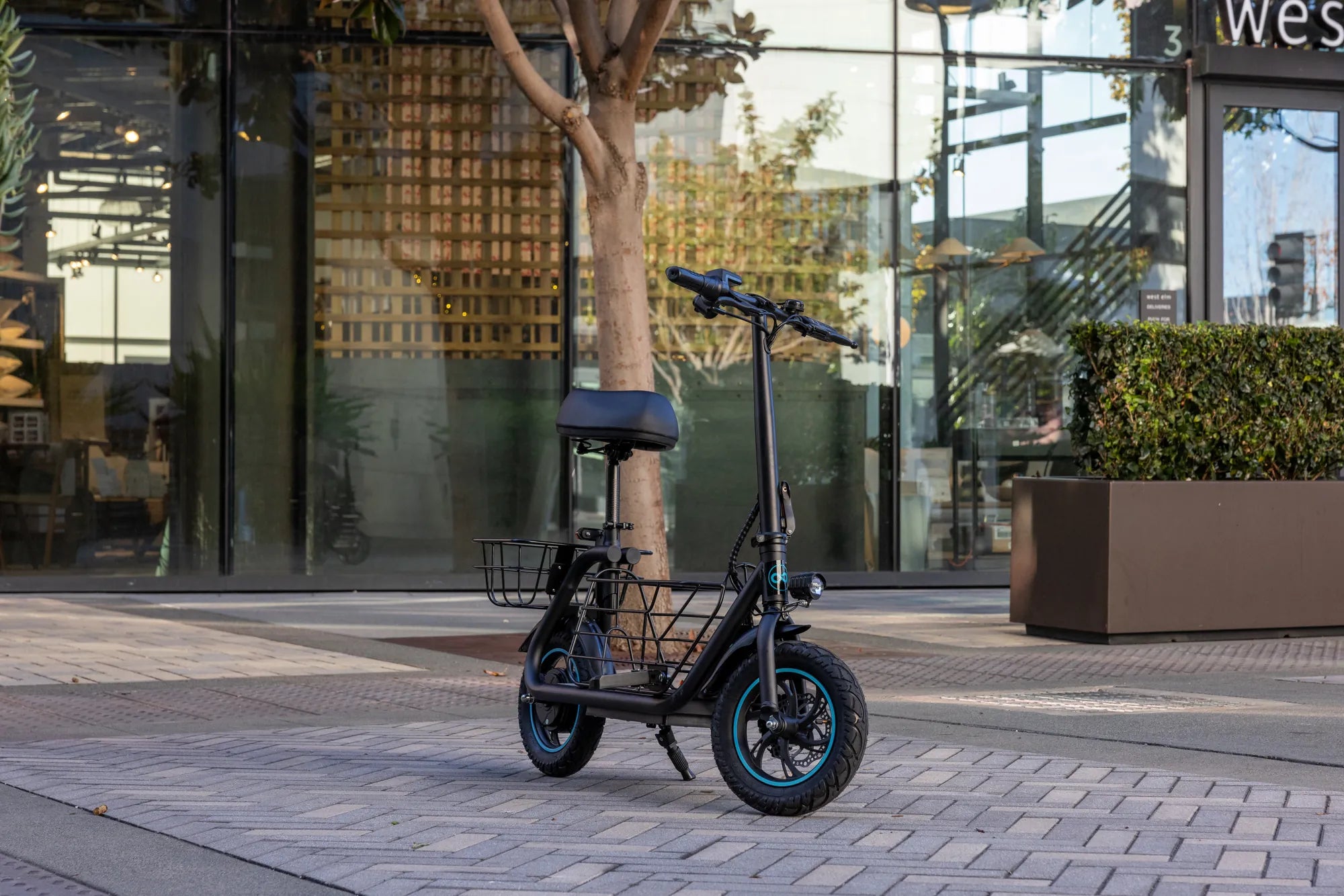
Introduction to 3-Wheel Mobility Scooter Batteries
The battery is the heart of your 3 wheel mobility scooter. It directly determines how far you can travel, how well you climb hills, and ultimately, your independence. Choosing the right battery and maintaining it properly are the most critical decisions for any mobility scooter user.
This guide will provide a complete, data-driven look at 3 wheel mobility scooter battery technology. You will learn the differences between battery chemistries, how to interpret technical specifications, and proven practices to extend battery life. We will also cover how to select a safe, compatible replacement when the time comes.
As a leading brand in personal electric mobility, Gyroor engineers all its products, including mobility solutions, with UL-certified battery safety as a core principle. Understanding your battery empowers you to ride with confidence and reliability for years to come.
Understanding Battery Types: Lead-Acid vs. Lithium-Ion
Mobility scooters primarily use two battery chemistries: traditional Sealed Lead-Acid (SLA) and modern Lithium-Ion (Li-ion). The choice between them significantly impacts the scooter's performance, weight, maintenance, and total cost of ownership. Knowing the key differences is essential for making an informed purchase or upgrade decision.
Lead-acid technology has been used for decades in various applications, including early mobility scooters. Lithium-ion, however, has become the modern standard in consumer electronics and is rapidly becoming preferred for mobility devices due to its superior energy density and user-friendly characteristics.
The following table provides a clear, side-by-side comparison of these two critical battery types for a 3 wheel mobility scooter.
| Feature | Sealed Lead-Acid (SLA) | Lithium-Ion (Li-ion) |
|---|---|---|
| Average Weight | Very Heavy (e.g., 30-40 lbs per battery) | Lightweight (e.g., 8-12 lbs per battery) |
| Energy Density | Low | High |
| Typical Lifespan (Cycles) | 300 - 500 full cycles | 800 - 1000+ full cycles |
| Charge Time | 8 - 12 hours | 4 - 8 hours |
| Memory Effect | Minimal | None |
| Maintenance | Requires periodic equalization charges | Maintenance-free |
| Cost | Lower upfront cost | Higher upfront cost |
| Self-Discharge Rate | Higher (3-5% per month) | Lower (1-2% per month) |
The Traditional Choice: Sealed Lead-Acid (SLA)
Sealed Lead-Acid batteries are often found in entry-level or older 3 wheel mobility scooter models. Their primary advantage is a lower initial purchase price. They are a proven technology with a simple construction.
However, the drawbacks are significant for daily users. SLA batteries are extremely heavy, which reduces the scooter's effective payload capacity and makes handling more difficult. They have a shorter lifespan, typically rated for 300 to 500 full charge cycles before capacity noticeably degrades.
Charging is slow, often requiring 8-12 hours for a full charge. They also require more careful maintenance; allowing them to sit in a deeply discharged state can cause permanent sulfation, ruining the battery. For active users, these limitations can quickly outweigh the initial cost savings.
The Modern Standard: Lithium-Ion (Li-ion)
Lithium-Ion batteries represent the current standard for performance and convenience in a 3 wheel mobility scooter. Their high energy density means they pack more power into a much smaller and lighter package. This directly translates to a lighter scooter with greater range per charge.
A quality Li-ion battery for a mobility scooter can last for 800 to over 1000 full charge cycles, effectively doubling or tripling the service life of an SLA battery. They charge significantly faster, often reaching full capacity in 4 to 8 hours. They are also maintenance-free, with no periodic conditioning required.
Safety is paramount with Li-ion chemistry. Reputable brands like Gyroor exclusively use UL-certified lithium battery packs. This certification ensures the battery has passed rigorous tests for electrical, mechanical, and thermal safety, providing critical peace of mind. For most users seeking reliability and ease of use, Li-ion is the recommended choice.
Key Battery Specifications and What They Mean for You
The numbers on a battery label are not just technical jargon; they are a direct map to your scooter's capabilities. Understanding three key specifications—Voltage, Amp-Hours, and Watt-Hours—allows you to predict real-world performance and compare different models accurately.
These specs work together to define the scooter's power and energy capacity. Think of it like a car: voltage is akin to engine power (for climbing hills), while amp-hours relate to the size of the fuel tank (for determining range). Ignoring these specs can lead to purchasing an underpowered battery or one that doesn't fit your daily needs.
Voltage (V) and Amp-Hours (Ah): Determining Range and Power
Voltage (V) indicates the electrical potential or "pressure" of the battery pack. Common voltages for 3 wheel mobility scooters are 24V, 36V, and 48V. Higher voltage generally means more power available to the motor, resulting in better acceleration and improved hill-climbing ability. It is crucial to match the voltage of a replacement battery exactly to your scooter's system.
Amp-Hours (Ah) measures the battery's capacity, or how much charge it can hold. A higher Ah rating means a larger "fuel tank." For example, a 20Ah battery can theoretically deliver 20 amps of current for one hour before being depleted. In practice, range is calculated by combining Voltage and Amp-Hours into Watt-Hours (Wh).
Watt-Hours (Wh) = Voltage (V) x Amp-Hours (Ah). This is the most accurate measure of total energy. A 24V 20Ah battery (480Wh) has less total energy than a 36V 20Ah battery (720Wh). Therefore, the 36V system will typically provide a longer range, assuming similar motor efficiency and riding conditions.
Charge Cycles and Battery Lifespan
A "charge cycle" is defined as using 100% of the battery's rated capacity, which can happen over multiple partial discharges. For instance, using 50% of the charge one day and 50% the next equals one full cycle. Battery lifespan is typically rated in these cycles.
A standard SLA battery is often rated for 300-500 cycles before its capacity drops to about 80% of its original state. A quality Lithium-ion battery, like those used by Gyroor, is rated for 800-1000+ cycles under normal use. This means a Li-ion battery can last two to three times longer than an SLA battery in daily use.
It's important to note that these are laboratory ratings. Real-world lifespan is heavily influenced by user habits. Extreme temperatures, frequent deep discharges, and using an improper charger can significantly reduce the number of usable cycles. Proper care is the key to reaching—or exceeding—the rated lifespan.
Best Practices for Maximizing Your Battery's Life and Performance
Your daily habits have a profound impact on the health and longevity of your 3 wheel mobility scooter battery. By following a set of simple but effective best practices, you can ensure optimal performance, maximize your range, and delay the need for a costly replacement. These guidelines apply to both lithium-ion and lead-acid batteries, though lithium is more forgiving.
Consistency is more important than perfection. Establishing a routine for charging and storage will yield the best long-term results. The goal is to avoid the two biggest battery stressors: extreme states of charge and extreme temperatures.
Charging Do's and Don'ts
Do charge your battery after each use, even if you've only traveled a short distance. For lithium-ion batteries, it is better to perform frequent partial charges than to regularly drain them completely. Avoid letting the battery sit in a fully discharged state.
Do not leave your battery on the charger indefinitely after it is fully charged. Modern smart chargers will switch to a maintenance or "trickle" mode, but it's still best practice to unplug once charging is complete (usually indicated by a green light).
Do allow the battery to cool down to room temperature after a long ride before plugging it in to charge. Charging a hot battery can accelerate internal degradation. Similarly, avoid charging in direct sunlight or in a very hot garage.
Proper Storage and Seasonal Care
If you plan not to use your 3 wheel mobility scooter for an extended period (e.g., over the winter), proper storage is critical. For Lithium-ion batteries, the ideal storage charge is between 40% and 60%. Never store a battery long-term at 0% or 100% charge, as both states put stress on the cells.
Store the battery (removed from the scooter if possible) in a cool, dry place. Avoid locations where temperatures can fall below freezing (32°F / 0°C) or rise above 95°F (35°C). A climate-controlled indoor space like a closet is ideal. Check the charge level every 2-3 months and give it a top-up if it drops below 30%.
Before returning the battery to service after long storage, give it a full charge with the correct OEM charger. This helps balance the cells and ensures you start your first ride with maximum available range.
The Importance of the Right Charger
Always use the charger provided by the scooter or battery manufacturer. The charger is not a generic device; it is programmed with a specific charging algorithm (voltage and current profile) designed for your battery's chemistry and configuration.
Using an incorrect charger can lead to undercharging, which reduces range and can cause sulfation in SLA batteries. More dangerously, it can cause overcharging, which leads to excessive heat, reduced lifespan, and in extreme cases, poses a safety risk. Gyroor's chargers are specifically engineered for their UL-certified battery packs, ensuring safe, efficient, and lifespan-optimized charging every time.
Choosing a Replacement or Upgrade Battery
Eventually, every 3 wheel mobility scooter battery will reach the end of its usable life, indicated by a severe drop in range. When this time comes, selecting the correct replacement is crucial for safety, performance, and compatibility. This is also an opportunity to upgrade from lead-acid to lithium-ion for improved performance, provided your scooter's electronics are compatible.
The process involves more than just matching voltage. You must consider physical dimensions, connector types, and the battery management system (BMS). Taking the time to verify these details will prevent costly mistakes and ensure a seamless installation.
Compatibility Check: Voltage, Connectors, and Dimensions
First and foremost, the voltage must match exactly. A 36V scooter requires a 36V battery. Installing a 48V battery could damage the motor controller, while a 24V battery will result in very poor performance.
Second, check the physical dimensions. The new battery must fit securely within the scooter's existing battery compartment. Measure the length, width, and height of your old battery or the compartment itself before purchasing.
Third, verify the connector type. Battery connectors come in various styles (e.g., Anderson, XT60, proprietary plugs). The new battery must have the same connector, or you must be prepared to safely swap connectors, which is a task best left to a professional if you are not experienced with electrical work.
Why Invest in a Quality, UL-Certified Battery?
When replacing the heart of your mobility device, opting for the cheapest option can be a false economy and a safety hazard. High-quality batteries from reputable manufacturers use superior cells, robust construction, and integrated Battery Management Systems (BMS).
A UL certification mark is one of the most important indicators of safety. It means the battery model has been independently tested by Underwriters Laboratories to meet stringent standards for electrical, fire, and mechanical hazard safety. Gyroor's commitment to UL-certified batteries reflects a priority on user safety that goes beyond basic compliance.
Investing in a quality, certified battery protects your larger investment in the scooter itself, ensures reliable performance, and comes with the backing of a warranty. Gyroor provides a 1-year warranty on its electric mobility products, offering peace of mind and support should any issue arise.
Troubleshooting Common Battery Issues
Even with proper care, you may encounter issues with your 3 wheel mobility scooter battery. Understanding how to diagnose common problems can help you determine if it's a simple fix, a maintenance need, or a sign that replacement is imminent. Always prioritize safety; if you are unsure, consult the manufacturer or a qualified technician.
Many perceived battery problems can actually be related to the charger, connectors, or fuses. A systematic approach to troubleshooting can save time and money. Start with the simplest explanations before assuming the battery itself has failed.
If your scooter won't power on at all, first check that the battery is properly connected in its compartment. Ensure the main power switch on the scooter (if present) is turned on. Next, check any inline fuses. A blown fuse is a common and inexpensive fix. Verify that the charger is working by plugging it in and checking for indicator lights.
A sudden, significant reduction in range is the most common sign of a failing battery. Before concluding the battery is bad, consider external factors: Have you been riding on more inclines? Has the weather turned colder? Are the tires properly inflated? If range remains poor under normal conditions, the battery's capacity has likely degraded.
If the battery is not charging, the problem could be with the charger, the wall outlet, or the battery's charging port. Try a different outlet. Check the charger's cables for damage. Inspect the battery's charge port for debris or bent pins. If another known-good charger also fails to charge the battery, the internal BMS (in Li-ion) may have triggered a fault or the cells may be damaged.
Frequently Asked Questions (FAQ)
Q1: How long does a 3 wheel mobility scooter battery last on a single charge?
Range varies widely based on battery capacity (Ah), voltage (V), rider weight, terrain, and speed. A typical mid-range scooter with a 36V 20Ah lithium battery can travel 15-25 miles on a single charge under average conditions. Always refer to the manufacturer's stated range, but understand that real-world results will be lower if you frequently climb hills or ride at top speed.
Q2: Can I use a lithium battery to replace my old lead-acid one?
Often, yes, but you must check compatibility. The voltage must match exactly. You will likely need a new charger, as lithium and lead-acid require different charging algorithms. The physical size and connector type must also be compatible. Upgrading to lithium reduces weight and increases range, but it is an investment that requires ensuring your scooter's electronics can handle it.
Q3: How do I know when my battery needs to be replaced?
The primary sign is a drastic reduction in usable range. If your scooter used to travel 15 miles but now struggles to go 5 miles on a full charge, the battery capacity has degraded. Other signs include the battery not holding a charge, taking an abnormally short time to charge fully, or the scooter struggling on slopes it previously handled easily.
Q4: Is it safe to leave my scooter charging overnight?
With a modern, manufacturer-provided smart charger, it is generally safe, as the charger will switch to a maintenance mode once full. However, as a best practice for safety and battery longevity, it is recommended to charge during waking hours when possible. Avoid charging unattended for extremely long periods (multiple days) or in cluttered, enclosed spaces.
Q5: Does Gyroor's warranty cover the battery?
Yes. Gyroor's standard 1-year warranty covers defects in materials and workmanship for the entire product, including the battery pack. This warranty is a testament to the confidence in their UL-certified battery technology. Always register your product and follow the care guidelines in the user manual to keep the warranty valid.
Conclusion: Powering Your Freedom with Confidence
Your 3 wheel mobility scooter battery is more than just a component; it's the source of your independence. Understanding its technology, specifications, and care requirements empowers you to make smart decisions, whether you're maintaining your current battery or selecting a new one. The choice between lead-acid and lithium-ion, the diligence in proper charging, and the insistence on safety-certified components all contribute to a reliable and worry-free mobility experience.
Investing in a high-quality battery from a trusted brand like Gyroor, backed by rigorous UL certification and a solid warranty, is an investment in long-term peace of mind. It ensures that your scooter performs when you need it most, providing the freedom and confidence to navigate your day. Proper care extends this investment, maximizing your range and delaying replacement costs.
Ready to explore reliable, safety-engineered mobility solutions? Browse the full Gyroor collection at gyroorboard.com to discover electric scooters and personal transportation devices designed with performance, safety, and rider satisfaction as the top priority.
What's the Best Scooter? A Data-Driven Guide to Finding Your Perfect Ride
125cc Trike: The Ultimate Guide to Stable, Economical Three-Wheeled Riding