


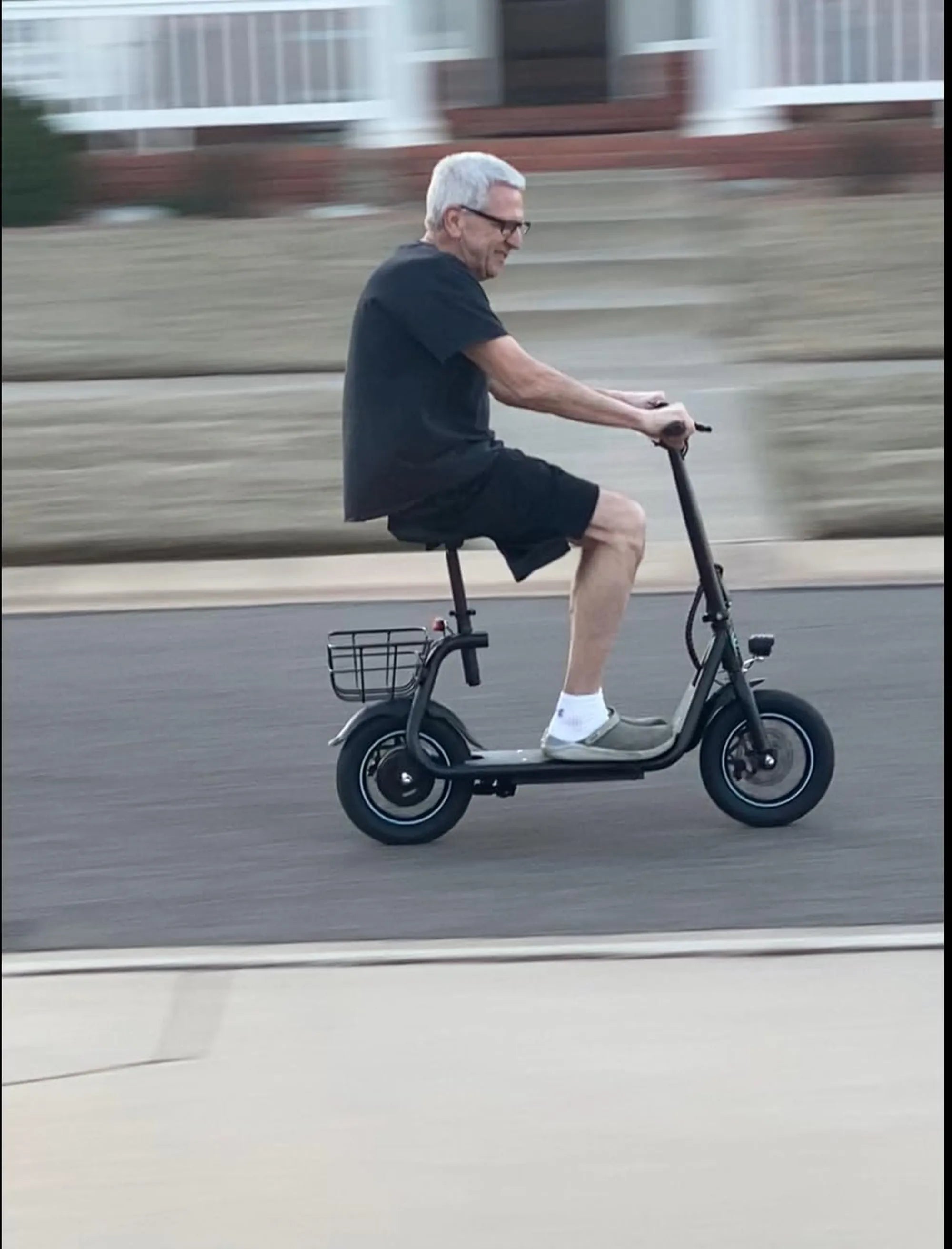
Introduction: The Rise of the 350W Electric Scooter
The 350W electric scooter has emerged as the definitive sweet spot in personal micro-mobility. It delivers the perfect equilibrium of sufficient power for urban landscapes, commendable efficiency for extended range, and compliance with many local regulations. For riders navigating city grids, college campuses, or suburban errands, this motor rating offers a compelling blend of practicality and performance that higher-wattage models often overcomplicate.
This guide will dissect the engineering rationale, critical features, and real-world benefits of choosing a 350w scooter. You will learn how this specific power class optimizes your commute, what specifications truly matter beyond the motor, and how to identify a scooter built for longevity and safety. We will also provide clear comparisons to other motor sizes and answer the most pressing questions from new and experienced riders alike.
The goal is to equip you with the knowledge to make an informed purchase. Understanding the nuances of a 350w scooter ensures you invest in a vehicle that seamlessly integrates into your daily life without compromise.
Why 350 Watts? The Perfect Balance of Power and Practicality
The choice of a 350-watt motor is not arbitrary; it is a calculated engineering decision aimed at the typical urban commuter. This power level provides ample torque for confident acceleration from a standstill, allowing you to merge safely with bicycle traffic or cross intersections promptly. It supports a top speed typically between 15 and 20 mph, which aligns with safe riding on bike lanes and multi-use paths.
Perhaps most importantly, a 350W motor strikes an optimal balance for hill climbing. It can comfortably handle moderate inclines in the 10-15% grade range, which covers the vast majority of urban slopes and overpasses. This capability means you won't be forced to dismount and push on your daily route, a common frustration with underpowered 250W models.
Simultaneously, the 350W motor avoids the excessive energy consumption and heat generation of more powerful 500W or 1000W motors. This efficiency translates directly into longer potential range from a similarly sized battery pack, reducing range anxiety and charging frequency. For the average commuter traveling 5-10 miles round trip, this efficiency is a key advantage.
Furthermore, in many jurisdictions across North America and Europe, electric scooters with motors under 500W and speeds under 20 mph face fewer regulatory hurdles. They are often classified similarly to bicycles, permitting use on bike paths without requiring a license, registration, or insurance. This makes the 350w scooter a hassle-free legal choice.
Performance vs. Efficiency: The 350W Equation
The 350W equation is fundamentally about maximizing usable performance per watt of energy consumed. The motor generates enough rotational force (torque) to get a rider weighing up to 220 lbs moving quickly, but it does so without the massive current draw that rapidly depletes a battery.
On flat terrain, a 350w scooter can often maintain its top speed while using only 70-80% of its maximum power draw. This headroom is crucial for handling brief accelerations or slight inclines without straining the system. The motor and electronic speed controller (ESC) operate in a highly efficient zone, minimizing energy loss as heat.
This efficiency directly impacts battery lifespan. A battery pack subjected to consistently high discharge rates degrades faster. The moderate demands of a 350W motor, paired with a quality battery management system (BMS), help ensure the battery retains its capacity over hundreds of charge cycles. This is a critical factor for long-term ownership cost and reliability.
In practice, this balance means a rider enjoys a snappy, responsive ride capable of tackling real-world urban obstacles, all while achieving a range that makes the scooter a viable primary commuter tool rather than a last-mile novelty.
Key Features to Look for in a 350W Scooter
While motor wattage is a headline figure, it is only one component of a high-quality electric scooter. Ignoring other critical features can lead to a disappointing and potentially unsafe experience. A truly great 350w scooter is defined by the synergy of its components.
First, examine the frame construction. Aircraft-grade aluminum alloy is the standard for a reason: it offers an excellent strength-to-weight ratio, resisting fatigue from daily use and vibrations. The folding mechanism should feel robust and secure, with no worrisome play when locked in the riding position.
The braking system is non-negotiable for safety. A combination brake system is ideal. A front electronic regenerative brake helps recapture some energy and provides smooth stopping power, while a rear disc or drum brake offers strong, consistent mechanical braking, especially important in wet conditions. Relying solely on a foot fender brake or a weak electronic brake is insufficient for safe commuting at 15-20 mph.
Finally, consider the cockpit and controls. A clear, bright display showing speed, battery level, and riding mode is essential. The throttle should be responsive, not laggy, and the controls should be intuitively placed. Additional features like integrated lighting (front and rear), a bell, and a kickstand add significant daily convenience.
Battery & Range: The Heart of Your Ride
The battery is the lifeblood of your 350w scooter. Its capacity, measured in Watt-hours (Wh) or Amp-hours (Ah), determines how far you can go. For a 350W motor, a battery in the 36V 7.8Ah (approx. 280Wh) to 36V 10.4Ah (approx. 375Wh) range is common. Realistically, expect 15 to 25 miles of range per charge, depending heavily on rider weight, terrain, temperature, and riding style.
Battery quality and safety are paramount. Always prioritize scooters with UL-certified battery packs. This certification means the cells and battery management system have undergone rigorous independent testing for safety, stability, and performance over hundreds of charge cycles. It is your best defense against fire risk and premature failure.
Brands like Gyroor build their reputation on this foundation, using only UL-certified batteries tested for 500+ charge cycles. This commitment ensures that the promised range remains consistent over years of ownership and that the scooter's most critical component is reliable.
Remember, manufacturer range claims are often based on ideal laboratory conditions. For real-world planning, assume you'll achieve 70-80% of the advertised maximum range, especially if your route includes hills or you ride at top speed frequently.
Build Quality & Durability for Daily Use
A commuter scooter must withstand daily punishment: potholes, curbs, rain, and constant folding. Build quality separates a seasonal toy from a dependable transportation tool. The frame should have clean welds and reinforced stress points, particularly around the folding hinge and the stem.
Tire choice significantly impacts ride quality and maintenance. Pneumatic (air-filled) tires offer superior shock absorption and traction, especially on wet or uneven surfaces, but require occasional inflation and are susceptible to punctures. Solid or honeycomb tires eliminate flat tires but provide a harsher ride and less grip. For a 350w scooter used primarily on paved surfaces, quality pneumatic tires are often the best balance.
Water resistance is crucial for all-weather readiness. Look for a minimum IPX4 rating (splash resistance from all angles), but an IPX5 rating is the benchmark for a true commuter. An IPX5-rated 350w scooter can withstand water jets from a nozzle, meaning it can safely handle riding in steady rain and through puddles, protecting the motor, battery, and electronics from water damage.
This durability is backed by warranty. A comprehensive 1-year warranty covering the frame, motor, battery, and electronics indicates the manufacturer's confidence in their product. It provides essential peace of mind for your investment.
Gyroor 350W Scooters: Engineered for Confidence
Gyroor has established itself as a leader in personal electric mobility by focusing on the core principles that matter most for daily riders: certified safety, durable construction, and reliable performance. Their approach to the 350w scooter category exemplifies this philosophy, engineering vehicles that inspire confidence mile after mile.
By integrating high-discharge, UL-certified lithium-ion battery packs with precision-tuned 350W brushless hub motors, Gyroor models deliver the predictable, efficient performance discussed throughout this guide. The power delivery is smooth, the acceleration is linear, and the hill-climbing capability meets real-world urban demands.
Attention to detail extends to the rider experience. Ergonomically designed decks provide stable footing, bright LED lighting ensures visibility, and intuitive controls make operation simple. This holistic engineering ensures that the 350w scooter is not just a collection of parts, but a cohesive, reliable machine.
With a trusted community of over 100,000 riders across North America and Europe and a consistent 4.5/5 average rating, Gyroor's commitment to the 350W platform is proven in daily use. Their models are designed to be the dependable workhorse of your micro-mobility fleet.
Safety First: UL-Certified Batteries and Reliable Braking
Safety is the non-negotiable foundation of any responsible e-scooter brand. Gyroor's unwavering commitment starts with the battery. Every Gyroor scooter uses a UL 2271 certified battery pack. This certification involves exhaustive testing for electrical, mechanical, and environmental safety, including overcharge, short circuit, crush, and drop tests.
This goes beyond marketing; it is a critical safeguard. A UL-certified battery pack drastically reduces the risk of thermal runaway (fire) and ensures the battery management system properly regulates charging and discharging, maximizing cell lifespan. For a component that is charged indoors, often overnight, this certification is indispensable.
This philosophy extends to the braking system. Gyroor equips its 350W commuter scooters with a dual braking system, typically combining a front electronic regenerative brake with a rear mechanical disc brake. This setup provides redundant stopping power. The regenerative brake offers smooth, controlled deceleration while recapturing energy, and the mechanical disc brake delivers immediate, powerful stopping force in any condition, from dry pavement to wet streets.
Together, a certified safe energy source and a robust, redundant braking system create a 350w scooter you can trust with your daily commute, providing security for both the rider and the surrounding community.
Built to Last: IPX5 Water-Resistance and Warranty Peace of Mind
Durability is defined by how a product handles the unexpected. For an electric scooter, water is a primary adversary. Gyroor's IPX5 water-resistance rating is a specification with tangible meaning. It certifies that the scooter's critical components can withstand low-pressure water jets from any direction.
In practical terms, this means you can confidently ride your Gyroor 350w scooter in light to moderate rain, through urban puddles, or after the streets have been washed. The motor compartment, battery housing, and deck electronics are sealed against water ingress, preventing corrosion and electrical shorts that can cripple lesser models.
This ruggedness is backed by a clear promise: Gyroor's standard 1-year comprehensive warranty. This warranty covers defects in materials and workmanship for the entire vehicle, including the battery, motor, controller, and frame. For a brand with US-based customer support, this warranty is straightforward and actionable, not a hollow promise.
The combination of IPX5 construction and a strong warranty transforms the 350w scooter from a disposable gadget into a legitimate tool. It guarantees that your investment is protected against manufacturing flaws and built to survive the realities of daily commuting, come rain or shine.
350W Scooter vs. The Competition: Making an Informed Choice
Understanding where the 350W motor fits in the broader landscape of electric scooters is key to validating your choice. It sits in a strategic position between less powerful and more powerful options, each suited to different primary use cases.
A 250W scooter is often lighter and less expensive, but it struggles significantly with hills and may feel sluggish with heavier riders. It's best suited for very flat areas or for riders who prioritize minimum weight and cost over performance. The 350w scooter, in contrast, adds that crucial hill-climbing ability and more confident acceleration without a major weight or cost penalty.
At the other end, 500W, 750W, or 1000W scooters offer higher top speeds (25+ mph) and greater hill-climbing torque. However, this comes with trade-offs: significantly higher energy consumption (shorter range per battery size), increased weight, more heat generation, and often more complex (and sometimes less reliable) electronics. They may also fall into different, more restrictive legal categories requiring licensing or prohibiting use on bike paths.
The following table provides a clear, data-driven comparison to illustrate these differences and highlight the 350w scooter's role as the optimal urban commuter.
| Motor Power | Best Use Case | Top Speed | Hill Climbing | Typical Range* |
|---|---|---|---|---|
| 250W | Flat campuses, light recreational use | 12-15 mph | Struggles with >10% grades | 10-18 miles |
| 350W | Urban commuting, suburban errands | 15-20 mph | Handles 10-15% grades well | 15-25 miles |
| 500W+ | Hilly terrain, performance riding | 20-28+ mph | Excels on steep hills | 12-20 miles (for comparable battery) |
*Range varies greatly based on battery capacity, rider weight, and terrain. Table assumes similar battery size (e.g., ~300Wh).
As the table shows, the 350w scooter occupies the center ground, offering the best combination of adequate speed, proven hill capability, and maximum efficiency for its power class. It is the rational choice for the majority of commuters.
Frequently Asked Questions About 350W Electric Scooters
Q: Is a 350W scooter powerful enough for my hilly commute?
A: For most urban and suburban environments, yes. A quality 350w scooter with a geared hub motor can handle sustained inclines of 10-15% grade. If your route includes very steep, long hills (over 15% grade), you may want to test a 350W model first or consider a 500W scooter, understanding the trade-offs in range and legality.
Q: How far can I really go on a single charge?
A: Real-world range is influenced by rider weight, wind, temperature, terrain, and riding speed. A 350w scooter with a 36V 10Ah (360Wh) battery will typically provide 18-22 miles for a 160 lb rider on flat ground at moderate speed. Heavier riders or hilly routes will reduce this. Always plan for about 70-80% of the manufacturer's ideal-condition claim.
Q: Do I need a license, registration, or insurance to ride a 350W scooter?
A> Laws vary by city, state, and country. In many jurisdictions in the US and Europe, electric scooters with motors under 500W and a maximum speed under 20 mph are treated similarly to bicycles. This often means no driver's license, vehicle registration, or insurance is required. However, you must always check your local ordinances before riding.
Q: Are 350W scooters legal on bike paths and in bike lanes?
A: Again, this depends on local law. In most areas that have legalized e-scooters, models that meet the criteria above (sub-20 mph, often sub-500W) are explicitly permitted in bicycle lanes and on multi-use paths. They are usually prohibited on sidewalks for pedestrian safety. Always verify local rules.
Q: How important is the IP water resistance rating?
A> Extremely important if you plan to use the scooter for daily transportation. Weather is unpredictable. An IPX4 rating protects against splashes, but an IPX5 rating (like on Gyroor models) ensures the scooter can handle riding in rain and through puddles without damage. For a true commuter vehicle, IPX5 should be considered a minimum standard.
Conclusion: Your Smart Choice for Everyday Mobility
The 350w scooter stands as the intelligent cornerstone of modern personal electric transport. It delivers precisely the power needed for efficient, capable urban commuting without the complexity, cost, and regulatory concerns of overpowered alternatives. By prioritizing this balance, you choose a vehicle designed for sustainability—both in battery life and daily utility.
Your decision ultimately hinges on trusting the engineering behind the specifications. A 350w scooter from a brand like Gyroor, built with UL-certified batteries, IPX5 water resistance, and backed by a robust warranty, transforms a simple purchase into a long-term mobility solution. It’s the difference between a gadget and a reliable commuter partner.
Ready to experience the perfect balance of power, efficiency, and peace of mind? Explore the engineered reliability of a Gyroor 350W electric scooter. Browse the full Gyroor collection, trusted by over 100,000 riders, at gyroorboard.com and find the model that powers your journey.
Little Boy Scooter: The Ultimate Guide to Choosing the Perfect Ride
How Fast Can a 10-Speed Bike Go? Realistic Speed Ranges Explained