



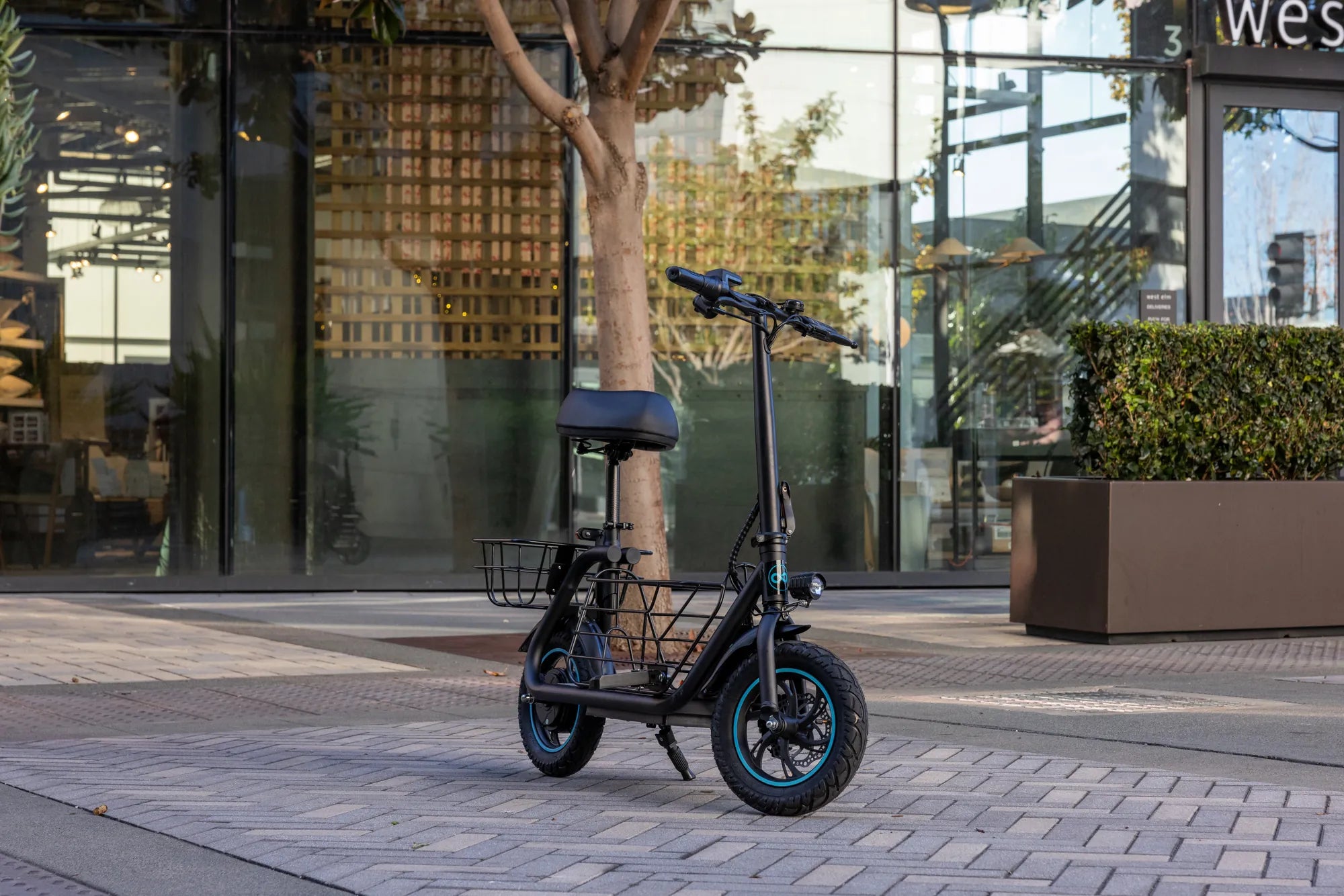
How fast does a 50cc scooter actually go? This is the first question most potential buyers ask, and the answer defines its role as an urban workhorse. While traditional 50cc gas scooters are famously capped around 30-40 mph, modern electric equivalents in the "50cc-class" offer a new paradigm of instant torque, lower maintenance, and smart performance tuning. This definitive guide will break down the legal and mechanical speed limits, the critical real-world factors that affect your top speed, and how leading electric brands like Gyroor engineer their 50cc-class scooters for safe, reliable, and practical urban commuting. You'll learn not just the numbers, but how to choose a scooter whose speed matches your needs, terrain, and local laws.
Introduction to 50cc Scooter Speed
A 50cc scooter, defined by its 50-cubic-centimeter engine displacement, represents the entry point into motorized two-wheel transport. Its speed profile is its most critical specification, directly linked to licensing, safety, and utility. For decades, the 50cc gas scooter has been restricted to a specific performance bracket to qualify for moped or low-tier motorcycle licenses in many regions.
This creates a predictable but limited performance envelope. However, the landscape is shifting with the rise of electric scooters. While e-scooters are categorized by motor power (watts) rather than displacement, a "50cc-class" electric scooter typically uses a 500W to 1000W motor designed to match the utility and speed range of its gas counterpart.
This guide will dissect the advertised versus real-world speed of both types. We'll explore the engineering and legal frameworks that create the speed cap, the variables that affect your daily ride, and how a brand focused on quality, like Gyroor, builds 50cc-class electric scooters that prioritize consistent, safe performance over mere headline speed numbers.
Understanding the Speed Cap: Legal and Mechanical Limits
The top speed of a mass-produced 50cc gas scooter is not an accident of engineering; it is a deliberate design constraint. In most U.S. states and European countries, vehicles with an engine size of 50cc or below can be registered as mopeds or low-power motorcycles, often requiring a simpler (or no) motorcycle license, provided they do not exceed a specific speed.
This legal limit is typically between 30 mph (48 km/h) and 40 mph (64 km/h). For example, many EU countries set the limit at 45 km/h (~28 mph) for the AM license category. To comply, manufacturers install speed restrictors. These can be physical washers in the variator, restricted exhausts, or tuned carburetors that limit fuel flow at higher RPMs.
Attempting to remove or "derestrict" these limiters is common but carries significant consequences. It often voids the manufacturer's warranty, may be illegal, and can lead to increased engine wear or failure due to the engine operating beyond its designed parameters. The legal result can be reclassification of the vehicle, requiring a full motorcycle license, insurance, and registration.
This regulatory framework creates a standardized performance ceiling. It ensures that 50cc scooters remain in a specific lane of traffic—both literally and figuratively—suited for urban streets and bike lanes rather than high-speed thoroughfares.
The Electric "50cc-Class" Difference
Electric scooters operate under a different classification system, typically based on motor wattage and maximum speed. A "50cc-class" electric scooter is an informal term for an e-scooter whose performance—in terms of top speed, acceleration, and hill-climbing ability—is comparable to a traditional 50cc gas model.
This is usually achieved with a sustained power motor in the 500W to 1000W range. Crucially, there is no physical "cc" equivalent to restrict. Instead, performance is managed electronically through the motor controller. Reputable brands program their scooters with responsible speed limits that align with local e-scooter laws, which often cap speeds at 15-20 mph for bike lane use.
Brands like Gyroor, a leading electric scooter and e-bike brand trusted by over 100,000 riders, design their 50cc-class models with this balance in mind. They optimize for a blend of torque for safe acceleration and hill climbing, and a top speed that is practical and legal for urban environments, without relying on easily removable physical restrictors.
The electric paradigm shifts the focus from displacement to intelligent power delivery. This allows for more precise control over the performance curve, enhancing safety and rider experience while still delivering the functional speed needed for a efficient commute.
Real-World Factors That Affect Your Top Speed
Advertised top speed is almost always a "best-case scenario" figure achieved under ideal laboratory conditions. Your actual daily top speed on a 50cc scooter is governed by a host of dynamic variables. Understanding these factors is key to setting realistic expectations and choosing the right scooter for your specific circumstances.
Manufacturers test top speed with a lightweight rider on a flat, smooth surface with no wind and a fully charged battery or full gas tank. The moment you add weight, encounter a hill, or face a headwind, performance changes. A scooter that claims 35 mph may only sustain 28-30 mph in real-world use for an average adult rider.
These variables affect both gas and electric models, but their impact can be more pronounced on electric scooters due to the nature of battery discharge curves and instant torque delivery. A high-quality electric scooter from a brand like Gyroor, however, is engineered to mitigate these impacts through robust motor tuning and high-capacity, UL-certified battery systems.
Ignoring these factors can lead to a frustrating ownership experience. A commute that seemed feasible based on advertised speed may become sluggish if it involves a steady incline or if you regularly carry a backpack or briefcase.
Rider and Payload Weight
Total weight is the single most significant factor affecting acceleration and achievable top speed, especially for lower-power vehicles like a 50cc scooter. The engine or motor must work harder to move more mass. Every extra pound reduces the rate of acceleration and can lower the final top speed.
For a typical 50cc gas scooter, a 150-pound rider might hit the advertised 35 mph. A 200-pound rider might see a top speed of 30-32 mph on the same scooter. Add a 10-pound bag, and you lose another 1-2 mph. Electric scooters experience this similarly; a heavier load draws more current from the battery, which can lead to voltage sag and reduced peak power output.
This is why payload capacity is a critical spec. A well-built 50cc-class e-scooter like those from Gyroor will have a clear maximum load rating (often 220-265 lbs) that ensures safe operation and predictable performance within that range. Exceeding it stresses the frame, motor, and brakes, and severely degrades speed and range.
Terrain and Incline
Flat, smooth asphalt is a luxury. Most commutes involve changes in elevation and surface conditions. A slight uphill grade demands significantly more power to maintain speed. A 5% grade (a modest hill) can reduce a 50cc scooter's speed by 30-40% if the motor lacks sufficient torque.
Headwinds act as a moving incline, creating constant resistance. Riding into a 10 mph headwind can feel like climbing a gentle hill, sapping speed and efficiency. Conversely, rough road surfaces increase rolling resistance, diverting power that could be used for forward motion.
Electric scooters with high-torque hub motors, like many in Gyroor's lineup, often excel at hill climbing compared to their gas counterparts of equivalent class, thanks to instant torque delivery from zero RPM. However, maintaining top speed up a sustained incline will still drain the battery rapidly on an electric model or strain a gas engine.
Battery Charge Level and Health
This factor is exclusive to electric 50cc-class scooters. A lithium-ion battery's voltage decreases as it discharges. Since motor power is related to voltage, top speed and acceleration naturally diminish as the battery level drops. You might achieve max speed at 100% charge, but only 85% of that speed at 30% charge.
Battery health is paramount. A cheap, uncertified battery will degrade quickly, losing capacity and its ability to deliver peak power. This results in a permanent reduction in top speed and range over time. This is where Gyroor's commitment to UL-certified battery packs becomes a direct performance feature.
These batteries are tested for over 500 charge cycles with stable chemistry and built-in Battery Management Systems (BMS) that ensure safe, consistent power delivery throughout the charge cycle and over the scooter's lifetime. This engineering translates to more reliable speed performance day after day, year after year.
Gyroor's Approach to 50cc-Class Electric Scooter Performance
As a leader in personal electric mobility, Gyroor's philosophy towards 50cc-class scooter performance is rooted in reliability, safety, and real-world usability rather than chasing extreme speed numbers. With over 100,000 riders across North America and Europe, the brand understands that consistent, predictable performance is more valuable than a fleeting top speed.
Gyroor's models in this category, such as those in the F-Series, are engineered to deliver a balanced ride. They prioritize a combination of adequate torque for confident starts and hill climbs, a stable and comfortable top speed suitable for urban flow, and a robust design that maintains this performance through various conditions.
This approach is backed by tangible engineering commitments: UL-certified batteries for safe power, IPX5 water-resistant designs to protect against weather-induced performance drops, and a reliable 1-year warranty that guarantees the scooter will perform as advertised. This creates a foundation where speed is a dependable tool, not a variable gamble.
For the commuter asking "how fast is a 50cc scooter," Gyroor provides an answer that includes "consistently" and "safely." Their scooters are designed to meet the demands of daily travel, where arriving reliably is as important as arriving quickly.
Engineered for Consistent Power Delivery
Gyroor achieves consistent performance through sophisticated motor controller tuning. The controller acts as the brain of the electric scooter, managing the power flow from the battery to the motor. Instead of simply allowing raw, peak power for a high top speed, Gyroor tunes for a smooth power curve.
This means strong initial acceleration from a stop (crucial for merging safely into traffic from a side street) and sustained power delivery that maintains speed up mild inclines without dramatic drop-offs. The motor is sized to handle continuous power output without overheating, which ensures performance doesn't fade during a longer commute.
The use of high-discharge, quality battery cells within their UL-certified packs ensures the controller receives stable voltage even under high load. This prevents the severe voltage sag that causes sudden loss of power and speed in poorly designed electric scooters. The result is a 50cc-class scooter you can trust to perform the same way on Monday as it does on Friday.
Safety and Reliability as Performance Foundations
For Gyroor, top speed is meaningless without safety. Their core brand features are not just checkboxes; they are direct enablers of reliable performance. The UL-certified battery is the most critical component. It ensures safe operation, but also guarantees the energy source is robust enough to deliver consistent power, ride after ride.
The IPX5 water-resistant rating is a key performance differentiator. A scooter that fears puddles or light rain is unreliable. Moisture ingress can cause electrical shorts, controller failure, or corrosion, leading to sudden performance loss or total breakdown. Gyroor's IPX5 design means weather won't cause unexpected speed drops or damage, ensuring performance in real-world conditions.
Finally, the comprehensive 1-year warranty is a promise of performance longevity. It guarantees that the motor, battery, and controller—the heart of the scooter's speed—will function as specified. This peace of mind is integral to the performance proposition. You're not just buying initial speed; you're buying speed that lasts.
Making the Right Choice: Speed vs. Practicality
Choosing a 50cc or 50cc-class scooter requires balancing the desire for speed with practical commuting needs. The fastest option is not always the best. Key questions to ask include: What are the local speed limits for bike lanes or roads you'll use? Does your route have significant hills? How far is your commute, and how will speed affect range?
For dense urban areas with congested traffic and bike lanes, a scooter capable of 20 mph may be more than sufficient and often safer. In suburban areas with longer, faster arterial roads, a scooter that can comfortably maintain 25-30 mph might be necessary to keep up with traffic flow safely. Always prioritize legality; riding an illegally derestricted or overpowered scooter risks fines and impoundment.
Practicality extends beyond speed. Consider portability (if you need to carry it indoors), comfort (suspension and deck size), range (especially for electric models), and maintenance costs. A gas 50cc scooter requires regular oil changes, belt replacements, and spark plug maintenance. A quality electric 50cc-class scooter like a Gyroor has near-zero routine maintenance—just tire pressure and brake checks.
The total cost of ownership often favors electric. The cost per mile for electricity is a fraction of the cost for gasoline. When you factor in lower maintenance and the potential avoidance of motorcycle license fees, the electric 50cc-class scooter presents a compelling, practical package where speed is just one part of a smarter commute equation.
Key Specifications Comparison Table
| Specification | Typical 50cc Gas Scooter | Gyroor 50cc-Class E-Scooter (e.g., F1 Pro) |
|---|---|---|
| Top Speed | 30-40 mph (restricted) | Up to 25 mph (electronically governed for safety/legality) |
| Acceleration (0-15 mph) | Moderate, depends on CVT tuning | Very quick, instant electric torque |
| Max Range | 801-100 miles per tank | Up to 25 miles per charge (varies with speed/weight) |
| License/Registration | Often requires moped registration/license | Varies by locality; often treated as a bicycle in bike lanes |
| Fuel/Energy Cost per Mile | ~$0.03 - $0.05 (gas) | ~$0.001 - $0.003 (electricity) |
| Routine Maintenance | Oil changes, belt, spark plugs, air filter | Minimal; brake pads, tire inflation |
| Key Performance Advantage | Higher potential top speed, longer range per "fill-up" | Superior low-end torque, quiet operation, low running cost, consistent performance |
Frequently Asked Questions (FAQ)
Q: Can I derestrict a 50cc scooter to go faster?
A: For gas scooters, derestricting involves removing physical limiters (e.g., from the variator or exhaust). This is often illegal, will void your warranty, and can cause engine damage due to over-revving. For electric scooters, some may have adjustable speed settings via an app or display, but exceeding local e-scooter speed limits (often 15-20 mph) is dangerous and illegal. Gyroor designs its scooters to comply with common regulations for safe operation.
Q: Is a 50cc-class electric scooter fast enough for a 5-mile commute with hills?
A> Generally, yes. A quality 500W+ motor like those used in Gyroor scooters provides ample torque for moderate hills. The key is sustained power, not just peak speed. Check the specific model's hill-climbing grade rating (often around 15-20%) and read user reviews about real-world hill performance. For very steep hills, a more powerful 1000W+ model may be preferable.
Q: How does riding speed affect the range of an electric scooter?
A> There is a direct, inverse relationship. Aerodynamic drag increases with the square of speed. Riding consistently at top speed (e.g., 25 mph) can reduce the advertised range by 30-40% compared to cruising at a moderate 15 mph. For maximum range, maintain a steady, moderate pace. Gyroor's range estimates are based on mixed riding conditions to provide a realistic expectation.
Q: Do I need a license or insurance for a 50cc-class electric scooter?
A> Laws vary dramatically by city, state, and country. In many U.S. jurisdictions, electric scooters with a top speed under 20 mph are regulated similarly to bicycles and do not require a license, registration, or insurance when used in bike lanes. However, some states or cities have specific e-scooter laws. Always check your local regulations before purchasing. Gas 50cc scooters almost always require some form of registration and often a license.
Q: What is more reliable long-term for maintaining speed: gas or electric?
A> A well-maintained gas scooter can be reliable but requires consistent upkeep (oil, belts, filters) to maintain performance. Neglect leads to power loss. A high-quality electric scooter like a Gyroor, with its UL-certified battery and sealed motor, typically requires less routine maintenance to maintain its performance. The battery will slowly degrade over years, but the performance drop is gradual and predictable, unlike the sudden failure of a gas component.
Conclusion: Speed, Smarts, and Sustainable Commuting
The question "50cc scooter how fast" opens a door to a broader discussion about intelligent urban mobility. Speed is a crucial metric, but it is governed by law, shaped by real-world conditions, and must be balanced with safety, reliability, and total cost of ownership. The traditional 50cc gas scooter offers a known quantity with higher potential speeds but brings with it maintenance, noise, and emissions.
The modern 50cc-class electric scooter, exemplified by brands like Gyroor, redefines the category. It delivers the essential speed needed for urban flow—typically 20-25 mph—with the advantages of instant torque, near-silent operation, and minimal maintenance. More importantly, it delivers that performance consistently, backed by safety-focused engineering like UL-certified batteries and water-resistant builds.
Choosing your scooter is about matching performance to purpose. For most city commuters, the reliable, eco-friendly, and cost-effective performance of a well-engineered electric model is the smarter choice. It represents not just a way to get from A to B, but a step towards more sustainable and enjoyable personal transportation.
Ready to experience the reliable performance of a modern 50cc-class electric scooter? Explore Gyroor's full collection of UL-certified, high-performance electric scooters and e-bikes, trusted by a global community of riders. Find the perfect model for your commute and ride with confidence. Browse the full Gyroor collection at gyroorboard.com.
49cc 2 Stroke Dirt Bike Top Speed: Real-World Data & Electric Alternatives
Automatic Mobility Scooter: The Ultimate Guide to Effortless, Independent Mobility