



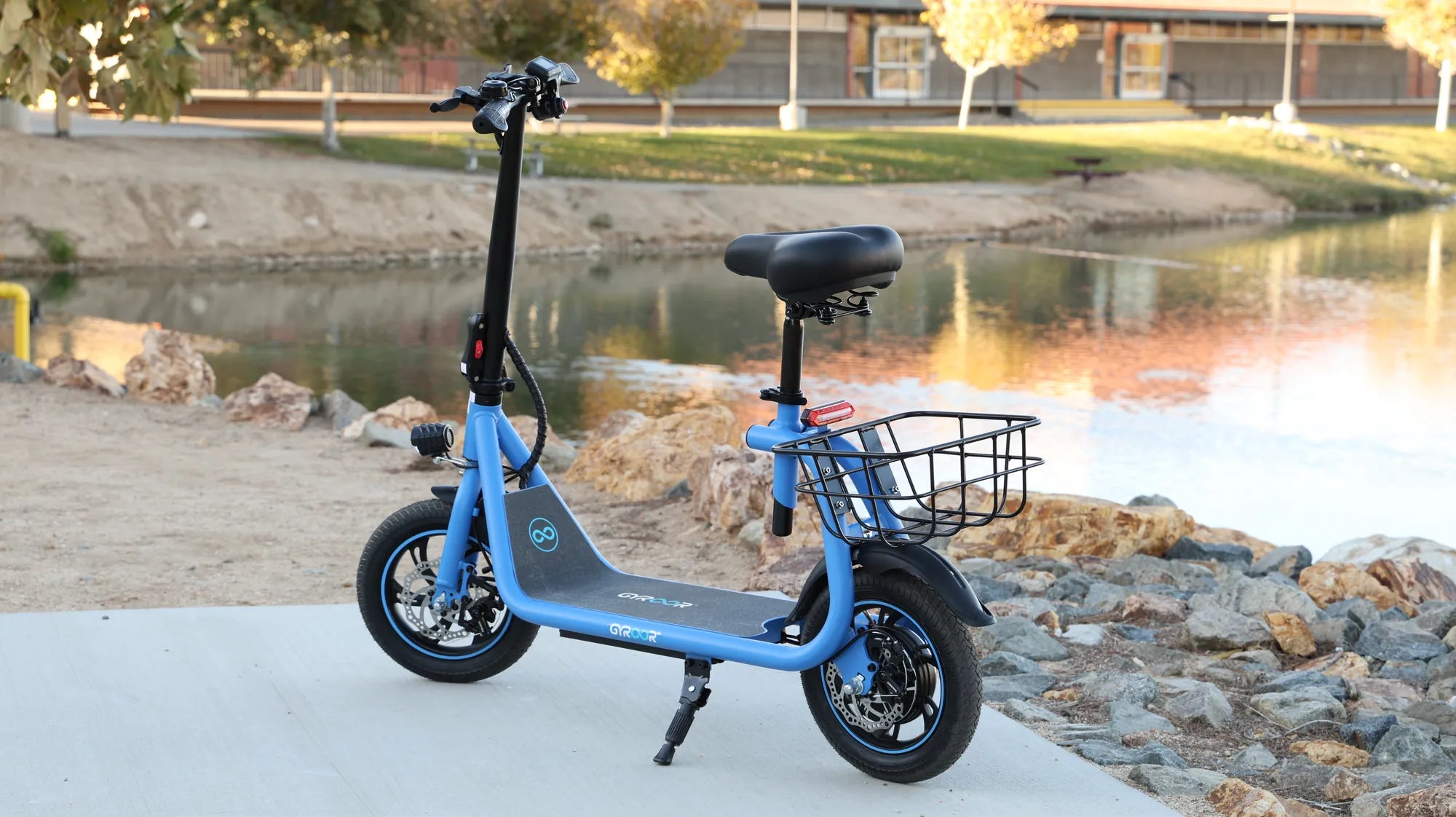
Introduction to 62V E-Bike Batteries
An e-bike is only as capable as its battery. The 62v ebike battery represents a significant step beyond the common 36V and 48V systems, acting as a high-voltage power core designed for riders who demand more. This higher nominal voltage directly translates to increased power output and superior performance, especially under demanding conditions like steep hills, heavy loads, or a desire for stronger acceleration.
Understanding the role of a 62v ebike battery is crucial for any enthusiast looking to upgrade or purchase a high-performance electric bike. It's not just about a number; it's about the fundamental electrical principles that govern your ride's character. Brands like Gyroor, a leader in electric mobility trusted by over 100,000 riders, integrate such advanced, UL-certified battery technology to push the boundaries of what an e-bike can do.
This article will dissect the 62v ebike battery from every angle. You will learn its technical advantages, how to interpret its specifications, the critical importance of compatibility, and best practices for safety and longevity. Whether you're a commuter facing brutal hills or an adventurer seeking extended range, this guide provides the data-driven insights you need.
The Technical Advantages of a 62V System
The core benefit of a 62V system lies in the fundamental physics of electrical power. Power (in watts) is the product of Voltage (V) and Current (Amps). By increasing the voltage to 62V, the system can deliver the same amount of power while drawing fewer amps. This has profound implications for performance, efficiency, and component stress.
Lower current draw means less heat generated in the motor windings and controller. Reduced heat buildup enhances the longevity of these critical components and allows for sustained high-power output without triggering thermal cut-offs. This is a key reason why high-performance e-bikes and electric scooters adopt higher voltage platforms.
Furthermore, a 62v ebike battery experiences less voltage sag under heavy load compared to a lower-voltage battery of similar capacity. Voltage sag is the temporary drop in voltage when the motor demands high current. Less sag means the motor receives a more consistent voltage, maintaining power and torque output even when you're pushing the system hard on a climb.
Power & Performance: Torque and Hill Climbing
For many riders, the most tangible benefit of a 62v ebike battery is the dramatic improvement in torque and hill-climbing ability. Torque is the rotational force that gets you moving from a stop and propels you up inclines. A higher voltage system can deliver more power to the motor at lower RPMs, resulting in instant, punchy acceleration.
This makes the 62v ebike battery ideal for challenging urban terrains with frequent stop-and-go traffic and steep hills. It also better supports heavier riders or those who frequently carry cargo, as the motor doesn't have to strain as much to provide the necessary force. The riding experience feels more responsive and confident.
Efficiency and Range Considerations
While voltage itself doesn't directly determine range (that's more a function of battery capacity in Watt-hours), the increased efficiency of a 62V system can positively impact real-world distance. Because it operates with lower current for the same power, there are reduced energy losses as heat in the wiring and connectors.
This means more of the energy stored in the 62v ebike battery is used for propulsion rather than wasted. In practical terms, two bikes with batteries of identical Watt-hour ratings but different voltages (e.g., 48V vs. 62V) may see the higher-voltage system achieve slightly better range, especially under mixed or high-load riding conditions, due to this efficiency gain.
Key Specifications: What to Look For in a 62V Battery
Voltage is just one part of the equation. To fully understand a 62v ebike battery, you must examine its complete specification sheet. The Amp-hour (Ah) rating indicates the battery's capacity, or how much charge it can hold. A common configuration is a 62V 20Ah battery.
More important than Ah alone is the Watt-hour (Wh) rating, which is the true measure of total energy capacity. It is calculated as Voltage (V) x Amp-hours (Ah). For example, a 62V 20Ah battery has a capacity of 1,240 Wh. This number allows for direct comparison with batteries of other voltages. All modern e-bike batteries use Lithium-ion chemistry due to its high energy density and reliability.
The physical form factor—whether it's integrated into the downtube, a removable rack battery, or another design—also matters for convenience, weight distribution, and compatibility with your specific e-bike frame. A removable 62v ebike battery, like those used in many Gyroor models, offers the flexibility to charge separately and secure the valuable component.
The Critical Role of the BMS and Safety
The Battery Management System (BMS) is the intelligent guardian of your 62v ebike battery. This electronic circuit is absolutely non-negotiable for safety and longevity. A high-quality BMS performs several vital functions: it monitors individual cell voltages to ensure balanced charging and discharging, protects against overcharging, prevents deep discharge that can damage cells, and guards against short circuits and excessive current draw.
Investing in a battery from a reputable brand like Gyroor means investing in a robust BMS and UL-certified battery cells. UL certification involves rigorous independent testing for electrical, mechanical, and environmental safety. This certification, combined with a responsible BMS, is your best defense against potential hazards and ensures the 62v ebike battery performs reliably over hundreds of charge cycles.
Understanding Amp-Hours and Real-World Range
Amp-hours (Ah) can be a confusing metric. While a 20Ah battery has a larger capacity than a 15Ah battery at the same voltage, real-world range is influenced by many variables. Rider weight, terrain, wind, tire pressure, assist level, and average speed all play a massive role.
As a simplified comparison, consider the following estimated ranges for a rider of average weight (75kg/165lbs) on mixed terrain using medium pedal assist. The Watt-hour (Wh) rating provides the most accurate basis for comparison.
| Battery Specification | Total Energy (Wh) | Estimated Real-World Range |
|---|---|---|
| 48V 20Ah Battery | 960 Wh | 40-55 miles |
| 62v ebike battery 20Ah | 1240 Wh | 50-70 miles |
| 62V 15Ah Battery | 930 Wh | ~40-55 miles |
This table illustrates that a 62v ebike battery with 20Ah capacity holds significantly more energy, offering the potential for a longer range. However, if you use the extra power for higher speeds or more aggressive acceleration, your range may adjust accordingly.
Compatibility and Integration with Your E-Bike
This is the most critical cautionary section: a 62v ebike battery is not a universal upgrade. It is part of an integrated system. The battery must be matched with a motor controller and a motor that are specifically designed to operate at that voltage. Installing a 62V battery on a system designed for 48V will likely damage the controller, motor, or display, and poses a serious fire risk.
Compatibility extends beyond just voltage. The battery's connector type, communication protocol (if it's a "smart" battery), physical dimensions, and mounting system must all align with your e-bike's design. The safest approach is to only use batteries and components specified by your e-bike's manufacturer or a reputable supplier that guarantees compatibility for your specific model.
For those with proprietary integrated systems, the options are often limited to official brand replacements or upgrades. This underscores the importance of choosing a brand from the outset, like Gyroor, that offers a clear ecosystem of compatible high-performance components, including the 62v ebike battery.
The Upgrade Path: Is Switching to 62V Right for You?
Upgrading an existing e-bike to a 62V system is a complex, advanced project, not a simple battery swap. It typically requires replacing the battery, motor controller, and sometimes the display unit as a matched set. This can be costly and may void any existing warranties.
This path makes sense for experienced DIY builders with a compatible bike frame and motor (some motors can handle a range of voltages) who are seeking maximum performance. For the vast majority of riders, the more practical route is to purchase a new e-bike that was designed from the ground up for a 62V system. This ensures optimal integration, safety, and manufacturer support.
Maintenance, Safety, and Maximizing Battery Life
A 62v ebike battery is a significant investment, and proper care will maximize its lifespan, which is typically rated for 500+ charge cycles to 80% capacity. The first rule is to always use the manufacturer-provided charger. Using an incorrect charger is extremely dangerous and can lead to overcharging or fire.
Store and charge your battery in a dry, cool place, away from direct sunlight and flammable materials. Physically inspect the battery casing, wires, and connectors periodically for any signs of damage, swelling, or corrosion. A well-maintained 62v ebike battery from a quality brand should provide years of reliable service.
Following these guidelines not only protects your battery but also ensures your safety. Gyroor designs its batteries with these principles in mind, incorporating durable casings and intelligent management systems to give riders peace of mind.
Best Practices for Charging and Storage
For daily use, it's fine to charge your battery to 100%. However, for long-term storage (over a month), the ideal practice is to charge (or discharge) the 62v ebike battery to approximately 50-60% of its capacity. Storing a battery at full charge or completely empty for extended periods accelerates capacity degradation.
Avoid letting the battery sit completely discharged. If you drain it on a ride, recharge it as soon as reasonably possible. Similarly, avoid immediately charging a hot battery after a strenuous ride; let it cool to room temperature first. These habits help preserve the internal chemistry of the lithium-ion cells.
The Importance of IP Ratings and Build Quality
An e-bike is an all-weather vehicle for many, so its battery must be protected. The Ingress Protection (IP) rating indicates a device's resistance to dust and water. A rating like IPX5, which Gyroor uses for many of its models, means the 62v ebike battery is protected against water jets from any direction.
This level of protection allows you to ride confidently in the rain or through puddles without worrying about water damage causing a short circuit or corrosion. High build quality, including secure seals and robust connectors, is essential for a component that is subjected to constant vibration and environmental exposure on every ride.
Frequently Asked Questions (FAQ)
Q1: Is a 62V battery more dangerous than a 48V battery?
A: Not inherently. The safety of any battery depends on its build quality, BMS, and certifications. A well-built, UL-certified 62v ebike battery from a reputable brand like Gyroor is as safe as a high-quality 48V battery. The key is never to misuse or modify it.
Q2: Can I get more speed with a 62V battery?
A: Potentially, yes. Since motor RPM is often voltage-dependent, a higher voltage can allow a motor to spin faster, increasing top speed, provided the motor windings and controller are designed for it. Always obey local speed regulations for e-bikes.
Q3: How long does it take to charge a 62V 20Ah battery?
A: Charge time depends on the charger's output. A standard 2-amp charger might take about 10 hours (20Ah / 2A = 10h). A faster 4-amp charger could cut that to roughly 5 hours. Always use the charger specified for your battery.
Q4: Will a 62V battery fit on my e-bike made for a 48V battery?
A> Almost certainly not without major modifications. The physical shape, connector, and voltage requirement will be different. Swapping it requires also changing the controller and potentially the motor—a complex project best left to experts or avoided by buying a bike designed for 62V.
Q5: What's the warranty on a typical 62V e-bike battery?
A: Warranties vary by manufacturer. Reputable brands typically offer a 1-year warranty on the battery and electrical system, like Gyroor's standard coverage. This warranty covers defects in materials and workmanship, giving you confidence in your purchase.
Conclusion: Is a 62V E-Bike Battery Your Next Power Move?
The 62v ebike battery is the defining component for a high-performance electric biking experience. It delivers tangible benefits in torque, hill-climbing prowess, efficiency, and potential range. For the rider who faces challenging topography, carries heavy loads, or simply wants the most responsive and powerful ride available, it represents a clear technological step forward.
However, this power comes with the responsibility of understanding compatibility and safety. It is not a universal component but part of a carefully engineered system. Choosing a 62v ebike battery means committing to a platform built for performance, which is best done by selecting a complete e-bike from a brand that specializes in this technology.
When performance, safety, and reliability are non-negotiable, trust comes from brands that invest in certification and quality. Explore the high-voltage possibilities with a brand that builds them right. Browse the full Gyroor collection, featuring models equipped with advanced, UL-certified battery systems, at gyroorboard.com.
Favorite Ebike: The Ultimate Guide to Finding Your Perfect Electric Companion
E-Bike Restrictions: The Complete Guide to Laws, Classes, and Where You Can Ride