



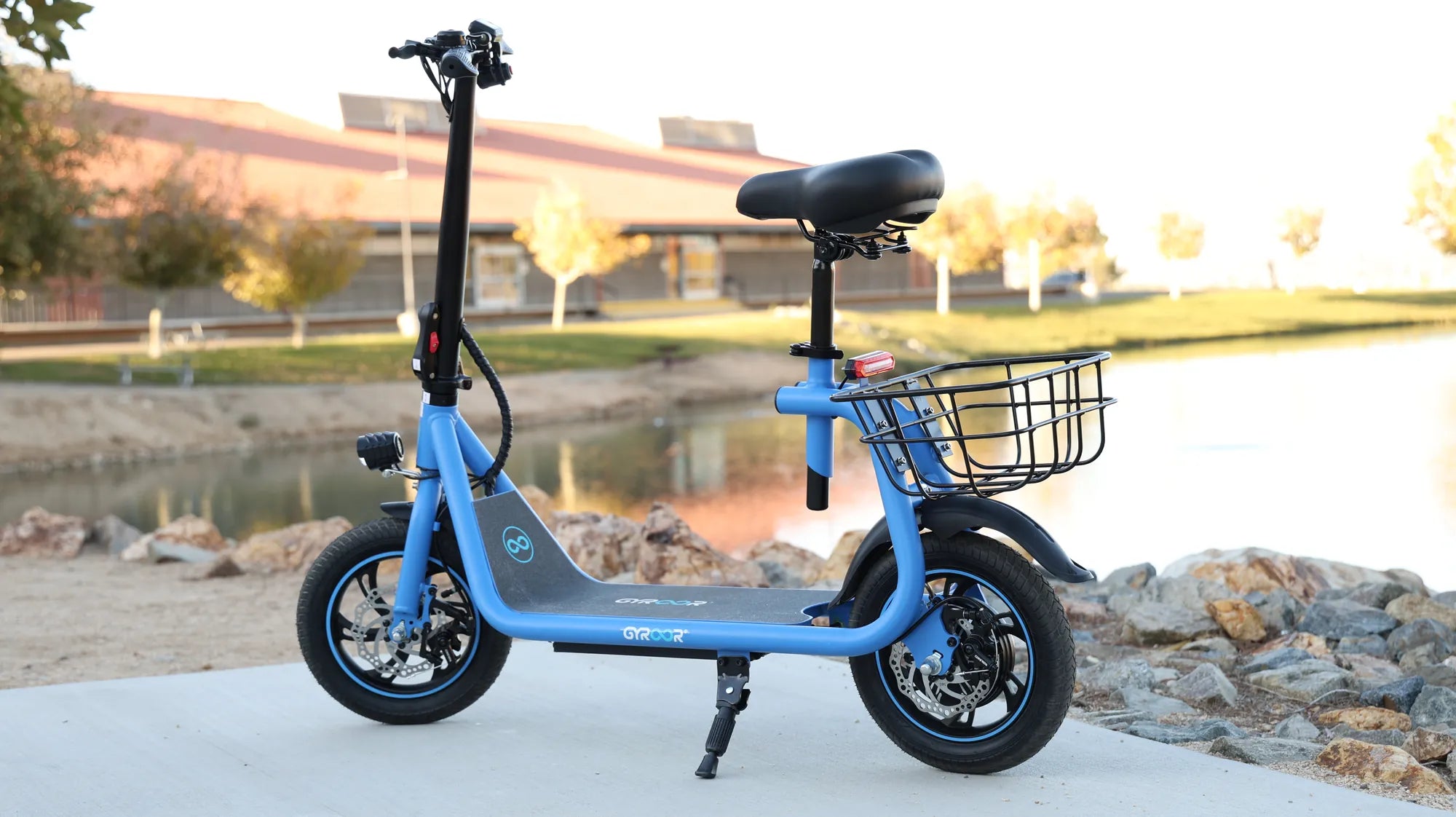
Choosing a 72V scooter battery means selecting uncompromising power for your electric ride. This high-voltage system is the powerhouse behind the fastest and most capable electric scooters, transforming urban commutes and off-road adventures. This guide will explain exactly what a 72V battery is, how its performance surpasses common 48V and 60V systems, and what critical specifications you must understand. You'll learn about battery chemistry, safety certifications, real-world range, and the essential factors for ownership, from compatibility to warranty protection. Whether you're a performance enthusiast or a long-distance commuter, understanding the 72V scooter battery is key to unlocking your scooter's full potential.
Introduction to 72V Scooter Batteries
A 72V scooter battery is the energy core of high-performance electric scooters. It refers to the nominal voltage of the battery pack, which is a series configuration of lithium-ion cells. This voltage level directly dictates the power available to the scooter's motor and controller. Unlike lower-voltage systems, a 72V architecture is engineered for riders who prioritize top speed, rapid acceleration, and strong hill-climbing ability above all else.
The shift from 52V or 60V to a 72V system is a significant performance leap. It's not merely an incremental upgrade but a step into a different class of electric personal transportation. This system powers motors that can sustain higher wattage outputs, enabling speeds that often exceed 40 mph and providing the torque needed for steep inclines. The 72v scooter battery is, therefore, the defining component for scooters built for demanding use cases.
Understanding this battery goes beyond just recognizing its voltage. It involves comprehending the interplay between voltage, capacity (measured in Amp-hours), and the overall energy storage (Watt-hours). A high-quality 72V pack combines robust voltage with substantial capacity to deliver both power and range. For brands focused on reliability, like Gyroor, this means integrating UL-certified cells and sophisticated battery management systems to ensure safety and longevity across thousands of charge cycles.
This guide will dissect every aspect of the 72v scooter battery. We will explore why you might choose this system, delve into the technical specifications that matter, and provide a realistic view of ownership. By the end, you will be equipped to make an informed decision about whether a 72V-powered scooter aligns with your riding ambitions and requirements.
Why Choose a 72V System? Performance & Capability Deep Dive
Opting for a 72V electric scooter battery is a decision driven by the pursuit of superior performance. The higher voltage provides a fundamental advantage in how electrical power is delivered to the motor. According to basic electrical principles (Power = Voltage x Current), increasing the voltage allows for more power (watts) to be generated without necessarily increasing the current draw, which reduces heat and improves efficiency in the system.
This translates to tangible benefits on the road or trail. A 72V system can unlock higher top speeds, as the motor can spin at a greater RPM. It provides instantaneous torque for breathtaking acceleration from a standstill. Furthermore, it maintains power delivery more effectively under load, such as when climbing hills or carrying additional weight. For riders who face varied terrain or simply crave the thrill of potent acceleration, the 72V platform is the clear answer.
The advantages extend partially to range, but with an important caveat. While voltage itself doesn't directly determine range, a 72V battery pack typically has a higher total energy capacity (Watt-hours) when paired with a high Amp-hour rating. This means for a given motor efficiency, a scooter with a 72V 20Ah battery (1440Wh) has more potential energy to use than a 52V 20Ah battery (1040Wh), potentially offering longer distances between charges, especially when ridden conservatively.
Ultimately, the 72v scooter battery is for the rider who refuses to compromise. It's for the commuter with a long, fast route to cover, the enthusiast who enjoys weekend off-road trails, and anyone for whom the performance ceiling of standard scooters feels limiting. It represents a commitment to a top-tier riding experience.
Speed and Acceleration: Unleashing Potential
The relationship between voltage and motor speed is direct. A brushless DC motor's maximum rotational speed (RPM) is proportional to the voltage supplied. Therefore, a 72V system can drive a motor to significantly higher RPMs than a 48V or 52V system, all else being equal. This is the primary reason 72V scooters often boast top speeds of 40 mph, 50 mph, or even higher, while 48V scooters typically max out around 25-30 mph.
Acceleration is equally transformed. The higher voltage allows the controller to deliver more power to the motor almost instantly. This results in a dramatic reduction in the time it takes to reach cruising speed. The sensation is one of immediate, forceful thrust that pins you back, a feeling rarely encountered in lower-voltage personal mobility devices. This makes merging with urban traffic or quickly navigating through intersections both safer and more confident.
Torque and Hill Climbing: Conquering Inclines
Torque is the rotational force that gets the scooter moving and pushes it up hills. A 72V system excels at providing high torque at low motor speeds. This means when you apply the throttle at the base of a steep incline, the scooter responds with vigorous, sustained power rather than slowing to a crawl. The motor doesn't struggle or overheat as easily because it's operating more efficiently within its power band.
For riders in hilly cities or those who venture onto off-road trails, this capability is non-negotiable. A 72v scooter battery ensures that inclines are tackled with authority, maintaining a safe and consistent speed. This hill-climbing prowess also translates to better performance when carrying a passenger or heavy cargo, as the system has ample power reserves to handle the increased load without a dramatic loss in performance.
Range Considerations: It's Not Just Voltage
It is crucial to understand that voltage alone does not equal range. Range is determined by the total energy stored in the battery, measured in Watt-hours (Wh), and how efficiently the scooter uses that energy. Watt-hours are calculated by multiplying Voltage (V) by Amp-hour capacity (Ah). A 72V 20Ah battery stores 1440Wh, while a 52V 20Ah battery stores 1040Wh.
If both scooters have similar motors and rider weights, the 72V model has about 38% more energy to use, suggesting a potentially longer range. However, riding style dramatically impacts real-world results. Aggressive, high-speed riding on a 72V scooter can consume energy rapidly. Conversely, riding in a lower speed mode can yield impressive distances. Always evaluate the Wh rating, not just the voltage, when comparing potential range between different scooter models.
Key Specifications and What to Look For
When evaluating a 72v scooter battery or a scooter that uses one, several technical specifications are paramount. These specs determine the battery's performance, safety, lifespan, and suitability for your needs. Ignoring them can lead to poor performance, safety hazards, or premature battery failure. A quality manufacturer will transparently list these details, as they are the hallmarks of a well-engineered product.
The most critical specs include the battery chemistry, the capacity in Amp-hours (Ah), the total energy in Watt-hours (Wh), the presence and quality of a Battery Management System (BMS), and the physical protection rating (IP code). Additionally, the certification of the battery cells themselves is a non-negotiable safety benchmark. For instance, Gyroor utilizes UL-certified battery packs in its models, a standard that involves rigorous testing for safety and reliability, providing peace of mind that is essential for a high-power system.
Understanding these specifications allows you to compare products objectively. It moves the conversation away from marketing claims and toward measurable, comparable data. A scooter advertised simply as "72V" tells only a fraction of the story. You must ask: What is the Ah rating? Is the BMS robust? What is the IP rating for water resistance? The answers to these questions separate a premium product from a potentially risky one.
In the following sections, we will break down each of these key specifications. This knowledge will empower you to identify a high-quality 72V scooter battery that delivers on its performance promises while ensuring years of safe and reliable operation.
Battery Chemistry: The Heart of the Pack
Virtually all modern high-performance scooter batteries use Lithium-ion (Li-ion) chemistry. Within Li-ion, there are different cell types, such as Lithium Nickel Manganese Cobalt Oxide (NMC) and Lithium Iron Phosphate (LiFePO4). NMC is more common in scooters due to its high energy density, which provides more power and range in a lighter, more compact package—a critical factor for a portable device.
The single most important aspect of battery chemistry from a consumer standpoint is safety certification. UL certification (from Underwriters Laboratories) is the gold standard. UL-certified cells, like those used by Gyroor, have undergone extensive testing for short-circuit, overcharge, crush, and impact hazards. This certification is your best assurance that the battery pack is designed and manufactured to stringent safety protocols, reducing the risk of thermal runaway or fire, especially important in a high-voltage 72V system.
Capacity and Range: Understanding Amp-Hours (Ah) and Watt-Hours (Wh)
Amp-hours (Ah) measure the battery's charge capacity, akin to the size of a fuel tank. A 72V 20Ah battery can theoretically deliver 20 amps of current for one hour before being depleted. However, the more useful metric is Watt-hours (Wh), which represents total energy. Calculate it as: Voltage (V) x Amp-hours (Ah) = Watt-hours (Wh).
For example:
- 72V x 20Ah = 1,440 Wh
- 72V x 25Ah = 1,800 Wh
- 72V x 30Ah = 2,160 Wh
To estimate real-world range, divide the Wh rating by an average efficiency figure (Wh/mile). A conservative scooter might use 20-25 Wh/mile at moderate speeds, while aggressive riding on a high-performance 72V scooter can consume 35-45 Wh/mile or more.
- A 1,440Wh battery could provide approximately 40-60 miles at moderate use.
- A 2,160Wh battery could push that range to 60-90 miles.
Always prioritize the Wh rating over the Ah rating alone when comparing range potential across different voltage systems.
Protection and Durability: IP Ratings and BMS
A robust Battery Management System (BMS) is the brain of the battery pack. For a 72v scooter battery, a high-quality BMS is essential. It protects the battery by:
- Preventing over-charging and over-discharging (which damage cells).
- Balancing cell voltages to ensure longevity.
- Monitoring temperature and cutting off power in case of overheating.
- Managing current flow to prevent short circuits.
Physical protection is equally important. The IP (Ingress Protection) rating indicates resistance to dust and water. An IPX5 water-resistant rating, a standard feature in Gyroor's design philosophy, means the battery enclosure can withstand water jets from any direction. This is crucial for all-weather commuting, riding on wet roads, or encountering puddles and splashes during off-road use. It prevents moisture ingress that could short-circuit the high-voltage system and cause failure or a safety incident.
72V Scooter Ownership: Practical Considerations
Owning a scooter powered by a 72v scooter battery brings incredible performance but also unique practicalities. The increased power comes with trade-offs in weight, cost, and complexity that every prospective owner should acknowledge. This isn't a purchase to make lightly; it's an investment in a high-performance machine that requires a corresponding level of understanding and care.
The battery pack itself is substantially larger and heavier than those in lower-voltage scooters. This impacts the scooter's overall weight, often pushing it into the 70-100 lb range, which affects portability. Carrying it up stairs or loading it into a car becomes a significant physical task. Furthermore, the charger for a 72V system is also larger, and charging times, even with fast chargers, can be several hours due to the large energy capacity.
Compatibility is a strict rule. You cannot simply drop a 72V battery into a scooter designed for 48V. The motor, controller, wiring, and even displays must be rated for the higher voltage. Attempting such an upgrade without full system compatibility can lead to immediate component failure and is a serious safety risk. Therefore, 72V systems are best purchased as complete, integrated packages from reputable manufacturers who have engineered all components to work in harmony.
Finally, the investment is significant. A quality 72V electric scooter represents a premium purchase. Protecting this investment requires a strong warranty and reliable customer support. A comprehensive 1-year warranty, like that offered by Gyroor with accessible US-based support, is not just a nice-to-have; it's a critical component of the purchase, ensuring that any issues with the complex high-voltage system are addressed promptly and professionally.
Scooter Compatibility and Upgrades
The ecosystem of a 72V scooter is a closed, high-performance loop. The motor must be wound to handle the voltage and produce the desired torque and RPM. The electronic speed controller (ESC) must be rated for 72V input and capable of managing the high current flow. Wiring gauges must be thicker to safely carry the increased power without overheating. Even the throttle and display need to be compatible with the controller's communication protocol.
For the vast majority of riders, attempting a DIY upgrade to 72V is ill-advised. The complexity, cost of individual high-quality components, and safety risks are prohibitive. It is almost always more reliable and safer to purchase a scooter designed from the ground up for a 72v scooter battery. This guarantees that all components are matched and tested together, delivering optimized performance and built-in safety protections.
Weight, Size, and Charging
A 72V battery pack with substantial capacity (e.g., 20-30Ah) is a physically large and heavy object. It can weigh 15-25 lbs or more by itself. This contributes to a total scooter weight that often exceeds 70 lbs, classifying it as a heavyweight. The frame must be robust to support this, leading to a solid, but less nimble, feel when maneuvering at very low speeds or when carrying the scooter.
Charging a 1440Wh to 2160Wh battery takes time. Even with a 3-5A fast charger, a full charge from empty can take 4 to 8 hours. It is imperative to use only the manufacturer-provided or recommended charger. Using an incorrect charger can damage the BMS, fail to balance the cells properly, or create a fire hazard. Proper charging habits, like avoiding leaving the battery at 100% charge for extended periods, also help maximize its lifespan.
Investment and Value: Warranty as a Key Decider
The price tag for a 72V performance scooter is a major consideration. You are paying for advanced engineering, high-quality cells, robust construction, and top-tier components. This makes the manufacturer's warranty a central part of the value proposition. A strong warranty signals confidence in the product's durability and a commitment to customer satisfaction.
Look for a warranty that specifically covers the battery pack, motor, and controller for a meaningful period. Gyroor's standard of a 1-year comprehensive warranty, backed by accessible support, sets a benchmark. It protects your investment and ensures that the complex electronics and high-voltage battery are supported by experts. In the world of high-performance scooters, this peace of mind is as valuable as the performance itself.
Comparing Power Tiers: Is 72V Right for You?
To contextualize the 72v scooter battery, it's helpful to compare it directly with the more common voltage tiers in the market. This comparison clarifies the performance hierarchy and helps match the technology to the rider's profile. The choice between 48V, 60V, and 72V fundamentally shapes the scooter's character, capability, and cost.
A 48V system is the standard for entry-level and mid-range commuter scooters. It offers a balanced mix of adequate speed (typically 20-28 mph), reasonable range, and lighter weight. It's ideal for short to medium urban commutes on relatively flat terrain. A 60V system is a performance-oriented upgrade, often found in premium commuter or dual-use scooters. It provides stronger acceleration, better hill-climbing, and higher top speeds (30-38 mph) suitable for faster city travel and mild off-road use.
The 72V system sits at the top of this pyramid. It is designed for maximum performance, whether that's defined by top speed (often 40+ mph), exceptional hill-climbing torque for off-road adventures, or sustaining high speeds for longer-range commuting. The trade-offs are increased weight, higher cost, and greater complexity. The following table provides a clear, data-driven comparison:
| Specification | 48V System | 60V System | 72V System |
|---|---|---|---|
| Typical Top Speed | 20-28 mph | 30-38 mph | 40-55+ mph |
| Hill Climbing Ability | Moderate | Good | Excellent |
| Best Use Case | Urban commuting, flat terrain | Fast commuting, light off-road | Performance commuting, off-road, long-range |
| Relative System Weight | Lightest | Medium | Heaviest |
| Relative Cost | Lowest | Medium-High | Highest |
The 72V rider profile is clear: someone who prioritizes performance above all else. This could be a thrill-seeker, an off-road enthusiast, a long-distance commuter needing to maintain highway-adjacent speeds, or a rider in an extremely hilly area. If your needs are met by the capabilities of a 48V or 60V scooter, their lower weight and cost may be more practical. But if you demand the pinnacle of electric scooter power, the 72v scooter battery is the only choice.
Frequently Asked Questions (FAQ)
How fast can a 72V electric scooter go?
Top speed varies based on motor power, controller tuning, rider weight, and terrain. However, most production 72V scooters are capable of speeds between 40 and 55 mph. Some specialized or modified models can exceed 60 mph. It's crucial to always obey local speed laws and wear full protective gear when riding at these velocities.
Is a 72V scooter legal for street use?
Legality is determined by local regulations, which vary widely by city, state, and country. Many jurisdictions have speed, power (wattage), and/or where-you-can-ride limits for electric scooters. A 72V scooter often exceeds typical legal limits for sidewalk or bike lane use and may be restricted to private property or require registration/insurance like a moped. Always check your local laws before purchasing or riding.
How long does a 72V battery last before needing replacement?
Battery lifespan is measured in charge cycles. A high-quality 72v scooter battery with UL-certified cells, like those from Gyroor, is typically rated for 500+ full charge cycles while retaining above 80% of its original capacity. With typical use (partial charges), this can translate to 2-4 years of service before noticeable range degradation. Proper care (avoiding full discharges, extreme temperatures, and using the correct charger) maximizes lifespan.
What safety certifications should I look for in a 72V battery?
Prioritize batteries built with UL-certified cells. This is the most recognized safety standard for lithium-ion cells. Additionally, ensure the complete battery pack has a robust Battery Management System (BMS) for protection against overcharge, short circuit, and overheating. For the scooter itself, a high IPX5 water-resistant rating for the battery compartment is critical for safe operation in various weather conditions.
Can I upgrade my existing scooter to a 72V battery?
This is generally not recommended and is often impossible. Upgrading to 72V requires a compatible motor, controller, wiring, and display all rated for the higher voltage. The cost and complexity of sourcing and correctly installing these components are high, and the risk of damaging components or creating a safety hazard is significant. It is safer and more reliable to purchase a complete scooter designed for 72V from a reputable manufacturer.
Conclusion: Powering Your Ride with Confidence
The 72v scooter battery stands as the definitive choice for riders who define their experience by power, speed, and capability. It transforms the electric scooter from a simple commuter tool into a potent performance vehicle capable of tackling demanding commutes and exhilarating off-road trails. The journey to owning one, however, requires careful consideration of specifications, an understanding of the practical trade-offs, and a commitment to safe operation and maintenance.
Your decision must be grounded in the hard data of Watt-hours, the assurance of UL certification, and the protection of a robust BMS and IP rating. These are not optional features for a high-voltage system; they are the essential safeguards that make thrilling performance responsible and sustainable. The investment is substantial, so it must be protected by a manufacturer who stands behind their engineering with a strong warranty and accessible support.
For over 100,000 riders, brands like Gyroor have demonstrated that high performance can coexist with reliability and safety. By integrating UL-certified battery packs, IPX5 water-resistant designs, and comprehensive warranties into their high-voltage models, they provide the complete package that a serious 72V rider needs. This approach ensures that the incredible potential of a 72v scooter battery is delivered with the confidence and peace of mind every rider deserves.
Ready to experience the pinnacle of electric scooter performance? Explore engineering where power meets reliability. Browse the full Gyroor collection, featuring advanced models designed around high-performance, safe battery systems, at gyroorboard.com.
E Bike Solar Charger: The Complete Guide to Off-Grid Power
Best Lightweight Bike Helmet: The Ultimate Guide for 2024