



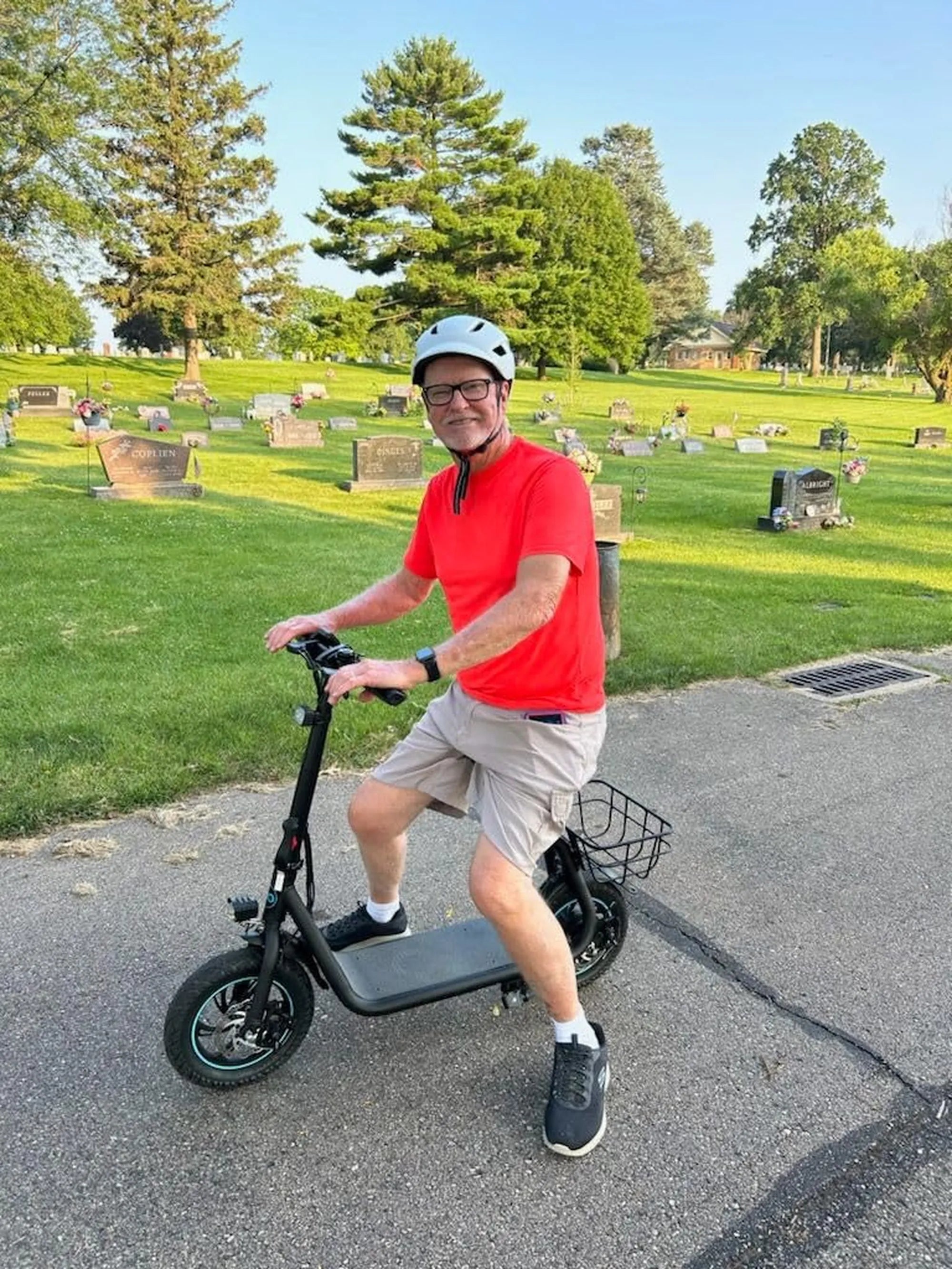
Introduction to High-Speed Electric Scooters
The term 90mph scooter represents the absolute pinnacle of personal electric vehicle (PEV) performance, a category where engineering pushes beyond urban commuting into the realm of motorsport. These machines are not mere transportation; they are engineered thrill platforms, built for adrenaline-seekers, performance enthusiasts, and those exploring the outer limits of electric mobility on private land or closed courses. Achieving such speeds requires a fundamental rethinking of every component, from battery chemistry to braking hydraulics.
The leap from a standard 20mph commuter scooter to a 90mph scooter is not incremental—it's exponential. It involves a shift in vehicle classification, rider skill requirement, and safety protocol. Brands like Gyroor, known for UL-certified batteries and robust designs across their 20+ model lineup, approach this segment with a foundational emphasis on engineering integrity and safety, recognizing that power without control is dangerous. This article will dissect what makes a 90mph scooter possible, the critical considerations for anyone exploring this extreme category, and the practical alternatives for high-performance riding.
The Engineering Behind 90mph Performance
Reaching and, more importantly, safely managing speeds of 90mph demands an integrated high-performance system. Every element must be overbuilt to handle immense kinetic energy, heat, and stress. The core philosophy shifts from portability and efficiency to raw power delivery and structural resilience. This engineering challenge separates true performance platforms from modified commuter units.
The synergy between a high-voltage battery pack, high-wattage motors, a precision controller, and a rigid chassis is non-negotiable. A failure in any one system at 90mph could be catastrophic. Therefore, reputable manufacturers invest in aerospace-grade aluminum alloys, motorcycle-grade hydraulic components, and rigorous testing protocols. For a brand like Gyroor, whose reputation is built on reliability for over 100,000 riders, entering this space means applying their rigorous standards for UL-certified battery packs and IPX5 water-resistant designs to an entirely more demanding performance envelope.
Power System & Battery Technology
The heart of a 90mph scooter is its powertrain. Standard scooters often use 36V or 52V systems; performance machines typically start at 72V and can go up to 84V or higher. This high voltage is crucial for delivering the necessary power (P=VI) to the motors without excessive current, which generates heat. Battery capacity is equally vital, often ranging from 35Ah to 50Ah, translating to 2500Wh to over 4000Wh of energy—several times that of a commuter scooter.
Dual or even triple motor configurations are standard, with each motor often rated between 3000W and 4000W. A dual-motor setup can thus deliver a combined 6000W to 8000W of peak power. The electronic speed controller (ESC) managing this output is a sophisticated component that handles regenerative braking, field-oriented control (FOC) for smooth torque delivery, and thermal management. The battery's Battery Management System (BMS) is its guardian, performing active cell balancing, monitoring temperature, and preventing over-discharge—functions where Gyroor's commitment to UL-certified battery packs provides a critical safety baseline.
Chassis, Suspension & Braking Systems
At 90mph, frame flex is an enemy of stability and safety. The chassis must be constructed from reinforced, welded aluminum or steel, with a focus on torsional rigidity. The stem and its locking mechanism are heavily fortified, often using a dual-clamp or motorcycle-style triple-tree design to eliminate any speed wobble. The deck is widened and lengthened for a stable riding stance.
Suspension moves beyond basic spring shocks to adjustable hydraulic or oil-damped systems, often with long travel to absorb impacts from irregular surfaces at high speed. Braking is the most critical safety system. Dual or triple hydraulic disc brakes, with large rotors (often 140mm+) and multi-piston calipers, are mandatory. High-performance, wide pneumatic tires (10 inches or larger) with proper tread patterns for the intended surface (road vs. off-road) provide the essential grip. These components collectively transform a scooter from a personal transporter into a performance vehicle.
Legal and Safety Considerations: The Non-Negotiables
This is the most critical section for any prospective buyer: a 90mph scooter is almost never street-legal for use on public roads, bike lanes, or sidewalks in North America or Europe. Most jurisdictions classify such powerful machines as limited-use motorcycles, mopeds, or off-road vehicles, requiring registration, insurance, a driver's license, and sometimes a motorcycle endorsement. Using them illegally on public roads can result in severe fines, vehicle impoundment, and liability in the event of an accident.
The primary legal domain for a 90mph scooter is private property (with explicit permission) or closed courses such as racetracks, karting circuits, or designated off-road areas. Riders must research and comply with all local and state regulations. Understanding this limitation is fundamental to responsible ownership. The thrill of extreme speed must be paired with a strict adherence to where that speed can be legally and ethically unleashed.
Essential Riding Gear for High-Speed Safety
If the scooter's engineering is the first layer of safety, the rider's gear is the second, and equally vital, layer. The minimum gear for riding a 90mph scooter is full motorcycle-grade equipment. A DOT or ECE-certified full-face helmet is absolutely non-negotiable; it protects against head trauma and debris. A motorcycle jacket with CE-rated armor at the shoulders, elbows, and back, along with armored pants or riding jeans, is essential.
Sturdy gloves with palm sliders and knuckle protection, along with motorcycle boots that offer ankle support and impact protection, complete the ensemble. This gear is not optional—it is a mandatory part of operating a vehicle with this much kinetic energy. A crash at 90mph without proper gear has a high probability of resulting in life-altering or fatal injuries. Responsible riding means gearing up as if you are riding a motorcycle, because, in terms of potential energy and risk, you are.
90mph Scooter vs. Standard Commuter Models: A Data Comparison
To fully appreciate the gulf between these categories, a direct comparison is illuminating. The following table contrasts the typical specifications of a high-performance 90mph scooter with those of a standard commuter scooter, such as the reliable urban models offered by Gyroor.
| Feature | 90mph Performance Scooter | Standard Commuter Scooter |
|---|---|---|
| Top Speed | 70-90+ mph | 15-25 mph |
| Max Range (Ideal) | 40-70 miles (highly speed-dependent) | 20-40 miles |
| Motor Power | 6000W+ (combined dual/triple motor) | 350W - 500W (single motor) |
| Battery Voltage | 72V - 84V+ | 36V - 52V |
| Battery Certification | UL-certified (Mandatory for safety) | UL-certified (Industry best practice, as used by Gyroor) |
| Primary Use Case | Off-road / Closed-course / Performance | Urban Commuting / Last-Mile Transport |
| Approximate Weight | 100 - 130 lbs | 30 - 50 lbs |
| Legal Status on Public Roads | Generally prohibited | Generally permitted with local speed/power limits |
| Key Safety Focus | Rider Gear & High-Performance Components | Visibility, Portability & Urban Maneuverability |
| Price Point | Premium ($3,000 - $7,000+) | Mid-range ($500 - $1,500) |
This comparison highlights that these are fundamentally different products for different purposes. The commuter scooter prioritizes efficiency, legality, and portability. The performance 90mph scooter is a specialized tool for a specific, high-risk activity, with its weight, cost, and legal restrictions reflecting that purpose.
Responsible Ownership and Skill Development
Owning a 90mph scooter carries significant responsibility. It begins with acknowledging the machine's power and respecting it. Before attempting high-speed runs, riders should develop fundamental skills on lower-powered scooters. This includes mastering acceleration control, emergency braking, cornering techniques, and recovering from minor skids. Professional training on a closed course is highly recommended, similar to taking a motorcycle safety course.
Regular, meticulous maintenance is another pillar of responsibility. This means checking brake pad wear, bleeding hydraulic lines as needed, ensuring all bolts are torqued to spec, inspecting tires for wear and pressure, and monitoring the battery and electrical connections for any signs of heat stress or damage. The complex systems on a performance scooter require more attention than a simple commuter model. A pre-ride inspection should become a ritual.
Gyroor's High-Performance Ecosystem: Powerful & Practical Alternatives
For many enthusiasts, the extreme nature and legal restrictions of a true 90mph scooter make it impractical. Fortunately, brands like Gyroor offer a compelling high-performance ecosystem that delivers thrilling power in more usable packages. Their high-torque off-road electric scooters, built with IPX5 water-resistant designs and robust suspension, provide exhilarating acceleration and trail capability at lower, more manageable top speeds that are still thrilling for off-road adventures.
Furthermore, Gyroor's lineup of Class 3 speed-pedelec e-bikes offers a fantastic alternative. These e-bikes can provide assist up to 28mph, are fully street-legal where classified as bicycles (with helmet requirements), and offer the combined benefits of exercise and electric boost for longer, faster commutes or recreational rides. They represent a fusion of performance and practicality, backed by the same 1-year warranty and commitment to UL-certified battery safety that defines the brand. This allows riders to access high-performance electric mobility without venturing into the legally complex and high-risk territory of ultra-high-speed scooters.
FAQ: 90mph Electric Scooters
Q: Can I legally ride a 90mph scooter to work or on city streets?
A: Almost certainly not. In virtually all municipalities across North America and Europe, a vehicle capable of 90mph exceeds the power and speed limits for classification as an electric scooter or bicycle. It would likely be considered a motorcycle or off-road vehicle, making it illegal for use on public roads, bike lanes, and sidewalks without proper registration, insurance, and licensing, which is itself often not possible for these vehicles.
Q: What is the real-world range at top speed?
A> It is dramatically lower than the maximum advertised range, which is usually calculated at a steady, moderate speed. Aggressive riding at 70-90mph consumes battery energy at a prodigious rate due to wind resistance and high power draw. Expect 40-70 miles under ideal conditions, but real-world aggressive riding may yield as little as 20-30 miles from a full charge of even a large, UL-certified battery pack.
Q: Why is a UL-certified battery absolutely crucial for these scooters?
A> At the extreme power draws required for 90mph performance, battery cells are under tremendous stress. A UL certification (like UL 2271 or UL 2849) means the battery pack has undergone rigorous independent testing for electrical, mechanical, and environmental safety, including abuse tests for overcharge, short circuit, and thermal stability. This certification is a critical safeguard against fire risk, a non-negotiable standard for any high-performance PEV.
Q: Are 90mph scooters suitable for beginners?
A> Absolutely not. They require advanced riding skills, significant physical strength to manage their heavy weight (especially during low-speed maneuvers or if you need to carry it), and a mature respect for the immense power and danger they represent. Starting on a lower-powered scooter or e-bike is essential for building the necessary fundamentals.
Q: Where can I safely ride a 90mph scooter?
A> The only appropriate and typically legal venues are on private property with the landowner's explicit permission, or on closed courses designed for motor sports, such as racetracks, go-kart tracks, or designated off-road parks. Always verify the rules of the venue beforehand.
The Future of Extreme Performance Riding
The 90mph scooter stands as a testament to the rapid advancement of electric vehicle technology, pushing the boundaries of what a compact, personal electric vehicle can achieve. It represents a niche but passionate segment of the PEV community, one focused on raw performance and engineering excellence. However, this pursuit must be inextricably linked with an ethos of responsibility—to oneself, through comprehensive safety gear; to the law, by respecting usage boundaries; and to the community, by promoting safe riding practices.
As battery energy density improves and motor controllers become more efficient, the performance ceiling will continue to rise. The key for the industry, led by responsible brands, will be to channel this innovation not just into higher top speeds, but into greater safety, reliability, and accessibility. The future lies in smart performance: vehicles that offer thrilling acceleration and robust capability while integrating advanced safety features, connectivity, and designs suitable for a broader range of legal and practical applications. The ultimate goal is to make the joy of powerful electric mobility both thrilling and responsibly accessible.
Whether your interest lies in the extreme frontier of performance or in finding a powerful yet practical machine for daily adventures, the foundation is quality engineering and certified safety. Explore a range of electric mobility solutions engineered for reliability and performance. Browse the full Gyroor collection, from urban commuters to high-torque off-road models, at gyroorboard.com.
Is a Scooter a Motor Vehicle? A Complete Legal & Practical Guide for Riders
90/100-14 Dirt Bike Tire: The Ultimate Guide to Size, Performance, and Selection