



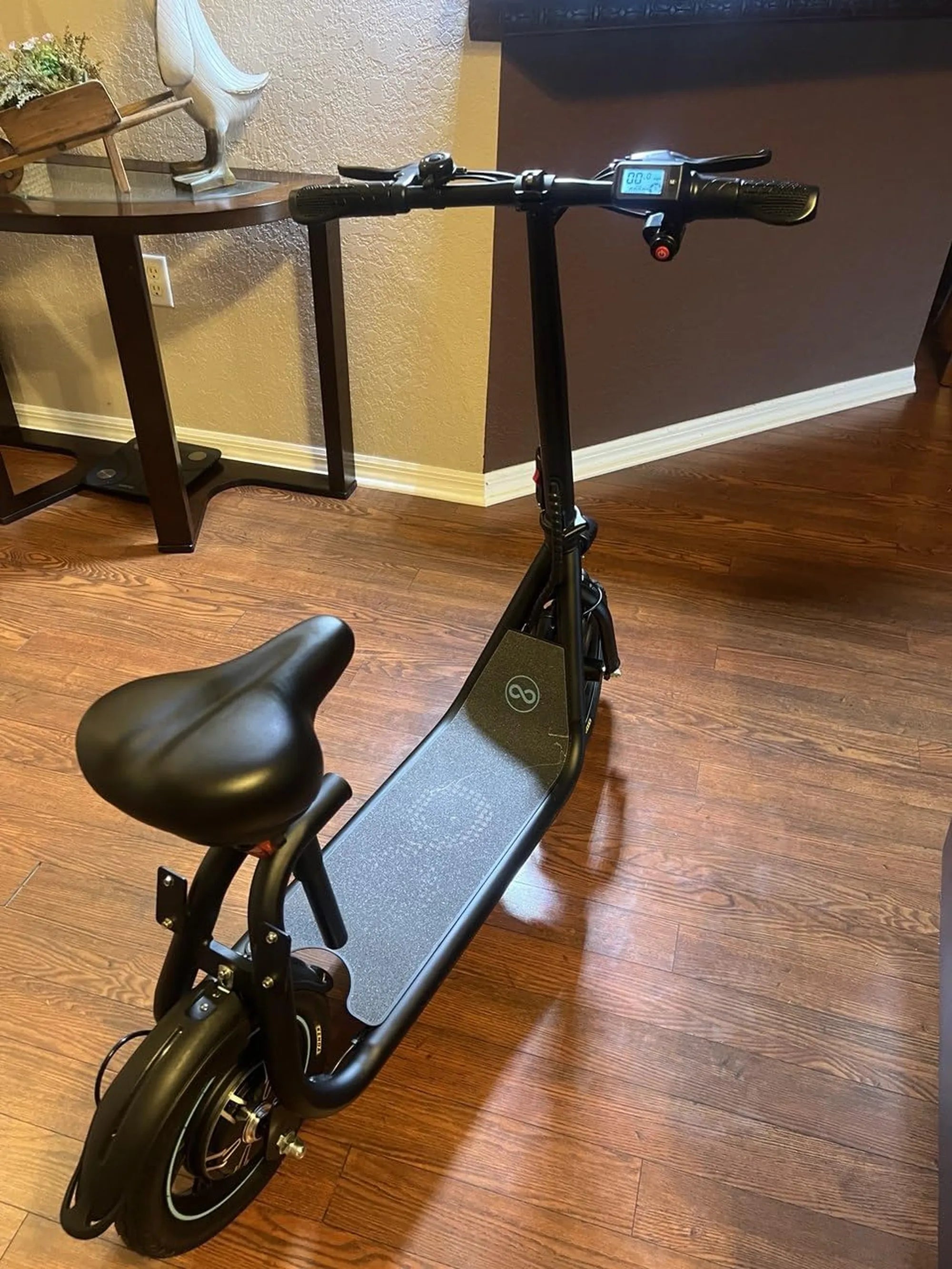
What is an Adaptive Scooter? Beyond Basic Mobility
An adaptive scooter is a sophisticated personal electric vehicle (PEV) engineered with adjustable hardware and software features, enabling riders to customize performance, comfort, and control to match their specific needs and changing riding conditions. This concept moves far beyond standard, fixed-specification models, which offer a one-size-fits-all experience. The core philosophy of an adaptive scooter is personalization, transforming a simple transport tool into a dynamic extension of the rider's preferences.
Unlike basic models with a single speed mode and rigid suspension, an adaptive scooter provides tunable parameters. Think of it as the difference between a factory-set bicycle and a fully adjustable racing bike fitted to your body and route. This adaptability is crucial because no two rides are identical; a smooth morning commute differs vastly from a bumpy park trail or a hilly evening return trip.
The term 'adaptive' encompasses both physical adjustments, like handlebar height or seat position, and digital configurations managed via a display or smartphone app. These can include riding modes that recalibrate the motor controller, adjustable regenerative braking strength, and suspension stiffness settings. This level of control directly impacts safety, efficiency, and enjoyment.
For the modern rider, an adaptive scooter is not a luxury but a practical solution for real-world variability. It acknowledges that a rider's weight, the day's cargo, road surface quality, and desired battery range are all factors that should influence the vehicle's behavior. By investing in an adaptive scooter, you invest in a tool that evolves with your journey.
Key Adaptive Features: Customizing Your Ride for Comfort and Control
The defining characteristic of an adaptive scooter is its suite of customizable components. These features work in concert to create a ride experience that is uniquely yours, addressing the core aspects of performance, safety, and ergonomics.
First, consider adjustable suspension. Many premium scooters feature front and rear shock absorbers with pre-load adjustment. This allows you to stiffen the suspension for a more responsive feel on smooth pavement or soften it to absorb impacts from cracks, curbs, and light off-road terrain. Properly tuned suspension improves tire contact and control, directly enhancing safety.
Second, electronic riding modes are the brain of the adaptive scooter. Common modes include Eco, Standard, and Sport. Eco mode prioritizes battery conservation by limiting top speed and acceleration torque, ideal for maximizing range. Sport mode unlocks full motor power for rapid acceleration and higher top speeds, perfect for open paths or climbing hills. The ability to switch between these modes on-the-fly is a fundamental adaptive function.
Third, regenerative braking systems often have adjustable strength. A stronger regen setting captures more kinetic energy during deceleration, funneling it back to the battery to extend range, while also providing more aggressive engine braking. A lighter setting allows for a coasting feel similar to a bicycle. This feature lets you balance between energy recovery and riding style.
Finally, ergonomic adaptations like telescopic handlebars, adjustable stem angles, and (on seated models) seat height and position are critical for long-term comfort. Proper ergonomics reduce fatigue, improve steering control, and make the scooter accessible to multiple riders of different sizes sharing the same vehicle.
Performance Adaptation: Tuning Speed, Torque, and Range
At the heart of an adaptive scooter's versatility is its programmable motor controller. This component dictates how power from the battery is delivered to the wheel. Through software, riders can effectively retune their scooter's personality for different scenarios.
For a long-distance commute where outlet access is limited, you would prioritize range adaptation. This involves selecting Eco mode, which typically caps speed at 10-15 mph and uses a gradual acceleration curve. Combined with maximizing regenerative braking, this configuration can extend a scooter's range by 20-30% compared to constant Sport mode usage. It's a strategic adaptation for endurance.
Conversely, when facing a hilly route or needing to merge quickly with urban traffic, torque adaptation becomes key. Sport mode or a custom setting will direct maximum available current to the motor, providing the high torque needed for steep inclines and rapid acceleration from a stop. This ensures the scooter remains practical and safe in demanding topographic conditions.
Some advanced systems allow even finer granularity, letting users set custom speed limits, acceleration curves (soft, medium, aggressive), and even torque delivery maps via a companion app. This level of performance adaptation caters to enthusiasts and commuters with highly specific route profiles, ensuring the scooter is never under- or over-powered for the task at hand.
The Gyroor Advantage: Built-in Adaptability for Real-World Riding
Gyroor, a leading electric scooter and e-bike brand trusted by over 100,000 riders, engineers adaptability into its core design philosophy. Recognizing that real-world conditions are unpredictable, Gyroor models incorporate key adaptive features that align with their commitment to safety, durability, and user-centric performance.
A prime example is the integration of multiple riding modes across their lineup. Riders can effortlessly switch between Eco, Standard, and Sport settings to match their immediate needs for range or power. This electronic adaptability is powered by reliable controllers and UL-certified battery packs, ensuring consistent performance and safety through 500+ charge cycles.
Furthermore, Gyroor's emphasis on robust construction complements functional adaptability. An IPX5 water-resistance rating is a critical form of environmental adaptation, allowing riders to confidently navigate damp roads or light rain without compromising the vehicle's electronics. This feature ensures your scooter adapts to weather changes, not the other way around.
The brand's reliable 1-year warranty on major components provides peace of mind, encouraging riders to fully utilize their scooter's adaptive features without fear of undue wear. When you combine tunable performance with foundational safety certifications and weather-resistant design, you get a truly adaptive platform built for diverse daily use.
Case in Point: Adapting to Urban Commutes vs. Light Off-Road
Let's illustrate adaptive scooter use with a practical scenario. Imagine a Gyroor scooter equipped with dual suspension, three riding modes, and adjustable handlebars.
For an Urban Commute: On smooth city streets, the rider would select Standard or Eco mode to optimize battery range for the 10-mile round trip. They might increase the regenerative braking to medium to recoup energy from frequent stops. The suspension could be set to a firmer setting for efficient energy transfer and a more responsive feel on pavement. The handlebar is adjusted to an upright, comfortable position for visibility and control in traffic.
For a Weekend Park Trail: Heading onto packed gravel or dirt paths, the rider switches to Sport mode for extra torque to navigate slight inclines and uneven surfaces. The suspension is softened to its maximum travel to absorb bumps and roots, improving comfort and traction. Regenerative braking might be lowered to allow for more coasting over uneven ground. The handlebar might be raised slightly for a more commanding standing position.
This seamless transition between two radically different ride profiles showcases the true value of an adaptive scooter. One vehicle, dynamically reconfigured, competently handles multiple environments, eliminating the need for specialized machines.
Who Benefits Most from an Adaptive Scooter? Identifying Your Needs
While most riders can enjoy the benefits of customization, certain user profiles will find an adaptive scooter to be a particularly transformative investment. Identifying your primary use case is key to justifying the value.
The Variable Terrain Commuter: If your daily route mixes bike lanes, poorly maintained sidewalks, bridge inclines, and park shortcuts, a fixed scooter will force compromises. An adaptive model allows you to optimize for each segment, ensuring a safe, efficient, and comfortable journey regardless of pavement quality or slope.
The Multi-User Household: Families or roommates sharing one scooter benefit immensely from ergonomic and performance adaptability. Adjustable handlebars and seats accommodate different heights, while resetting riding modes can tailor acceleration and top speed to each rider's skill and comfort level, enhancing safety for all users.
The Performance Enthusiast: Riders who enjoy tinkering and fine-tuning their vehicles appreciate the granular control an adaptive scooter offers. The ability to tweak acceleration response, braking feel, and suspension dynamics turns commuting into a personalized engineering experience, maximizing engagement and satisfaction.
The Range-Conscious Rider: For those with long commutes or limited charging options, the ability to switch into a hyper-efficient Eco mode with strong regen braking is a game-changer. This adaptive capability can be the difference between arriving with battery to spare and needing a mid-trip charge.
Choosing Your Adaptive Scooter: A Data-Driven Checklist
Selecting the right adaptive scooter requires looking beyond peak speed and price. Use this checklist to evaluate models based on their true adaptability and long-term value.
- Adjustability Range: How many riding modes are offered? Can you customize them via an app? What is the range of suspension adjustment (e.g., pre-load levels)?
- Battery Performance: Request range estimates for each riding mode, not just a maximum. A quality adaptive scooter will have a UL-certified battery for safety and longevity.
- Ergonomic Options: Does the handlebar telescope and/or fold? If it's a seated model, is the seat height adjustable? This is crucial for comfort and shared use.
- Environmental Resistance: Look for an IP rating (e.g., IPX5). True adaptability includes reliable operation in damp or dusty conditions.
- Warranty & Support: A generous warranty on the motor, battery, and frame indicates confidence in the scooter's durability under varied, adaptive use.
The table below contrasts the core value proposition of a fixed-feature scooter versus an adaptive scooter across key parameters:
| Parameter | Fixed-Feature Scooter | Adaptive Scooter |
|---|---|---|
| Versatility | Low. Optimized for one condition. | High. Tunable for multiple terrains/uses. |
| Rider Satisfaction | Can be limited if needs change. | High due to personalization and control. |
| Long-Term Value | May become obsolete if user's route changes. | Higher. Adapts to evolving user needs and routes. |
| Safety | Static; may be under/over-powered for conditions. | Enhanced via tuning for specific terrain (e.g., softer suspension for bumps). |
| Efficiency | Fixed power curve, potentially wasteful. | Optimizable for range or power as needed. |
Adaptive Scooter FAQs
Q1: Does using Sport mode all the time ruin the battery or motor?
A1: Not if the scooter is well-designed. Using Sport mode primarily increases power draw, which reduces range per charge but does not inherently damage quality components like UL-certified batteries or rated motors. It may lead to slightly faster long-term wear, but reputable brands engineer their systems to handle peak performance reliably.
Q2: Is adjusting suspension complicated or requiring tools?
A2> It varies. Many adaptive scooters feature tool-free, hand-adjustable knobs or levers for pre-load adjustment, making it a simple, sub-30-second task. More intricate damping adjustments might require tools and are less common on consumer models. Always consult your manual.
Q3: How does water-resistance (like IPX5) relate to adaptability?
A3> Environmental adaptability is crucial. An IPX5 rating means the scooter can withstand water jets from any direction, allowing you to adapt your riding to light rain or wet roads without fear of electrical failure. This expands the usable conditions for your scooter significantly.
Q4: Can I customize features beyond the preset modes?
A4> On some advanced models, yes. Companion smartphone apps for certain brands allow deep customization, letting you set exact speed limits, acceleration sensitivity, and regenerative braking strength, creating a truly personalized adaptive profile.
Q5: Are adaptive scooters much heavier or more expensive?
A5> They can be slightly heavier due to more robust components like adjustable suspension. Price is typically higher than basic models, reflecting advanced electronics and hardware. However, the long-term value in versatility, comfort, and suitability for changing needs often justifies the investment.
The Future of Riding: Smart Adaptation and Connected Features
The evolution of the adaptive scooter is moving toward intelligent, automated personalization. The next generation will leverage sensors and connectivity to offer a seamlessly tailored experience. Imagine a scooter that uses GPS and crowd-sourced map data to automatically stiffen suspension before a known rough road patch or suggest switching to Eco mode as you enter a low-speed zone.
App-based ecosystems will become central, storing multiple user profiles that recall not just ergonomic settings but entire performance maps. Predictive adaptation could analyze your calendar and commute time to suggest the optimal balance of speed and range for the day ahead. This smart adaptation removes guesswork, enhancing both convenience and efficiency.
Brands like Gyroor are poised to lead this charge by integrating these smart features with their established foundation of safety and durability. The future adaptive scooter will be a connected, intelligent vehicle that learns from its rider and environment, offering a truly frictionless mobility solution. It represents the shift from a passive tool to an active partner in urban navigation.
Ready to experience the freedom of a ride that adapts to you, not the other way around? Explore how Gyroor's range of electric scooters incorporates these adaptive principles for a safer, more versatile, and personalized journey. Browse the full Gyroor collection at gyroorboard.com and find the model that matches your ever-changing world.
Ebike Battery Near Me - Your Complete Local Guide to Safe Replacement & Service
Scooter Weight Capacity: The Complete Safety and Performance Guide