



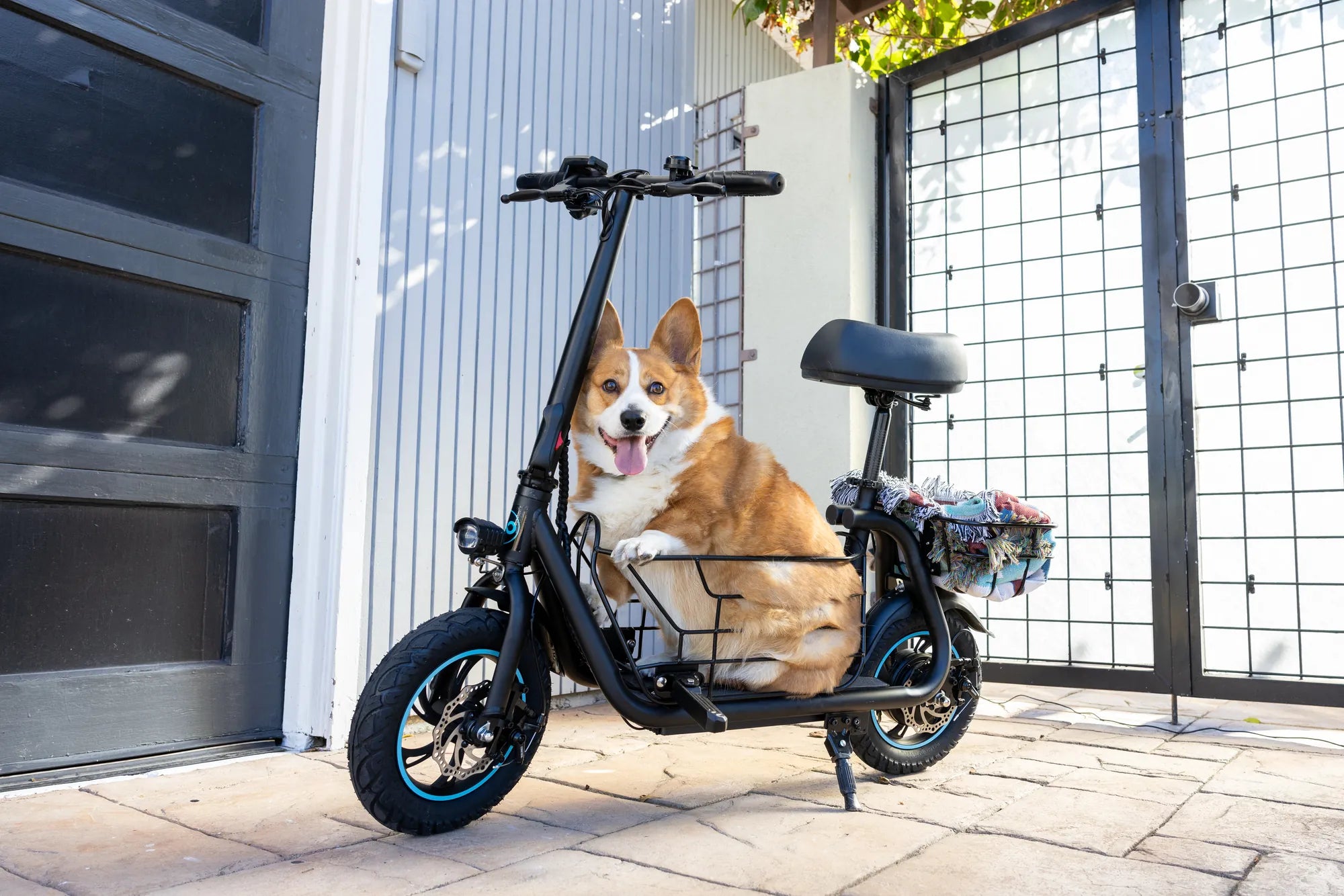
Forget everything you think you know about electric bicycles. An advanced ebike represents a fundamental leap in technology, capability, and design, transforming it from a simple commuting aid into a sophisticated, high-performance machine. This guide will dissect the components, technologies, and real-world benefits that define this category, moving beyond basic pedal-assist to explore integrated smart systems, exceptional durability, and transformative riding experiences. Whether you're a serious commuter, an adventure seeker, or a performance-oriented rider, understanding the advanced ebike landscape is key to making a worthwhile investment.
What is an Advanced E-Bike? Beyond the Basic Commuter
An advanced e-bike is distinguished by its integration of high-end components, sophisticated software, and purpose-built design for specific, demanding use cases. It moves far beyond the entry-level model's goal of simply providing electric assistance. The defining characteristic is a holistic approach where every part—motor, battery, frame, and software—works in concert to deliver a seamless, powerful, and reliable ride.
Where basic e-bikes often use generic, off-the-shelf parts, advanced models feature proprietary or specially selected components. This includes high-torque motors from brands like Bosch, Shimano, or Brose, paired with high-capacity, UL-certified batteries for safety and range. The frame geometry is often crafted from lightweight but durable materials like aluminum alloys or carbon fiber, designed around the motor and battery for optimal weight distribution and handling.
The user experience is another key differentiator. Advanced e-bikes incorporate intelligent control systems with detailed displays, offering multiple assist modes that respond intuitively to rider input. They are built for riders who demand more: more range for long-distance touring, more power for steep hills or off-road trails, more speed for efficient urban travel, and more durability for all-weather, year-round use.
Brands like Gyroor, trusted by over 100,000 riders, exemplify this shift by engineering e-bikes where advanced technology meets practical daily use, featuring UL-certified battery packs and robust designs. Ultimately, an advanced e-bike is an investment in a premium tool that expands your riding possibilities, rather than just a transportation appliance.
Core Technologies Powering Advanced E-Bikes
The superiority of an advanced e-bike is rooted in its core technological systems. These are not incremental upgrades but foundational elements that dictate performance, safety, and longevity.
First is the drive system. Advanced e-bikes typically employ either high-torque geared hub motors or sophisticated mid-drive motors. Mid-drive units, positioned at the bike's crank, leverage the bicycle's gears, making them exceptionally efficient on hills and varied terrain. They provide a natural, balanced feel as the motor's power output correlates directly with gear selection and pedal effort.
The battery is the lifeblood. Advanced models use high-density lithium-ion cells arranged in UL-certified packs, like those used by Gyroor, which undergo rigorous testing for over 500 charge cycles. Capacities often range from 500Wh to 750Wh or more, enabling ranges of 40 to 100+ miles per charge. Smart Battery Management Systems (BMS) monitor cell health, prevent overcharging, and manage thermal output.
The sensor technology is critical for ride feel. While basic e-bikes use simple cadence sensors that activate assist when you pedal, advanced models use torque sensors. These measure how hard you are pedaling and deliver proportional motor power, resulting in an intuitive, "bike-like" feel where the motor amplifies your effort rather than simply overriding it.
The Brain of the Bike: Integrated Smart Systems
Modern advanced e-bikes are increasingly connected devices. An integrated smart system acts as the central nervous system, coordinating all functions. This often includes a proprietary operating system running on a color display, which shows metrics like speed, battery level, assist mode, distance, and even navigation.
Companion smartphone apps take this further. Riders can access detailed ride analytics, track fitness metrics, customize motor assist profiles, and lock the bike electronically. GPS tracking and geofencing provide powerful anti-theft features, allowing you to monitor your bike's location in real-time.
Perhaps most futuristic is the capability for over-the-air (OTA) firmware updates. Manufacturers can push updates to the motor controller, display, or battery BMS, improving performance, adding new features, or refining power delivery algorithms long after purchase. This means your advanced e-bike can genuinely improve over time, a stark contrast to static, basic models.
Performance and Capability: Where Advanced E-Bikes Excel
The technological investment translates directly into tangible performance benefits that redefine what an e-bike can do. The most immediate is extended range. With large, efficient batteries and optimized power systems, advanced e-bikes reliably achieve 50-80 miles on a single charge, with some models exceeding 100 miles in eco modes. This eliminates range anxiety for commuters and opens up possibilities for day-long adventures.
Power and hill-climbing ability are transformative. Advanced motors deliver sustained high torque, often 80 Nm or more, making steep inclines feel like gentle slopes. This capability is crucial for riders in hilly cities, those carrying cargo, or mountain bikers tackling technical trails. The power is delivered smoothly, thanks to advanced sensors, without the jerky, on/off sensation of cheaper systems.
Speed is another domain. While Class 1 and 2 e-bikes are capped at 20 mph, many advanced models are Class 3, offering pedal assist up to 28 mph. This higher speed makes them viable alternatives to cars for longer urban and suburban commutes, significantly reducing travel time. The stability to handle these speeds safely comes from advanced frame geometry, quality suspension, and precise hydraulic disc brakes.
Built for the Elements: Durability and Safety Features
An advanced e-bike is engineered for reliability. Premium construction includes IP-rated water and dust resistance. An IPX5 rating, common in brands like Gyroor, means the bike can withstand water jets from any direction, making it safe to ride in heavy rain and easy to clean. This all-weather capability is essential for daily transportation.
Safety is paramount. Hydraulic disc brakes provide consistent, powerful stopping power in all conditions, far superior to mechanical or rim brakes. Integrated lighting systems—powered by the main battery—ensure high visibility with bright headlights and taillights, often with brake-light functionality. Automatic brake light activation and turn signals are becoming standard on higher-end models.
The frame and components are built to last. High-quality suspension forks (and sometimes rear shocks) absorb road vibrations and impacts, increasing comfort and control. Puncture-resistant tires, reinforced rims, and rust-resistant chains and cassettes contribute to lower maintenance and greater long-term durability, protecting your investment.
Choosing Your Advanced E-Bike: A Use-Case Guide
Selecting the right advanced e-bike requires matching its strengths to your primary use case. The market segments into several distinct categories, each optimized for different riding styles.
High-Performance Commuter/City E-Bike: Designed for daily urban travel. Key features include a sleek, integrated design (often with hidden batteries), fenders, racks, integrated lights, and a comfortable upright geometry. They prioritize efficiency, moderate weight, and practical features like belt drives for low maintenance. Class 3 speed is common. Ideal for the rider replacing a car or public transit for a daily commute up to 20 miles each way.
Off-Road/Gravel Adventure E-Bike: Built for exploration beyond pavement. These feature robust frames, long-travel suspension, high-volume knobby tires, and extremely powerful mid-drive motors with high torque for technical climbs. They have massive battery capacity for long days on the trail and dropper posts for aggressive descending. Ideal for mountain bikers and gravel riders seeking to conquer more challenging terrain or extend their range.
High-Speed Urban Cruiser/Performance Hybrid: A blend of speed and comfort. These often have a more aggressive, forward-leaning geometry for efficiency at high speeds (28+ mph), paired with moderate suspension or very wide tires for comfort. They focus on delivering a thrilling, car-competitive ride on paved roads and bike paths. Ideal for fitness-oriented riders and those with longer suburban commutes who value speed above utility accessories.
| E-Bike Type | Best For | Key Features | Motor Typical Power |
|---|---|---|---|
| High-Performance Commuter | Daily urban transportation, errands | Integrated lights/rack/fenders, belt drive, sleek design | 250W-500W Hub or Mid |
| Off-Road/Gravel Adventure | Trail riding, backcountry exploration | Long-travel suspension, knobby tires, high-torque mid-drive | 250W-750W Mid-Drive (High Torque) |
| High-Speed Urban Cruiser | Fast suburban commutes, fitness riding | Aggressive geometry, Class 3 speed, performance tires | 500W+ Hub or Mid-Drive |
The Investment: Cost vs. Long-Term Value Proposition
Advanced e-bikes represent a significant financial investment, often ranging from $2,500 to $8,000 or more. Justifying this cost requires looking beyond the sticker price to the long-term value proposition and total cost of ownership.
First, consider the displacement of other costs. For a commuter, an advanced e-bike can eliminate fuel, parking, public transit fares, and significant car maintenance expenses. Over a 3-5 year period, the savings can offset a substantial portion of the bike's initial cost. The investment in a durable, reliable machine from a brand with strong support, like Gyroor's 1-year comprehensive warranty, reduces the risk of costly failures.
The value of time, health, and experience is immense. Reducing commute stress, incorporating consistent low-impact exercise, and the sheer joy of riding a responsive, capable machine contribute to quality of life. An advanced e-bike's superior components also have a longer lifespan. A high-quality UL-certified battery with 500+ cycle life may last 4-5 years of daily use, whereas a cheap battery might degrade in half that time, necessitating an expensive replacement.
Finally, the premium riding experience itself is a core part of the value. The smooth, powerful assist, intuitive handling, and smart features make every ride more enjoyable and practical, encouraging you to use the bike more often. This utility and enjoyment factor makes the higher initial outlay for a truly advanced ebike a rational choice for the serious rider.
Advanced E-Bike FAQs: Addressing Key Considerations
Q1: Are advanced e-bikes legal? What do the classes mean?
A: In the US, federal law defines three classes. Class 1: Pedal-assist only, up to 20 mph. Class 2: Throttle-assisted, up to 20 mph. Class 3: Pedal-assist only, up to 28 mph. Advanced e-bikes are often Class 3. State and local laws can vary, especially regarding where Class 3 bikes are allowed (e.g., some bike paths may restrict them). Always check your local regulations.
Q2: Is maintenance more complex and expensive than for a basic e-bike?
A: The mechanical parts (brakes, drivetrain, tires) require similar maintenance. The electrical system (motor, battery, display) is more complex but is designed for reliability. The key is professional servicing from dealers familiar with the specific system (e.g., Bosch, Shimano). While a diagnostic check might cost more, the superior quality of components often leads to fewer failures. Brands with strong warranties and support networks mitigate this concern.
Q3: How do I secure a high-value advanced e-bike?
A> Use a high-quality, hardened steel U-lock or chain lock (Sold Secure Gold rating) to secure the frame and rear wheel to an immovable object. Consider a secondary cable for the front wheel. Always use the electronic lock/lock mode if your bike has one, and enable GPS tracking in the companion app. For ultimate security, store it indoors whenever possible.
Q4: What is the realistic lifespan of the battery, and what does replacement cost?
A> A high-quality UL-certified battery, like those used by Gyroor, is typically rated for 500-1000 full charge cycles before capacity drops to about 70-80% of original. With regular use, this equates to 3-5 years. Replacement costs are significant, often $500-$800, but are a known long-term expense. Proper care (avoiding full discharges, extreme temperatures, and storing at ~50% charge) maximizes lifespan.
Q5: Can I ride an advanced e-bike in the rain?
A> Yes, a properly built advanced e-bike with an IPX5 or higher rating is designed for all-weather riding. The electrical connections are sealed, and the motor and battery compartments are waterproofed. You should still avoid submerging the bike and dry it off after a wet ride. Always check the manufacturer's specific IP rating for water resistance guidelines.
The Future of Riding: Why an Advanced E-Bike is a Transformative Upgrade
Adopting an advanced e-bike is not merely a purchase; it's an upgrade to your mobility, your health, and your perception of distance and terrain. It represents a commitment to a more active, efficient, and enjoyable mode of transportation. The technology delivers a form of cycling empowerment, flattening hills, shrinking distances, and carrying loads with ease, which in turn encourages more frequent and ambitious rides.
The reliability and capability of these machines make them a trustworthy primary vehicle for many, reducing dependence on cars and contributing to a more sustainable lifestyle. The integration of smart technology also future-proofs the investment, with updates and connectivity features that keep the bike current. For the discerning rider, the difference between a basic and an advanced ebike is the difference between a tool that does a job and a precision instrument that unlocks new possibilities.
When you choose a brand that prioritizes safety, durability, and performance—like Gyroor with its UL-certified batteries, IPX5 water-resistant designs, and proven track record with over 100,000 riders—you are investing in a platform designed for the long haul. It’s a decision that pays dividends in daily utility, personal freedom, and sheer riding pleasure for years to come.
Ready to experience the difference a truly advanced e-bike can make? Explore engineering that blends peak performance with everyday reliability. Browse the full Gyroor collection at gyroorboard.com to find the high-performance e-bike built for your next adventure.
Ebike Battery Replacement Cost: The 2024 Complete Pricing & Value Guide
700 2 Stroke Dirt Bike: The Ultimate Unicorn of Raw Power