



Introduction: Why All-Terrain Hoverboards Are a Game-Changer for Kids
Forget the pavement-limited hoverboards of the past. The modern all terrain hoverboard for kids is a rugged, capable machine designed to unlock the entire backyard, park, and trail. This guide is your definitive resource for navigating this exciting category, focusing squarely on safety, smart selection, and maximizing fun. You will learn how to identify a truly safe model, teach your child to ride confidently, and maintain the board for years of adventurous play.
These vehicles represent a significant evolution. They empower kids to explore beyond smooth concrete, fostering a love for outdoor activity and developing balance and coordination in dynamic environments. However, this expanded capability demands a more informed approach from parents. The core of a great experience lies in choosing a well-engineered product and instilling safe riding habits from day one.
We will dissect the essential features that define an all-terrain model, moving far beyond marketing claims to concrete specifications. Safety is non-negotiable, so we dedicate entire sections to the certifications and build qualities that separate trustworthy products from potential hazards. This guide aims to transform the purchasing decision from one of uncertainty to one of informed confidence.
By the end, you will be equipped to select the perfect all terrain hoverboard for kids for your child's age and adventurous spirit. You'll have a clear learning roadmap and maintenance checklist to ensure the fun lasts. Let's begin by understanding what truly makes a hoverboard "all-terrain."
What Makes an "All-Terrain" Hoverboard Different?
A standard hoverboard is designed for flat, hard indoor or pavement surfaces. An all-terrain model is engineered from the ground up to handle uneven, loose, and challenging outdoor landscapes. The difference is not just cosmetic; it's a fundamental redesign for durability and performance. The primary goal is to provide stability and traction where traditional models would falter or stop.
The most critical differentiator is the tires. True all-terrain hoverboards feature large, air-filled (pneumatic) tires, typically 8.5 inches or larger in diameter. These tires act as a primary suspension system, absorbing bumps from roots, rocks, and cracks. The deep, knobby tread patterns dig into grass, dirt, and gravel to prevent slipping, providing the grip necessary for confident off-pavement riding.
Power is another key factor. Navigating slopes and rough ground requires substantial torque. Dual motors with a minimum of 350W each are standard for all-terrain capability, with many premium models offering 400W or more per motor. This power ensures the board can maintain speed and climb mild inclines (typically up to a 15-20 degree grade) without straining the system or leaving your child stranded.
The construction must also be more robust. A reinforced frame, often made from aircraft-grade aluminum alloy, withstands the additional stresses of off-road use. Enhanced waterproofing is crucial; a rating of IPX5 or higher is essential to protect the electrical components from water splashes, puddles, and damp grass. Together, these features create a vehicle built for exploration, not just smooth cruising.
Key Specifications Comparison: Standard vs. All-Terrain
| Feature | Standard Hoverboard | All-Terrain Hoverboard |
|---|---|---|
| Tires | Solid rubber, 6.5"-7" | Pneumatic (air-filled), 8.5"-10.5" |
| Motor Power | Dual 250W | Dual 350W - 500W+ |
| Primary Terrain | Indoor floors, smooth pavement | Grass, dirt trails, gravel, uneven pavement |
| Max Incline | ~10-12 degrees | ~15-25 degrees |
| Water Resistance | Minimal or IPX4 | IPX5 or higher (puddle-resistant) |
| Suspension | None | Tire-based; some have added shock absorbers |
Top Safety Features Every Parent Must Look For
When selecting an all terrain hoverboard for kids, safety is the paramount concern that overrides all other features. The market contains products of varying quality, making it essential to understand the non-negotiable certifications and build standards. These features are not mere bonuses; they are the foundation of a responsible purchase.
UL 2272 Certification is an absolute requirement. This rigorous standard, developed by Underwriters Laboratories, tests the entire electrical system—battery, charger, and motor management—for fire and electrical safety. A hoverboard without this certification poses a significant risk. Always verify the certification; it should be clearly marked on the product and its packaging.
The battery itself deserves special attention. Within a UL 2272 certified board, opt for models that specifically use UL-certified lithium-ion battery packs. This adds an extra layer of assurance regarding the battery cell's quality and management system. Reputable brands, like Gyroor, build their boards around these certified packs, which are tested for over 500 charge cycles for long-term reliability.
Robust water resistance is critical for an outdoor vehicle. Look for an IPX5 rating or higher. An IPX5 rating means the unit can withstand water jets from a nozzle from any direction, making it safe to ride through puddles, on damp grass, or in light rain. This protection prevents short circuits and corrosion. Additionally, non-slip foot pads with a textured surface are essential for maintaining secure footing, especially on bumpy terrain.
Finally, consider operational safety features. Models with a beginner or training mode that limits top speed are invaluable for new riders. Bright LED headlights and taillights (often with customizable colors) increase visibility during dusk rides. A clear, audible warning system for low battery or overload conditions helps prevent unexpected shutdowns while riding.
Choosing the Right Model: A Parent's Checklist
With safety standards established, use this practical checklist to match a specific all terrain hoverboard for kids to your child and their riding environment. This step-by-step guide focuses on performance specifications and practical considerations.
1. Age, Weight, and Skill Level: Most all-terrain models are suitable for riders aged 8 and up, with weight capacities ranging from 44 lbs to 220 lbs. Always check the manufacturer's minimum and maximum weight limits. For first-time riders, prioritize models with a speed-limiting beginner mode to build confidence safely.
2. Motor Power and Speed: For genuine all-terrain capability, dual motors of at least 350W each are recommended. Top speeds typically range from 7 mph (ideal for beginners) to 12 mph. More powerful motors (400W+) provide better hill-climbing ability and smoother performance on rough ground, not just higher top speed.
3. Battery Range and Charge Time: Range is stated as "up to" a certain mileage under ideal conditions. For adventurous kids, seek a range of 10-15 miles per charge. Real-world off-road riding will reduce this by 20-30%. Charge time should be under 4-5 hours for convenience. Remind your child to never use a third-party charger.
4. Tire Size and Type: Larger tires (8.5" to 10.5") provide better obstacle clearance and a smoother ride. Ensure they are pneumatic (air-filled) for shock absorption. Check the recommended PSI and include a small bicycle pump in your maintenance kit. Some premium models feature tubeless tires for reduced puncture risk.
5. Build Quality and Warranty: Examine product images and descriptions for a reinforced frame. A comprehensive warranty is a sign of manufacturer confidence. A 1-year warranty covering the battery, motors, and frame is industry-standard for reputable brands. Accessible customer support for troubleshooting is equally important.
Gyroor's Commitment to Safety and Durability
As a leading brand in personal electric mobility, Gyroor's design philosophy directly addresses core parent concerns for an all terrain hoverboard for kids. Their commitment starts with the power source: every model integrates UL-certified battery packs, providing peace of mind regarding the most critical safety component.
This commitment extends to environmental protection. Gyroor hoverboards are built with IPX5 water-resistant construction. This engineering ensures the electronic systems are shielded from the elements, allowing kids to enjoy riding on dewy grass or through occasional puddles without risking damage—a crucial feature for a true outdoor toy.
Durability is engineered into the chassis. Using reinforced materials and robust motor housings, Gyroor designs its all-terrain models to withstand the vibrations and impacts of off-road use. This durability is backed by a reliable 1-year warranty and supported by a customer service team trusted by over 100,000 riders across North America and Europe.
Mastering the Ride: A Step-by-Step Learning Guide
Learning to ride an all-terrain hoverboard is easier on forgiving surfaces like grass or dirt, which provide a softer landing. This progressive, parent-supervised method builds skills and confidence safely. Always ensure full safety gear is worn during every practice session.
Step 1: Mounting and Finding Balance. Power on the board on a flat, open patch of short grass. Have your child stand next to it, place one foot firmly on the foot pad, and use your shoulder or a wall for support as they slowly bring the second foot up. The goal here is simply to feel the board's balance point without moving. Practice stepping on and off until they are comfortable.
Step 2: Basic Movement (Forward/Backward). With both feet placed shoulder-width apart near the wheels, have your child practice a very slight, controlled lean forward. Emphasize tiny movements from the ankles, not the waist. The grass will naturally provide resistance, making initial movements slower and more manageable. Practice going forward a few feet, then stopping by centering their weight, then leaning slightly back to reverse.
Step 3: Turning and Steering. Once linear movement is comfortable, introduce turning. To turn right, the rider applies gentle forward pressure with their left toe (or backward pressure with their left heel). The key is differential pressure between the feet. Practice large, slow circles on the grass before attempting tighter turns. The wide, stable tires of an all-terrain model make this more intuitive than on a standard board.
Step 4: Controlled Stopping and Dismounting. The safest way to stop is to gradually level the feet to bring the board to a halt, then step off one foot at a time, backward. Practice emergency stops by having them quickly shift weight to a neutral position. Never jump off with both feet while the board is moving, as it can shoot out from under them. Master dismounting before progressing to more complex maneuvers.
Essential Gear and Pre-Ride Safety Protocols
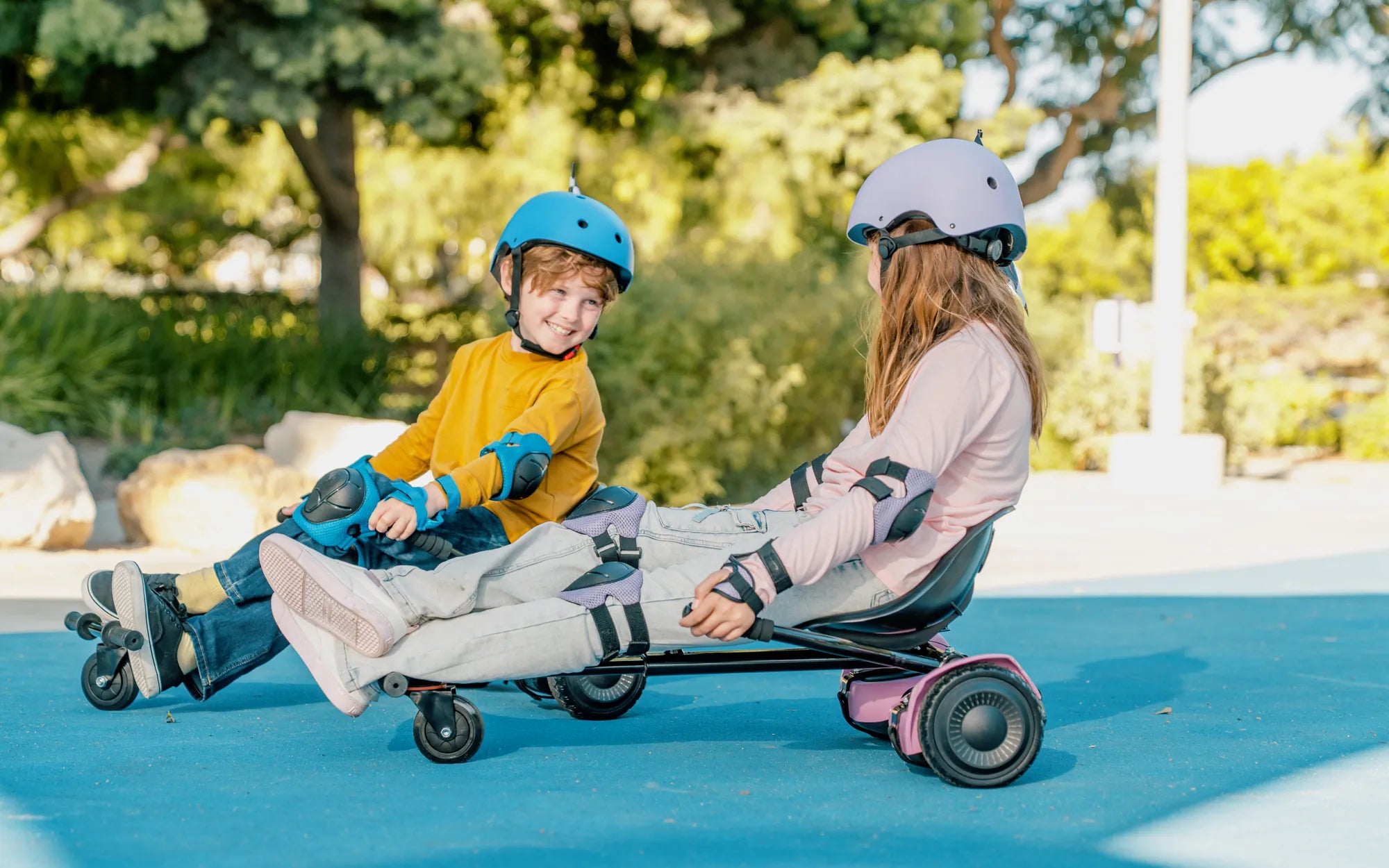
Riding an all terrain hoverboard for kids is an outdoor sport, and like any sport, it requires proper protective equipment. This gear is not optional; it is a fundamental part of the riding experience. Combine this with a consistent pre-ride checklist to establish safe habits.
Mandatory Protective Gear:
- Helmet: A properly fitted, CPSC or ASTM-certified bicycle or multi-sport helmet is essential. It must be worn every single time.
- Knee and Elbow Pads: These protect the joints during inevitable tumbles, especially on harder uneven surfaces.
- Wrist Guards: The most common injury in wheeled sports is a wrist fracture from bracing a fall. Guards are critical.
- Closed-Toe Shoes: Sturdy athletic shoes with good grip provide ankle support and secure footing on the foot pads.
Pre-Ride Safety Checklist: Establish a routine where your child completes these checks with your supervision before every ride.
- Inspect the Hoverboard: Look for any cracks in the body, loose parts, or damage to the tires. Ensure the foot pads are clean and dry.
- Check Tire Pressure: Use a gauge to ensure tires are inflated to the manufacturer's recommended PSI. Soft tires affect balance and range.
- Verify Battery Charge: Do not start a ride with less than 20% battery. An unexpected shutdown on uneven terrain can cause a fall.
- Scout the Riding Area: Quickly walk the intended path to identify major new hazards like large holes, deep mud, big rocks, or traffic.
- Gear Up: No exceptions. Helmet, pads, and guards must be on before the board is powered on.
Maintenance Tips to Ensure Long-Lasting Performance
Regular, simple maintenance will keep an all terrain hoverboard for kids running smoothly and safely for years. These tasks are quick but profoundly impact the vehicle's performance and longevity.
Battery Care: This is the most important maintenance item. Follow the 20-80 rule when possible: avoid draining the battery completely and try not to leave it at 100% charge for extended periods. If storing the board for more than a month, charge it to about 50-60%. Always use the manufacturer-provided charger and allow the board to cool down for 30 minutes after a long ride before charging.
Cleaning After Off-Road Use: Dirt, mud, and grass clippings can get into moving parts. After a ride on dirty terrain, wipe down the entire board with a slightly damp cloth. Avoid spraying it directly with a hose, even with an IPX5 rating, as high-pressure water can force its way into seals. Pay special attention to cleaning the wheel wells and the area around the wheel axles.
Tire and Mechanical Checks: Weekly, check the tire pressure and inflate as needed. Monthly, inspect the tires for cuts, excessive wear, or embedded debris. Every few months, check that all visible screws and bolts on the frame and foot pads are tight (do not over-tighten). Listen for any new grinding or rattling noises during operation, which could indicate a loose component or debris in a motor.
Proper Storage: Store the hoverboard in a cool, dry place away from direct sunlight and extreme temperatures (both hot and cold). Do not store it in a car trunk. Keep it away from flammable materials. Storing it on its side or in a stand, rather than on its wheels, can help prevent flat spots on the tires during long periods of inactivity.
Frequently Asked Questions (FAQ)
Q1: What is the appropriate age for an all-terrain hoverboard?
Most manufacturers recommend ages 8 and up. The key factors are the child's weight (meeting the minimum requirement, typically 44+ lbs), coordination, and ability to follow safety instructions. Maturity and responsibility are as important as physical size.
Q2: Can it ride on sand, mud, or in the rain?
While all-terrain tires handle packed sand and light mud better than solid tires, deep, loose sand or thick mud should be avoided as it can overstress the motors and cause loss of control. An IPX5 rating protects against puddles and light rain, but submerging the board or riding in heavy rain is not advised and may void the warranty.
Q3: How long does the battery last on a single charge, and how long until it needs replacement?
Real-world range is 7-12 miles depending on terrain, rider weight, and speed. The battery itself is designed for 500+ full charge cycles. With typical use, this translates to 2-4 years before a noticeable reduction in range occurs, at which point the battery pack can be replaced.
Q4: Is it difficult for a child to learn?
Most children pick up the basics within 30-60 minutes of practice. The learning curve is often easier than for a standard hoverboard because practicing on grass provides more stability and less fear of falling. Using the beginner speed mode is highly recommended for the first few hours.
Q5: What should I do if the hoverboard gets very wet or is caught in a downpour?
Immediately power it off. Wipe it dry with a towel and place it in a dry, ventilated area (not on a heater) for at least 48-72 hours to ensure all internal components are completely dry before attempting to power it on again. Do not charge it while it is wet.
Conclusion: Unleashing Adventure with Confidence
A high-quality all terrain hoverboard for kids opens a world of outdoor exploration, combining physical activity with technological fun. The joy it brings is directly tied to the foundation of safety and responsibility you build as a parent. By prioritizing UL certifications, robust construction, and comprehensive protective gear, you mitigate risks and set the stage for endless adventure.
The process—from informed selection to supervised learning and regular maintenance—is an investment in your child's confidence and independence. Choosing a reputable brand that stands behind its products with clear safety standards and reliable support, like Gyroor, provides the peace of mind necessary for true enjoyment. Their focus on UL-certified batteries, IPX5 water-resistance, and durable design aligns perfectly with the demands of active young riders.
Remember, the ultimate goal is fun, but safe fun is the only kind that lasts. Equip your child with knowledge and the right tools, establish clear rules for where and how to ride, and encourage their newfound mobility. The backyard, the park trail, and the neighborhood path become arenas for adventure, all accessed from a platform of security and smart choices.
Ready to explore the possibilities? Browse the full Gyroor collection, including their range of durable, safety-certified all-terrain hoverboards, at gyroorboard.com. Find the perfect model to start your child's next adventure.
Christmas Gift Ideas for 10-12 Year Old Boys: Fun and Exciting Presents They'll Love
Buy Hoverboard: The Ultimate Guide to Choosing the Best One for You