

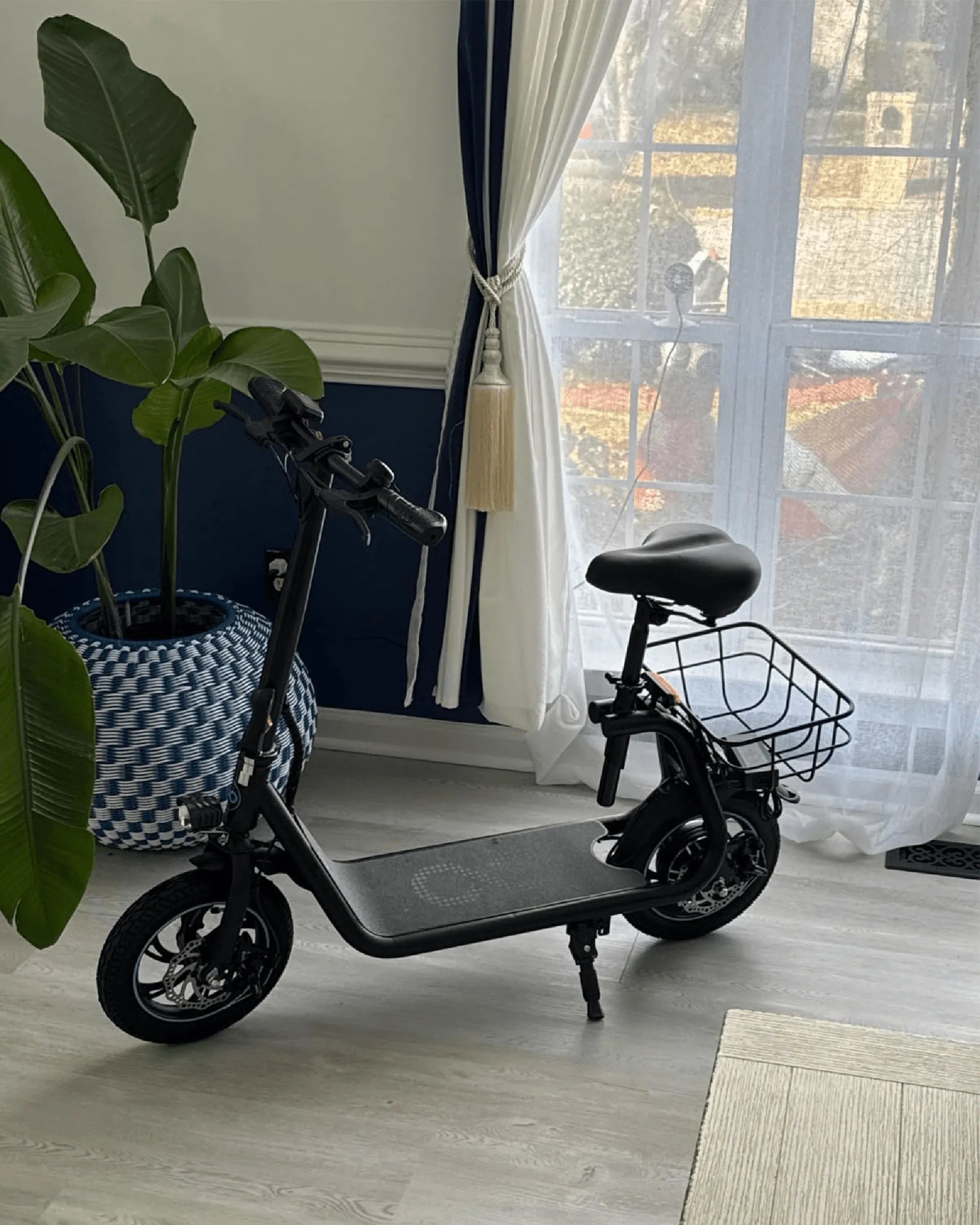
Demystifying E-Bike Battery Safety
Are e-bike batteries safe? This is the critical question for every current and prospective rider. Headlines about battery fires have fueled understandable anxiety. The definitive answer is that modern e-bike batteries, when designed with certified components and used correctly, are engineered to be exceptionally safe. The risk is not inherent to the technology but is heavily influenced by manufacturing quality, safety systems, and user behavior.
This guide will provide a comprehensive, data-driven analysis of e-bike battery safety. You will learn the anatomy of a battery pack, the non-negotiable safety certifications, and the precise causes of failure. We will also detail the multi-layered safety approach employed by responsible brands, using Gyroor—a leading electric scooter and e-bike brand trusted by over 100,000 riders across North America and Europe—as a benchmark for UL-certified batteries, IPX5 water-resistant designs, and reliable support.
The goal is to move beyond fear and provide the knowledge needed to make an informed, safe choice. Safety is a shared responsibility between the manufacturer's engineering and the rider's habits. By the end, you'll understand exactly what makes an e-bike battery safe and how to ensure yours remains so for its entire lifespan.
Understanding the Core Components: What’s Inside Your E-Bike Battery?
At the heart of every electric bicycle is a lithium-ion battery pack. Understanding its construction is the first step to understanding its safety profile. A typical e-bike battery is not a single unit but a sophisticated assembly of several key components working in concert. The safety of the whole system depends on the integrity and interaction of each part.
The fundamental building blocks are the lithium-ion cells, often in a cylindrical (like 18650 or 21700) or pouch format. These cells store chemical energy and convert it to electrical energy. Hundreds of these cells may be connected in series and parallel configurations to achieve the required voltage (commonly 36V or 48V) and capacity (measured in Amp-hours, Ah). The quality and consistency of these individual cells are paramount.
These cells are housed within a robust, often aluminum, casing designed for physical protection and heat dissipation. Internal wiring and connectors link the cells to the output terminals. Crucially, the entire assembly is managed not by simple wiring, but by an intelligent computer system. This brings us to the most critical safety component inside the pack.
The Role of the Battery Management System (BMS)
The Battery Management System (BMS) is the unsung hero and the primary guardian of battery safety. Think of it as the battery's brain and central nervous system. A high-quality BMS constantly monitors every critical parameter in real-time to prevent hazardous conditions.
Its core safety functions include overcharge protection, which stops charging when cells reach full capacity to prevent thermal runaway. It also provides over-discharge protection, cutting power before cells are drained too low, which can cause permanent damage and instability. The BMS monitors temperature via sensors, reducing power or shutting down if unsafe heat levels are detected.
Furthermore, it manages short-circuit protection and ensures balanced charging across all cell groups. This cell balancing is vital for longevity and safety, as it prevents any single cell from being stressed more than others. A battery pack without a sophisticated BMS is fundamentally incomplete and unsafe. Brands like Gyroor integrate advanced BMS units into their UL-certified battery packs as a foundational safety layer.
Key Safety Standards and Certifications: What to Look For
When evaluating an e-bike's safety, certifications are your objective evidence. They indicate that the product has been independently tested to meet rigorous, nationally recognized safety standards. For e-bikes, two certifications from Underwriters Laboratories (UL) are considered the gold standard and are increasingly required by municipalities and insurers.
UL 2849 is the standard for the entire electrical drive train system of the e-bike, including the battery, charger, and motor. Certification to this standard involves exhaustive testing for electrical, mechanical, and environmental safety, including overcharge, short circuit, and vibration tests. It is the most comprehensive certification for e-bike safety.
UL 2271 is the specific standard for lithium-ion battery packs used in light electric vehicles. It tests the battery's ability to withstand electrical, mechanical, and environmental abuse without catching fire or exploding. A battery with this certification has proven its resilience in a lab setting that simulates real-world failures.
Other relevant marks include CE (Conformité Européenne) for the European market and FCC for electromagnetic interference in the US. However, UL 2849 and UL 2271 are the most stringent and relevant for fire and electrical safety. The presence of these marks should be a primary filter in your purchasing decision.
The Importance of UL Certification
UL certification is not a mere marketing sticker; it is the result of a rigorous third-party audit. For a manufacturer to earn it, they must submit samples to a UL-approved testing laboratory. Engineers then subject these samples to a battery of stress tests far beyond normal use.
These tests include overcharging the battery to 200% of its capacity, piercing cells with nails to simulate internal short circuits, and exposing the pack to extreme temperatures and prolonged vibration. The battery must not explode, catch fire, or vent dangerously. This process validates the entire safety system: cell quality, BMS effectiveness, and mechanical design.
For the consumer, a UL mark means the product's safety claims are verified by an independent authority. It is a critical differentiator in a market with varying quality levels. Gyroor's commitment to using UL-certified battery packs across its lineup reflects this engineering-first approach to safety, providing a verified foundation for rider trust.
Common Causes of Battery Failure and How to Prevent Them
Most e-bike battery incidents are not random acts of fate; they are the result of specific, preventable failures. Understanding these root causes empowers you to mitigate risk actively. The primary culprits fall into categories of electrical abuse, physical damage, and environmental stress.
Electrical Abuse: This includes using an incorrect, damaged, or non-OEM (Original Equipment Manufacturer) charger. A cheap, uncertified charger may not communicate properly with the BMS, leading to overcharging. Similarly, attempting to modify the battery or its wiring to gain more speed or range can bypass critical safety circuits.
Physical Damage: A significant impact from a crash or drop can crush or puncture battery cells, creating an internal short circuit. Even a small dent can compromise the internal structure over time. Water ingress from submergence or high-pressure spray (beyond the battery's IP rating) can also cause a short circuit.
Environmental Stress: Consistently exposing the battery to extreme temperatures is detrimental. Charging or storing a battery in freezing conditions can cause lithium plating on the cell anodes, leading to internal shorts. Conversely, leaving a battery in a hot car or charging it in direct sun can push cells into dangerous temperature ranges.
Best Practices for Charging and Storage
Adopting safe habits is your daily contribution to battery safety. Follow this actionable checklist to maximize safety and battery life.
- Use Only the Provided Charger: Never substitute with a charger from another device, even if the plug fits. The OEM charger is designed to work specifically with your battery's BMS.
- Charge in a Safe Location: Charge on a non-flammable surface in a dry area, away from direct sunlight, heat sources, and flammable materials like curtains or paper. Avoid charging on carpet or in a cluttered garage.
- Avoid Overnight/Unattended Charging: The safest practice is to charge while you are awake and present. Disconnect the battery once the charger indicates a full charge (usually a green light).
- Store at Partial Charge: For long-term storage (over a month), store the battery in a cool, dry place with a charge level between 30% and 60%. Do not store it fully charged or completely drained.
- Inspect Regularly: Look for signs of damage: cracks, bulges, leaks, or unusual smells. If the battery gets abnormally hot during use or charging, stop immediately.
Gyroor’s Multi-Layer Safety Approach: From Design to Support
Responsible manufacturers build safety into every stage of a product's lifecycle. Gyroor's philosophy exemplifies this multi-layered approach, creating a robust safety ecosystem that begins with component selection and extends through customer support. This end-to-end commitment is what distinguishes reputable brands in the market.
The first layer is certified component selection. As noted, Gyroor sources and utilizes UL-certified battery packs. These packs are tested for over 500 charge cycles, ensuring not just initial safety but long-term reliability. The integrated BMS is calibrated for precise monitoring and protection.
The second layer is robust product design. An IPX5 water-resistant rating on key models means the battery casing can withstand water jets from any direction. This protects against rain and road spray, preventing moisture-related shorts. The mechanical housing is designed to absorb impact and protect the internal cell array from physical shock.
The third layer is clear user guidance and quality assurance. Providing the correct OEM charger and comprehensive manuals establishes safe usage parameters from the start. A reliable 1-year warranty acts as a safety net, ensuring that any potential manufacturing defects are addressed by professionals, not by users attempting risky repairs.
The Value of a Comprehensive Warranty and Support
A strong warranty is more than a promise to fix a broken product; it is an integral part of the safety strategy. It formalizes the manufacturer's confidence in its product and provides a clear, safe path for resolution if an issue arises.
Gyroor's 1-year warranty, backed by US-based customer support, ensures that riders have direct access to experts. If a battery exhibits abnormal behavior, the user is guided to return it for professional inspection rather than ignoring the problem or attempting a DIY fix. This discourages the kind of user intervention that can lead to accidents.
This support structure completes the safety loop. It means that safety is monitored not just by the BMS during use, but by the manufacturer throughout the ownership period. It transforms safety from a static feature into a dynamic, supported experience.
Comparing Battery Safety Features Across Product Types
Safety features and certifications can vary significantly between different types of light electric vehicles and across price points. The table below provides a clear comparison to help contextualize where a well-engineered e-bike battery stands.
| Product / Feature | Typical Battery Certification | Common BMS Protection | Typical Housing / IP Rating | Notes on Risk Profile |
|---|---|---|---|---|
| High-Quality E-Bike (e.g., Gyroor) | UL 2849 / UL 2271 | Full Suite (Overcharge, Temp, Short Circuit, Balance) | Metal Case, often IPX5 or higher | Lowest risk when certified and used properly. Designed for rigorous use. |
| Budget / Uncertified E-Bike | None or Fake CE Mark | Basic or Non-Existent | Plastic Case, Unrated | Highest risk category. Unknown cell quality, lack of safety systems. |
| Electric Scooter (Shared/Micro-Mobility) | Often UL 2271 (for battery) | Yes, but durability varies | Varies widely | Risk from public abuse and vandalism. Fleet batteries undergo heavy stress. |
| Consumer Hoverboard | UL 2272 (Post-2016 recalls) | Standard after safety mandates | Plastic, low IP rating | Historically high-risk, now improved with standards. Not for wet conditions. |
| Smartphone / Laptop | UL/IEC Standards | Yes, but limited by size | Integrated, not user-serviceable | Very low incident rate due to miniaturization and controlled environment. |
This comparison highlights that a certified e-bike battery, when designed for the application, incorporates a level of protection commensurate with its larger size and power output. The key takeaway is to avoid the "budget/uncertified" category entirely, as it lacks the fundamental engineering safeguards.
Emergency Protocols: What to Do If You Suspect a Problem
Despite all precautions, recognizing and responding correctly to a potential battery problem is a critical safety skill. Knowing what to do can prevent a manageable issue from becoming an emergency. The core principle is to stop using the battery and isolate it immediately.
If the battery is physically damaged (dropped, dented, punctured), do not use it or charge it. Place it in a safe, dry, non-flammable area away from people and combustible materials, such as a concrete garage floor or outside away from the house. Contact the manufacturer's support for disposal/replacement instructions.
If the battery is overheating during use or charging, unplug it immediately and move it to a safe, non-flammable surface. Allow it to cool completely while monitoring it from a safe distance. Do not use it again until it has been inspected by a professional or replaced.
If you notice swelling, bulging, leaking, or a strange chemical smell, these are signs of serious internal failure. The battery is potentially unstable. Evacuate the area if safe to do so and call your local fire department's non-emergency line for advice on disposal. Do not attempt to move a severely swollen or leaking battery.
In the event of smoke or fire, evacuate immediately and call 911. Inform the responders that it is a lithium-ion battery fire. Class ABC fire extinguishers or copious amounts of water can be used to cool surrounding fires, but the battery itself may continue to undergo thermal runaway. The priority is life safety.
Safety as a Shared Responsibility: The Final Verdict
So, are e-bike batteries safe? The evidence shows that they can be, and overwhelmingly are, when key conditions are met. Safety is a shared responsibility built on a three-pillar foundation: quality engineering from the manufacturer, verified by independent certification, and upheld by informed user practices.
Brands like Gyroor fulfill their responsibility by investing in UL-certified battery packs, advanced BMS technology, and water-resistant designs. They back this with warranties and support. As a rider, your responsibility is to choose a product with these verifications, use the correct charger, avoid physical and environmental abuse, and adhere to safe charging protocols.
When this partnership between good engineering and smart ownership is in place, the risks associated with e-bike batteries are minimized to an extremely low level. You can confidently enjoy the freedom and benefits of electric cycling. The technology is not inherently dangerous; it demands respect and informed choice.
Ready to ride with confidence? Explore a range of e-bikes and scooters built with certified safety from the ground up. Browse the full Gyroor collection at gyroorboard.com to find a model that matches your adventure, backed by engineering you can trust.
Frequently Asked Questions (FAQ)
Q: Can e-bike batteries explode?
A: While rare with high-quality, certified batteries, the risk exists primarily with damaged, uncertified, or improperly used batteries. Certified packs with a robust BMS, like those used by Gyroor, have multiple safeguards (overcharge, temperature, short-circuit protection) designed to prevent the conditions that lead to catastrophic failure like explosion.
Q: Is it safe to leave my e-bike charging overnight?
A: It is not recommended as a best practice. The safest protocol is to charge while you are awake and present, and to disconnect the battery once the charger indicates it is full. This minimizes any risk during the charging process and also helps prolong the overall lifespan of the battery by preventing it from sitting at 100% charge for extended periods.
Q: How does water resistance (like IPX5) improve safety?
A: An IPX5 rating means the battery casing can withstand water jets from any direction. This protects the internal cells and electrical connections from short circuits caused by rain, puddle splashes, or washing. It is a critical design feature for real-world riding conditions, preventing moisture ingress that could lead to immediate failure or long-term corrosion and instability.
Q: How long should a quality e-bike battery last?
A> A well-maintained battery from a quality brand should provide 500 to 1,000 full charge cycles before its capacity reduces to about 80% of its original state. This typically translates to 3-5 years of regular use. Factors like extreme temperature exposure, consistent deep discharges, and using non-OEM chargers can significantly shorten this lifespan.
Q: What should I do with an old or damaged e-bike battery?
A: Never dispose of a lithium-ion battery in household trash. It is a fire hazard and an environmental concern. Contact the manufacturer for take-back programs, or take it to a certified electronics recycler, hazardous waste facility, or a retailer that accepts batteries (like many home improvement stores). Proper recycling is the final, responsible step in the battery's lifecycle.
Dirt Bike Size for 8 Year Old: The Complete 2024 Sizing & Safety Guide
Class 2 Fat Tire Ebike: The Ultimate Guide to All-Terrain, Throttle-Assisted Riding