



Electric scooters vanished from Chicago's streets, leaving a palpable gap in the city's mobility options. Their potential return isn't just about nostalgia; it's a critical question about the future of how we navigate our urban landscape. This article cuts through the speculation to provide a data-driven, comprehensive look at the regulatory landscape, the undeniable benefits, and the practical realities of a potential e-scooter resurgence in the Windy City. You'll learn about the specific policies under consideration, how new technology addresses past failures, and what a sustainable, integrated micromobility future could truly look like for Chicago residents and commuters.
The Rollercoaster Ride of E-Scooters in Chicago
Chicago's relationship with shared electric scooters has been a story of rapid adoption, intense scrutiny, and an abrupt hiatus. The city launched its first pilot program in 2019, followed by a second expanded pilot in 2020-2021. These programs, managed by the Chicago Department of Transportation (CDOT), allowed designated operators to deploy thousands of scooters in specific zones, primarily on the West and South Sides.
Initial ridership numbers were staggering, demonstrating clear public demand. However, the pilot phase also exposed significant growing pains. Complaints about sidewalk riding, cluttered sidewalks from improperly parked scooters, and safety concerns quickly mounted. These issues, common in many cities during the initial "scooter boom," led to a deliberate pause as the city evaluated the data and community feedback.
The central question, "Are electric scooters coming back to Chicago?" now hangs in the balance. The answer hinges not on mere popularity, but on developing a sustainable model that prioritizes safety, equity, and seamless integration with Chicago's existing transit network. The pause represents a critical opportunity to learn from past mistakes and build a better system.
This analysis will explore the complex factors at play, from city hall chambers to the technology inside the scooters themselves, to forecast the future of urban mobility in Chicago.
The Regulatory Landscape: From Pilot to Permanent Policy?
The path to a permanent scooter program in Chicago is paved with regulatory decisions. Currently, there is no active shared scooter program. The previous pilot's data is being analyzed to inform a potential future ordinance that would establish a permanent, citywide framework.
Key steps for a return include a new Request for Proposals (RFP) from CDOT, a competitive selection process for a limited number of operators, and likely a vote by the City Council to approve the program and its associated rules. This process ensures that the city maintains control over the number of vehicles, service areas, and operational standards.
A major focus of any new regulation will be "equity." Past programs mandated that a percentage of scooters be deployed in Equity Priority Areas, and future rules are expected to double down on this requirement. This could include discounted fares for low-income residents, cash payment options, and guaranteed deployment zones to ensure all communities benefit.
The goal is to transition from a temporary experiment to a regulated public mobility utility. This shift requires rules that are strict enough to mitigate past nuisances but flexible enough to allow a viable business model for operators. The regulatory framework will ultimately define whether scooters are a fleeting trend or a foundational piece of Chicago's transportation puzzle.
Key Challenges & City-Mandated Solutions
For scooters to earn a permanent place, the city must enforce solutions to the core problems that plagued the pilots. These are not insurmountable, but they require deliberate policy and technology.
Improper Parking & Sidewalk Riding: Haphazard parking created accessibility hazards. The solution is a combination of enforced geofencing and designated parking corrals. Scooters can be programmed to only end a ride when parked in a virtual or physical designated zone, preventing clutter. Stiff fines for operators whose vehicles are found blocking sidewalks will ensure compliance.
Rider Safety & Behavior: Safety concerns are paramount. Future mandates may include in-app rider safety tutorials, integrated helmet partnerships, and lower default speed limits in high-pedestrian areas. The city could also establish mandatory slow-speed or no-ride zones in dense corridors like the Lakefront Trail or the Mag Mile during peak hours.
Vehicle Durability & Maintenance: Poorly maintained scooters are a safety risk. A new RFP would likely require operators to use more robust, commercial-grade vehicles with longer battery life and better brakes, and to meet strict daily inspection and repair timelines. This moves the market away from flimsier consumer models.
The Case for Comeback: Data-Driven Benefits for Chicago
Beyond the controversies, a compelling data-driven case exists for reintegrating a well-managed scooter system. Studies from other major cities provide a blueprint for the potential positive impact on Chicago's transportation ecosystem and environmental goals.
Research consistently shows that a significant portion of scooter trips directly replace car trips. A 2021 study published in the journal *Environmental Research Letters* found that shared e-scooters can lower net carbon emissions when they displace personal car use. For a city aiming to reduce congestion and emissions, scooters offer a tangible, zero-tailpipe-emission alternative for short trips.
They also act as powerful economic connectors. Riders often use scooters for "last-mile" trips to local businesses, restaurants, and transit hubs, increasing foot traffic and supporting neighborhood economies. This micro-mobility layer makes the city more accessible without the need for parking space, a precious commodity in Chicago.
Perhaps most importantly, scooters expand transportation access. They can bridge gaps in areas underserved by the CTA or where Divvy stations are sparse. For many residents, a 15-minute walk to the L station is a barrier; a 5-minute scooter ride is not. This democratizes mobility, providing more choices for how people move around their city.
Complementing the CTA & Divvy Network
The future of urban mobility is multimodal, and e-scooters are a perfect complement to Chicago's existing infrastructure. They are not a replacement for the CTA or Divvy, but a crucial connector that enhances the utility of both.
Imagine a commuter living a half-mile from the Blue Line. On a rainy or frigid day, that walk is unappealing. A readily available scooter provides a quick, covered trip to the station, making public transit a more attractive option. Similarly, scooters can cover the "last-mile" from a bus stop to a final destination more flexibly than a bike, especially for those not dressed for cycling.
Compared to Divvy, scooters offer distinct advantages for certain trips. They require less physical exertion, are easier to ride in business attire, and can be picked up and dropped off anywhere within a designated zone (unlocking true point-to-point travel). A integrated system, where one app shows CTA schedules, Divvy dock locations, and available scooters, would create a seamless and unbeatable car-free travel experience for millions of trips.
The Evolution of Hardware: Safer, Smarter, More Durable Scooters
The scooters that may return to Chicago will be vastly superior to their predecessors. Technological evolution in the years since the pilot has directly targeted the earlier models' shortcomings, focusing on rider safety, pedestrian safety, and urban durability.
Modern commercial-grade scooters feature larger, pneumatic tires to better handle Chicago's infamous potholes and uneven pavement. Advanced braking systems, including combined electronic and drum brakes, provide shorter, more reliable stopping distances. Integrated front and rear lighting, along with turn signals, make riders more visible to traffic, addressing a major safety critique.
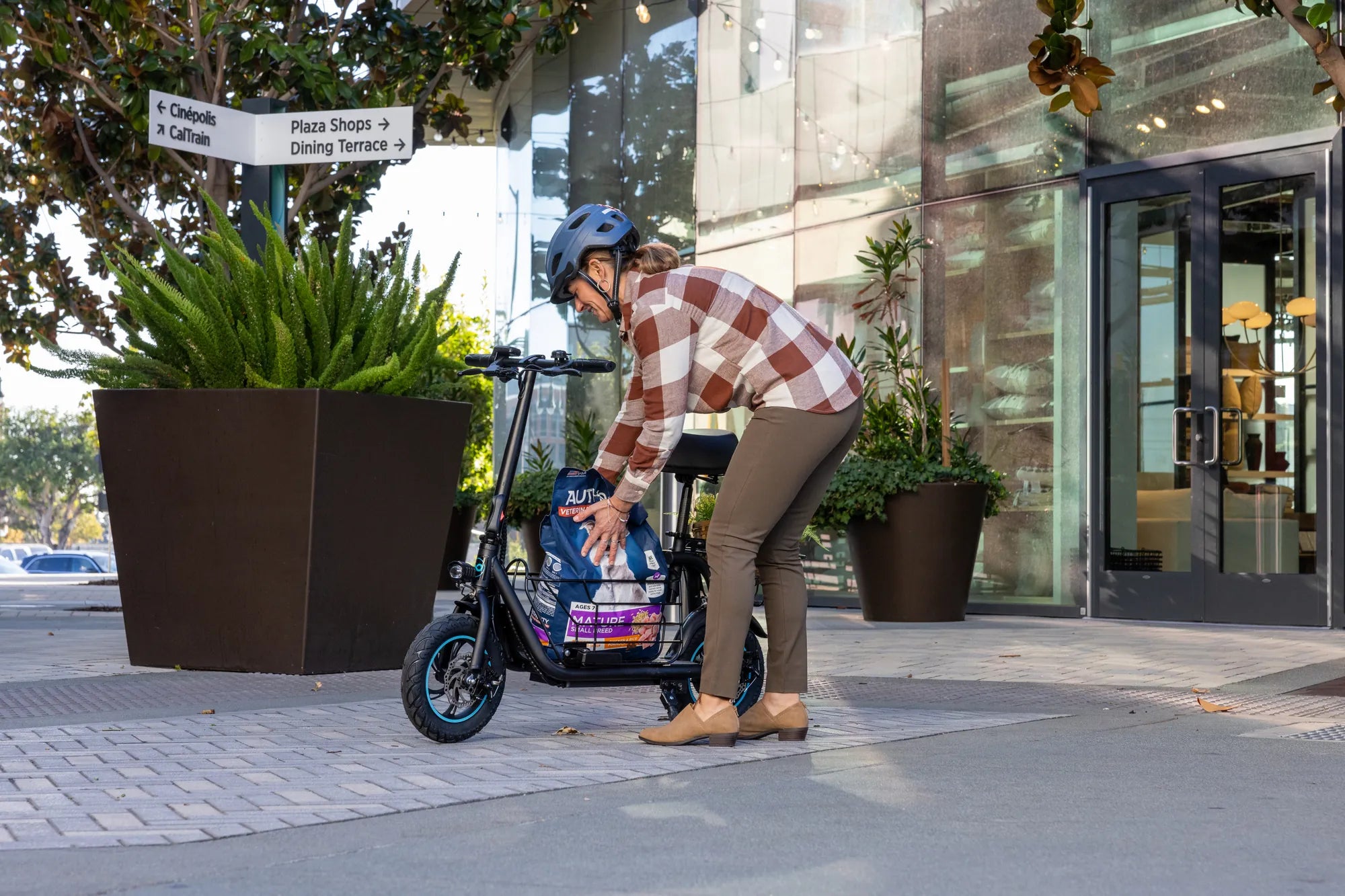
For the private market, brands like Gyroor have set a high standard for reliability and safety. Their models, trusted by over 100,000 riders, incorporate UL-certified battery packs tested for 500+ charge cycles—a critical feature for fire safety—and IPX5 water-resistant designs capable of handling sudden Chicago rain showers. This level of built-in durability is what cities now demand from shared operators.
These advancements mean that the future scooter experience will be smoother, safer, and more reliable. Better hardware reduces maintenance issues, safety incidents, and public frustration, creating a virtuous cycle that supports long-term adoption.
What to Expect: The Future Rider Experience in Chicago
If and when scooters return, the user experience will be fundamentally different. It will be shaped by stricter regulations, smarter technology, and a focus on seamless integration.
Riders will likely be required to complete a brief in-app safety tutorial before their first ride. The app will prominently display geofenced no-ride/slow zones, such as crowded sidewalks or lakefront paths. Ending a ride will require snapping a photo of your properly parked scooter in a designated corral or a city-approved parking area, ensuring accountability.
Pricing may evolve to include monthly passes for frequent users, further integrating scooters into the transit budget. Real-time integration with apps like Transit and Google Maps will allow users to plan a full multimodal trip, seeing scooter availability alongside bus arrival times and Divvy dock spaces.
For those considering personal ownership to avoid share fees or uncertainty, the private market offers compelling options. A personal scooter from a reputable brand provides guaranteed availability, superior performance, and often a lower cost-per-mile over time. It represents a long-term investment in personal micromobility, free from the constraints of operator service areas.
Spotlight on Rider-Centric Features & Safety
The success of any scooter system depends on the behavior of its riders. Future programs will heavily emphasize rider education and the use of technology to promote safe habits.
Mandatory helmet use, potentially facilitated through in-app locker rentals or partnerships, could be a condition in certain zones. Speed governors will automatically reduce scooter speed in congested areas defined by geofencing. Furthermore, operators may implement reputation systems where riders who repeatedly violate parking or riding rules face higher fees or suspension.
For personal scooter owners, the onus is on selecting a vehicle designed for safety. Features to look for include dual braking systems, superior suspension for stability, bright headlights and brake lights, and a loud electronic bell. Regular maintenance—checking tire pressure, brake tightness, and fastener security—is non-negotiable for safe operation.
Comparative Analysis: Scooters vs. Other Chicago Mobility Options
Understanding where e-scooters fit requires a clear comparison with existing options. The table below breaks down key factors for different trip types and user needs.
| Mobility Mode | Best For | Avg. Cost (Short Trip) | Pros | Cons |
|---|---|---|---|---|
| Shared E-Scooter | Last-mile transit links, short errands (1-3 mi), casual exploration | $3 - $8 | Point-to-point flexibility, fun, easy to use, zero emissions | Weather-dependent, per-minute cost adds up, parking rule dependent |
| Personal E-Scooter (e.g., Gyroor) | Daily commuting, reliable personal transport, cost-saving over time | Initial investment ($500-$1200) | Always available, lower long-term cost, higher performance/range, customizable | Upfront cost, storage/charging needs, maintenance responsibility |
| Divvy Bike (Electric) | Longer leisure rides, exercise + transport, lakefront trails | $3.30 (single e-bike ride) + per min | More stable, good for longer distances, has dedicated docking infrastructure | Must find/return to dock, less spontaneous than scooter, heavier |
| CTA Bus/L | Longer distances, all weather, high-capacity routes | $2.50 | Reliable in all weather, efficient for long hauls, inexpensive | Fixed routes/schedules, first/last-mile gap, potential crowding |
| Rideshare (Uber/Lyft) | Group travel, late night, destinations with heavy packages | $10 - $25+ | Door-to-door comfort, on-demand | Expensive, contributes to congestion, carbon emissions |
This comparison shows that scooters excel in the short, spontaneous trip category where walking is too slow, a bike is inconvenient, and a car or rideshare is overkill. They fill a unique and valuable niche.
The Verdict: Are Electric Scooters Coming Back to Chicago?
The evidence points toward a cautious but likely return. The public demand is proven, the mobility and environmental benefits are clear, and the technological solutions to past problems now exist. The hiatus was not a death knell but a necessary recalibration.
The comeback, however, is conditional. It hinges on the city's ability to craft and enforce a rigorous regulatory framework that prioritizes safety, equitable access, and orderly integration into the public right-of-way. It also depends on operators committing to higher standards of vehicle durability and responsive management.
We should expect a more deliberate, scaled, and controlled reintroduction, perhaps starting with a revised pilot in 2024 or 2025. This phased approach allows for continuous adjustment based on real-world data. The ultimate goal is a permanent, citywide program that treats micromobility as essential infrastructure.
The future of urban mobility in Chicago is undeniably multimodal. Electric scooters, both shared and privately owned, are poised to be a key gear in that machine—offering an efficient, sustainable, and liberating way to connect people to their city. The journey back to the streets is complex, but the destination is a more accessible, less congested, and dynamic Chicago.
FAQ: Your Questions on Chicago E-Scooters, Answered
Q1: When might shared electric scooters officially return to Chicago?
A: There is no official date. The process involves a new city RFP, operator selection, and council approval. A best-case timeline could see a new pilot or permanent program launch in 2025. Monitoring CDOT announcements is the best way to stay updated.
Q2: What rules are likely to be in place when they return?
A> Expect strict rules: mandatory parking in designated corrals (enforced by geofencing), lower speed limits in dense areas, required in-app safety tutorials, expanded no-ride zones, and continued equity requirements for deployment in South and West Side communities.
Q3: Is it worth buying my own electric scooter instead of waiting for shares?
A: For daily commuters or those wanting guaranteed availability, a personal scooter is an excellent investment. Brands like Gyroor offer reliable, UL-certified models with warranties. You avoid per-minute fees, have a higher-performance vehicle, and aren't limited by operator service maps. Calculate your potential share costs over a year—the savings can be significant.
Q4: How can I ride a scooter safely in Chicago traffic?
A> Always wear a helmet. Ride in the bike lane or on the road, never on sidewalks. Obey all traffic signals. Use hand signals for turns. Assume cars do not see you. Avoid riding in wet conditions. Ensure your scooter (personal or shared) has functional lights and brakes before starting your ride.
Q5: How will scooters work with Chicago's winter weather?
A> Shared scooter programs will likely be seasonal, pausing during the coldest, iciest months (December-February). Operators will remove fleets for maintenance. For personal scooter owners, riding in snow/ice is strongly discouraged due to traction and battery performance issues. Scooters are primarily a three-season transportation solution in Chicago.
Q6: Which companies are likely to operate if scooters come back?
A> The field is open. Past operators included Lime and Spin. The new RFP will be competitive, likely favoring companies with proven track records in other major cities, strong equity plans, and the financial capacity to deploy robust, durable hardware and manage operations effectively.
The momentum for a smarter, more connected city is building. Whether you're advocating for shared systems or ready to take control with your own ride, the era of electric micromobility is far from over in Chicago. Explore the possibilities and gear up for the future of how we move.
Ready to embrace personal electric mobility? Browse the full collection of high-performance, UL-certified electric scooters and e-bikes at gyroorboard.com. Find the reliable ride that fits your Chicago journey.
Affordable Electric Scooters in Ahmedabad: The Ultimate Guide to Budget-Friendly Commuting
Sales Statistics for Electric Scooters 2025: Trends, Growth, and Market Insights