

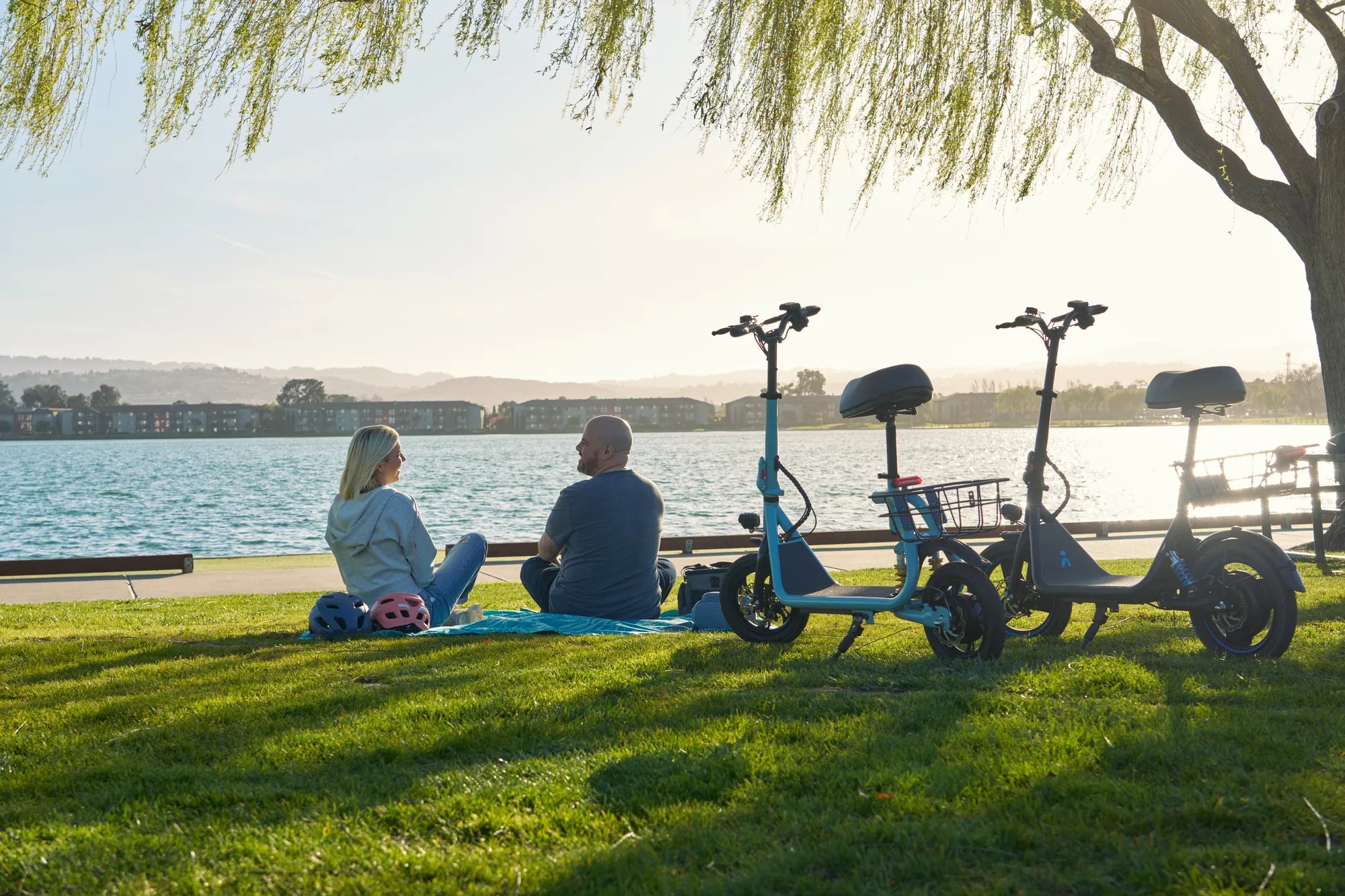
Navigating Quebec's E-Scooter Landscape
Electric scooters have surged in popularity across Quebec, offering a nimble, eco-friendly solution for urban commutes and leisurely rides. However, their rapid adoption has been met with widespread confusion regarding their legal status. Are electric scooters legal in Quebec? The answer is yes, but with a critical caveat: their operation is governed by a detailed set of provincial regulations and often stricter municipal bylaws.
This article serves as your definitive, up-to-date resource. We will dissect Quebec's Highway Safety Code, clarify where you can and cannot ride, outline all rider requirements, and examine how local rules in cities like Montreal and Quebec City add another layer of complexity. Understanding these rules is not just about avoiding fines—it's about ensuring your safety and the safety of others on shared pathways and roads.
For riders and prospective buyers, navigating this legal framework is the first step to responsible ownership. Brands like GYROOR, a leading electric scooter and e-bike brand trusted by over 100,000 riders across North America and Europe, engineer their models with these regulations in mind, focusing on compliance, safety, and reliability for the Quebec market.
Understanding the Legal Framework: Quebec's Highway Safety Code
The primary law governing electric scooters in Quebec is the Highway Safety Code. In 2019, the province introduced amendments to formally integrate "motorized scooters" into the legal framework. This classification is crucial as it defines electric scooters as vehicles, subjecting them to specific rules distinct from pedestrians or traditional bicycles.
Under the Code, a "motorized scooter" is defined as a vehicle equipped with a motor, handlebars, a floorboard designed to be stood upon, and no seat. It must not be capable of exceeding 32 km/h on level ground powered solely by its motor. This speed cap is a fundamental legal threshold; scooters capable of higher speeds may be classified differently and subject to more stringent requirements like registration and licensing.
The classification brings both freedoms and responsibilities. It grants e-scooters access to certain roadways but also imposes clear equipment and operational mandates. The law's intent is to legitimize their use while managing their integration into existing transportation ecosystems, prioritizing safety for all users.
Key Definitions and Classifications
To be considered a legal "motorized scooter" in Quebec, a device must meet specific criteria. First, its design must include a standing deck—seated electric scooters or mopeds fall under different categories. Second, it must have handlebars for steering control. Third, its maximum speed, as determined by its motor power, cannot exceed 32 km/h (approximately 20 mph).
Motor power, while not explicitly capped in the same way as speed, is intrinsically linked to it. A scooter with an overly powerful motor would inherently violate the speed limit. Reputable manufacturers design their products to comply with these limits. For instance, GYROOR models are engineered with performance profiles that align with common regulatory thresholds, ensuring riders can enjoy robust power for Quebec's varied terrain without inadvertently breaking the law.
Understanding this classification helps consumers make informed purchases. A scooter marketed as capable of 70 km/h is not a legal motorized scooter for road use in Quebec. Choosing a compliant model from a trusted brand is the first step toward lawful and safe riding.
Where You Can and Cannot Ride: Paths, Roads, and Bike Lanes
The permitted riding zones for electric scooters in Quebec are clearly delineated but require careful attention. Generally, you may operate a legal e-scooter on bicycle paths and on local roads with a speed limit of 50 km/h or less. This makes most residential and urban streets accessible.
Explicitly prohibited areas are critical to remember. Riding on sidewalks is strictly forbidden—this rule is aggressively enforced in urban centers to protect pedestrians. Highways (routes with speed limits above 50 km/h, such as provincial autoroutes) are off-limits. Additionally, you cannot ride on certain regional roads that may be designated as unsafe for such vehicles by local authorities.
When using bike lanes, e-scooter riders must behave like cyclists, maintaining a safe speed and yielding as appropriate. On roads, you must ride as far to the right as practicable, following the flow of traffic. The principle is clear: e-scooters are road vehicles, not pedestrian accessories, and must operate in spaces designated for vehicular or active transportation.
Navigating Municipal Bylaws: Montreal, Quebec City, and Beyond
Provincial law sets the baseline, but municipal bylaws can impose further restrictions, and they often do. In Montreal, the rules are particularly specific. E-scooters are permitted on the island's bicycle paths and local streets (≤50 km/h). However, the city has historically taken a strict stance against sidewalk riding and the improper parking of scooters, especially in the context of rental fleets.
Quebec City also aligns with the provincial code but emphasizes safety in its historic and often hilly terrain. Other municipalities may have unique rules; for example, some suburbs may restrict e-scooter use on certain trails or in park areas. The onus is on the rider to check local regulations before riding.
A key distinction often found in bylaws is between shared/rental scooters and privately owned ones. Cities have more control over rental company operations, dictating fleet sizes, parking zones, and geofencing. As a private owner of a model like a GYROOR scooter, you are generally subject to the standard traffic and parking rules for vehicles, but you must still be vigilant for any local ordinances that might affect you.
Rider Requirements and Safety Regulations
Quebec's law mandates specific requirements for both the rider and the scooter itself. Compliance is non-negotiable for legal operation and is fundamental to safety. These rules are designed to minimize risk and ensure predictable behavior in traffic.
First and foremost, every rider must have a braking system that can stop the scooter efficiently. The scooter must be equipped with a bell or horn for audible signaling. For visibility—a critical safety component—a white front light and a red rear light or reflector are mandatory if riding at night or in conditions of poor visibility. Many modern scooters, including those from GYROOR, come with integrated lighting systems that meet or exceed these requirements.
Furthermore, riders must obey all standard traffic signals and signs, including stop signs and traffic lights. Signaling turns with hand signals is required. Impaired driving (alcohol or drugs) is illegal, just as it is for any motor vehicle operator.
Age, Helmet, and Equipment Rules
The minimum age to operate an electric scooter in Quebec is 14 years old. This is a firm provincial rule. There is no requirement for a driver's license, registration, or insurance for scooters that meet the "motorized scooter" definition.
Helmet use is mandatory for all riders, regardless of age. This is one of the most important safety rules. A properly fitted bicycle helmet or multi-sport helmet is the minimum standard; using a certified skate or motorcycle helmet can offer additional protection. This rule is strictly enforced, and fines can be levied for non-compliance.
The equipment rules extend beyond lights and bells. While not always explicitly mandated, using reflective clothing or accessories is highly recommended, especially for evening commutes common in Quebec's shorter winter days. Ensuring your scooter's tires are properly inflated and its brakes are regularly maintained is also a key aspect of safe, lawful operation.
Speed Limits and Right-of-Way
The maximum permitted speed for an e-scooter is dictated by both the vehicle's capability and the local environment. As per the vehicle definition, the scooter itself must not be capable of exceeding 32 km/h. However, you must also adhere to lower speed limits on paths and roads.
On bicycle paths, a prudent speed is necessary, often suggested to be around 20 km/h, especially when sharing with cyclists, pedestrians (where permitted), and other users. On roads, you must not impede the normal flow of traffic. E-scooters have the same rights and responsibilities as bicycles regarding right-of-way. This means yielding to pedestrians in crosswalks, obeying the hierarchy at four-way stops, and not assuming vehicles can see you.
Aggressive or unpredictable riding that violates right-of-way rules is a common cause of accidents and can result in fines. The rule of thumb is to ride defensively and predictably, as you are one of the smaller and more vulnerable users on the road.
Data and Comparison: How Quebec's Laws Stack Up
Understanding Quebec's position relative to other Canadian provinces provides valuable context. Regulations vary significantly across the country, creating a patchwork of rules. The table below highlights key differences.
| Province | Legal Status | Min. Age | Helmet Law | Road Access | Max Speed (Legal) |
|---|---|---|---|---|---|
| Quebec | Legal (Motorized Scooter) | 14 | Mandatory for all | Bike paths & roads ≤50 km/h | 32 km/h |
| Ontario | Pilot Programs Only* | 16 | Mandatory for all | As per municipal pilot rules | 24 km/h |
| British Columbia | Legal (Motor-Assisted Cycle) | 16 | Mandatory for all | Bike lanes/paths, roads (no highways) | 25 km/h (motor assist) |
| Alberta | Legal (Low-Speed Vehicle/Bylaw) | 14-18 (varies) | Mandatory for under 18 | Bike lanes/paths, roads (varies by city) | Depends on classification |
*Ontario's province-wide ban on private e-scooters outside of specific municipal pilot projects creates a stark contrast to Quebec's open, regulated approach. British Columbia's classification as a "motor-assisted cycle" often requires a pedal-assist function, which most stand-up e-scooters lack, making Quebec's "motorized scooter" category more inclusive. Alberta delegates more authority to municipalities, leading to less consistency than Quebec's clear provincial framework.
Quebec's model is relatively permissive with clear state-wide rules, though its 14-year age minimum is lower than some provinces. Its alignment of e-scooters with bicycle infrastructure is a common and practical approach seen across Canada.
GYROOR Scooters: Engineered for Compliance and Quebec's Terrain
Choosing the right electric scooter is paramount for legal and enjoyable riding in Quebec. GYROOR designs its products with regulatory compliance and real-world conditions as core principles. Their models are configured with top speeds that respect the 32 km/h limit while providing ample torque for Quebec's urban hills, such as those in Montreal and Quebec City.
Safety is addressed at the component level. All GYROOR scooters use UL-certified battery packs, tested for over 500 charge cycles. This certification is a critical benchmark for battery safety, reducing risks of fire—a concern for all lithium-ion devices. Furthermore, IPX5 water-resistant ratings on key models mean they can handle sudden rain showers or wet streets, a necessity in Quebec's unpredictable climate.
Reliability is backed by a comprehensive 1-year warranty, offering peace of mind for daily commuters. Features like bright LED lighting systems ensure compliance with visibility laws, while robust mechanical and electronic braking systems provide the stopping power required by law. For riders seeking a trustworthy vehicle that aligns with Quebec's legal framework, brands that prioritize these engineering and safety standards are the logical choice.
Frequently Asked Questions (FAQ)
Do I need a driver's license or registration for my e-scooter in Quebec?
No. For an electric scooter that meets the definition of a "motorized scooter" under the Highway Safety Code (max speed 32 km/h, standing deck, etc.), you do not need a driver's license, vehicle registration, or insurance. This is a key advantage of the Quebec regulatory model.
Can I carry a passenger on my e-scooter?
Absolutely not. Carrying a passenger is explicitly prohibited by the Highway Safety Code. E-scooters are designed and intended for a single rider only. Attempting to carry a passenger is dangerous, can affect the scooter's balance and braking, and will result in a fine.
Am I allowed to ride on the sidewalk if the bike lane is busy?
No. Riding on sidewalks is illegal across Quebec, regardless of how busy the bike lane may be. Sidewalks are reserved for pedestrians. You must use the bicycle lane or, if permissible and safe, the roadway. If a bike lane is obstructed, you should maneuver around the obstruction with caution and return to the lane, as a cyclist would.
What are the penalties for breaking e-scooter laws?
Penalties can include fines ranging from $15 to $30 for minor infractions like not having a bell, to $200 to $300 for more serious offenses like riding on a sidewalk or carrying a passenger. Riding an illegal, high-speed scooter could result in higher fines and the impoundment of the vehicle. Municipalities may add their own fines for bylaw violations.
Does the 1-year GYROOR warranty cover damage from illegal use?
No. Like all reputable manufacturers, GYROOR's warranty covers defects in materials and workmanship under normal, lawful use. Damage resulting from illegal activities—such as modifications to exceed speed limits, riding in prohibited areas, or overloading the scooter—would void the warranty. The warranty is designed to protect responsible riders who use the product as intended and within legal parameters.
Riding Responsibly in La Belle Province
The question, "Are electric scooters legal in Quebec?" has a multi-faceted answer. Yes, they are legal, provided they comply with the Province's Highway Safety Code as "motorized scooters," and provided riders adhere to all operational, equipment, and safety rules. The framework is designed to integrate this modern mobility option safely into Quebec's transportation network.
Success hinges on rider responsibility. Know the provincial code. Respect the additional layers of municipal bylaws in your city. Always wear your helmet and use lights. Choose a scooter from a brand that prioritizes compliance and safety through engineering, such as GYROOR, with its UL-certified batteries, water-resistant builds, and warranty-backed reliability.
By following these guidelines, you can fully enjoy the convenience, efficiency, and fun of electric scooters in Quebec. You become part of a sustainable transportation solution while ensuring the safety and comfort of everyone sharing the paths and roads. Embrace the ride, but always ride smart and ride right.
Ready to explore compliant, high-performance electric scooters designed for Quebec's streets? Browse the full GYROOR collection, featuring models with the safety certifications and durable construction you need, at gyroorboard.com.
Are You Allowed Electric Scooters? The Ultimate Guide to Laws and Safety
Electric Scooters Winnipeg: The Ultimate Guide to Eco-Friendly Commuting