


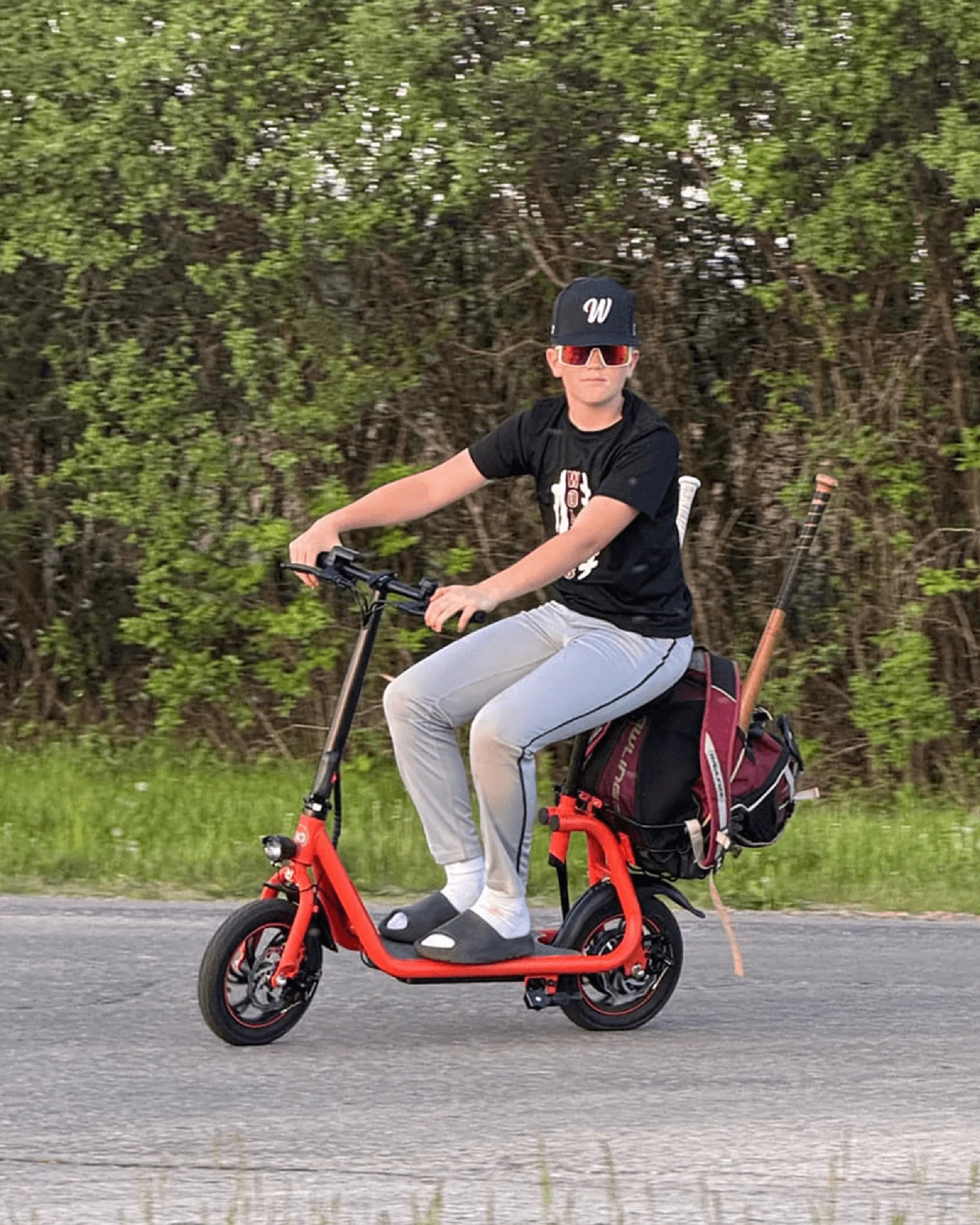
Introduction: The Electric Scooter Identity Crisis
You see them zipping through bike lanes, parked outside coffee shops, and sometimes, controversially, on sidewalks. The rapid rise of the electric scooter has sparked a fundamental debate: are electric scooters vehicles, or are they merely motorized toys? This question isn't just academic; it dictates where you can legally ride, what rules you must follow, and how cities plan our streets. This article provides a comprehensive exploration, dissecting legal frameworks, practical utility, safety imperatives, and future trends to answer definitively: electric scooters are evolving into a recognized, distinct category of personal transportation vehicle.
We will examine how jurisdictions from California to the European Union are scrambling to classify these devices. You'll see data on their real-world impact as commuting tools and understand the non-negotiable safety responsibilities that come with operating them. The discussion extends to the critical role of manufacturer reliability—where features like UL-certified batteries and robust warranties aren't luxuries but necessities for a vehicle meant for daily use. By the end, you'll have a clear framework for understanding the electric scooter's legitimate and growing role in modern transportation.
Defining a "Vehicle": Legal Frameworks and Classifications
Legally, the term "vehicle" is a chameleon, changing color based on local statute. At the federal level in the United States, the National Highway Traffic Safety Administration (NHTSA) traditionally defines a motor vehicle as having a seat, being designed for highway travel, and exceeding certain speed and power thresholds—a definition many e-scooters narrowly avoid. This federal ambiguity pushes classification to state and city governments, creating a complex patchwork of regulations. The core legal question, "Are electric scooters vehicles?," therefore has dozens of different answers.
Contrast this with the European Union's approach, which has moved more decisively to create a new category. The EU's machinery directive and subsequent vehicle category L1e-B for "powered cycles" provide a clearer, though not uniform, template for member states. This classification typically brings requirements for type-approval, maximum power (often 4 kW), and a design speed limit of 45 km/h (28 mph). The transatlantic regulatory divergence highlights a global transportation system adapting, often awkwardly, to a new mobility technology.
Comparing e-scooters to established categories clarifies their hybrid nature. Unlike bicycles, they are motor-propelled. Unlike mopeds or motorcycles, they are often stand-on and lower-speed. This places them squarely in the emerging "micro-mobility" vehicle category, sharing space with certain e-bikes and electric skateboards. The legal implications are profound: classification as a vehicle typically grants road/bike lane access but imposes operational rules, while classification as a toy or pedestrian device restricts use to sidewalks and paths, often creating safety conflicts.
State-by-State Variations in the US
Navigating US e-scooter law requires a local map. California, an early adopter, defines them as "electrically motorized boards" and permits them on roads and bike lanes with a speed limit of up to 15 mph, prohibiting sidewalk use in business districts. New York State, after lengthy debate, legalized them in 2020, treating them similarly to bicycles but allowing local cities like NYC to impose further restrictions, including a top speed of 15 mph.
Texas classifies e-scooters under a "motor-assisted scooter" definition, permitting them on roads with speed limits of 35 mph or less and requiring riders to be 16 or older. Florida law is more permissive, allowing them on roads, bike lanes, and sidewalks (unless locally prohibited), with a focus on rider age (16+) and equipment (brakes). Common threads across states are emerging: age restrictions (usually 16+), speed limits (often 15-20 mph), helmet laws for minors, and a strong preference for their use in bike lanes over sidewalks.
The table below summarizes key regulatory aspects in major markets:
| Jurisdiction | Common Classification | Max Speed Limit | Primary Permitted Areas | Helmet Law |
|---|---|---|---|---|
| California, USA | Motorized Scooter/Board | 15 mph | Bike Lanes, Roads (≤25 mph) | Required for <18 |
| New York City, USA | Micro-mobility Device | 15 mph | Bike Lanes, Roads (≤30 mph) | Required for All |
| Texas, USA | Motor-Assisted Scooter | 20 mph | Roads (≤35 mph limit) | Required for <18 |
| European Union (L1e-B) | Powered Cycle | 28 mph (45 km/h) | Roads, Bike Lanes (varies) | Often Required |
| United Kingdom | Powered Transporters | 15.5 mph | Private Land Only (Public trial schemes) | Recommended |
Electric Scooters as Practical Transportation Vehicles
Beyond legal definitions, the most compelling argument for e-scooters as vehicles is their demonstrated practical utility. They have evolved from recreational gadgets into serious tools for urban mobility. Their primary value is as a first-and-last-mile solution, seamlessly connecting homes and offices to public transit hubs like bus stops and subway stations. This fills a critical gap in the transportation network, making public transit a viable option for more people and reducing reliance on private cars for short, inefficient trips.
The environmental and economic case is robust. Compared to a single-occupancy car trip, an e-scooter ride produces negligible direct emissions and significantly reduces urban congestion and noise pollution. For the rider, the cost-effectiveness is undeniable. With no fuel costs, minimal maintenance, and a purchase price far below a car or even an annual transit pass, e-scooters offer substantial savings. This practical reality is what transforms them from toys into transportation vehicles.
For this utilitarian role to be safe and reliable, the scooter itself must be engineered to vehicle-like standards. This is where the distinction between well-made and poorly-made products becomes critical. A commuter vehicle needs a durable frame, reliable braking systems, and consistent performance. Features like IPX5 water-resistance, as found on Gyroor models, ensure all-weather capability, while UL-certified battery packs provide peace of mind against fire risk—a non-negotiable safety standard for a device stored in homes and offices. A 1-year comprehensive warranty, offered by leading brands, underscores the manufacturer's confidence in their product's durability as a daily-use vehicle.
Data and Rider Trends: Who's Using Them and Why?
Surveys and mobility data paint a clear picture: e-scooters are for commuters. Studies from cities like Paris and Austin show a significant portion of trips directly replace car journeys. Users are not just tourists; they are residents traveling to work, class, or appointments. The average trip distance for shared scooters typically falls between 1-2 miles, perfectly aligning with the short urban trips that clog city streets with cars.
The advantages driving adoption are multifaceted. Beyond cost, riders cite time savings in congested traffic, convenience of point-to-point travel, and the sheer enjoyment of the ride. For many, it makes a multi-modal commute—combining scooter, bus, and train—not only possible but pleasant. This behavioral shift underscores that for a growing demographic, the answer to "Are electric scooters vehicles?" is a resounding yes, based on daily lived experience. They are a legitimate, efficient, and sustainable component of the personal transportation fleet.
Safety, Responsibility, and Operating as a Vehicle Operator
If we accept that electric scooters function as vehicles, then the operator must embrace the mindset and responsibilities of a vehicle operator. This is the cornerstone of safe integration. Riding a scooter in traffic demands the same alertness, predictability, and respect for rules as driving a car or riding a motorcycle. The consequences of inattention—whether from the scooter rider, a driver, or a pedestrian—are equally severe.
Essential safety gear is the first layer of responsibility. A helmet is paramount; studies consistently link helmet use to reduced head injury severity. For night riding, active lighting (front and rear) and reflective clothing are not optional—they are critical for visibility. Operators must know and follow the rules of the road: obeying traffic signals, using hand signals for turns, yielding appropriately, and never riding under the influence of alcohol or drugs. Parking etiquette is also key; a vehicle improperly abandoned on a sidewalk becomes a hazardous obstacle, fueling public opposition.
This responsibility extends to choosing your equipment. Operating a vehicle requires trust in its mechanics. Investing in a scooter from a reputable brand with a proven safety record, robust construction, and reliable customer support is a fundamental safety decision. It ensures that the brakes will engage consistently, the frame won't fail unexpectedly, and the battery—the heart of the vehicle—is built to rigorous safety standards.
Infrastructure and Shared Space Challenges
The rise of e-scooters has exposed pre-existing deficits in urban infrastructure. The central challenge is a lack of dedicated, protected space for micro-mobility. When bike lanes are absent or blocked, scooter riders are forced to choose between dangerous roads or contentious sidewalks. This creates conflict with both drivers and pedestrians, hindering broader acceptance.
The solution lies in proactive urban planning. Cities that succeed in integrating e-scooters are those investing in connected networks of protected bike and micro-mobility lanes. These lanes provide a safe, dedicated space, separating faster micro-vehicles from pedestrians and from car traffic. Technologies like geo-fencing, used in shared scooter systems, can also help by creating slow-speed or no-ride zones in sensitive pedestrian areas. Ultimately, safe coexistence depends on a triad: better infrastructure, clear and fair regulations, and responsible rider behavior. Each is dependent on the other.
The Technical Evolution: Building a Better Vehicle
The early days of electric scooters were marked by trade-offs: power vs. range, portability vs. stability. Today, technological advancements are directly addressing these compromises, further solidifying their status as capable vehicles. Motor technology has improved, offering more torque for hill climbing and smoother acceleration from a stop. Battery chemistry advancements, particularly the widespread adoption of lithium-ion cells from reputable manufacturers, have increased energy density, allowing for longer ranges (now commonly 20-40 miles on a single charge) without significantly increasing weight.
Vehicle dynamics and safety systems have seen major innovation. Dual braking systems—combining electronic regenerative braking with mechanical disc or drum brakes—are becoming standard, providing reliable stopping power. Suspension systems, once a luxury, are now common on commuter models, improving comfort and wheel contact on imperfect pavement. Connectivity features like smartphone apps for locking, diagnostics, and ride tracking add a layer of security and functionality expected of modern personal vehicles.
This technical progression mirrors the evolution of early automobiles. The focus has shifted from mere functionality to reliability, safety, and user experience. Brands that prioritize these engineering principles, such as Gyroor with its focus on UL-certified components and IP-rated water resistance, are building the scooters that people trust for daily transportation. This relentless improvement cycle is a hallmark of a maturing vehicle category, not a passing toy fad.
The Future: Integration and Regulation of E-Scooters
The trajectory for electric scooters points toward deeper, more formalized integration into the transportation ecosystem. Future regulations will likely continue to coalesce around common standards for speed, power, lighting, and rider age. We may see the introduction of mandatory third-party certification for models intended for public road use, similar to automotive standards. The debate around insurance and registration for private scooters will intensify, particularly as speeds and usage increase.
Technologically, the future is smart and connected. Advanced driver-assistance systems (ADAS) for scooters, like collision warnings and automatic emergency braking, are on the horizon. Integration with city mobility platforms will allow seamless multi-modal trip planning and payment. Scooters will communicate with smart city infrastructure, potentially receiving signal priority at intersections or warnings about road hazards.
In the broader context, e-scooters are a key pillar of the smart, sustainable city. They offer a high-efficiency, low-footprint solution for dense urban areas. Their success depends on a balanced regulatory framework that ensures safety without stifling innovation, and on continued investment in the physical infrastructure that allows all road users—pedestrians, cyclists, scooter riders, and drivers—to coexist safely and efficiently. They are not a silver bullet, but an essential tool in the modern mobility toolkit.
FAQ: Common Questions on E-Scooter Vehicle Status
1. Do I need a driver's license or insurance to ride an e-scooter?
This is highly location-dependent. In most U.S. states for privately-owned scooters under 20 mph, no driver's license is required. However, some states and most EU countries under the L1e-B category do require a license (often a standard car license). For insurance, it's rarely mandatory for private scooters in the US but is strongly recommended. In Europe, third-party liability insurance is often a legal requirement once the scooter is classified as a vehicle.
2. Can I ride my e-scooter on the road, bike lane, or sidewalk?
The general rule of thumb is: bike lanes are best, roads are often permitted (check local speed limits), and sidewalks are usually prohibited for safety reasons. Always prioritize dedicated bike/micro-mobility lanes. Riding on sidewalks is dangerous for pedestrians and is illegal in most urban centers. Always verify your specific city's ordinances.
3. How does the build quality of my scooter affect its safety as a vehicle?
Build quality is everything. A vehicle used daily must withstand potholes, weather, and constant use. A robust frame, reliable brakes (preferably dual-system), and pneumatic tires improve stability and control. Most critically, the battery must be from a certified manufacturer (like UL) and the electronics should have proper water-resistance ratings (like IPX5). A scooter without these features is a liability, not a reliable vehicle.
4. Are electric scooters environmentally friendly compared to other options?
Yes, when they replace car trips. Their manufacturing and electricity use have a carbon footprint, but it is drastically lower per mile than a personal automobile. Their true environmental benefit comes from reducing congestion and emissions from short car trips. Proper end-of-life battery recycling is crucial for maximizing their green credentials.
5. What are the key features to look for in a scooter meant for daily commuting?
Prioritize: (1) Range: Should exceed your round-trip commute. (2) Motor Power: Enough for local hills (250W minimum, 350W+ preferred). (3) Safety: UL-certified battery, dual brakes, front and rear lights. (4) Durability: IP54 or higher water-resistance, quality suspension, a reputable brand warranty. (5) Portability: Foldable design and manageable weight if combining with transit.
Conclusion: Embracing a New Category of Vehicle
The evidence is conclusive: electric scooters have transcended their novelty origins to become legitimate micro-mobility vehicles. They are defined as such by evolving legal codes, validated by their practical utility in cities worldwide, and demanded to meet higher safety and reliability standards by informed consumers. The persistent question, "Are electric scooters vehicles?," is being answered daily on streets and in city halls affirmatively. Their successful integration hinges on a three-part foundation: clear and consistent regulations that treat them as the vehicles they are, responsible operation by riders who adopt a vehicle operator's mindset, and access to well-engineered, safely designed products built for transportation, not just recreation.
This new category of vehicle offers a tangible path toward more livable, less congested, and more sustainable urban environments. As technology and infrastructure catch up, their role will only expand. The future of urban mobility is multi-modal, and the electric scooter has firmly claimed its lane. Explore that future with confidence by choosing a scooter engineered for the responsibility of daily transportation.
Ready to choose a commuter-grade electric scooter built to vehicle-like standards of safety and reliability? Browse the full Gyroor collection—featuring UL-certified batteries, IPX5 water-resistant designs, and a comprehensive 1-year warranty—at gyroorboard.com.
Best Electric Scooters Under $150: Your Guide to Affordable Commutes
Target Market for Electric Scooters: Who’s Riding the E-Scooter Revolution?